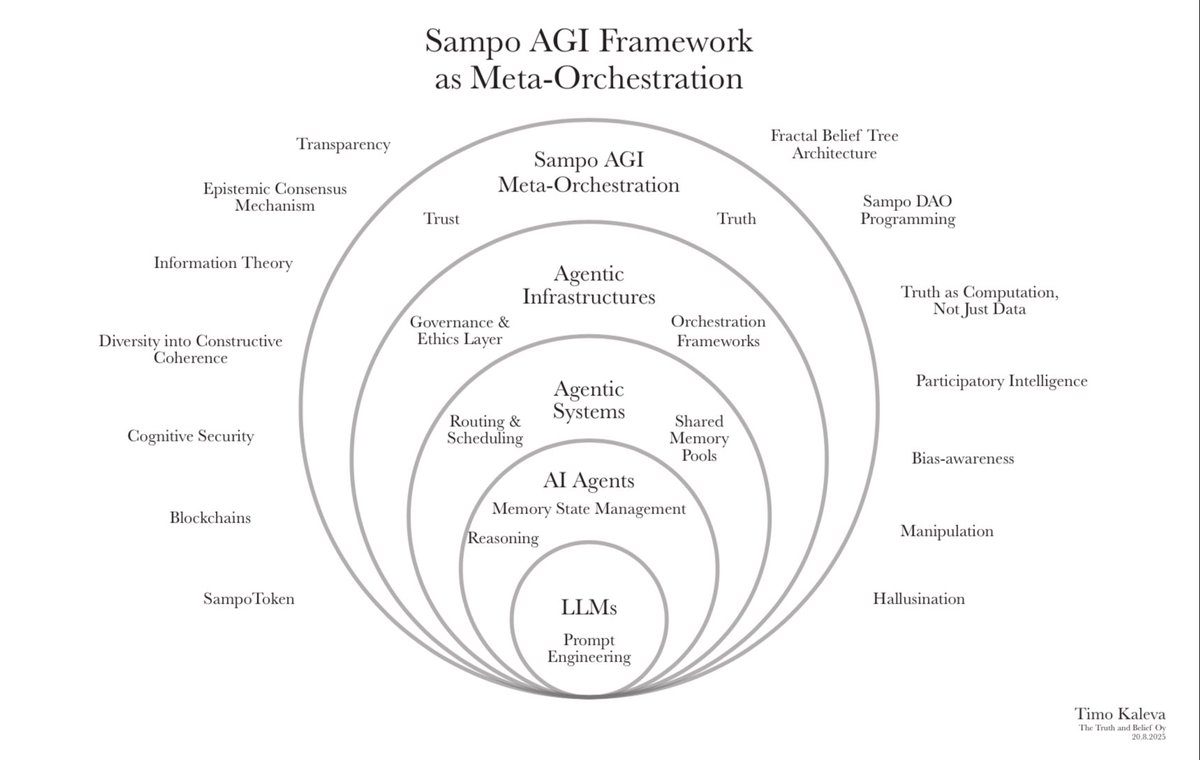
A simple breakdown of Agentic AI - layer by layer
Before we dive in - we’re offering a Free AI Agentic Program for anyone who wants to go deeper into these concepts.
Let’s walk through how it all fits together.
1️⃣ LLMs: the foundation
This is where it all starts. Models like GPT or DeepSeek power the system.
Main ideas:
✅ Tokenization & inference: how text gets processed and generated
✅ Prompt engineering: crafting better inputs for smarter outputs
✅ LLM APIs: ways to connect and use these models in apps
Think of this layer as the engine behind everything else.
2️⃣ AI Agents — built on top of LLMs
Agents give LLMs the ability to act, not just respond.
They handle:
✅ Tool use & function calling: linking models to APIs or external tools
✅ Reasoning: using methods like ReAct or Chain-of-Thought
✅ Task planning: breaking large goals into smaller steps
3️⃣ Agentic Systems — multiple agents working together
When several agents coordinate, you get a full system that can collaborate and adapt.
Core features:
✅ Inter-agent communication: talking through protocols like A2A
✅ Routing & scheduling: assigning tasks to the right agent
✅ State coordination: keeping shared progress consistent
✅ Multi-agent RAG: retrieving and combining knowledge across agents
4️⃣ Agentic Infrastructure — the foundation for scale and safety
This layer makes everything reliable, secure, and ready for production.
It includes:
✅ Monitoring: tracking performance with tools like Opik
✅ Error handling: recovering gracefully when things fail
✅ Security & access control: defining what agents can and can’t do
✅ Rate limits & cost control: managing compute and spend
✅ Automation: integrating agents into wider workflows
✅ Human-in-the-loop: letting people step in when needed
This layer ensures trust, safety, and scalability.
Agentic AI isn’t one tool it’s a layered system.
Each layer builds on the last to add more intelligence, coordination, and control.
What other layer or concept would you include?

English