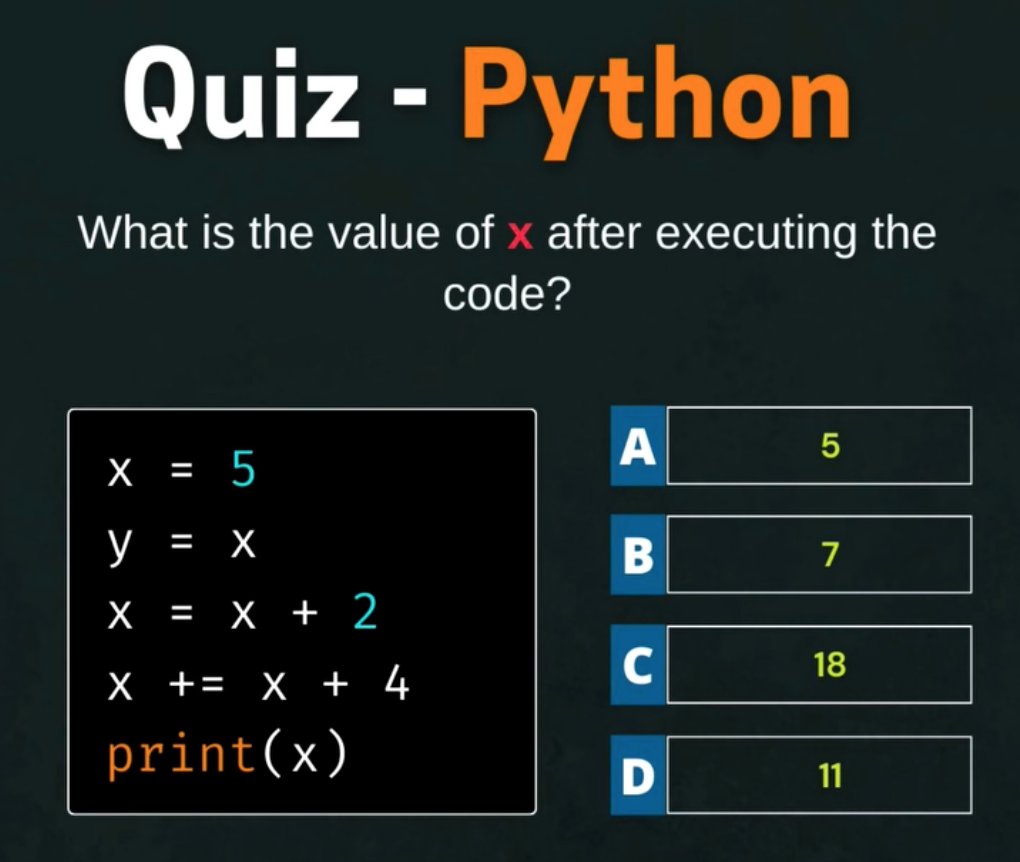
@PythonPr C: 18. For beginners: track each line carefully. Line 1: x=5, Line 2: y=5 (copy of x), Line 3: x=7 (5+2), Line 4: x += x + 4 means x = x + (x + 4) = 7 + (7 + 4) = 7 + 11 = 18. The key is understanding that += evaluates the right side completely first.
@PythonPr Final Output:
The variable x was never modified after its initial assignment. Therefore, it retains its original value of 5.
The output of the print(x) statement will be: A. 5
For More Reference =>>