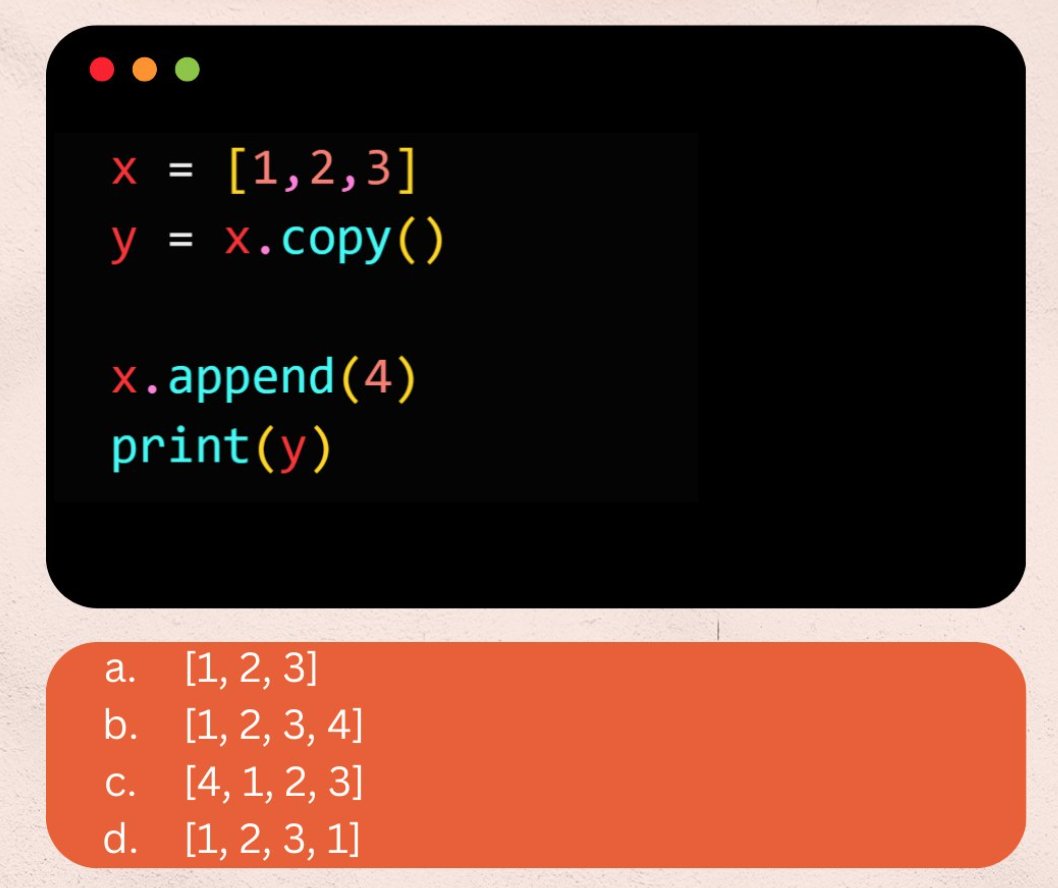
Answer: a) [1, 2, 3]
The .copy() saves the day!
› y = x.copy() creates a NEW list in memory
› x.append(4) only modifies x's list
› y remains unchanged: [1, 2, 3]
For beginners: Lists are boxes, variables are stickers. y = x puts another sticker on the same box. y = x.copy() creates a new box!
@PythonPr Will be [1,2,3]
After the copy, a new list is allocated in another memory address with the same items, but original remains at the same address.