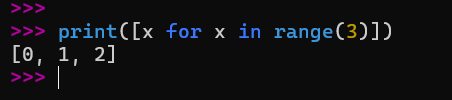
Answer: B) [0, 1, 2]
List comprehension basics!
› [x for x in range(3)] creates a list
› range(3) generates 0, 1, 2 (stops before 3)
› Each x is collected into the list
› Result: [0, 1, 2]
For beginners: Same as list(range(3)), but list comprehensions shine when transforming data! Try [x*2 for x in range(3)] fro [0, 2, 4]
@PythonPr Answer: B
The code print([x for x in range(3)]) uses a list comprehension and the range() function to generate and print a list of numbers.
The range(3) function generates a sequence of numbers starting from 0 by default, up to but not including the specified number,
@PythonPr B. [0,1,2].
The code uses a list comprehension and the range function to generate a list of numbers in range 3 but not including the last number which is 3. That's how range function works. It generate a user specified number of numbers but doesn't the last number.
@PythonPr Option B is the answer. The reason is that the range takes all the values within the specified values, starting from 0 but excludes the last number. In this case, it excludes 3