@PythonPr B) [1, 2, 3]
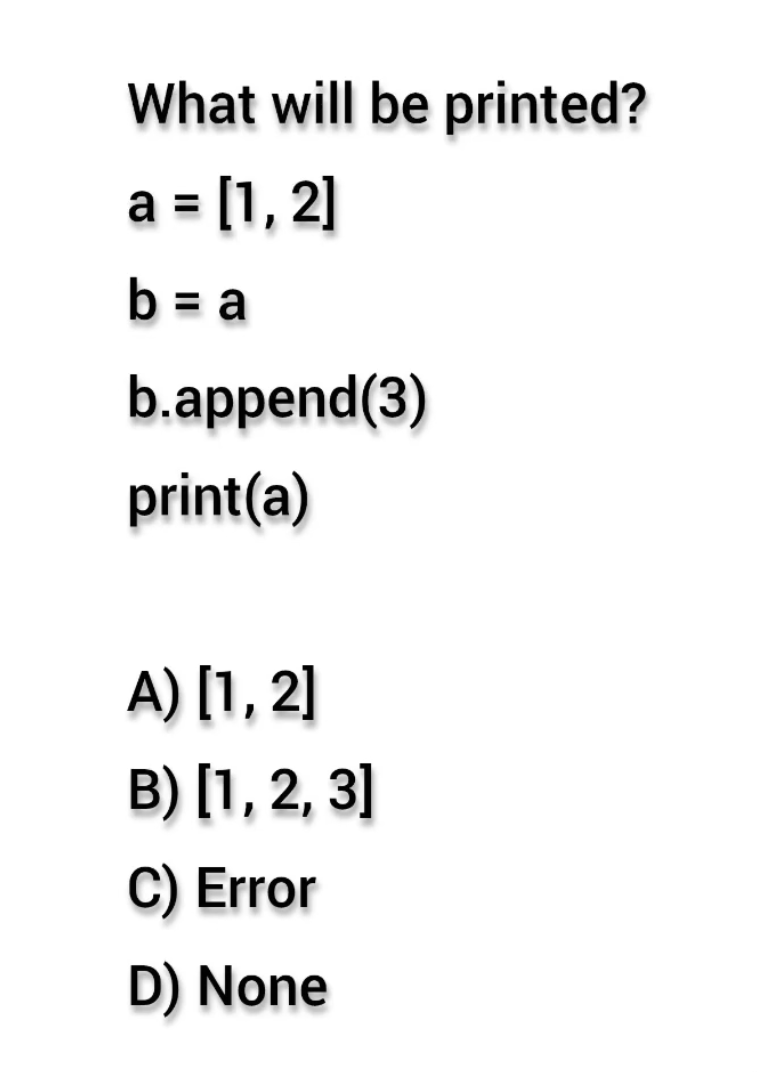
b = a doesn't copy the list. Both point to the same object.
b.append(3) modifies the original list.
Tip: Use b = a.copy() if you want a separate list.
Answer: B) [1, 2, 3]
The key: b = a creates a reference, not a copy.
› Both a and b point to the same list.
› b.append(3) modifies that shared list.
› a sees the change too.
› Result: [1, 2, 3]
For beginners: Variables in Python are labels on objects, not the objects themselves.
@PythonPr In Python, when you assign a list to another variable using b = a, both variables reference the same list object in memory. This is known as assignment by reference. Therefore, any modification made to the list through the variable b, such as appending an element with
@PythonPr Answer: B) [1, 2, 3]
Why:
b = a doesn’t copy the list—it points to the same object.
So b.append(3) mutates the original list, and a reflects the change.
@PythonPr The output is B) [1, 2, 3].
In Python, variables are labels, not containers. When you set b = a, you aren't copying the list; you are just giving the same list a second name.
@PythonPr It's all about references. Just like in life; when you change the core, every label attached to it reflects the change. B is the only logical answer. ♟️