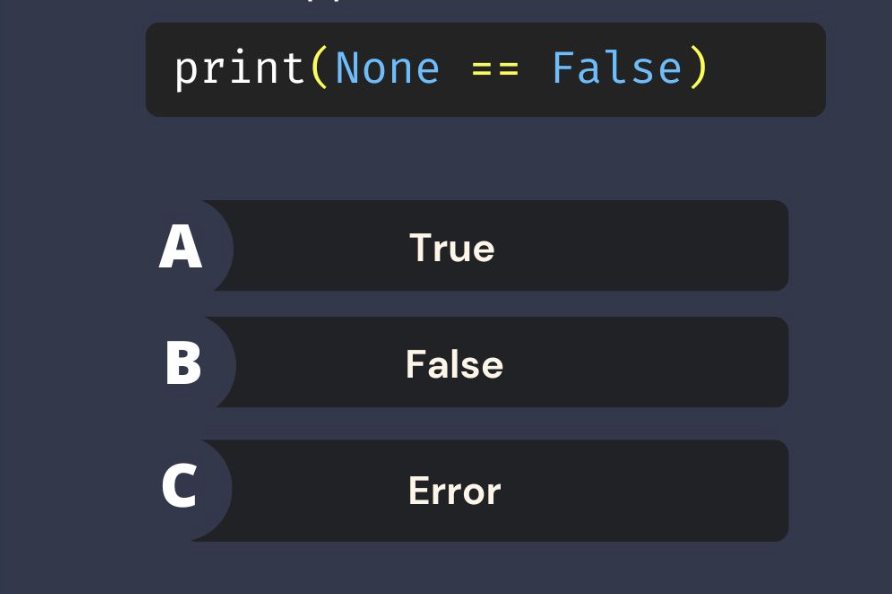
Answer: B) False
The trap: None and False are both "falsy", but NOT equal!
Step by step:
› None is its own unique type
› False is a boolean
› None == False → False (different types)
› bool(None) == False → True (both falsy)
For beginners: None isn't False isn't 0 isn't "" isn't [] despite all these values being falsy
@PythonPr Output: B) False
None is a separate singleton object. It’s “falsy” in boolean context, but it’s not equal to False.
So print(None == False) prints False