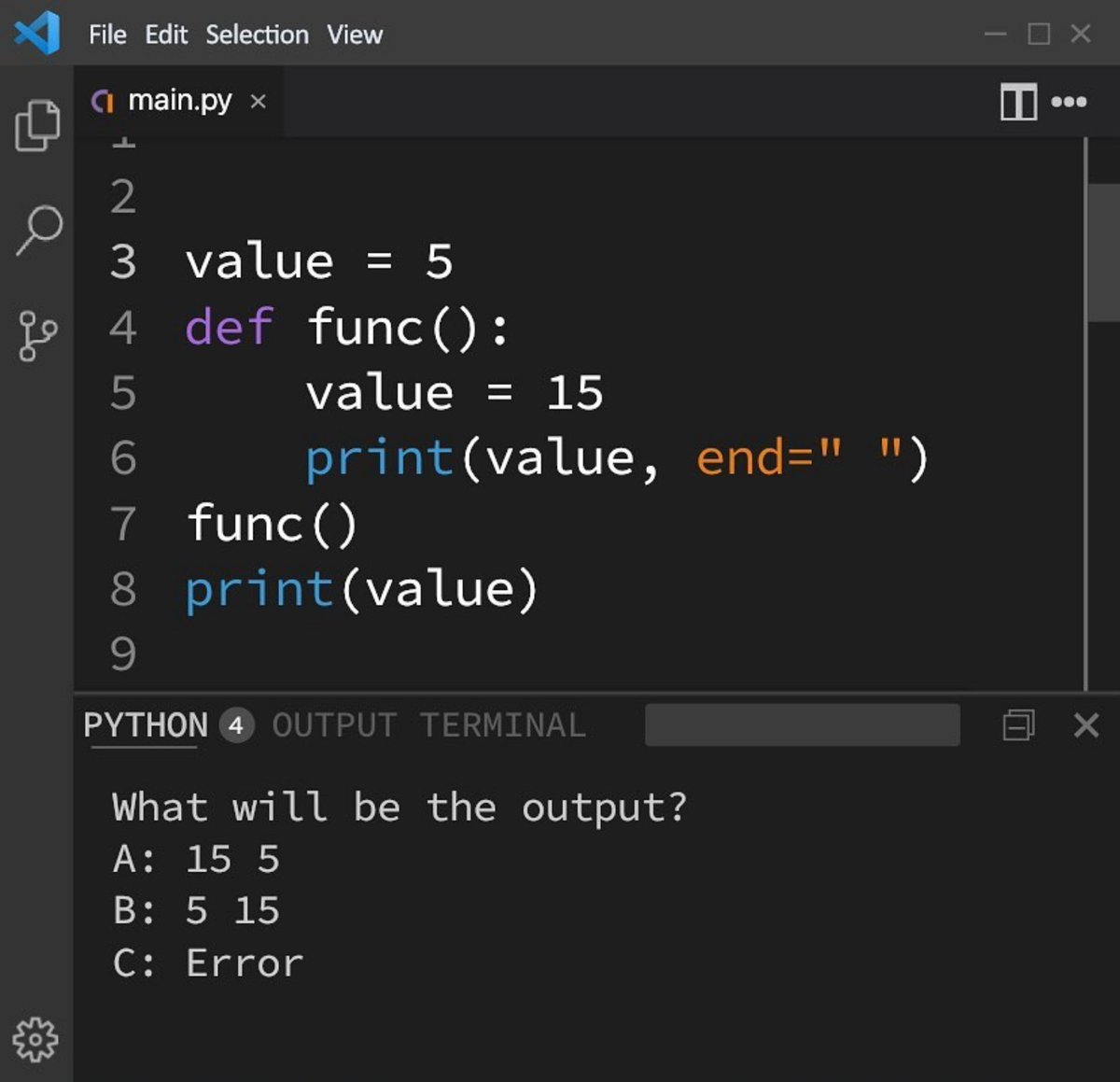
@Python_Dv The output is:
15 5
Why:
Inside func(), value = 15 is a local variable, so print(value, end=" ") prints 15.
Outside the function, the global value stays 5, so print(value) prints 5.
Correct choice: A ✅
@Python_Dv Global vs. Local Scope
The answer is A): 15 5.
This tests your knowledge of variable scope—specifically, how Python distinguishes between variables defined inside a function and those defined outside of it.
Why is the answer 15 5?
Global Initialization: value = 5
@Python_Dv value inside func() is a local variable, and value outside is a global variable.
What happens:
•Inside func(), Python uses the local value = 15
•Outside, Python uses the global value = 5
Output: 15 5