

Post
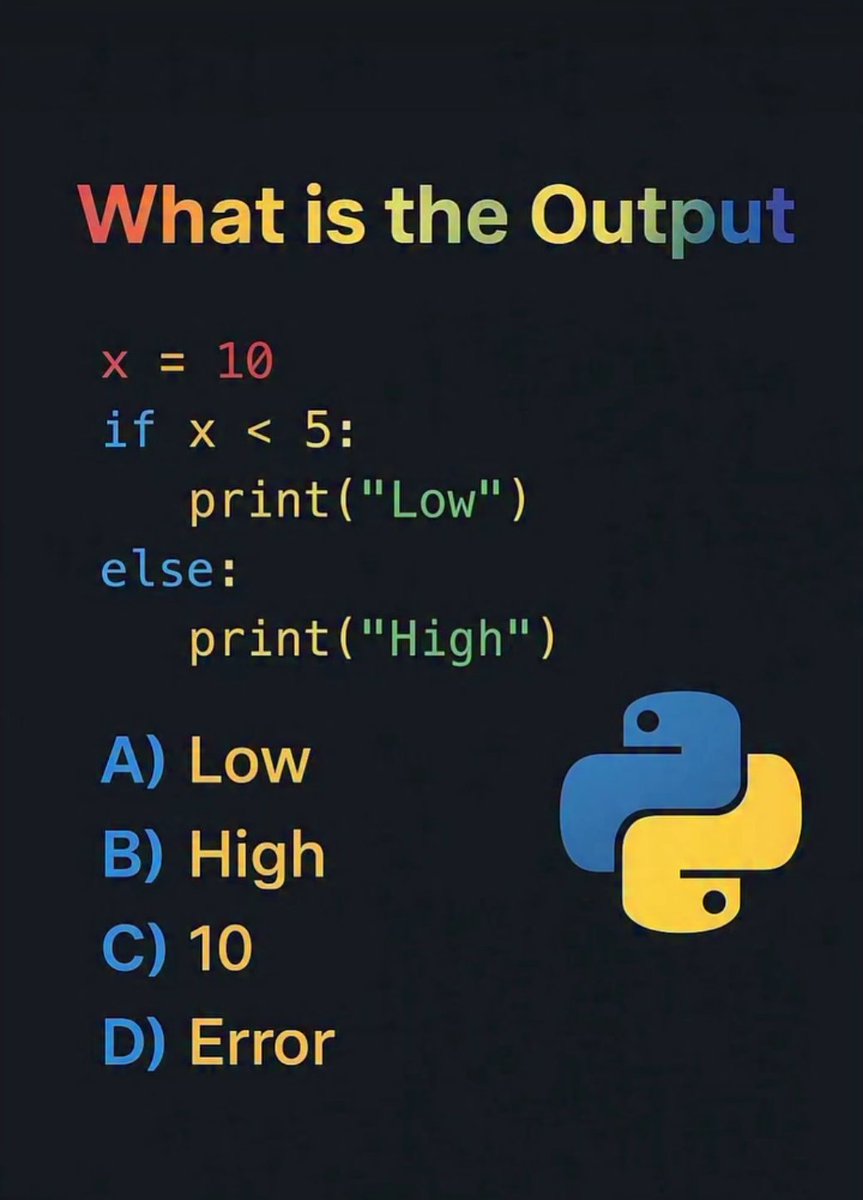

@Python_Dv B) High
x = 10, condition checks if 10 < 5 (False), so else block runs
English

@Python_Dv Answer: B) High
Copy-paste reply: “B) High — because x=10, so x < 5 is false and else runs.
English

@Python_Dv Answer: (B) High
The variable (x) is assigned the value (10). The if statement checks if (x<5). Since (10) is not less than (5), the condition is false. The program then executes the code in the else block, which prints the string "High".
English


@Python_Dv Answer: B) High
Step by step:
› x = 10
› if x < 5: checks if 10 < 5
› 10 is not less than 5 → False
› else runs → "High"
For beginners: Basic if-else logic - when the if fails, else runs.
English


@Python_Dv High
Cause it check if x(10) < 5, which is false. Then else is runed
English


@Python_Dv Answer is B. Everyone crack this one Python developer. Drop us some complex stuff please🙏
English






@Python_Dv High is right answer.
The value of x is 10, if x< 5, this condition is false so else condition is true. Then answer is high
English

@Python_Dv B . High
condition: x<5 -> 10<5 -> False
So, the else block runs.
English


@Python_Dv D) Error
The declared variable x is lowercase. However, the variable being evaluated is X, Which is uppercase; Therefore, the output is error NameError
English


