Post

NASA JPL
NASA JPL@NASAJPL·
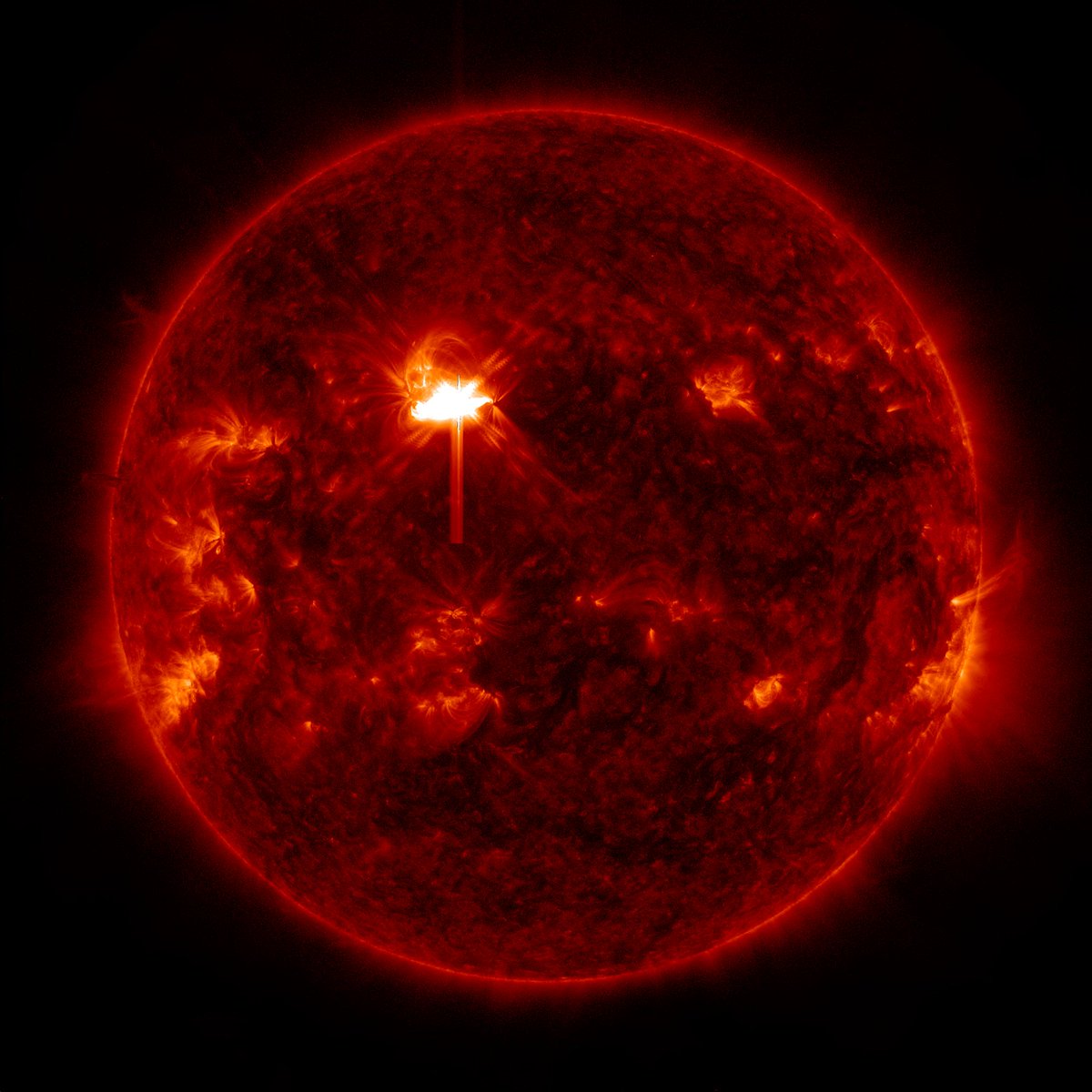
Fun fact: Perseverance is helping keep the @NASAArtemis II crew safe! The rover can see sunspots not visible from Earth — giving up to 2 weeks’ advance notice so the team can monitor and prepare for potentially dangerous solar flares. go.nasa.gov/4rvmclj
NASA JPL tweet media
English
19
186
843
37K
SpaceWxDaily
SpaceWxDaily@SpaceWxDaily·
NASA’s Artemis program faces several significant space weather vulnerabilities, particularly given that missions go beyond low Earth orbit (LEO) where Earth’s magnetic field provides less protection. Solar Energetic Particle (SEP) Events The most acute threat. During solar flares and coronal mass ejections (CMEs), the Sun can release bursts of high-energy protons that arrive at the Moon within minutes to hours. Astronauts on the lunar surface or in transit have minimal shielding, and a major SEP event could deliver a potentially lethal radiation dose in a short window. The challenge is that prediction windows are narrow — sometimes just 20–30 minutes of warning. Galactic Cosmic Rays (GCRs) A chronic, background threat. These high-energy particles from outside the solar system penetrate nearly all shielding materials. During solar minimum (when the Sun’s magnetic field weakens), GCR flux increases. Prolonged lunar surface stays accumulate significant GCR dose, raising long-term cancer risk and potentially causing neurological damage. Artemis missions near or during solar minimum face elevated GCR exposure. Radiation Effects on Electronics Space weather can cause single-event upsets (SEUs) in spacecraft electronics — bit flips, latch-ups, or permanent damage to components. The Orion capsule, Gateway lunar station, and surface systems all require radiation-hardened designs and redundant systems. Lunar Surface Hazards (No Magnetosphere) Unlike Earth, the Moon has no global magnetic field and almost no atmosphere, so the surface receives the full brunt of solar wind and energetic particles. Astronauts conducting EVAs (extravehicular activities) during a solar storm face serious risk, and there are no natural “safe harbors” on the surface. Communication and Navigation Disruption Ionospheric disturbances triggered by solar activity can degrade GPS and radio communications — affecting both the spacecraft in transit and coordination with Earth mission control. Signal blackouts during critical maneuvers (lunar orbit insertion, landing) are a real concern. Mitigation Strategies NASA is Pursuing ∙PREDICCS and other forecasting tools to give earlier SEP warnings ∙Radiation shelters within the Gateway (using water walls or polyethylene shielding) ∙Real-time space weather monitoring via NOAA’s Space Weather Prediction Center ∙Mission scheduling to avoid known high-risk solar activity windows, though a multi-week lunar mission can’t fully avoid the solar cycle ∙Dosimetry aboard Orion to track cumulative crew exposure The combination of deep-space radiation and the lack of Earth’s protective magnetosphere makes space weather one of the most serious human health and operational challenges for Artemis beyond the engineering problems of getting to the Moon.
English
0
1
1
110
Nebula Chaser
Nebula Chaser@seahunter·
@NASAJPL @NASAArtemis Talk about a solar-powered early warning system — space weather forecasting just got a whole lot cooler.
English
0
0
1
128
Mr. Wills⌚
Mr. Wills⌚@willsojong0·
@NASAJPL @NASAArtemis Amazing how missions connect across space. Perseverance Rover helping protect the Artemis II crew shows exploration isn’t isolated—every mission builds knowledge that keeps the next astronauts safer.
English
0
1
1
49
Brenda
Brenda@Brenda434129415·
@NASAJPL @NASAArtemis なるほど!2週間前に警告があるのはすごいですね。どのように観測しているのですか?楼主の意見が聞きたいです!
日本語
0
0
0
29
BetMGM 🦁
BetMGM 🦁@BetMGM·
Pick which twin will win! You could score a share of $2 million in Bonus Bets.
English
295
181
3.6K
46.1M
مشاركة