The Singularity Project

12.3K posts

The Singularity Project banner
The Singularity Project

The Singularity Project

@01Singularity01

Steven Vincent 🎯https://t.co/hjRK366HrO🎯 Inti AI: Intelligent Creative Agent 🎯BullBear Market Report: https://t.co/dF7jxeSXsQ

Universe انضم Kasım 2022
899 يتبع2.2K المتابعون
The Singularity Project أُعيد تغريده
Daniel Hnyk
Daniel Hnyk@hnykda·
LiteLLM HAS BEEN COMPROMISED, DO NOT UPDATE. We just discovered that LiteLLM pypi release 1.82.8. It has been compromised, it contains litellm_init.pth with base64 encoded instructions to send all the credentials it can find to remote server + self-replicate. link below
English
176
1.3K
5.3K
1.7M
The Singularity Project أُعيد تغريده
ArchaeoHistories
ArchaeoHistories@histories_arch·
In 1979, Madison; Wisconsin, a woman sits in a basement office, writing code line by line on a computer most hospitals don't even know they need yet. Her name is Judy Faulkner. She's started with $6,000 to $7,000 of her own money, plus contributions from friends and family totaling around $70,000. No venture capital. No Silicon Valley connections. Just a conviction that the American healthcare system is killing people because doctors can't access the information they desperately need. She had watched it happen. Medical records stayed trapped in filing cabinets and incompatible systems when patients moved between cities and providers. Doctors made critical decisions in the dark, lacking the patient histories they needed. People died from preventable mistakes. That systemic failure became her mission. Faulkner began building software that would let patient information follow the patient, no matter where they went. It was a radical idea in an era when most hospitals still relied on paper charts and metal drawers. Decades later, she controls Epic Systems, the most powerful health technology company in America. Her software manages medical records for over 300 million patients worldwide. Roughly half of all U.S. hospital beds run on systems she created. Her wealth sits between $7 and $8 billion. And almost no one knows her name. She never took Epic public. Never accepted venture capital. Never sold out. She believed Wall Street would force her to chase quarterly profits instead of patient outcomes. So she kept control, kept her wealth locked in private shares, and kept building. Now in her eighties, she's methodically dismantling that fortune. In 2015, she signed the Giving Pledge. Then went further, committing to give away 99 percent of her wealth. She and her husband created the Roots & Wings Foundation, named after advice she once gave her children when they asked what they needed most from her. "You need roots and wings," she told them. Values to anchor you. Freedom to grow. Everything else is noise. Today, that foundation distributes tens of millions annually, aiming for $100 million a year. Food security. Healthcare access. Education. Housing. She's not waiting until she's gone to make an impact. She's converting ownership into action right now, while she's still here to see it work. In an age of billionaire spectacle, Judy Faulkner built an empire in silence, accumulated unimaginable wealth without chasing it, and is now giving it all away with the same quiet determination she used to write that first line of code in a Wisconsin basement. Faulkner still runs Epic Systems from its headquarters in Verona, Wisconsin, where the campus has become legendary for its design. Buildings are themed after famous works of literature and fantasy, with conference rooms modeled after Hogwarts, Alice in Wonderland, and Star Trek. Employees traverse tunnels decorated like subway stations and walk through spaces that feel more like theme parks than corporate offices. It's Faulkner's way of making grueling work feel a little more human. Unlike most tech billionaires, she lives modestly and avoids the spotlight. She doesn't own yachts, doesn't collect estates, and rarely seeks media attention. Her focus remains on Epic's mission: building software that saves lives by making sure critical information is always available when it matters most. Faulkner majored in mathematics and computer science at a time when women made up less than 10 percent of the field. Before founding Epic, she taught herself programming languages and worked on developing systems for hospitals while teaching at the University of Wisconsin. Another fascinating detail: Epic remains one of the largest privately held software companies in the world, with thousands of employees and zero outside investors. Faulkner retains control by design, ensuring the company answers to patients, not shareholders. #archaeohistories
ArchaeoHistories tweet media
English
123
382
2K
189.3K
The Singularity Project أُعيد تغريده
Milk Road AI
Milk Road AI@MilkRoadAI·
This is WILD. Peter Thiel just bet $2 billion on a collar that wraps around a cow’s neck. The company is called Halter and it has a proprietary algorithm that runs the entire operation. They actually trademarked the name for it and called it the Cowgorithm and here's how it works. A farmer opens an app, taps a button, and 600,000 cows across three countries start walking toward the milking station on their own. No farm dogs, fences or physical labor, it's just a solar-powered GPS collar sending sound and vibration cues to each animal. The collar does more than move cows around. It monitors digestion, fertility cycles, and health patterns in real time, 24 hours a day, using machine learning trained on the behavior of hundreds of thousands of animals. Halter was founded by a rocket engineer who built spacecraft at Rocket Lab before deciding that farming was the bigger unsolved problem. US ranchers alone have already used the technology to build over 11,000 miles of virtual fencing, roughly the full perimeter of the continental United States, saving an estimated $220 million in physical fencing costs. Halter's previous funding round valued the company at $1 billion. This new round, led by Thiel's Founders Fund, doubles that valuation to $2 billion before the new money even hits the account. And they charge farmers between $5 and $8 per animal per month on a subscription model, meaning the more cows they collar, the more locked-in the revenue becomes. The most powerful venture capitalist on earth just decided that the future of food and farming runs through an algorithm named after a cow. He might be right.
Bloomberg@business

Peter Thiel’s Founders Fund is backing a company bringing AI to cow herding at a $2 billion valuation bloomberg.com/news/articles/…

English
430
1.2K
5.4K
1.9M
andrew chen
andrew chen@andrewchen·
Web 1.0 came with new channels: - email, search, link sharing, etc Web 2.0 too: - feeds, creators, viral invites, etc Mobile: - app stores, SMS invites, vertical vid, mobile ads What about AI? I’ve been complaining that AI hasn’t come with much. But we’re seeing a big growth channel opening now: Products that are built as APIs/CLIs that can be pulled into new projects by Codex/Claude on the fly Maybe the “AI-native hotel app” doesn’t mean a mobile booking app with an AI chat panel. It means a CLI that can book a hotel for you, that an AI agent can pull into a bespoke answer or project or into code. Bolting on an AI chat panel is this generation’s weak form of AI. Maybe the full reinvention involves making it agent-first not human-first and once you start looking at it that way, a lot of existing products suddenly feel mis-specified. they’re built as destinations, but agents don’t want destinations. they want capabilities. composable, callable, reliable capabilities. So instead of “go to Expedia” or “open the app,” the future interaction is more like: an agent assembles a workflow on the fly. it pulls a flight search tool, a hotel booking tool, maybe a weather model, maybe even your personal preference graph. none of these are full products in the traditional sense. they’re more like endpoints with taste and state. This flips distribution completely. historically you win by owning the surface area. seo, app store ranking, homepage traffic. in an agent world, you win by being the default callable primitive. the thing that shows up again and again in agent-generated plans because it works, has clean interfaces, and returns structured outputs. distribution shifts from “top of funnel” to “top of call stack.” And the crazy part is this might actually compress product surface area dramatically. the best products might look more like tight, extremely well-designed CLIs with opinionated defaults rather than sprawling UIs. almost like the stripe api moment, but for everything. imagine if every vertical had a “stripe-level” primitive that agents preferentially use. there’s also a weird inversion of brand here. humans used to choose brands. now agents will. so the brand becomes partially machine-legible. reliability, latency, error rates, schema clarity. you can almost imagine “agent seo” where the ranking factors are things like success rate across thousands of agent runs, or how easy your tool is to integrate in a chain-of-thought execution loop. This also suggests a new kind of moat. not just data or network effects, but integration depth with agent ecosystems. if claude or codex or openclaw learns that your tool is the safest way to accomplish X, it gets baked into prompts, templates, maybe even fine-tunes. you become a default. and defaults, historically, are insanely sticky. The contrarian take is that most current “AI features” are a local maximum. chat panels, copilots, assistants. they’re transitional. the real end state might look closer to invisible infrastructure that agents orchestrate. the ui is just a debug layer for humans to peek into what the agents are doing. so maybe the new growth channels for ai look like: - being callable - being composable - being reliable at scale in agent loops - being embedded in agent templates and workflows - being the default primitive in a given domain and if that’s right, then the question for any new product isn’t “what’s the ui” or even “what’s the killer feature.” it’s “what’s the minimal, highest-leverage capability we can expose such that agents will repeatedly choose us when building something new.”
English
129
82
775
161.5K
The Singularity Project
The Singularity Project@01Singularity01·
That's what I've been talking about AND ACTIVELY BUILDING. Decentralized, distributed, nodal, network Intelligence in which every Human + Device + AI is a node. Way more powerful and robust than a handful of Big Data Centers representing brittle points of failure.
vitrupo@vitrupo

AI research could become a swarm of agents on the internet. Andrej Karpathy says systems like AutoResearch could let anyone propose improvements to a model, verified automatically like commits in a blockchain. The Earth has far more compute than any frontier lab.

English
0
0
3
129
The Singularity Project
The Singularity Project@01Singularity01·
@vitrupo That's what I've been talking about AND ACTIVELY BUILDING. Decentralized, distributed, nodal, network Intelligence in which every Human + Device + AI is a node. Way more powerful and robust than a handful of Big Data Centers representing brittle points of failure.
English
0
0
4
107
vitrupo
vitrupo@vitrupo·
AI research could become a swarm of agents on the internet. Andrej Karpathy says systems like AutoResearch could let anyone propose improvements to a model, verified automatically like commits in a blockchain. The Earth has far more compute than any frontier lab.
English
34
40
211
13.1K
The Singularity Project أُعيد تغريده
Natural Philosophy
Natural Philosophy@Naturalphilosy·
“Practice any art… no matter how well or badly, not to get money and fame, but to experience becoming, to find out what's inside you, to make your soul grow.” - McKellen reciting Vonnegut
English
131
13.7K
62.3K
1.3M
The Singularity Project
The Singularity Project@01Singularity01·
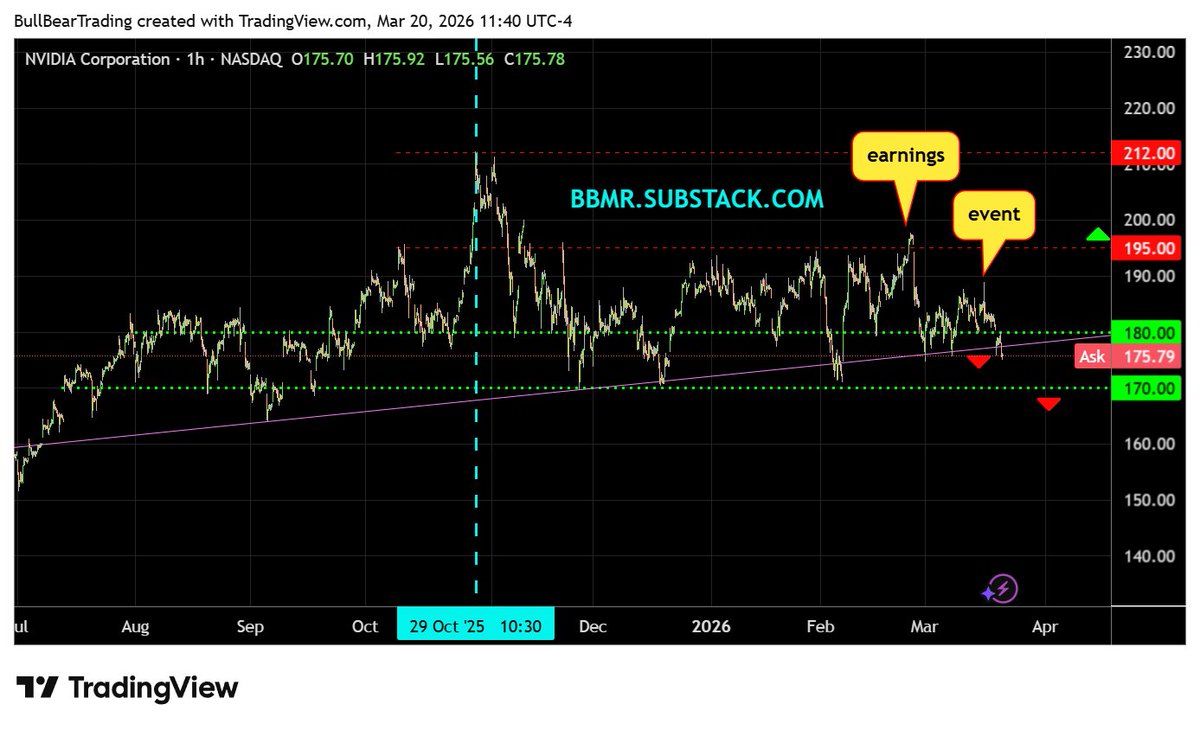
@zerohedge The MAG7 is about to crack down into a bear market. This is theatre to try to pump expectations. It will never be built.
The Singularity Project tweet media
English
0
0
0
7
zerohedge
zerohedge@zerohedge·
*SOFTBANK CEO: OHIO DATA CENTER WILL BE $500 BILLION PROJECT uhm, is this a joke?
English
229
210
3.1K
360.2K
The Singularity Project أُعيد تغريده
Dr. Lemma
Dr. Lemma@DoctorLemma·
Sixteen years ago, one man stood alone on a grassy hill at a music festival in Washington State, USA, and started dancing by himself. People glanced over and looked away. Some laughed. His roommate leaned in and warned him people were filming him. He did not stop. Then one stranger got up and joined him. Then another. Then the hillside tipped. Within minutes, hundreds of people were sprinting from across the field to be part of something that, thirty seconds earlier, had been one man being laughed at in a field. Someone filming from higher up the hill said quietly: "See what one man can do. One man can change the world." The clip spread across the internet in 2009. Entrepreneur Derek Sivers played it at a TED conference to explain how movements actually begin. Not with the first person brave enough to start, he argued, but with the first person willing to join them. Collin Wynter, the man dancing alone, later said he had no idea he had done anything special. He was just tired of watching everyone sit still.
English
2K
14.2K
101.1K
9.7M
The Singularity Project
The Singularity Project@01Singularity01·
@aakashgupta There is simply NO MOAT at all for a tool like Cursor. These "valuations" are just smoke and mirrors. The entire VC model is about to collapse.
English
0
1
1
114
Aakash Gupta
Aakash Gupta@aakashgupta·
Cursor is raising at a $50 billion valuation on the claim that its “in-house models generate more code than almost any other LLMs in the world.” Less than 24 hours after launching Composer 2, a developer found the model ID in the API response: kimi-k2p5-rl-0317-s515-fast. That’s Moonshot AI’s Kimi K2.5 with reinforcement learning appended. A developer named Fynn was testing Cursor’s OpenAI-compatible base URL when the identifier leaked through the response headers. Moonshot’s head of pretraining, Yulun Du, confirmed on X that the tokenizer is identical to Kimi’s and questioned Cursor’s license compliance. Two other Moonshot employees posted confirmations. All three posts have since been deleted. This is the second time. When Cursor launched Composer 1 in October 2025, users across multiple countries reported the model spontaneously switching its inner monologue to Chinese mid-session. Kenneth Auchenberg, a partner at Alley Corp, posted a screenshot calling it a smoking gun. KR-Asia and 36Kr confirmed both Cursor and Windsurf were running fine-tuned Chinese open-weight models underneath. Cursor never disclosed what Composer 1 was built on. They shipped Composer 1.5 in February and moved on. The pattern: take a Chinese open-weight model, run RL on coding tasks, ship it as a proprietary breakthrough, publish a cost-performance chart comparing yourself against Opus 4.6 and GPT-5.4 without disclosing that your base model was free, then raise another round. That chart from the Composer 2 announcement deserves its own paragraph. Cursor plotted Composer 2 against frontier models on a price-vs-quality axis to argue they’d hit a superior tradeoff. What the chart doesn’t show is that Anthropic and OpenAI trained their models from scratch. Cursor took an open-weight model that Moonshot spent hundreds of millions developing, ran RL on top, and presented the output as evidence of in-house research. That’s margin arbitrage on someone else’s R&D dressed up as a benchmark slide. The license makes this more than an attribution oversight. Kimi K2.5 ships under a Modified MIT License with one clause designed for exactly this scenario: if your product exceeds $20 million in monthly revenue, you must prominently display “Kimi K2.5” on the user interface. Cursor’s ARR crossed $2 billion in February. That’s roughly $167 million per month, 8x the threshold. The clause covers derivative works explicitly. Cursor is valued at $29.3 billion and raising at $50 billion. Moonshot’s last reported valuation was $4.3 billion. The company worth 12x more took the smaller company’s model and shipped it as proprietary technology to justify a valuation built on the frontier lab narrative. Three Composer releases in five months. Composer 1 caught speaking Chinese. Composer 2 caught with a Kimi model ID in the API. A P0 incident this year. And a benchmark chart that compares an RL fine-tune against models requiring billions in training compute without disclosing the base was free. The question for investors in the $50 billion round: what exactly are you buying? A VS Code fork with strong distribution, or a frontier research lab? The model ID in the API answers that. If Moonshot doesn’t enforce this license against a company generating $2 billion annually from a derivative of their model, the attribution clause becomes decoration for every future open-weight release. Every AI lab watching this is running the same math: why open-source your model if companies with better distribution can strip attribution, call it proprietary, and raise at 12x your valuation? kimi-k2p5-rl-0317-s515-fast is the most expensive model ID leak in the history of AI licensing.
Harveen Singh Chadha@HarveenChadha

things are about to get interesting from here on

English
250
551
4.4K
1.4M
The Singularity Project
The Singularity Project@01Singularity01·
@elonmusk I see less crap but I am probably more invisible than ever. I’ve gone from invisible to a black hole from which no light can escape.
English
0
0
0
10
Elon Musk
Elon Musk@elonmusk·
Algorithm is better today than 3 months ago?
English
17K
4.6K
22.2K
41.8M
feedai
feedai@feedainow·
@01Singularity01 Exactly. Domain signal beats generic code every time. Same rule for AI. Intelligence grows on real human input. Feed it intentionally or get out of the way.
English
1
0
1
6
The Singularity Project
The Singularity Project@01Singularity01·
This is it.
Todd Saunders@toddsaunders

I know Silicon Valley startups don't want to hear this..... But the combination of someone in the trades with deep domain expertise and Claude Code will run circles around your generic software. I talked to Cory LaChance this morning, a mechanical engineer in industrial piping construction in Houston. He normally works with chemical plants and refineries, but now he also works with the terminal He reached out in a DM a few days ago and I was so fired up by his story, I asked him if we could record the conversation and share it. He built a full application that industrial contractors are using every day. It reads piping isometric drawings and automatically extracts every weld count, every material spec, every commodity code. Work that took 10 minutes per drawing now takes 60 seconds. It can do 100 drawings in five minutes, saving days of time. His co-workers are all mind blown, and when he talks to them, it's like they are speaking different languages. His fabrication shop uses it daily, and he built the entire thing in 8 weeks. During those 8 weeks he also had to learn everything about Claude Code, the terminal, VS Code, everything. My favorite quote from him was when he said, "I literally did this with zero outside help other than the AI. My favorite tools are screenshots, step by step instructions and asking Claude to explain things like I'm five." Every trades worker with deep expertise and a willingness to sit down with Claude Code for a few weekends is now a potential software founder. I can't wait to meet more people like Cory.

English
2
0
1
161
The Singularity Project
The Singularity Project@01Singularity01·
@HackingDave Someone just... Dead give away. Meanwhile, if you do have something substantive to share, forget about getting any views.
English
0
0
0
44
Dave Kennedy
Dave Kennedy@HackingDave·
What I’m realizing is 99.9999999999999999999999999% of AI posts are from people that are trying to get more followers and clicks and has no real world experience on actually deploying. “Improve your workflow 80% by this one Claude skill” “Omg they just released this and it changes the industry completely” It’s all bogus. Create your own workflow that is tailored to you. Don’t buy into this garbage.
English
287
184
2.4K
81.6K
Nassim Haramein
Nassim Haramein@NassimHaramein·
Every proton is a hologram of the entire universe. Not poetically. Quantitatively. Haramein’s generalized holographic solution: each proton is a micro–black hole with ~10⁶⁰ Planck units of information and ~10⁴⁰ wormhole connections. One step: 10⁸⁰ protons — the observable universe. Mass = emergent bandwidth limit. spacefed.com/astronomy/an-e…
English
185
325
1.6K
111.5K
The Singularity Project
The Singularity Project@01Singularity01·
@gailcweiner The consumer market for AI hasn't been invented yet. The general industry headset is not tuned to how the average person can/will leverage intellgence. I'm actively developing that.
English
0
0
0
12
Gail Weiner
Gail Weiner@gailcweiner·
OpenAI announcing the focusing on Coding and business is essentially them saying: we’re not going to win the consumer trust battle, so we’re going to plant our flag in enterprise and developer tools instead. The problem is Anthropic already owns the enterprise trust story and Claude Code is eating their lunch on the developer side. So they’re pivoting into the exact space where they’re already losing. It’s also a tacit admission that the consumer ChatGPT product, the thing that made them culturally dominant, is no longer their primary identity. That’s an enormous strategic concession dressed up as a pivot announcement.
English
67
33
371
26.7K