CopperViolette
2.2K posts
CopperViolette
@CopperViolette
C'mon now. Enough of this ruckus. It's getting late. 🌎🌠🌘 Current Research Focus: The Eastern Archaic and the Megalithic Builders (10,000 - 1177 B.C.E.)
انضم Kasım 2022
154 يتبع182 المتابعون

CopperViolette أُعيد تغريده

Totemism & Shamanism?
Totemism encompasses real-world social, cultural/spiritual/religious connections, rules, rituals, and behaviors, while shamanism encompasses otherworldly spiritual/religious connections, rituals, and behaviors related to the spirit/supernatural world.

English
A lot of info is free, but you need to know where to look. Lots of different websites. Nitty-gritty details (such as journals) are often behind paywalls from archaeological societies. This is true for the Old Copper Complex. You need to buy Wisconsin Archaeological Society journals to read about their sites.
Not great, but not terrible, either.
English
CopperViolette أُعيد تغريده
Here is why there are similar mythologies, especially bird myths, shared in the Nordic region, Siberia, and the Pacific Northwest of North America: they originated in Siberia.
harvardmagazine.com/research/harva…
osu.eu/23676/long-sta…
1/

English
Just know that the statements made here, especially "might be a civilization," are ones I'll be explaining in future posts and articles. There's a lot to unpack with the Old Copper Complex, and it wouldn't be possible without academics (geneticists, anthropologists, archaeologists, etc.) who've done great work.
English

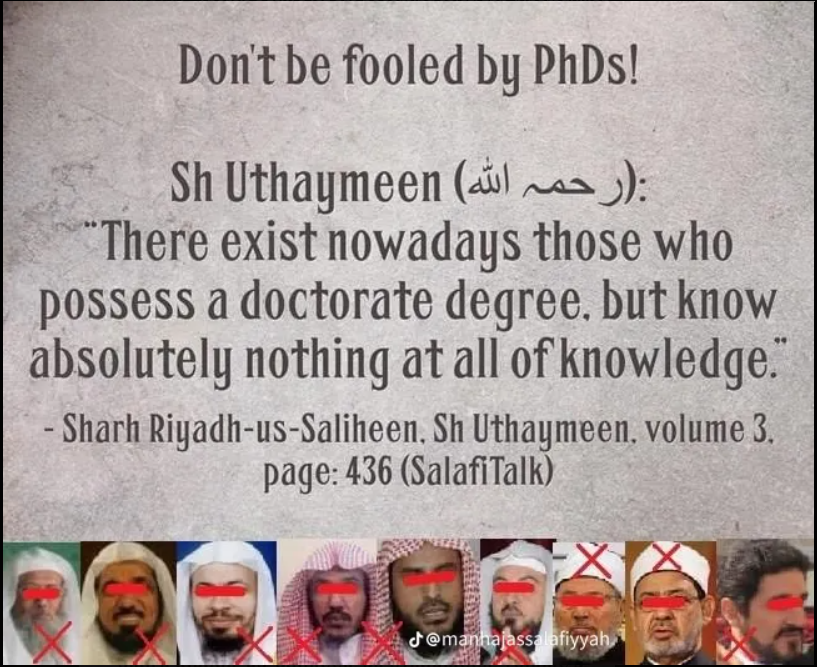
Meant to show an issue some independent researchers and avocational groups are having with some academics. Some defend older theories with outdated data, don't consider the bigger picture (in my case, especially), don't use geospatial information systems (GIS), don't look to oral traditions, or all these. A lot of info once locked within universities is now free. Sure, it takes time to research and to make sure it's all logical (as much as possible with available data), but that doesn't mean it lacks quality. I've seen multiple people produce university and PhD-quality content without a single degree. Maqzara and Paxtysk are only two examples.
It's disappointing to have your work or that of your colleagues brushed aside as insignificant because there's no university degree. I've noticed it in some interactions I've had with academics. It's like a tension or hesitation. Even if you prove, multiple times, that you understand the topic, not having the degree makes them hesitant; some won't even listen. And I appreciate the work academics do!
The goofy dog is my reaction to all this.
English
@CopperViolette @Maqitzara I do not understand the posted statements and about the dog ?
English
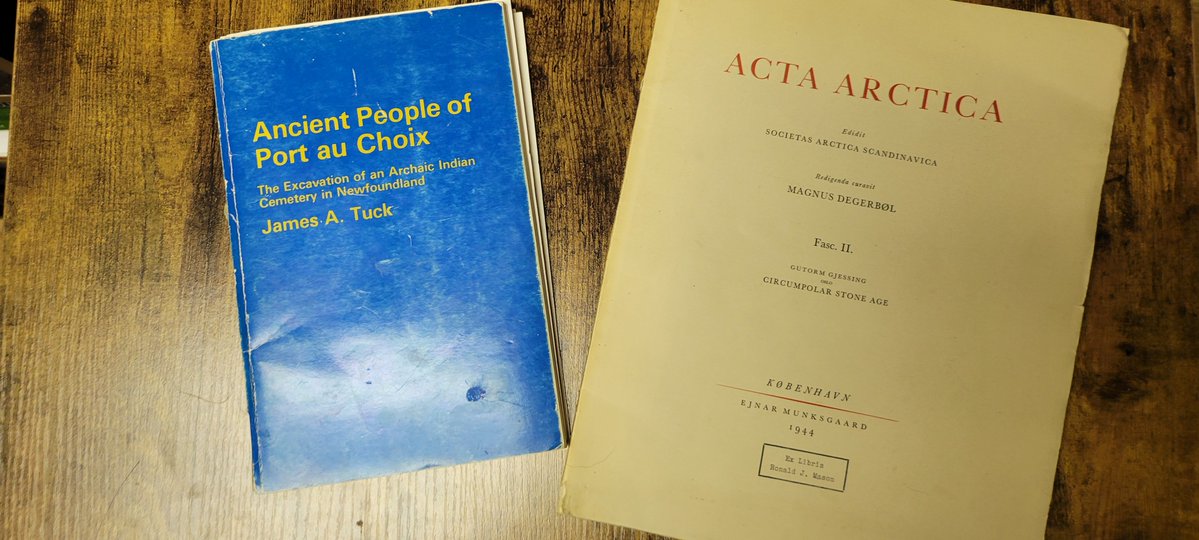
Are the books next? What about my clay models based on their artifacts?
The books have images of artifacts and burials (photos and sketches). They're incredibly valuable resources for anyone studying the Maritime Archaic.
As a Mainer and Maritime Archaic researcher, this hits close to home, unfortunately. I appreciate Bruce Bourque and you speaking out about this.
English
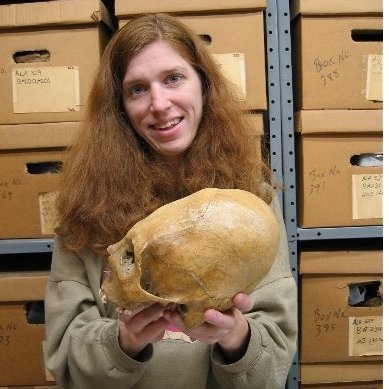
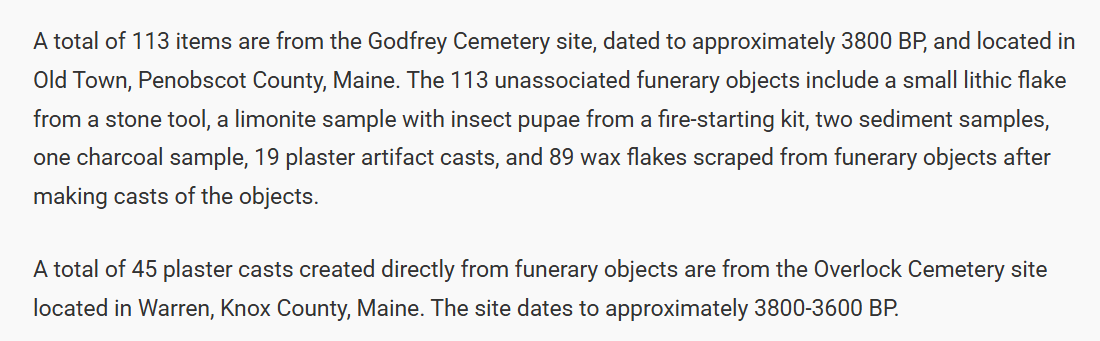
And, from University of Maine, plaster casts of artifacts are being incorrectly defined as funerary objects, and these casts -- made by archaeologists -- will be 'repatriated' and, likely, destroyed! #NAGPRA
federalregister.gov/d/2026-05962/p…
English
@eweissunburied First the Nevin site, now these...
The Maritime Archaic still has mysteries. Genetics, interactions with neighboring groups, artifact numbers, and extent. How can people study these ancient cultures without data?
English
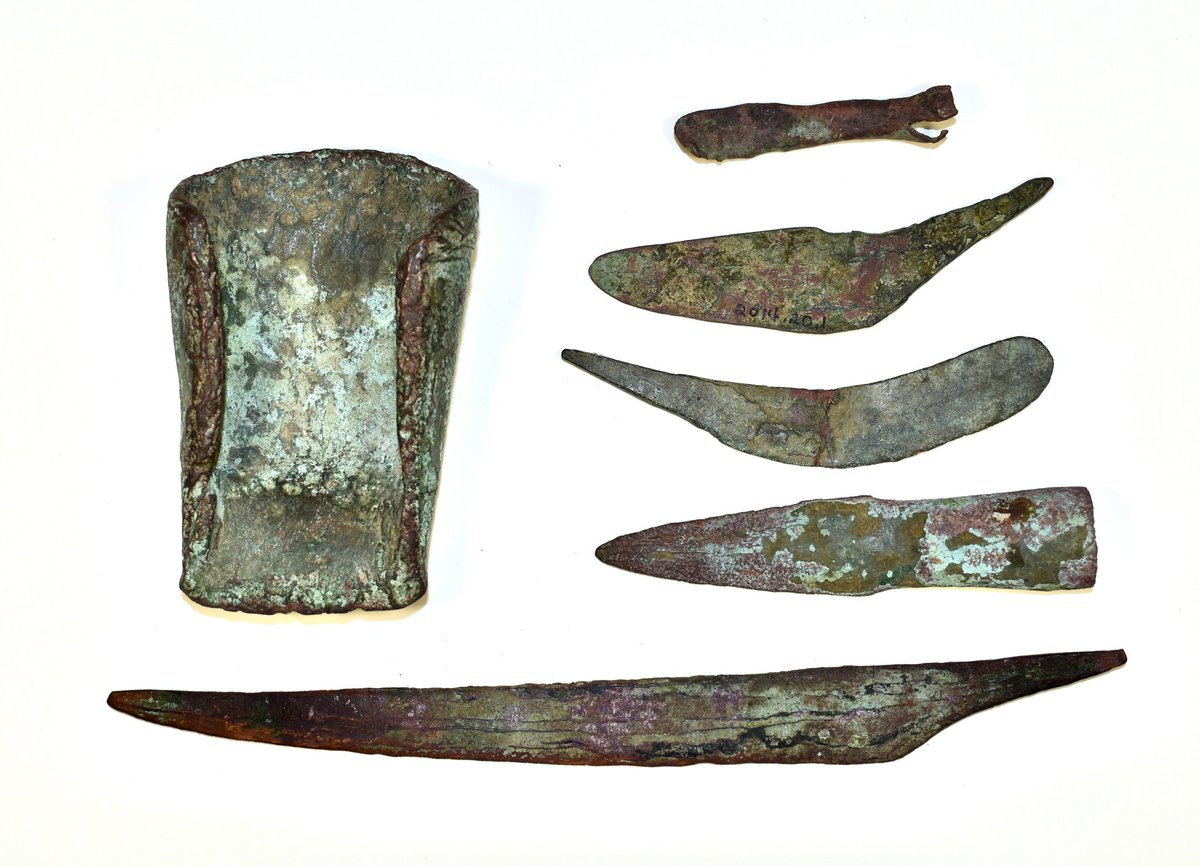
@MoundLore Wisconsin's got all those effigy mound groups. I'd take a trip there (might see some Old Copper items, too, if you stop at a museum).
English
CopperViolette أُعيد تغريده
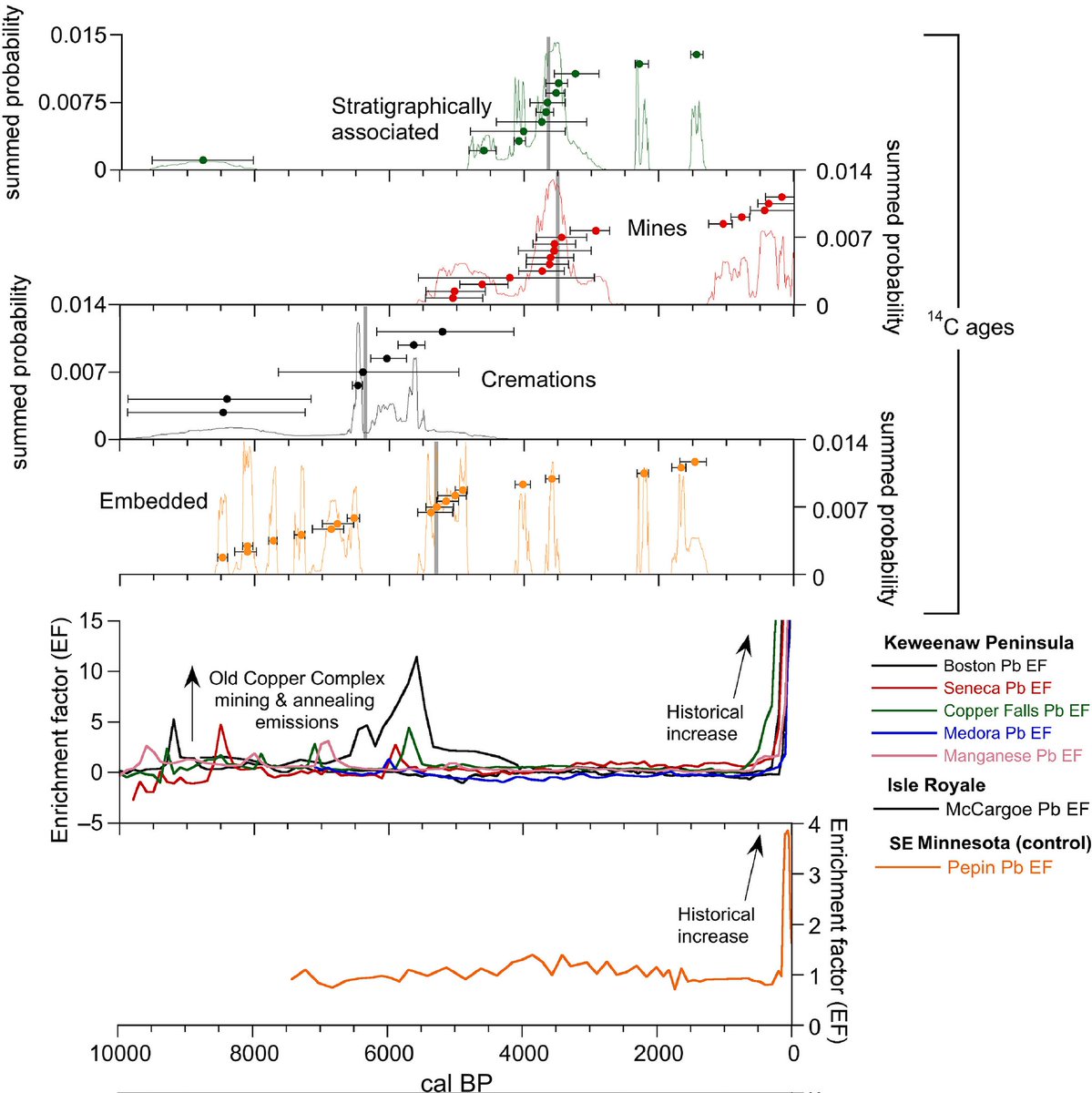
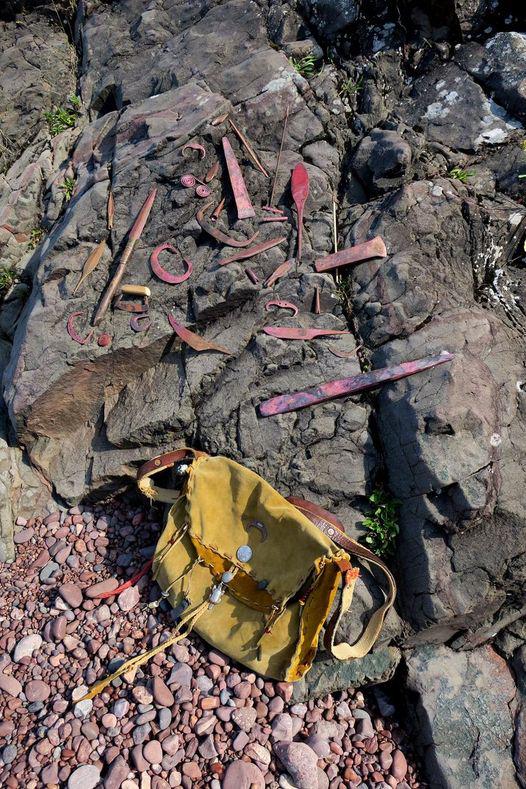
Old Copper Complex mining pollution data from sites around Lake Superior. David Pompeani (the lead author of the study) and I have talked about this, and we both agree it strongly suggests we've all underestimated the scale of those ancient metalworkers. He's compared the emissions to what you'd expect for Rome or ancient China. This is one reason among several why I'm viewing them as complex hunter-gatherer-fishers.
Source is Pompeani et al., "ON THE TIMING OF THE OLD COPPER COMPLEX IN NORTH AMERICA: A
COMPARISON OF RADIOCARBON DATES FROM DIFFERENT
ARCHAEOLOGICAL CONTEXTS," 2021
English
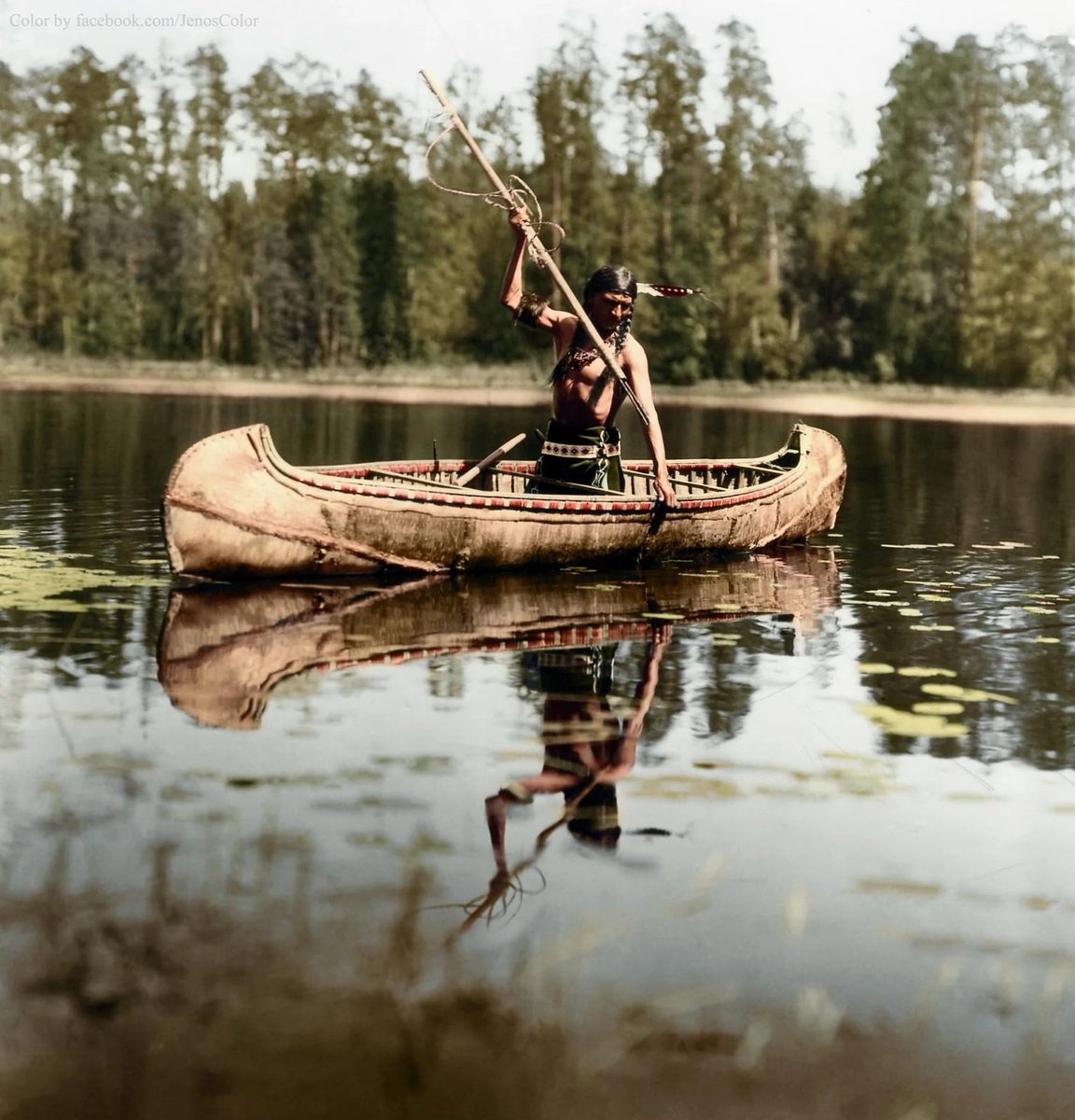
An Ojibwe man spearfishing in Minnesota, 1908. Colorized photograph from Alone with the Past: The Life and Photographic Art of Roland W. Reed, 2012.
English
CopperViolette أُعيد تغريده
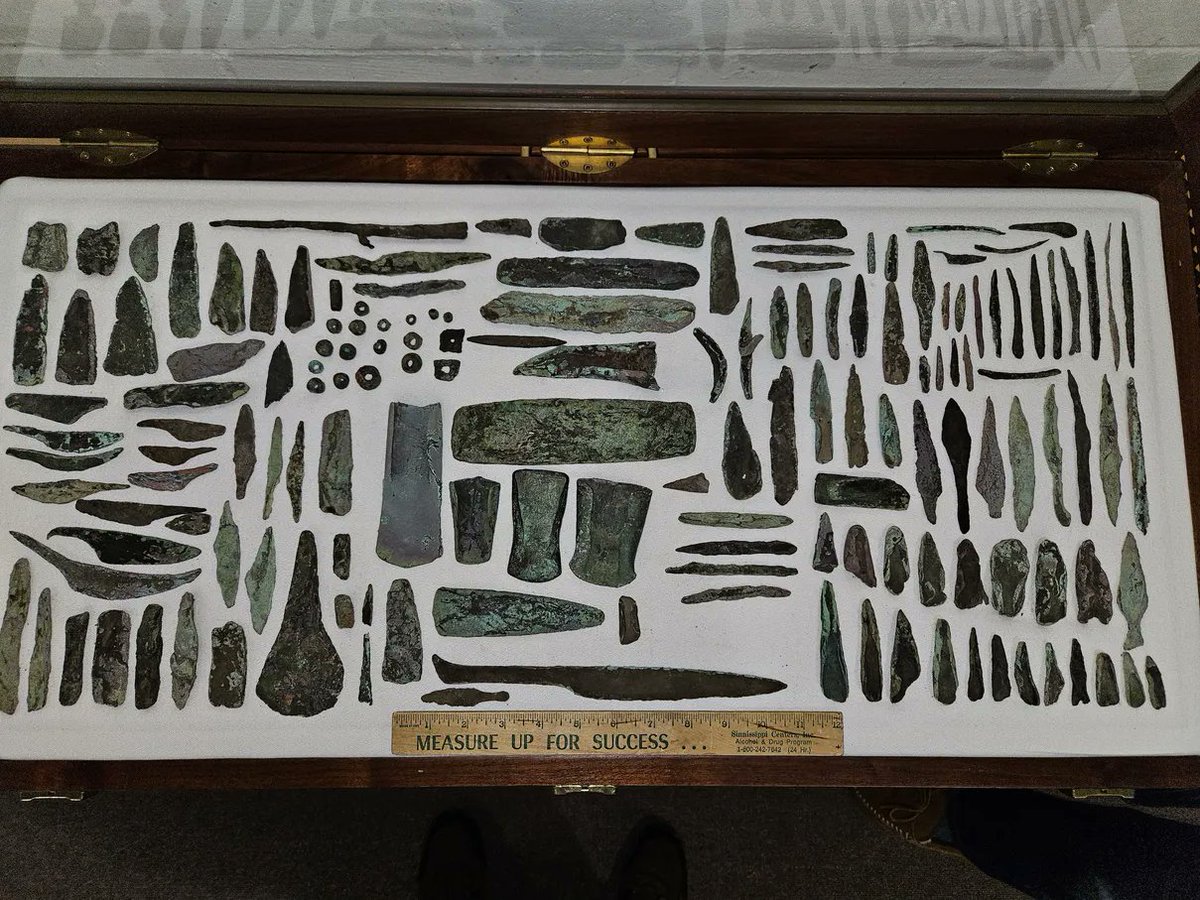
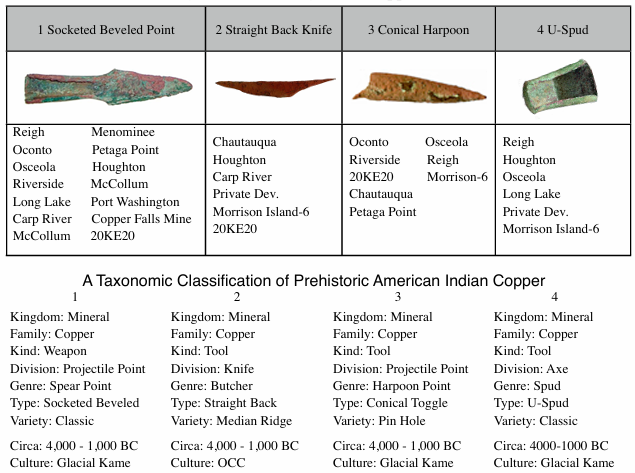
Some diagnostic Old Copper Complex (OCC) artifacts from sites around the Great Lakes.
These items are arranged by culture, with OCC and Glacial Kame associated with many. Both were contemporary between 4000-1000 B.C.E. Glacial Kame is known for copper use (just like the OCC), but with more emphasis on axes, beads, marine and freshwater shells (whole shells, beads, pendants, gorgets), and burials in flexed positions covered in red ochre or rarely yellow ochre. They're linked with the Shell Mound Archaic (SMA) from Kentucky, Tennessee, and northern Alabama. Glacial Kame mainly originates from interactions between the OCC and the SMA during the Middle Archaic (ca. 6000-3000 B.C.E.), with most of their sites south of the Great Lakes, especially in Ohio.
The diagram's source is Don Spohn's Prehistoric Copper Artifact Journal, Vol. 8, No. 1, 2012
English
CopperViolette أُعيد تغريده

CopperViolette أُعيد تغريده