MeditechAI🌐

4.9K posts

MeditechAI🌐 banner
MeditechAI🌐

MeditechAI🌐

@MeditechAI

Medical Technologies and AI in Healthcare- Stay updated with the 'Best and Latest' 🏥🩺🔬🩻 🤖

انضم Nisan 2020
598 يتبع642 المتابعون
تغريدة مثبتة
MeditechAI🌐
MeditechAI🌐@MeditechAI·
The FDA has approved over 1,500 AI-based, medical devices, and we looked at which companies stand out. Watch this short video and find out!
English
1
0
4
143
Healthcare AI Guy
Healthcare AI Guy@HealthcareAIGuy·
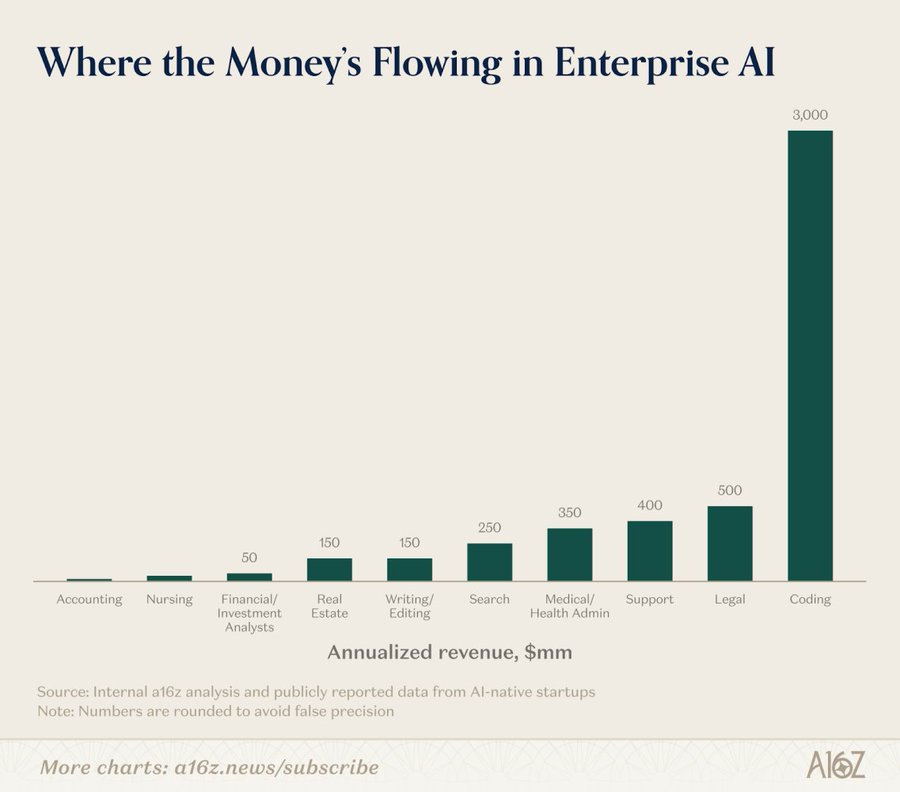
Healthcare is among the top in enterprise AI adoption 👀
Healthcare AI Guy tweet media
English
8
15
60
3.9K
MeditechAI🌐 أُعيد تغريده
Sarah Clark
Sarah Clark@SarahClarkBDM·
Leveraging Oracle Health’s AI-powered, voice-enabled Clinical Agent can truly transform workflows reducing documentation burden and allowing physicians to focus more on patient care.
Oracle Health@OracleHealth

Southwest General Health Center is using Oracle Health Clinical AI Agent to help alleviate the burden of clinical documentation across 18 ambulatory specialties. Read how this AI-powered, voice-enabled solution can help doctors spend more time with patients. social.ora.cl/6011B6vbpt

English
2
3
4
105
Dr Singularity
Dr Singularity@Dr_Singularity·
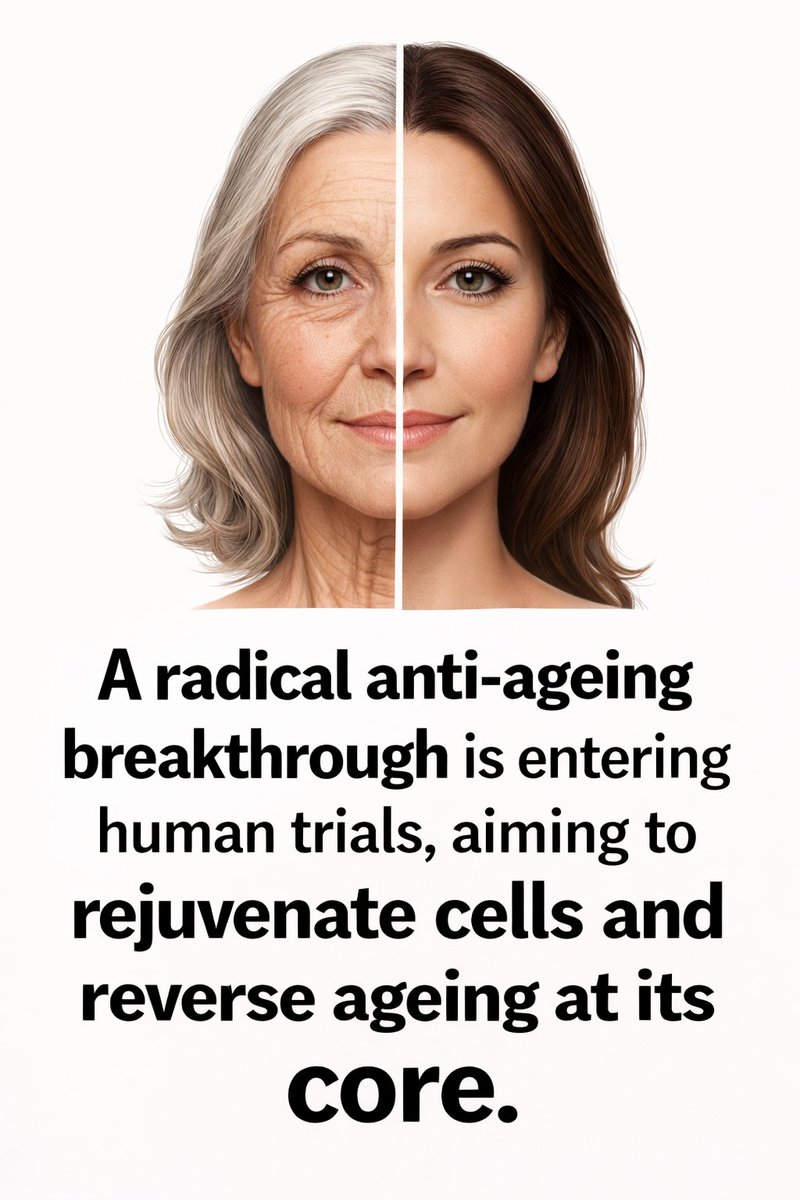
huge anti aging news/progress Anti ageing cell reprogramming is entering its first human trials to test if it can safely rejuvenate tissues. A radical new anti ageing approach is entering human trials, aiming to reprogram adult cells back to a more youthful state, effectively targeting ageing at its biological root rather than just treating its symptoms. The technique builds on cellular reprogramming, where specific factors can reset how cells behave, restoring lost function and resilience. In early studies, this approach has shown the potential to rejuvenate tissues and reverse key markers of ageing. Now, for the first time, researchers are testing whether this can be done safely in humans, marking a major step toward therapies that could repair ageing organs. If successful, it could signal a shift from slowing ageing… to actively reversing it.
Dr Singularity tweet media
English
20
52
333
10.3K
MeditechAI🌐 أُعيد تغريده
Healthcare AI Guy
Healthcare AI Guy@HealthcareAIGuy·
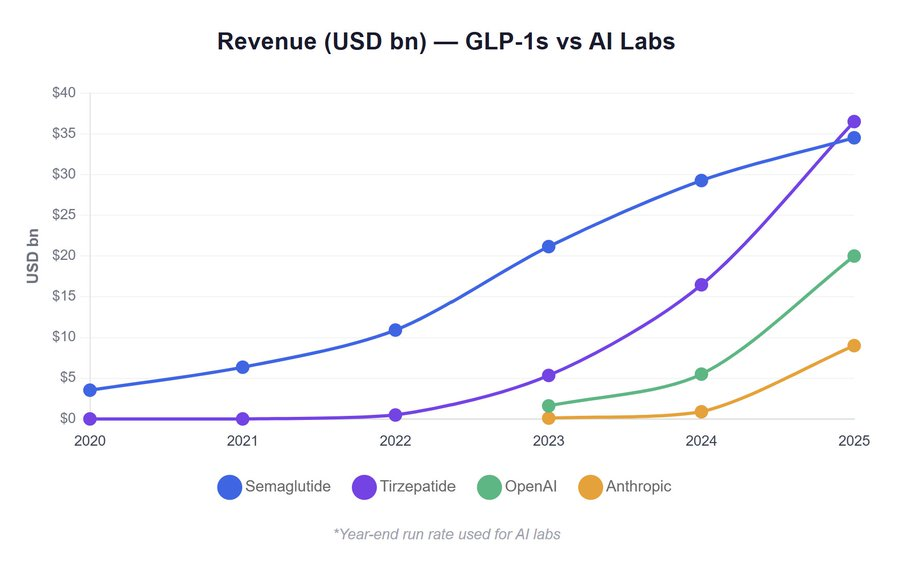
What's bigger, GLP1s or AI? Semaglutide alone (one single peptide) generated $34.6B in sales in 2025. OpenAI hit $20B revenue that year. So a single peptide out-earned ChatGPT by 1.7x. And that's before Eli Lilly's tirzepatide, which added another $25B.
Healthcare AI Guy tweet media
English
5
13
54
3.9K
MeditechAI🌐 أُعيد تغريده
Dr Amine Korchi
Dr Amine Korchi@AmineKorchiMD·
A new AI software that essentially fills in the blanks between image slices with synthetic images, enables 2x MRI acceleration ! 👇 “Scans of the abdomen that previously took around 23 minutes now are finished within just nine minutes.” 👏 radiologybusiness.com/topics/medical…
English
9
7
31
6.2K
MeditechAI🌐 أُعيد تغريده
Bo Wang
Bo Wang@BoWang87·
Lots of questions about legal liability of AI in healthcare. Want to share a fascinating paper last year: This NEJM AI study (Bernstein et al., 2025, ai.nejm.org/doi/abs/10.105…) ran 1,300+ mock jurors through radiology malpractice vignettes. The result: deploying AI in your workflow raises the legal bar for the physician — because juries assume AI is infallible. A radiologist misses a brain bleed. No AI involved — 56% of mock jurors find them liable. Same scenario, but AI also missed it — 50% find them liable. Slightly better. Same scenario, but AI caught it and the radiologist didn't — 73% find them liable. That 23-point swing is the "AI penalty." And it has nothing to do with whether the radiologist was actually negligent. The fix, surprisingly, works: tell jurors the AI's error rates. When informed of the false omission rate, perceived liability dropped by a third. The implications go well beyond radiology. Every clinical AI deployment is now quietly reshaping the standard of care: not through regulation, not through clinical guidelines, but through intuition about what "a machine would have caught." We need clarity about this aspect from regulatory bodies to guide the best use of AI in healthcare asap.
Bo Wang@BoWang87

This week, the "AI replacing doctors" debate is back. The CEO of America's largest public hospital system says he's ready to replace radiologists with AI. The Stanford-Harvard NOHARM study shows top models outperforming generalists. The discourse is moving fast. I run AI at @UHN, the largest hospital in Canada. Here's what I actually see. We've developed AI models across imaging, pathology, and clinical decision support. In controlled conditions, the accuracy numbers are real. In some narrow tasks, models genuinely outperform. That's not hype. But the operational reality of running these systems inside a large hospital teaches you things benchmarks never will. The errors that hurt patients aren't the confident wrong answers. They're the quiet omissions, i.e., the thing the model didn't flag because it wasn't in the training distribution. NOHARM found 76.6% of AI errors were omissions. We see this too. And in a hospital, a missed finding doesn't just affect one case. It propagates: the downstream physician trusts the AI read, the patient waits, the window closes. The accountability structure also doesn't exist yet. When an AI-assisted diagnosis leads to harm, who is responsible: the physician, the hospital, the vendor? In Canada, we don't have a clear answer. No hospital system deploying AI at scale does. That's not a regulatory delay. That's a fundamental gap in the infrastructure for AI-in-medicine. What I'm genuinely optimistic about: AI is already changing how our radiologists work. Not replacing them, but changing the shape of the job. Routine reads get faster. Their time shifts toward complex cases, clinical correlation, cases where the AI flags uncertainty. That's the right direction. But "ready to replace radiologists" skips 10 hard years of work on deployment infrastructure, liability frameworks, clinician training, and failure mode monitoring that nobody wants to talk about because it's less exciting than accuracy benchmarks. The capability question is nearly answered. The deployment question has barely been asked. CEO story: beckershospitalreview.com/radiology/nyc-… NOHARM paper: arxiv.org/abs/2512.01241


English
11
18
119
22.5K
Nous Research
Nous Research@NousResearch·
@nvk We have something you might like coming soon
English
20
0
212
7.9K
nvk 🌞
nvk 🌞@nvk·
I will ever sleep again 🤣 this agentic research stuff is crack
English
19
8
275
22K
SciTech Era
SciTech Era@SciTechera·
Reminder Quantum computing has just been used to create a new molecule with a half-Möbius topology. Scientists designed and analyzed a completely new molecule called C13Cl2, which has this unique structure. What makes it even more interesting is that the molecule can be switched between different topological states, opening the door to advanced materials and new technologies. The team used IBM’s Heron processor along with the SqDRIFT algorithm to simulate its behavior. This shows how quantum computing is starting to push the boundaries of chemistry and material science in ways that weren’t possible before 👀 Acceleration is everywhere
SciTech Era tweet media
SciTech Era@SciTechera

Wow. This is huge Quantum computing has just been used to create a new molecule with a half-Möbius topology. Scientists designed and analyzed a completely new molecule called C13Cl2, which has this unique structure. What makes it even more interesting is that the molecule can be switched between different topological states, opening the door to advanced materials and new technologies. The team used IBM’s Heron processor along with the SqDRIFT algorithm to simulate its behavior. This shows how quantum computing is starting to push the boundaries of chemistry and material science in ways that weren’t possible before 👀 Acceleration is everywhere..

English
6
54
189
15.9K
MeditechAI🌐 أُعيد تغريده
Dr Singularity
Dr Singularity@Dr_Singularity·
amazing news for bio/acc Regulations and the pace of approvals are one of the biggest, if not the biggest, brakes on our development as a civilization. However, we are starting to see early positive signs of change. New Ozempic in a pill approved in the USA after just 50 days 👀
Dr Singularity tweet media
English
9
17
177
7.8K
MeditechAI🌐 أُعيد تغريده
Medscape
Medscape@Medscape·
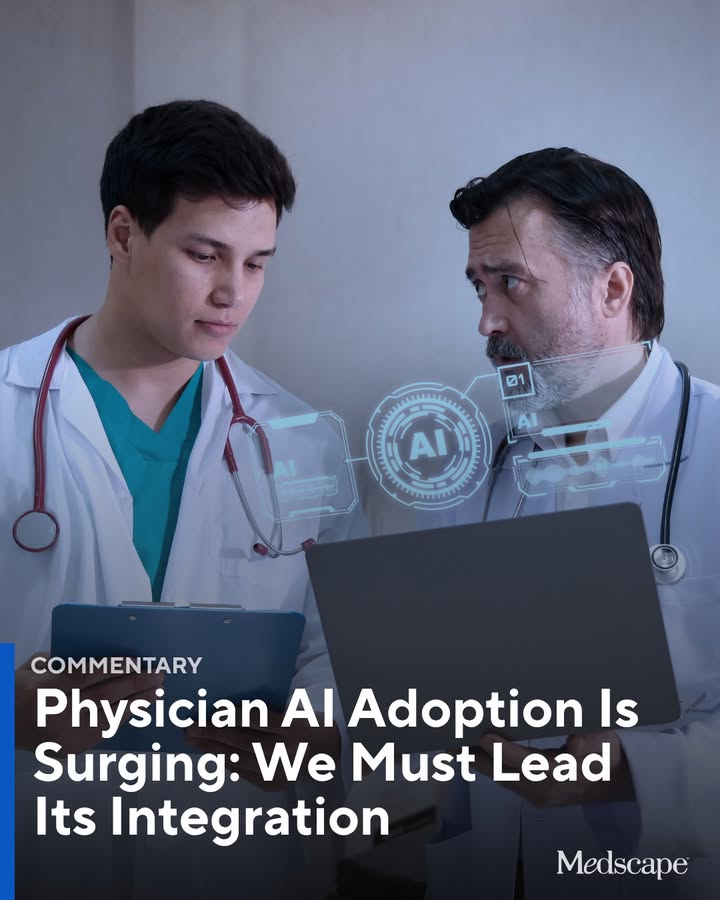
"AI is not the future of medicine — it is the present, already influencing how care is delivered in hospitals and clinics every day. New research from the American Medical Association’s Center for Digital Health and AI shows just how quickly augmented intelligence is becoming part of everyday clinical practice. In 2023, about 38% of physicians reported using some form of AI in their work. Today, that number is 81%. That level of adoption is remarkable in a field that typically moves carefully when introducing new technologies. But the real story isn’t how many physicians are using AI. It’s how they are putting it to work in ways that are beginning to improve patient care, and how they’re guiding the technology." Read the full commentary from Dr. John Whyte: mdsc.pe/4bPoXtn
Medscape tweet media
English
8
24
41
3.7K
MeditechAI🌐 أُعيد تغريده
Ian Miles Cheong
Ian Miles Cheong@ianmiles·
Demis Hassabis: If you know the structure of a protein, the real question becomes—where will your drug bind, and what will it actually do? That’s where the next wave of AI comes in. Not just predicting structures, but modeling interactions, outcomes, and real biological impact. At Isomorphic Labs, this is already happening—with 17 active drug programs and partnerships with giants like Eli Lilly and Novartis. The goal? Scale that to 100. This is a fundamental shift in how medicine gets built. Instead of slow, expensive trial-and-error in wet labs, AI allows researchers to run thousands of hypotheses in silico—hundreds to thousands of times more efficiently. The wet lab becomes validation, not exploration. Drug discovery is turning into a computational problem. Faster cycles, smarter predictions, and potentially massive breakthroughs in human health.
English
19
74
377
91.5K
MeditechAI🌐 أُعيد تغريده
Nature Medicine
Nature Medicine@NatureMedicine·
In a randomized controlled study of 1,298 participants, performance of humans when assisted by an #LLM was inferior to the LLM alone when assessing 10 medical scenarios. nature.com/articles/s4159…
English
10
86
247
117K
MeditechAI🌐 أُعيد تغريده
Dr Singularity
Dr Singularity@Dr_Singularity·
People underestimate AI for many reasons, one of them is because they compare it to past technologies. They don’t realize this may be (AGI/ASI) the last invention we’ll ever need to make.
English
56
40
350
10.8K
MeditechAI🌐 أُعيد تغريده
Bloomberg
Bloomberg@business·
Eli Lilly signed an AI-powered drug development deal with Insilico Medicine that could be worth up to $2.75 billion. bloomberg.com/news/articles/…
English
15
52
284
138.3K
MeditechAI🌐 أُعيد تغريده
Rohan Paul
Rohan Paul@rohanpaul_ai·
Another great Robots in healthcare usecase. Aletta is a robot that fully automates blood draws. The patient sits down; the robot uses ultrasound to find a vein, helps position the arm, collects the sample, and applies a bandage—fully automated
English
90
221
1.2K
487K
MeditechAI🌐 أُعيد تغريده
Colton Ortolf
Colton Ortolf@ColtonOrtolf·
AI in healthcare isn't a product. It's infrastructure. Diagnostic tools will assume AI assistance. Treatment protocols will embed predictive models. Patient workflows will route through AI layers by default. The entire healthcare stack is shifting to AI-first architecture.
English
7
9
53
3K