Melvin

201 posts

Melvin banner
Melvin

Melvin

@MelvinInvests

AI Analyst @MilkRoadAI | Co-Founder @_Investinq + @optionality_ | Finding opportunities across AI, photonics, defense, space, and tech.

انضم Haziran 2026
75 يتبع3.4K المتابعون
تغريدة مثبتة
Melvin
Melvin@MelvinInvests·
Nebius will be the first Neocloud to hit $1 trillion and the data makes that case better than any hype ever could (Save this). US data center power demand is on a trajectory to go from 31 GW in 2025 to 66 GW by 2027 more than doubling in just two years. Goldman estimates that only 50–60% of planned capacity will actually come online on time due to power grid bottlenecks, labor shortages, transformer supply constraints and permitting delays. And even after discounting half the entire buildout, demand still massively outstrips supply. Data centers are on track to consume 8.5% of peak US summer electricity by 2027, up from just 4.1% today. The real story is that the grid, the labor force, and the supply chain physically cannot build fast enough to satisfy it and that structural gap is widening every single quarter. This is the single most important tailwind Nebius has and it is not going away. In a world where Microsoft, Meta and Amazon are collectively spending over $700 billion on AI infrastructure in 2026 alone but cannot build fast enough themselves, they are being forced to sign decade long contracts with purpose-built AI cloud providers who have already done the hard work of securing land, power interconnects, and GPU supply. Nebius has secured $27 billion in contracted capacity with Meta Platforms and $19.4 billion with Microsoft over $46 billion in total contracted backlog meaning its revenue for the next five years is essentially pre-sold before a single new customer signs up. The financial results confirm that this, Nebius reported $399 million in revenue in Q1 2026, up 684% year over year, with AI cloud revenue specifically up 841% in a single quarter. Full-year 2026 guidance calls for $3.0–$3.4 billion in revenue, with an annualized run rate of $7–$9 billion by year-end. The company has now contracted over 3.5 GW of power capacity across seven sites each over 100 MW including a 1.2 GW AI factory campus in Pennsylvania and a £1.7 billion expansion across three UK sites, targeting 4 GW by end of 2026. And critically, Nebius is not just a landlord renting GPU racks to the highest bidder. But rather building a full-stack AI platform, proprietary inference solutions, agentic deployment tools, and developer APIs that converts one-time infrastructure contracts into recurring high-margin software subscriptions over time, compressing the multiple the market should apply to its revenue as those software layers scale. The Goldman chart is essentially a map of Nebius's total addressable market and every quarter that supply falls further behind demand, that market gets bigger. Long Nebius and make sure to follow me @MelvinInvests for more long duration AI winners.
Melvin tweet media
English
5
8
24
4.5K
Melvin
Melvin@MelvinInvests·
Nebius will be the first Neocloud to hit $1 trillion and the data makes that case better than any hype ever could (Save this). US data center power demand is on a trajectory to go from 31 GW in 2025 to 66 GW by 2027 more than doubling in just two years. Goldman estimates that only 50–60% of planned capacity will actually come online on time due to power grid bottlenecks, labor shortages, transformer supply constraints and permitting delays. And even after discounting half the entire buildout, demand still massively outstrips supply. Data centers are on track to consume 8.5% of peak US summer electricity by 2027, up from just 4.1% today. The real story is that the grid, the labor force, and the supply chain physically cannot build fast enough to satisfy it and that structural gap is widening every single quarter. This is the single most important tailwind Nebius has and it is not going away. In a world where Microsoft, Meta and Amazon are collectively spending over $700 billion on AI infrastructure in 2026 alone but cannot build fast enough themselves, they are being forced to sign decade long contracts with purpose-built AI cloud providers who have already done the hard work of securing land, power interconnects, and GPU supply. Nebius has secured $27 billion in contracted capacity with Meta Platforms and $19.4 billion with Microsoft over $46 billion in total contracted backlog meaning its revenue for the next five years is essentially pre-sold before a single new customer signs up. The financial results confirm that this, Nebius reported $399 million in revenue in Q1 2026, up 684% year over year, with AI cloud revenue specifically up 841% in a single quarter. Full-year 2026 guidance calls for $3.0–$3.4 billion in revenue, with an annualized run rate of $7–$9 billion by year-end. The company has now contracted over 3.5 GW of power capacity across seven sites each over 100 MW including a 1.2 GW AI factory campus in Pennsylvania and a £1.7 billion expansion across three UK sites, targeting 4 GW by end of 2026. And critically, Nebius is not just a landlord renting GPU racks to the highest bidder. But rather building a full-stack AI platform, proprietary inference solutions, agentic deployment tools, and developer APIs that converts one-time infrastructure contracts into recurring high-margin software subscriptions over time, compressing the multiple the market should apply to its revenue as those software layers scale. The Goldman chart is essentially a map of Nebius's total addressable market and every quarter that supply falls further behind demand, that market gets bigger. Long Nebius and make sure to follow me @MelvinInvests for more long duration AI winners.
Melvin tweet media
English
5
8
24
4.5K
Melvin
Melvin@MelvinInvests·
We just have different analysts within our Pro, as you probably already know. We all have different views. I don’t want to speak for Martin but I think demand for compute is at an all time high and will continue to go up, even as free open weight models catch up. Just look at Anthropic’s and OpenAI’s revenue. That will continue to accelerate, which means they are all going to need more compute. Google just limited Meta’s compute because they clearly don’t have enough capacity, even after signing a deal with SpaceX. I think some of the biggest beneficiaries of this will be neocloud providers like Nebius and CoreWeave.
English
0
0
2
77
Felix Heimberger
Felix Heimberger@FelixHburger·
@MelvinInvests @milkroaddaily Didn’t milk road recently analyzed that token cost has come down rapidly because improving free ai models? I’m super bullish data centers but that recent article from milk road was a bearish read for me. Could you please help me connect the dots?
English
1
0
1
79
Melvin
Melvin@MelvinInvests·
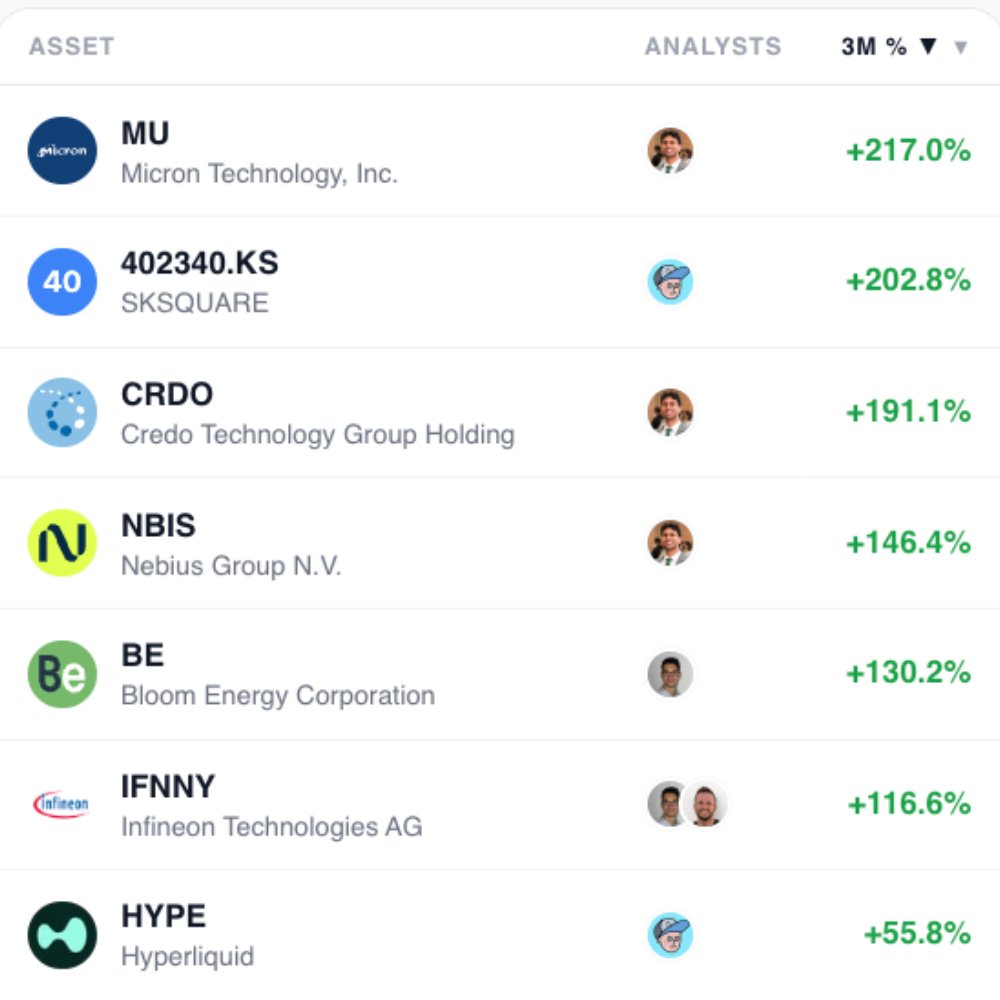
I’m an analyst at Milk Road, and my job is to find underrated gems before the market catches on. We called names like MU, CRDO, NBIS, and BE over the last 3 months. Join me and my team for just $1. #1" target="_blank" rel="nofollow noopener">milkroad.com/pro/?utm_mediu…
Melvin tweet media
English
0
1
1
318
Melvin
Melvin@MelvinInvests·
The humanoid robot market is projected to reach $7 trillion by 2050 with some forecasts going as high as $9 trillion when software and services are included (Save this). Every major bank covering this space agrees on one thing, this will eventually dwarf the entire global auto industry but the real money is not in the companies assembling the robots. Tesla, Hyundai and Xiaomi will compete brutally for share, compress each other's margins, and fight wars of attrition for the next 20 years just like every auto manufacturer before them. The companies that print money regardless of who wins that war are the ones supplying the components every single robot on earth must have, no matter which assembler's logo is on the chest. Here is how that plays out across each layer of the value chain shown above. The brain is the safest and most liquid layer to own. Nvidia (NVDA) is the backbone, its Isaac platform is becoming the default operating system for training and deploying physical AI meaning every humanoid robot essentially runs on Nvidia infrastructure before it ever takes a step. TSMC (TSM) manufactures the chips inside every competitive robot brain regardless of whose design wins, making it the toll booth of the entire sector. Arm (ARM) and Broadcom (AVGO) sit deeper in the stack as the architecture and connectivity layer that nobody talks about but everyone depends on. The body is where the highest conviction asymmetric plays live. Harmonic Drive Systems makes the precision gearboxes that give robot joints their accuracy, there is currently no viable substitute and every serious humanoid maker uses them, making this the closest thing to a monopoly in the entire value chain. Mobileye (MBLY) and Hesai supply the vision and LiDAR systems that let robots perceive the world, the same sensors that cracked autonomous vehicles are now being re-deployed into humanoid perception stacks. Monolithic Power Systems (MPWR) and Navitas supply the power management chips that determine how long a robot can operate, a silent but critical bottleneck as robots move from factory floors to field deployment. The bottleneck Layer is the most overlooked and potentially the most important. ASML (ASML) and Lam Research (LRCX) are the picks and shovels of semiconductor manufacturing, you cannot build robot chips at scale without their equipment, full stop. SK Hynix and Micron (MU) supply the memory that robot brains need to process real-time sensory data, the same HBM supercycle driving AI data centers will eventually power mobile robot intelligence. Amphenol (APH) and TE Connectivity (TEL) make the connectors and cables inside every robot, unglamorous, high margin, and impossible to disintermediate. MP Materials (MP) mines the rare earth magnets that go inside every actuator motor with China controlling most of the world's rare earth supply, MP is the only US-listed pure-play on this critical material. The applications layer, Intuitive Surgical, Symbotic, and Serve Robotics shows you what monetized robotics looks like right now, before humanoids go mass market. These companies are already generating real revenue from robotic systems in surgery, warehousing, and food delivery, and they de-risk the investment case because they don't require you to wait until 2035 for the thesis to pay off. For the lazy route, the chart lists KOID, BOTZ, ROBO, and ROBT as ETF vehicles that spread exposure across the full value chain. The framework is simple, bet on the toll roads, not the car companies. Make sure to follow me @MelvinInvests for more overlooked opportunities in AI and robotics.
Melvin tweet media
English
22
61
357
31.3K
Melvin
Melvin@MelvinInvests·
I’m an analyst at Milk Road, and my job is to find underrated gems before the market catches on. We called names like MU, CRDO, NBIS, and BE over the last 3 months. Join me and my team for just $1. #1" target="_blank" rel="nofollow noopener">milkroad.com/pro/?utm_mediu…
Melvin tweet media
English
0
1
4
909
Melvin أُعيد تغريده
Melvin
Melvin@MelvinInvests·
Goldman Sachs Research estimates that Korean companies will command 30% of global humanoid robot production by 2035, rising from near zero today to over 412,000 units annually (Save this). That chart above tells the whole story, it's a hockey stick and Korea is at the base of the blade right now. The reason Korea wins this is because of decades of automotive manufacturing excellence translate directly into humanoid robot components. The Korean government is backing this with 700 billion won (~$500M) in 2026 robotics investment, targeting 1,000 domestically produced humanoids per year by 2029. On the investment side, Korean robotics stocks have already repriced hard across the board. The biggest mover is LG Electronics (066570.KS) and most people don't think of LG as a robotics company but they produce 41 million motors annually and are now commercializing their Actuator Axium brand directly into humanoid robots with Figure AI already as a customer. This is the classic sleeper play, a massive industrial manufacturer that already has the capability, just now getting credit for it. Hyundai Motor (005380.KS) is arguably the most vertically integrated humanoid bet on the planet, they own Boston Dynamics, are launching a robot training facility in Q3 2026, and have the manufacturing scale to go from prototype to mass production faster than almost anyone. Hyundai Mobis (012330.KS) is the cleaner pure play within the Hyundai group and is a confirmed actuator supplier inside the next-gen Atlas robot meaning revenue visibility is already there. Rainbow Robotics (277810.KQ) is the highest risk, highest-reward name, it builds full humanoid systems, has Samsung Electronics as its largest shareholder and trades at premium multiples because the market sees it as Korea's answer to Figure AI or 1X. Robotis (108490.KQ) is the pure play actuator maker and appears in virtually every Korean humanoid ETF as a core holding, smaller cap, higher volatility, but maximum direct exposure to the component ramp. Doosan Robotics (454910.KQ) sits at the intersection of collaborative robots and humanoid systems, with established industrial customers already paying for its technology. For investors who don't want single-stock risk, the ACE K Humanoid Robot Industry TOP2+ ETF returned 37% in its first month after launch and overweights Hyundai Motor and Robotis. The TIGER Korea Humanoid Robot Industry ETF from Mirae Asset covers the full value chain, components, manufacturing, and software and is the broadest expression of this theme in a single ticker. Korean pension funds are already piling in, robot ETFs drew 3 trillion won in pension inflows in June 2026 alone, which signals this is no longer just a retail momentum trade. The main risk is valuation, several names have priced in years of perfect execution, and the investors who will win are the ones who separate companies with real signed contracts and confirmed component orders from the ones riding the hype wave. Make sure to follow me @MelvinInvests for more overlooked opportunities in AI and robotics.
Melvin tweet media
English
7
28
112
13.3K
Melvin
Melvin@MelvinInvests·
I’m an analyst at Milk Road, and my job is to find underrated gems before the market catches on. We called names like MU, CRDO, NBIS, and BE over the last 3 months. Join me and my team for just $1. #1" target="_blank" rel="nofollow noopener">milkroad.com/pro/?utm_mediu…
Melvin tweet media
English
1
1
1
892
Melvin
Melvin@MelvinInvests·
@ColtonSeal you should consider dropping a follow!
English
1
0
0
114
Melvin
Melvin@MelvinInvests·
Jensen Huang is investing in every photonics company he can find and the reason why tells you everything about where AI is headed (Save this). Lip-Bu Tan, the CEO of Intel says, when he looks for investment opportunities, he looks for the bottleneck and right now, the bottleneck is the interconnect, the pipes that move data between chips inside an AI data center. That is why he backed Credo Semiconductor, Astera Labs and Celestial AI on the optical side. Here is the simple version of what the interconnect bottleneck actually means. Think of an AI data center like a city, the GPUs are the buildings where all the work happens but for those buildings to function, you need roads connecting them, fast roads that can carry enormous traffic without congestion. And those roads are now the single biggest constraint on AI performance. As clusters scale to hundreds of thousands of GPUs, traditional copper wiring is hitting its physical limits and that is where this entire sector comes in. Credo Semiconductor (CRDO) is the most direct pure play on this theme, Credo makes high speed cables and optical chips that connect GPUs inside data center racks. Their revenue tripled in fiscal 2026 to $1.3 billion, growing 272% year over year at its peak and four of the world's largest hyperscalers each individually account for more than 10% of Credo's revenue. Astera Labs (ALAB) solves the connection problem between different chip types. Astera makes the PCIe and connectivity chips that manage data flow between GPUs, CPUs, and memory without errors or slowdowns. Their revenue grew 93% year over year to $308 million in Q1 2026 alone. The optical companies are where the longer-term and potentially larger opportunity lives. Copper has physical limits, you can only push electrical signals so far before the signal degrades, the heat spikes and power consumption explodes. The solution is light, fiber optic connections that move data using photons instead of electrons which is faster, cooler and far more energy efficient. Jensen Huang made this clear at Computex 2026 because copper works as long as physically possible but at greater distances and larger scale, optics takes over. Coherent (COHR) is the most established optical company in this space. Coherent makes the lasers, transceivers, and optical components at the foundation of all fiber optic communications. Nvidia signed a multibillion-dollar purchase commitment and invested $2 billion directly into the company and their customer order books are already extending out to 2028. Marvell (MRVL) is the most comprehensive bet across the entire connectivity stack. Marvell makes chips for optical networking, PCIe switching and custom AI silicon. Jensen Huang called Marvell the next trillion dollar company at Computex 2026 and backed it with a $2 billion Nvidia investment. Marvell also acquired Celestial AI, the exact company Lip-Bu Tan backed for $3.25 billion, gaining photonic fabric technology delivering 16 terabits per second of bandwidth. Lumentum (LITE), Corning (GLW), and Ciena (CIEN) round out the major public names. Lumentum received a $2 billion Nvidia investment for laser and photonics components. Corning known mostly for phone glass received $500 million from Nvidia for optical connectivity work and is up over 100% year to date. Ciena runs the optical networking systems between data centers and is seeing analyst price targets raised on the back of the AI optics boom. Every time a hyperscaler spends a billion dollars on Nvidia GPUs, the surrounding infrastructure, cables, switches, transceivers, optical components has to be upgraded to match. The smarter the GPU gets, the more the interconnect matters. Nvidia has committed at least $6.5 billion to photonics companies in the past 4 months alone and the companies building the roads between the GPUs may end up being just as valuable as the companies building the GPUs themselves. Follow me @MelvinInvests for more AI, semis and the next big market themes.
English
37
137
863
147.5K
Melvin أُعيد تغريده
Melvin
Melvin@MelvinInvests·
The creator of High Bandwidth Memory said something that reframes the entire AI investment thesis, AI equals memory (Save this). Most people still think about AI hardware through a training lens. During training, the bottleneck is raw compute, GPUs stay near 100% utilization crunching through billions of gradient updates. Inference is a completely different problem. When a model generates a response, it produces tokens one at a time and at every single step, the entire model has to be loaded from memory into the processor to generate just one token. The GPU cores sit there, waiting for data to arrive. This is what engineers mean when they say inference is memory bound, the bottleneck is not how many calculations you can do per second but rather how fast you can move data from memory to the chip. Adding more GPUs does not fix a memory bandwidth problem, it just gives you more processors starving for the same data. Modern LLMs use a KV cache, a data structure that stores the conversation's context so the model does not have to recompute it from scratch on each step. The KV cache is what gives a model its memory of the conversation. It grows with every token and for long documents or deep reasoning chains, it can dwarf the model weights themselves in memory consumption. This means memory directly determines how long a context the model can hold, how many users you can serve simultaneously, how fast it responds and how cheaply you can run it. A memory constrained model is not just slower but rather qualitatively worse, it forgets earlier parts of the conversation, truncates context and hallucinates more because it literally cannot hold the relevant information long enough to use it. The world now spends more on inference than training, and every ChatGPT query, every Claude document analysis, every API call is an inference workload. Inference economics, cost per token, latency, context length, concurrent users are memory problems first and compute problems second. The companies that control memory bandwidth and supply are not suppliers to the AI trade but rather are the AI trade. Long Micron! Follow me @MelvinInvests for more AI, semis and the next big market themes.
English
14
53
237
45K