Sabitlenmiş Tweet

The humanoid robot market is projected to reach $7 trillion by 2050 with some forecasts going as high as $9 trillion when software and services are included (Save this).
Every major bank covering this space agrees on one thing, this will eventually dwarf the entire global auto industry but the real money is not in the companies assembling the robots.
Tesla, Hyundai and Xiaomi will compete brutally for share, compress each other's margins, and fight wars of attrition for the next 20 years just like every auto manufacturer before them.
The companies that print money regardless of who wins that war are the ones supplying the components every single robot on earth must have, no matter which assembler's logo is on the chest.
Here is how that plays out across each layer of the value chain shown above.
The brain is the safest and most liquid layer to own.
Nvidia (NVDA) is the backbone, its Isaac platform is becoming the default operating system for training and deploying physical AI meaning every humanoid robot essentially runs on Nvidia infrastructure before it ever takes a step.
TSMC (TSM) manufactures the chips inside every competitive robot brain regardless of whose design wins, making it the toll booth of the entire sector.
Arm (ARM) and Broadcom (AVGO) sit deeper in the stack as the architecture and connectivity layer that nobody talks about but everyone depends on.
The body is where the highest conviction asymmetric plays live.
Harmonic Drive Systems makes the precision gearboxes that give robot joints their accuracy, there is currently no viable substitute and every serious humanoid maker uses them, making this the closest thing to a monopoly in the entire value chain.
Mobileye (MBLY) and Hesai supply the vision and LiDAR systems that let robots perceive the world, the same sensors that cracked autonomous vehicles are now being re-deployed into humanoid perception stacks.
Monolithic Power Systems (MPWR) and Navitas supply the power management chips that determine how long a robot can operate, a silent but critical bottleneck as robots move from factory floors to field deployment.
The bottleneck Layer is the most overlooked and potentially the most important.
ASML (ASML) and Lam Research (LRCX) are the picks and shovels of semiconductor manufacturing, you cannot build robot chips at scale without their equipment, full stop.
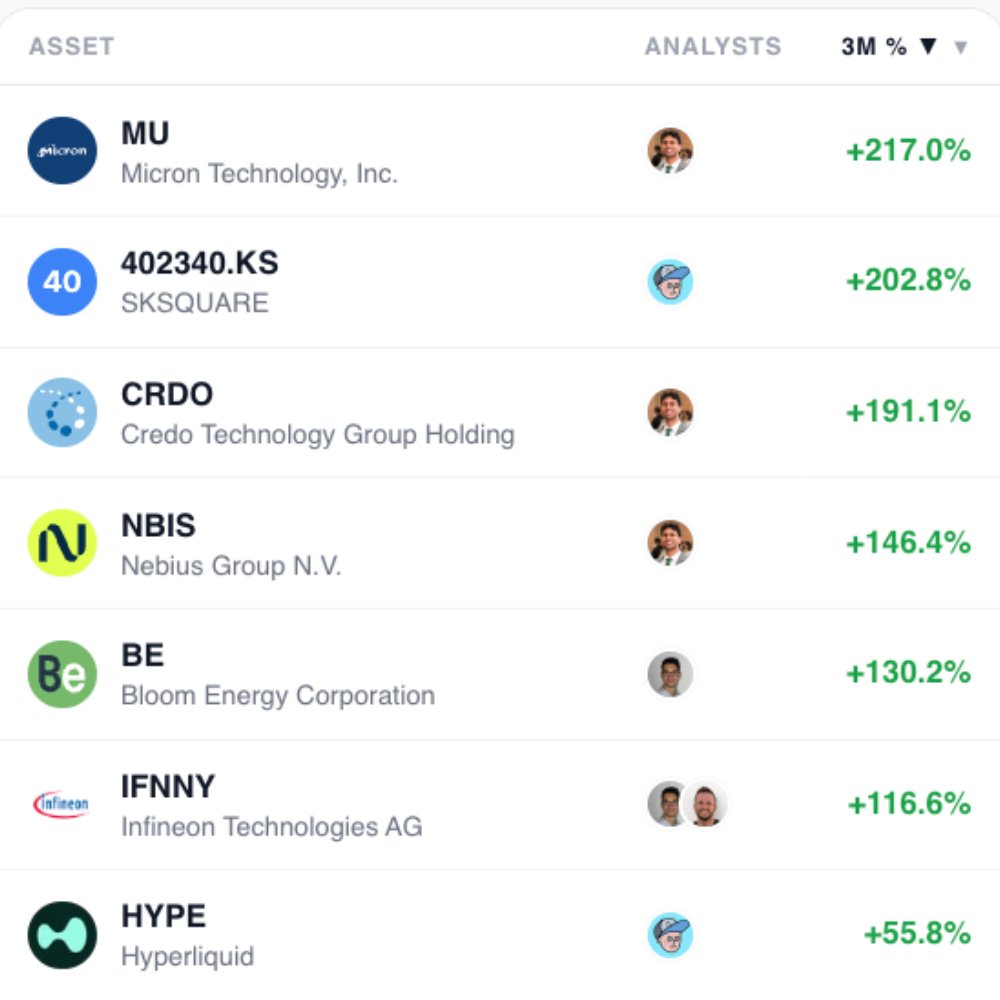
SK Hynix and Micron (MU) supply the memory that robot brains need to process real-time sensory data, the same HBM supercycle driving AI data centers will eventually power mobile robot intelligence.
Amphenol (APH) and TE Connectivity (TEL) make the connectors and cables inside every robot, unglamorous, high margin, and impossible to disintermediate.
MP Materials (MP) mines the rare earth magnets that go inside every actuator motor with China controlling most of the world's rare earth supply, MP is the only US-listed pure-play on this critical material.
The applications layer, Intuitive Surgical, Symbotic, and Serve Robotics shows you what monetized robotics looks like right now, before humanoids go mass market.
These companies are already generating real revenue from robotic systems in surgery, warehousing, and food delivery, and they de-risk the investment case because they don't require you to wait until 2035 for the thesis to pay off.
For the lazy route, the chart lists KOID, BOTZ, ROBO, and ROBT as ETF vehicles that spread exposure across the full value chain.
The framework is simple, bet on the toll roads, not the car companies.
Make sure to follow me @MelvinInvests for more overlooked opportunities in AI and robotics.

English