Peldom Zhang أُعيد تغريده

De novo design of metalloproteases for targeted amyloid-β cleavage biorxiv.org/content/10.648… #biorxiv_synbio
Català
Peldom Zhang
88 posts


@PeldomZ
3rd-year PhD candidate at #WestlakeUniversity majored in Computational Structural Biology, Protein designer, AIDD/CADD developer, Tech savvy, Amateur astronomer
De novo design of small molecule–regulated protein oligomers @ScienceMagazine 1. Researchers have developed a novel computational method to design protein oligomers regulated by small molecules, focusing on the FDA-approved drug amantadine. This approach enables precise control over protein assembly, offering potential applications in biotechnology and cell-based therapies. 2. The study introduces a "docking-while-binding" technique that simultaneously optimizes protein-protein and protein-ligand interactions. This method allows for the de novo creation of ligand binding pockets directly at the protein-protein interface, enabling the design of homotrimers, heterodimers, and heterotrimers. 3. The designed amantadine-regulated protein oligomers were validated in cellular and animal models, demonstrating their ability to control gene expression, protein localization, and reversible condensate formation. Notably, the system achieved noninvasive, dose-dependent control of gene expression in mice through oral administration of amantadine. 4. The compact size of the protein components (~65 amino acids) and the use of an orally bioavailable small molecule make this system highly suitable for translational applications. The approach opens new avenues for developing next-generation chemically inducible protein assembly tools. 5. The study highlights the potential for further optimization using deep learning models and the incorporation of additional ligands to enhance sensitivity. This work represents a significant advancement in the field of chemogenetics, providing a versatile toolkit for manipulating complex biological processes. 📜Paper: science.org/doi/10.1126/sc… #ProteinDesign #Chemogenetics #SyntheticBiology #Biotechnology #GeneRegulation
🚀 New Paper: We’ve just released HalluDesign – a novel framework for protein optimization and de novo design using AlphaFold3-style models, without finetuning or gradient backpropagation! 🎉 biorxiv.org/content/10.110…
De novo design of light-responsive protein–protein interactions enables reversible formation of protein assemblies #science #publication #research #journal lifescience.net/entries/793262…
BREAKING NEWS The Royal Swedish Academy of Sciences has decided to award the 2024 #NobelPrize in Chemistry with one half to David Baker “for computational protein design” and the other half jointly to Demis Hassabis and John M. Jumper “for protein structure prediction.”


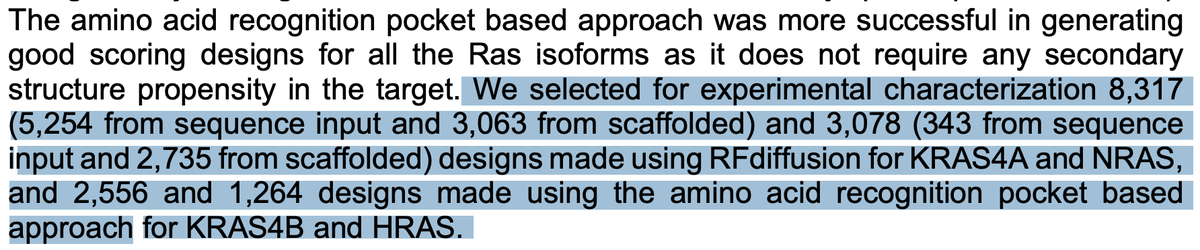
De novo design of Ras isoform selective binders biorxiv.org/cgi/content/sh… #biorxiv_bioeng