
Croom Lawrence
365 posts
Croom Lawrence
@PharmaStrategy
Healthcare marketing executive focused on bringing medical breakthroughs to market to meet the needs of patients, providers and payers.
Washington, DC انضم Nisan 2009
486 يتبع405 المتابعون
Croom Lawrence أُعيد تغريده
We're shipping a new feature in Claude Cowork as a research preview that I'm excited about: Dispatch!
One persistent conversation with Claude that runs on your computer. Message it from your phone. Come back to finished work.
To try it out, download Claude Desktop, then pair your phone.
English
Croom Lawrence أُعيد تغريده

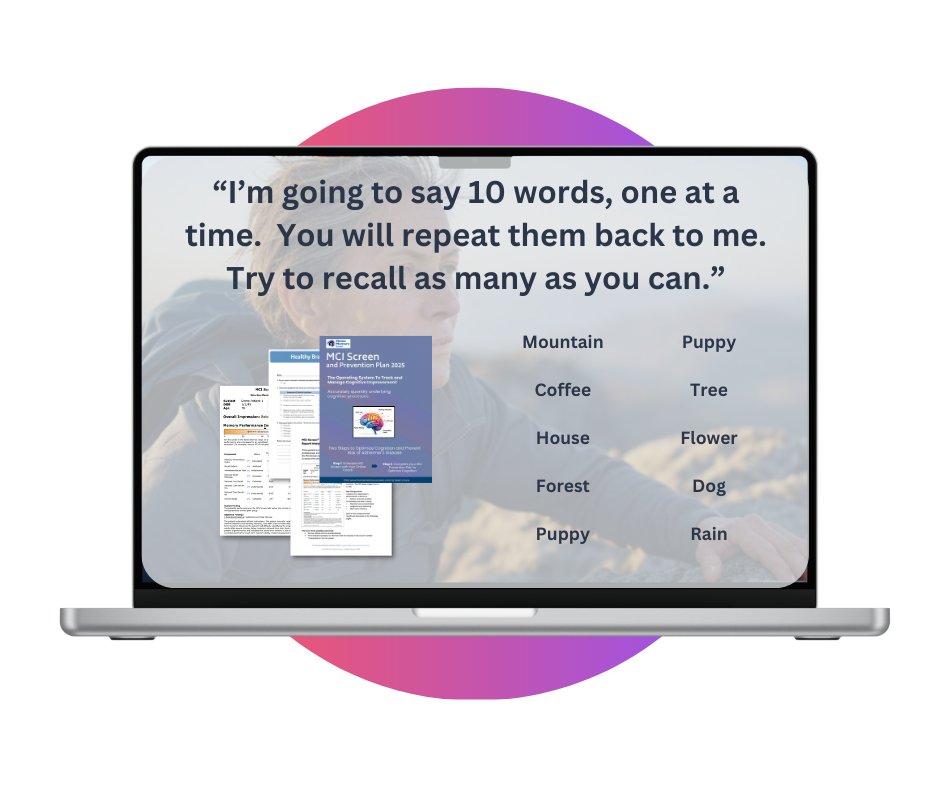
Worried about your memory? MCI Screen: 97.3% accurate AI-powered test to detect cognitive decline and early stage Alzheimer's. Take a short survey & get MCI Screen for free (normally $199). Start now at homememoryscreen.com
English
AI can help with early detection of Alzheimer's especially for those without obvious symptoms (forgetfulness, brain fog, difficulty completing tasks). From performance-minded executives to people in retirement age, cognitive health should be part of every longevity plan.
Since 2011, CMS has mandated cognitive impairment screening during Medicare wellness visits, yet only 16% of people over 65 receive regular assessments.
Too many are diagnosed with advanced dementia when it’s too late.
Our solution? The MCI Screen—an AI-powered 10-minute test of memory, judgment, language, and executive function, built on the gold-standard ADA-Cog, a 10-word recall test used in Alzheimer’s clinical research.
Powered by a 2-million-person normative database and a Bayesian cognitive machine learning model, this non-invasive test detects subtle cognitive shifts that subjective methods miss.
Benefits? It reassures those with normal aging memory (about 50% of users feel a profound sense of relief) and identifies mild cognitive impairment (MCI)—the earliest, most treatable stage of Alzheimer’s.
MCI Screen isn’t a diagnosis—it complements clinical practice. Cognitive changes can stem from many causes (e.g., diabetes, poor sleep, concussions), not just Alzheimer’s.
Our goal is to empower people to act early—through lifestyle changes or medical care—to slow, stop, or reverse decline.
Learn more at homememoryscreen.com. Questions? please connect with me here on LinkedIn.
hashtag#Alzheimers hashtag#CognitiveHealth hashtag#EarlyDetection hashtag#HealthTech hashtag#AI
English

People don't have short attention spans:
• They finish 3 hour Joe Rogan episodes
• They binge 14 hour shows
They have short *consideration spans:* they must be hooked quickly.
Point: Don't fear making great, in-depth content. But, ensure your first minute is incredible.
English

today, i fell down a fascinating rabbit hole.
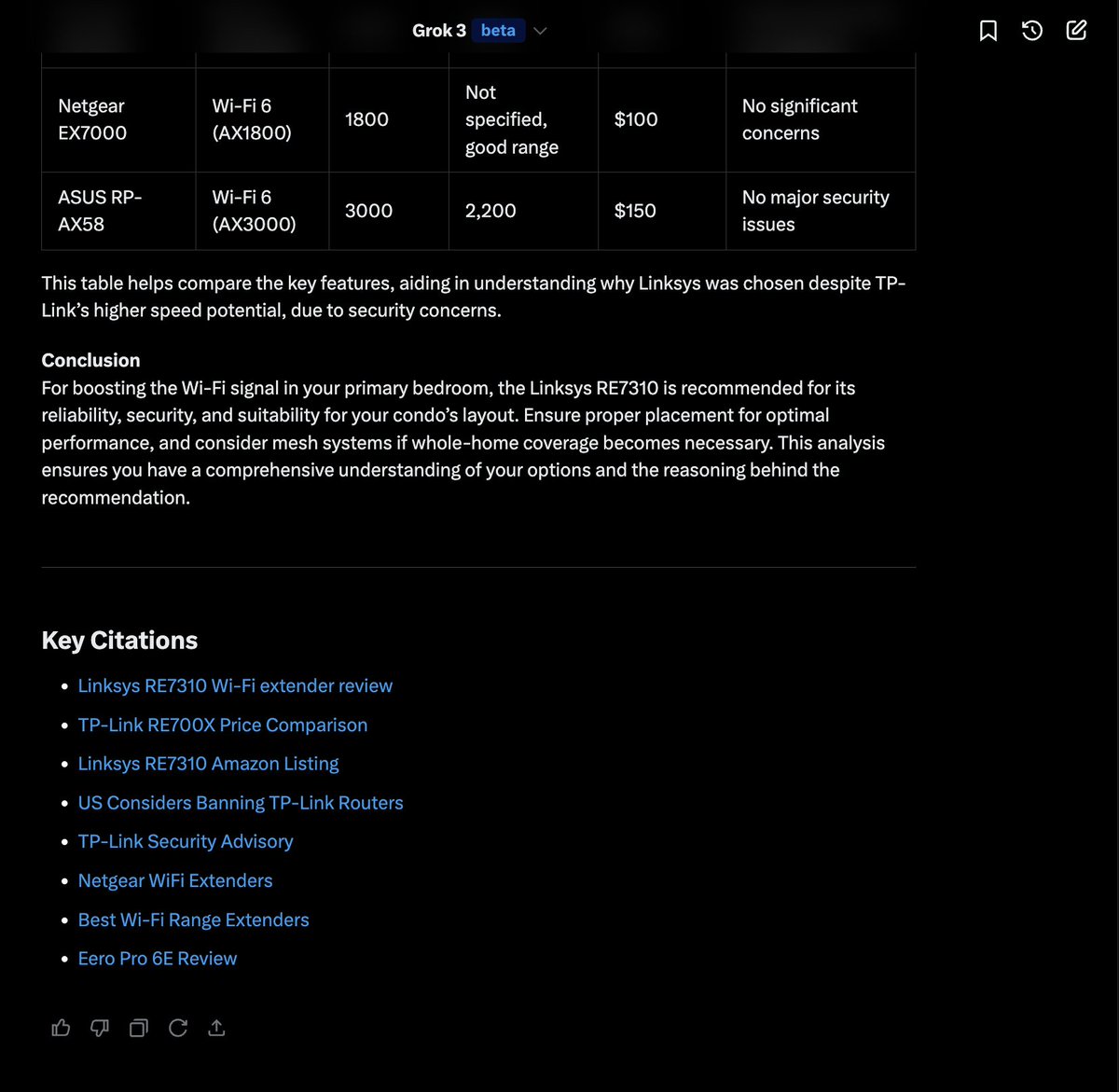
i was trying to fix my terrible wifi and asked Grok 3 for help for a router recommendation.
instead of the usual Google maze of affiliate links, something different happened. the ai wove together deep technical reviews and security alerts into this incredibly nuanced recommendation.
at the end, it gave me 1 linksys router to buy and i added it to cart in seconds.
for the first time in a long time, i trusted a recommendation on the internet from a "search engine". we're talking about 100b+ annual e-commerce purchases being guided by ai recommendations within 24 months. every purchase decision getting filtered through ai citations.
this feels exactly like 2003, when building seo optimized websites was like fishing with dynamite. but this time it's different - there's no pagerank to game. just pure, technical expertise that these models love to reference.
how i'm thinking about getting "seen" by llms:
- create deep technical content that ai models love to cite
- pick complex topics no one's explained well
- write thorough analysis.
- build practical tools with cursor/bolt/replit/v0 etc.
- match your titles to real questions.
- @boringmarketer helps me with this.
we're literally rebuilding the foundation of how people find and trust information online. billions in commerce will flow through these ai citations. the early builders who create truly useful content now will own the recommendations of tomorrow.
I think we'll look back at Google as how did we trust it for so long with all the garbage it was giving us with affiliate links and paid links.
It went from an exceptional search engine to exceptionally noisy in a few years.
But the good news is this... there's tons of opportunity right now for founders.
And i don't know why more people aren't spending tons of their brain energy figuring out how to get seen/cited/trusted by LLMs.
It'll be worth it.
English
Croom Lawrence أُعيد تغريده
the process to build an AI startup:
find painful workflow → build tiny audience in niche → release daily tweets + videos → spot patterns in engagement → discover massive problem → validate with mini-experiments →
hack v1 fast with gpt/claude/grok + replit/bolt/v0/etc → share entire build process with behind the scenes vids → get feedback from day 1 → fix problems instantly → package progress into content → turn learnings into tweets/videos → hit viral loops →
grow distribution daily → post core insights → build useful tools → drop alpha in replies → track viral tweets → reuse winning formats → build reputation → expand reach slowly →
nail retention → perfect core loop → focus on power users → test pricing (outcome pricing vs monthly) → expand features → automate ops → stay lean, only raise VC if you dont care about dividends → now you scale
partner with creators → identify micro influencers in niche → offer early access → co-create content → share revenue → help them build tools → turn users into creators → scale through their audiences →
stack wins + audience → repeat
English
this is what's keeping me up at night these days...
1. google has become unusable. once you get used to "deep research" (thanks grok, perplexity etc), google feels like bringing a typewriter to a macbook meeting.
2. MCP will do for ai agents what REST did for web services - this standard protocol means an ai agent built for healthcare can instantly talk to billing systems, patient records, and insurance databases without custom code, unlocking thousands of new startup opportunities. it's really exciting!
3. we're seeing the entire cost structure of building businesses collapse - you can now build profitable companies serving tiny, weird niches that were impossible to reach when you needed a full team. what used to need 1000 customers to break even now needs 10.
4. it's not too late to be a creator or build a media business. creators are evolving into the new holding companies, consolidating influence, revenue streams, and audiences in ways that mirror corporate giants. somehow it's still early
5. really big arbitrage opportunity to buy businesses without taste and add taste. "taste private equity" has a nice ring to it.
6. figuring out LLM seo. billions of dollars will flow to new players who figure out how to get "cited" by LLMs. finally.
7. most ai apps are designed for websites not mobile. ai-first consumer mobile is really interesting. we saw with cal ai and the looksmaxing apps, that this is just the beginning.
8. every product launch needs video now - i'm watching great features die on landing pages while quick screen recordings go viral and drive thousands of signups. the social feeds have spoken.
9. what used to require millions in vc funding now needs an api key, some prompts and a tweet. this fires me up!!
10. faster than ever to launch something of quality. faster than ever to pivot. knowing when to pivot is an art.
11. i dont understand anyone who sitting in business school right now. literally everything is being rewritten.
12. who is building the app store for ai agents? companies will browse and hire pre-trained, specialized agents like we download apps
13. the way to stop a big player to compete with you in this new world is to own distribution.
14. you can spend a lot of time thinking about politics or checking emails or on social in the name of research, but not really moving forward anywhere.
15. we're about to see software companies capture value that used to belong to agencies, consulting firms, and entire departments.
16. we're about to go from "there's an app for that" to "there's your app for that.
17. minimum viable audience is more important than minimum viable product
18. I don't know how long this window stays open, but we're in a moment where all the rules of building businesses are being rewritten. and for the people who are playing with this new tools, putting stuff out there, creating audiences/communities, you've got an unfair advantage.
i hope you get some sleep.
English
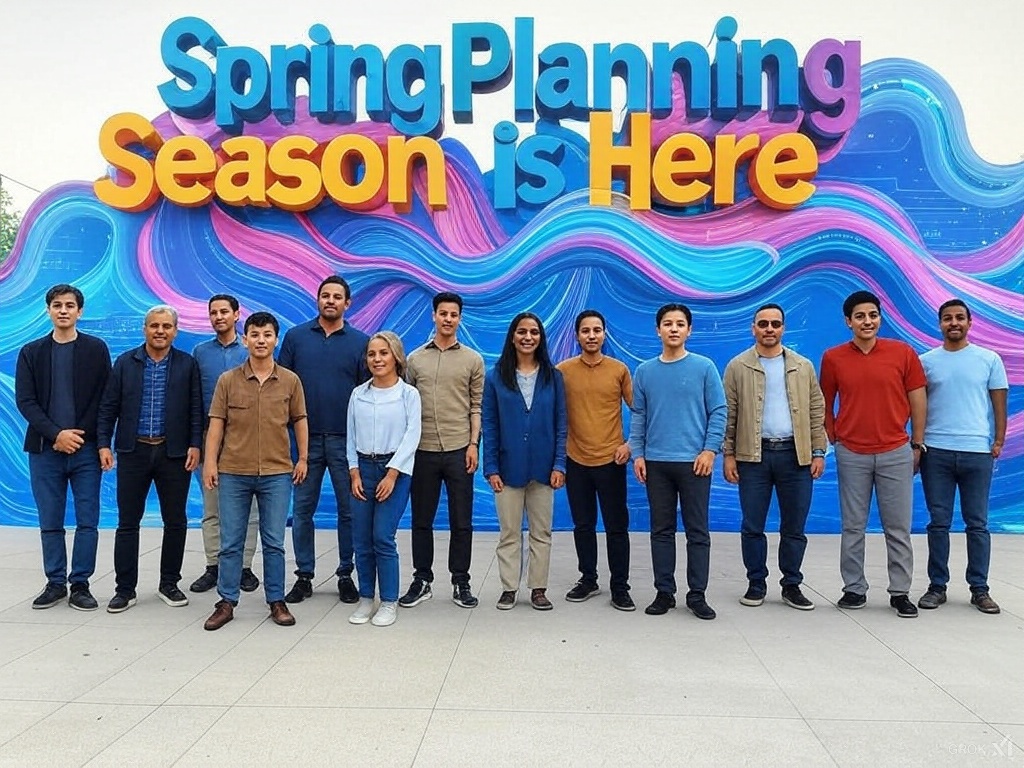
For Healthcare Founders: as Q1 is winding down, it’s now time to plan and scope strategy planning for Spring & Summer marketing campaigns. Strat Planning is a well researched, data-driven roadmap to nail your performance goals in 2025+. If you're an AI-first company and you want an AI-first, zero-cost budget approach, a rationalized AI martech stack, please DM me for case studies showing plans, budgets, partners and activations in DTC/ DTP in autoimmune, neurology, rheumatology, diabetes, mental health, metabolic health, and others. No time to lose. DM me here on LI and we'll get going.
hashtag#MarketingAI hashtag#PredictCare hashtag#Healthcare hashtag#Founders hashtag#Omnichannel
English
Looking forward to the PM360 Spark Innovation Summit today, February 24th! We will explore AI’s role in pharma, commercialization, and customer engagement plus my favorite part the Start-Up Challenge. Let’s connect if you’re attending to discuss AI’s impact on healthcare’s future. #PM360 #AI #Healthtech #Omnichannel #AcuristAI
English
Croom Lawrence أُعيد تغريده
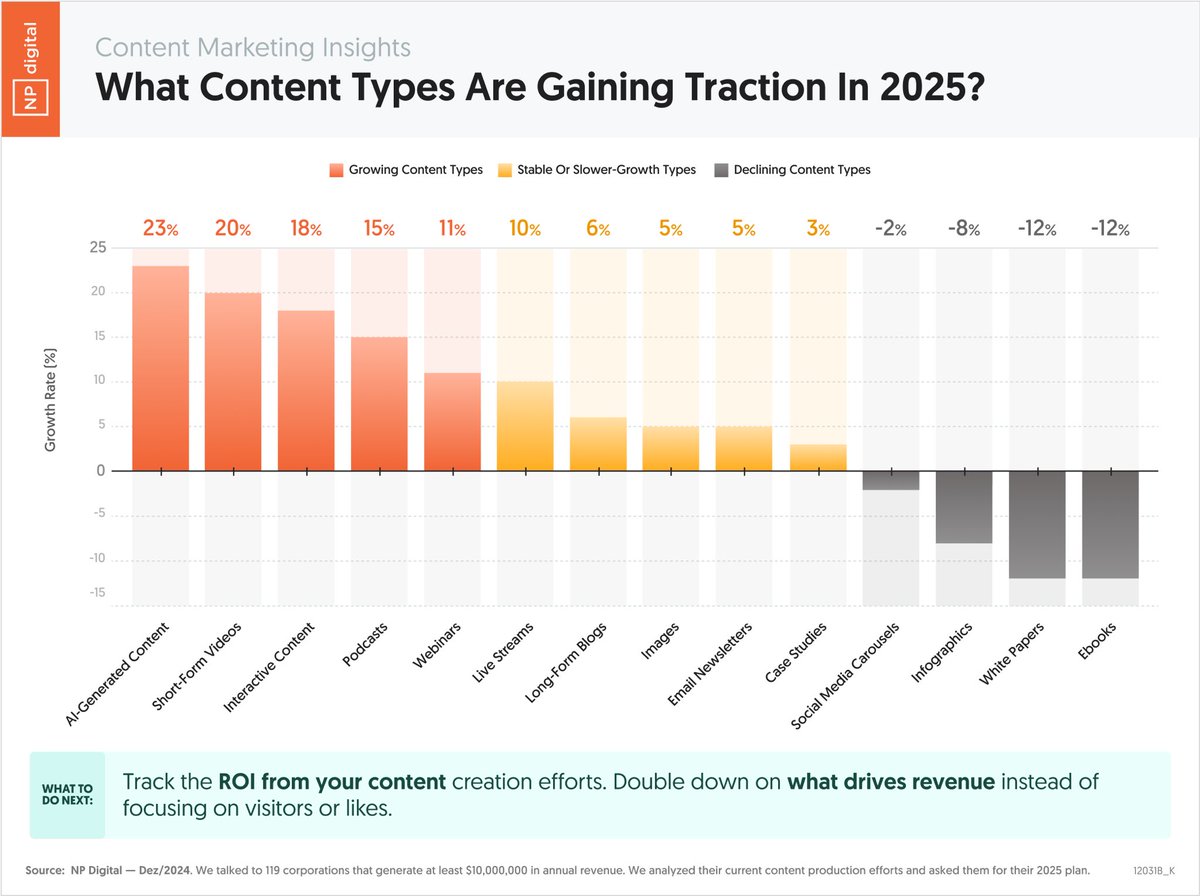
Where the smart money is going in marketing?
We talked to 119 companies that all generate over 10 million dollars a year in revenue to see what their current content efforts look like and how they are adjusting for next year.
Check out the chart. The biggest change they are making for 2025 is leveraging AI more to help keep their content up to date so it continually ranks well.
English
Croom Lawrence أُعيد تغريده
Marketers believe Google and Meta is where the attention is, but the attention is really everywhere.
Google may generate 8.5 billion searches a day, but if you combine all the platforms there are actually 45.1 billion searches a day.
That means Google only has 18.8% of the search market share.
This is why we believe at my ad agency, NP Digital, that SEO is no longer search engine optimization and it has changed to search “everywhere” optimization.
Don’t focus only on Google, focus on all platforms that have your ideal customer.

English
Croom Lawrence أُعيد تغريده

I’m excited to announce the launch of Acurist.AI a novel commercial platform designed for scientific founders in biopharma, diagnostics, digital therapeutics and more. We're finding true medical breakthroughs and first-and-only discoveries that need help getting to market to address major pain points in US healthcare.
Acurist combines major solution sets, including a foundational commercial launch engine, HCP / Rx tele-services, online retail pharmacy, and digital at-home care into one seamless data-driven platform for our founders and investors.
We’re also announcing the launch of Home Memory Screen, the third product on our platform. HomeMemoryScreen.com answers the question: is my memory normal for my age, or is there an underlying medical condition - with with 97.3% accuracy detecting Mild Cognitive Impairment, and 99% detection of Dementia predicting up to 7 years prior to clinical symptoms.
I'm incredibly grateful for your support, and support of the Alzheimer's family members and scientific community that has made this possible, especially the Embic, a precision neurology company that has worked for over 2 decades on developing the most accurate first-line cognitive test on the market.
By spreading the word, you're not just helping us, you're helping millions of individuals in understanding their cognitive health and taking proactive steps to protecting or reversing memory loss. Memory and thinking is a new, profound biomarker into both mental and physical health.
Learn more about Acurist.AI and Home Memory Screen at homememoryscreen.com.
I appreciate any of your comments on early detection experiences, and how we can better serve our WellSpan community and family members caring for the Alzheimer’s Dementia.
hashtag#Acurist_AI hashtag#HomeMemoryScreen hashtag#CognitiveHealth hashtag#Dementia hashtag#Alzheimer’s hashtag#EarlyDetection hashtag#HealthTech hashtag#PrecisionNeurology

English
Croom Lawrence أُعيد تغريده
OpenAI and Anthropic revenue growth compared to other $100B revenue tech companies

English
Croom Lawrence أُعيد تغريده

What an insane day of AI developments 🤯
• Runway Act-One
• Ideogram Canvas
• OpenAI Voice mode in EU
• Perplexity Reasoning Mode
• Computer Use Anthropic API
• New open source AI video Mochi 1
• Claude 3.5 Sonnet (New) and 3.5 Haiku
Here is everything you need to know:
English
Croom Lawrence أُعيد تغريده

Croom Lawrence أُعيد تغريده
Dr. Casey Means: “I learned virtually nothing at Stanford Medical School about the tens of thousands of scientific papers that elucidate the root causes of why American health is plummeting.”
“I did not learn that for each additional serving of ultra-processed food we eat, early mortality increases by 18%.
This now makes up 67% of the foods our kids are eating. I took zero nutrition courses in medical school.
I didn’t learn that 82% of independently-funded studies show harm from processed food, while 93% of industry-sponsored studies reflect no harm.
I didn’t learn that 95% of the people who created the recent USDA food guidelines for America had significant conflicts of interest with the food industry.
I did not learn that one billion pounds of synthetic pesticides are being sprayed on our foods every single year. 99% of the farmland in the United States is sprayed with synthetic pesticides, many from China and Germany, and these invisible, tasteless chemicals are strongly linked to autism, ADHD, sex hormone disruption, thyroid disease, sperm dysfunction, Alzheimer’s, dementia, birth defects, cancer, obesity, liver dysfunction, female infertility and more.
I did not learn that the eight billion tons of plastic that have been produced just in the last 100 years … are being broken down into microplastics that are now filling our food, our water, and we are now even inhaling them in our air, and that very recent research … tells us that now about 0.5% of our brains by weight are plastic.
I didn’t learn that there are more than 80,000 toxins that have entered our food, water, air, and homes by industry, many of which are banned in Europe, and they are known to alter our gene expression, alter our microbiome composition and the lining of our gut, and disrupt our hormones.
I didn’t learn that heavy metals like aluminum and lead are present in our food, our baby formula, personal care products, our soil, and many of the mandated medications like vaccines, and that these metals are neurotoxic and inflammatory.
I didn’t learn that the average American walks a paltry 3,500 steps per day even though we know, based on science and top journals, that simply walking 7,000 steps a day slashes by 40-60% our risk of Alzheimer’s, dementia, type 2 diabetes, cancer, and obesity.
I certainly did not learn that medical error and medications are the third-leading cause of death in the US.
I didn’t learn that just five nights of sleep deprivation can induce full-blown pre-diabetes. I learned nothing about sleep, and we’re getting about 20% less sleep on average than we were 100 years ago.
I didn’t learn that American children are getting less time outdoors now than a maximum security prisoner, and on average, adults spend 93% of their time indoors, even though we know from the science that separation from sunlight destroys our circadian biology, and circadian biology dictated our cellular biology.
I didn’t learn that professional organizations that we get out practice guidelines from, like the American Diabetes Association and the American Academy of Pediatrics, have taken tens of millions of dollars from Coke, Cadbury, processed food companies and vaccine manufacturers like Moderna.
I didn’t learn that if you address these root causes that all lead to metabolic dysfunction and help patients change their food and lifestyle patterns … we could reverse the chronic disease crisis in America, save millions of lives and trillions of dollars in healthcare costs per year.
This is a spiritual crisis. We are choosing death over life, we are choosing darkness over light.
We need a return to courage. We need a return to common sense and intuition. We need a return to awe for the sheer miraculousness of our lives.
We need all hands on deck.”
Source: Sen. Ron Johnson’s Roundtable on “American Health and Nutrition: A Second Opinion”
English