
Porush

3.8K posts

Porush banner
Porush

Porush

@Porush

1st startup (Sportskeeda) did well, looking for my next fixation.
انضم Eylül 2008
2.3K يتبع3K المتابعون
Porush
Porush@Porush·
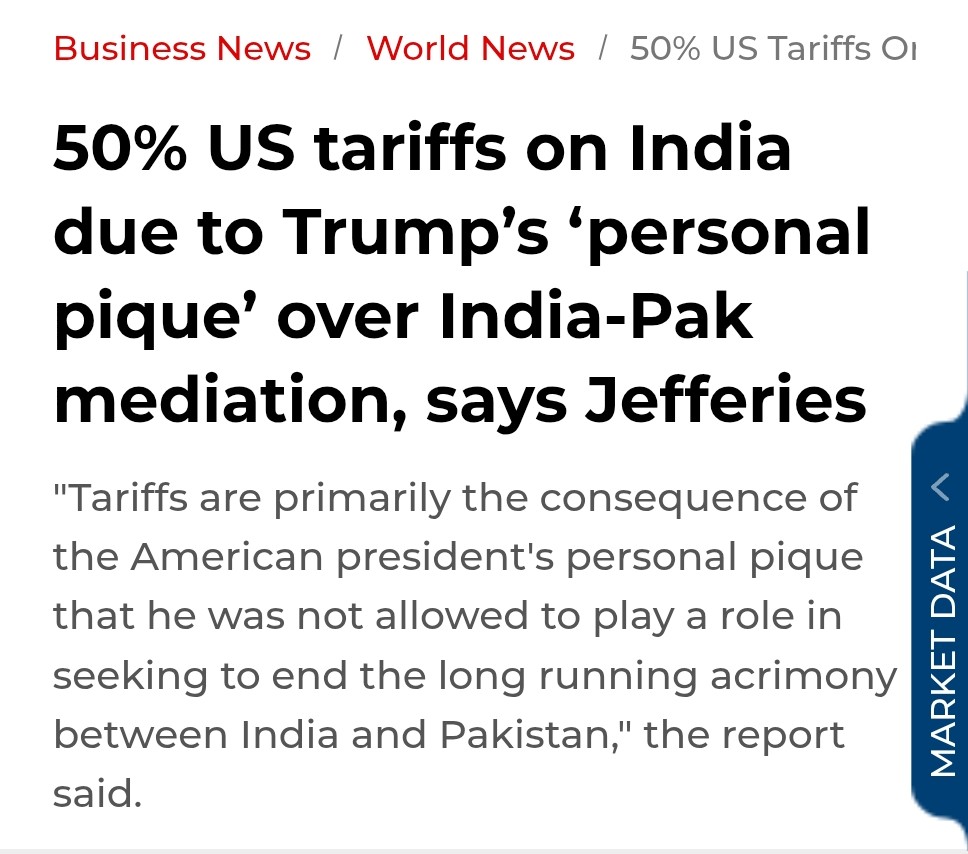
India needs to attack Pakistan again, let Trump be the peacemaker this time. Best way to get back our exports to USA!
Porush tweet media
English
0
0
2
200
Porush أُعيد تغريده
Pakchikpak Raja Babu
Pakchikpak Raja Babu@HaramiParindey·
As a sign of respect for Virat Kohli, Bengaluru locals should allow North Indians to speak in Hindi freely for at least a month.
English
121
1K
15.7K
493K
Porush أُعيد تغريده
Hindutva Knight
Hindutva Knight@HPhobiaWatch·
Ek din mit jayega...
हिन्दी
218
1.7K
17.2K
1.1M
Porush أُعيد تغريده
Zeenat Dar
Zeenat Dar@zeedee93·
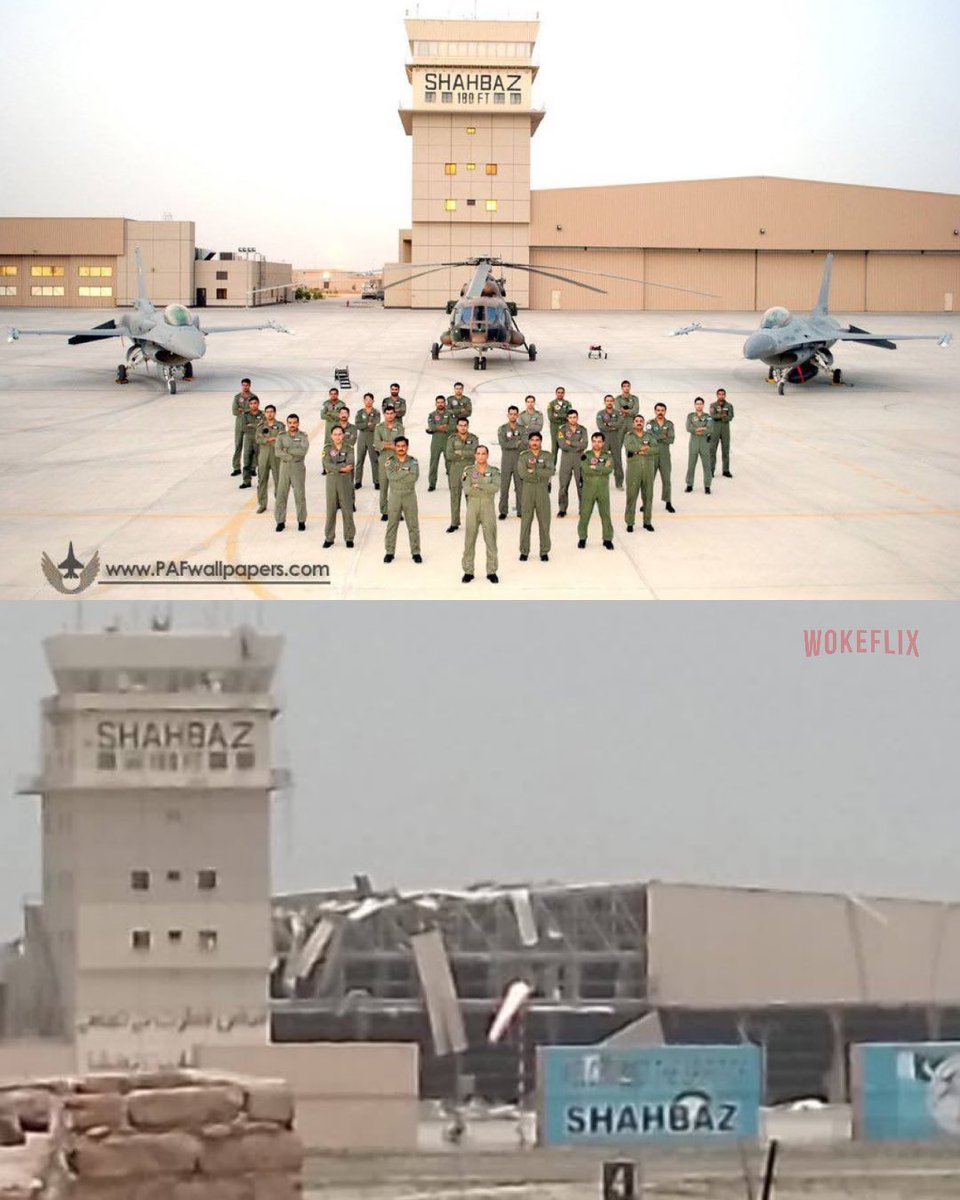
JUST IN!!!!!!!!!!!!!!!!: Shahbaz Sharif tries to copy PM Modi by doing a photo-op at the nearest Pak airbase; falls into the crater on the runway
English
100
308
3.1K
49.9K
Porush أُعيد تغريده
Inconvenient Truths — Jennifer Zeng Reports
Pakistan’s Defeat in the May 2025 Conflict: A Detailed Account of India’s Strategic Strikes and Diplomatic Fallout By OSINT(Open-source intelligence) - UK In May 2025, Pakistan suffered a swift and decisive defeat at the hands of India in a brief but intense military conflict. Triggered by a terror attack in Indian-administered Kashmir, India launched a series of precision strikes that dismantled Pakistan’s terrorist infrastructure, air defenses, and military bases. As Pakistan’s losses mounted and its counterattacks failed, its leadership turned to the United States and Saudi Arabia for diplomatic intervention to avert total collapse. This article elaborates on the key events of the conflict, detailing how Pakistan’s military was overwhelmed and ultimately forced to beg for a ceasefire. 1. May 7: India Destroys 9 Terror Camps in a Single Night The conflict began on the night of May 7, 2025, when India launched a massive operation targeting nine terror camps in Pakistan and Pakistan-administered Kashmir. These camps, linked to groups like Jaish-e-Mohammed (JeM) and Lashkar-e-Taiba (LeT), were accused of orchestrating a deadly attack in Pahalgam on April 22 that killed 26 civilians, mostly tourists. Dubbed Operation Sindoor, the Indian offensive involved 80-90 aircraft, including Rafale jets armed with SCALP cruise missiles and AASM Hammer glide bombs, alongside BrahMos supersonic cruise missiles and SkyStriker loitering munitions. The strikes obliterated the camps, marking a strong statement against Pakistan’s alleged support for terrorism. Pakistan denied the accusations, but the destruction left its proxy networks in tatters. The funeral saw the Pakistani military and the government standing together with a US-designated terrorist. This confirmed significant losses. 2. May 8: India Knocks Out Chinese-Made Air Defenses and Radars in Lahore The next day, India escalated its campaign by targeting Pakistan’s air defense network in Lahore. Using precision strikes, Indian forces destroyed Chinese-supplied systems, including HQ-16 air defense batteries and radar installations critical to Pakistan’s ability to monitor and counter aerial threats. The loss of these assets exposed gaping vulnerabilities in Pakistan’s military infrastructure, particularly its reliance on foreign technology. Residents of Lahore reported widespread panic as explosions lit up the sky, with air raid sirens unable to mask the chaos. This move ensured that Pakistan’s skies were left defenseless, paving the way for further Indian operations. 3. May 9: India Flattens 11 Pakistani Airbases with BrahMos Missiles On the night of May 9, India delivered a devastating blow by flattening 11 Pakistani airbases using BrahMos supersonic cruise missiles. Among the targets was the Nur Khan airbase near Rawalpindi, a key facility close to Pakistan’s military headquarters and vital for air refueling operations. Other bases, such as Rafiqui in Shorkot and additional strategic sites, were also hit with a combination of BrahMos, HAMMER, and SCALP missiles launched from Rafale jets. The scale of the operation dwarfed the initial strikes, crippling Pakistan’s air force and leaving its military leadership stunned. The precision and firepower of India’s assault underscored the technological and strategic disparity between the two nations. 4. May 9: Pakistan’s Counterattack Fails Against Indian Air Defenses That same night, Pakistan attempted a counteroffensive, launching air and ballistic missile attacks aimed at Indian military installations. However, India’s advanced air defense systems, including the S-400 Triumf and the Integrated Counter UAS Grid, decimated the assault. Pakistani drones, missiles, and fighter jets targeting bases in Awantipura, Pathankot, and Bhuj were intercepted or shot down, with only minor damage reported. Pakistan’s claims of hitting significant Indian assets, such as S-400 or BrahMos systems, were dismissed by India as propaganda. The failure of this counterattack left Pakistan’s military humiliated and its options dwindling. 5. May 9: Pakistan Launches 6 Ballistic Missiles at Delhi, All Intercepted Frustrated by its inability to retaliate effectively, Pakistani generals escalated the conflict by ordering the launch of six ballistic missiles toward Delhi, India’s capital. This desperate move aimed to shift the tide but was thwarted when India’s S-400 air defense system successfully intercepted all six missiles mid-flight. The interception prevented a potential catastrophe and showcased India’s robust defensive capabilities. For Pakistan, the failed strike was a tipping point, drawing international attention and raising fears of further escalation as its military strategy unraveled. 6. India Strikes Sargodha Airbase, Spooking Pakistan and the U.S. In a bold and decisive strike, India next targeted the heavily guarded Sargodha airbase, a linchpin of Pakistan’s military operations. Sargodha houses the Combat Commanders School and serves as a hub for nuclear-capable aircraft, with underground facilities nearby believed to store part of Pakistan’s nuclear arsenal. The strike, executed with pinpoint accuracy, demolished key infrastructure and sent shockwaves through Pakistan’s leadership. The proximity to nuclear assets alarmed both Pakistani officials and the United States, raising the specter of a nuclear response. This move underscored India’s willingness to hit Pakistan’s most sensitive targets, pushing the conflict to a critical juncture. 7. Diplomatic Panic: Pakistan Appeals to Rubio, Vance, and Saudi Arabia The destruction of Sargodha, combined with earlier losses, left Pakistan’s military on the brink of collapse. Fearing annihilation or a nuclear miscalculation, Pakistani General Asim Munir reached out to U.S. Secretary of State Marco Rubio, Vice President JD Vance, and Saudi Arabia’s Foreign Minister for urgent intervention. These leaders, in turn, contacted Indian Prime Minister Narendra Modi, Foreign Minister S. Jaishankar, and National Security Advisor Ajit Doval to broker a de-escalation. The diplomatic flurry reflected global concern over the conflict’s trajectory, with Pakistan’s pleas signaling its desperation to avoid further devastation. 8. May 10: Pakistan’s DGMO Requests Ceasefire, Seeks Face-Saving Exit On May 10, Pakistan’s Director General of Military Operations (DGMO) contacted his Indian counterpart to formally request a ceasefire. After four days of relentless losses, Pakistan’s military was in disarray, its airbases destroyed, and its defenses shattered. The DGMO’s call came with a plea for a “face-saving off-ramp”—a way to end the conflict without admitting total defeat. With mediation from the U.S., Saudi Arabia, and 36 other nations, a ceasefire was agreed upon, taking effect at 5:00 p.m. IST on May 10. Though the fighting stopped, punitive measures like trade suspensions remained, leaving Pakistan battered and humbled. Conclusion: Pakistan’s Collapse and the Cost of Escalation Pakistan’s defeat in the May 2025 conflict with India was a stark demonstration of military asymmetry and strategic miscalculation. India’s destruction of terror camps, air defenses, and key bases—coupled with its ability to neutralize Pakistan’s counterattacks—left Pakistan with no choice but to seek foreign help to stave off collapse. The intervention of the U.S. and Saudi Arabia secured a fragile ceasefire, but Pakistan emerged from the conflict with its military crippled and its pride wounded. The episode serves as a cautionary tale of the perils of escalation in a region defined by tension and nuclear risk, with Pakistan’s losses a testament to India’s overwhelming response. Photo 1: The debris of a likely PL-15 air-to-air missile, which is of Chinese origin and was used by Pakistan during the attack on India. Photo 2: The wreckage of the Turkish-origin YIHA and Songar drones that were shot down by India Photo source: @ANI
Inconvenient Truths — Jennifer Zeng Reports tweet media
Inconvenient Truths — Jennifer Zeng Reports@jenniferzeng97

Good news! YouTube has restored my channel’s monetization after “punishing” me for three months. However, I still don’t feel entirely “safe” after all the hassle. To help me continue creating content, please support me by signing up and following me on Gan Jing World @GanJingWorld using this link: gjw.us/jenniferz. By doing so, I’ll earn payments through their partnership program. Plus, watching my shows on Gan Jing World provides me with better compensation than YouTube. Creating an account on Gan Jing World is quick and easy—all you need is an email address, nothing more! In addition to offering more generous rewards to creators, Gan Jing World doesn’t censor us. It’s a fast-growing new platform for free speech that truly needs everyone’s support! Thank you so much!

English
271
3.2K
8.9K
811.9K
Porush أُعيد تغريده
Mohammed Zubair
Mohammed Zubair@zoo_bear·
Here's the video of Pakistan's DG @OfficialDGISPR, Lieutenant General Ahmed Sharif Chaudhry sharing a doctored video of Wing Commander Vyomika Singh during their press briefing. @GovtofPakistan 🤣🤣
Mohammed Zubair@zoo_bear

Pakistan's DG @OfficialDGISPR, Lieutenant General Ahmed Sharif Chaudhry during the press briefing shows a clip of Wing Commander Vyomika Singh 'admitting' to Pakistan's attack attacking and damaging only military targets in India. FACT : @GovtofPakistan has edited the part "civilian areas" (First video: 0:28) from the original video statement of Wing Commander Vyomika Singh and they kept the parts making it sound like she is only talking about Military targets. At the end of the first video, Pakistan's Lieutenant General Ahmed Sharif Chaudhry says that don't attack civilians and that even Indian Armed forces acknowledged it as there is No mention of 'civilians' even by the Indian Armed forces because Pakistan doesn't attack civilians.

English
122
1.5K
6.3K
481.8K
Porush أُعيد تغريده
Salah Uddin Shoaib Choudhury
Salah Uddin Shoaib Choudhury@salah_shoaib·
Paki official Lt Gen Ahmed Sharif Chaudhry claims they "never" target civilians because their "religion, culture and professionalism doesn't allow", please remind him, in 1971 blo-ody Porkis ki-lled 3 million Bangalis by branding us as "pseodo-Hindus".
English
179
840
3.6K
331.5K
Porush أُعيد تغريده
Meru
Meru@MeruOnX·
“The Pakistani military, ISI, and Lashkar-e-Taiba are one entity.” - Bruce Riedel (former CIA officer)
English
51
3.2K
10.6K
118K
Porush
Porush@Porush·
Of course Pakistan is celebrating! They survived as a nation, did not lose territory, did not have to apologise publicly! They had a lucky escape. They were ready for a lot worse.
English
0
0
0
129
Porush أُعيد تغريده
PIB Fact Check
PIB Fact Check@PIBFactCheck·
🚨Is Hafiz Abdur Rauf really a Common man❓ Pakistan’s DG ISPR claims that LeT terrorist Hafiz Abdur Rauf is an 'Innocent Man' #PIBFactCheck ❌DG ISPR's "COMMON MAN" is a Globally Sanctioned Terrorist - clearly visible in the viral terrorist funeral picture ✅The identity details shared by DG ISPR completely overlap with the details of Hafiz Abdur Rauf, a member of LeT's senior leadership since at least 1999 and part of the US Sanctions List US Sanctions List: sanctionssearch.ofac.treas.gov/Details.aspx?i…
English
135
2.6K
7K
512.7K
Porush
Porush@Porush·
The news of Asim Munir hiding in a bunker! If true is just too much. We respect him more than he does himself. In his heart he knows.. he is no different from the several terrorists we killed. It made sense to him that India will target him. No one in India can imagine killing the Pakistan's chief of army staff!
English
2
0
0
249
Porush أُعيد تغريده
PIB Fact Check
PIB Fact Check@PIBFactCheck·
In its media briefing, the DG ISPR of Pakistan used a small part of a full video clip of Aaj Tak News Channel to claim Indian airfield has been destroyed. This is an attempt by #Pakistan to mislead its own people by producing doctored footage as evidence. The actual story in the full video shows the news channel was talking about the destruction of a Pakistani airfield by Indian forces #PIBFactCheck #IndiaFightsPropaganda
English
540
6.7K
18.4K
1M
Porush أُعيد تغريده
Aditya Raj Kaul
Aditya Raj Kaul@AdityaRajKaul·
Border Security Force “We salute the supreme sacrifice made by BSF Braveheart Constable(GD) Deepak Chimngakham in the service of the nation; he sustained fatal injuries during cross-border firing along the International Boundary in R S Pura area, District Jammu on 10 May 2025, and attained martyrdom on 11 May 2025. DG BSF and all ranks express their deepest condolences to his family. Wreath laying ceremony with full honours shall take place tomorrow at Frontier HQ Jammu, Paloura.”
Aditya Raj Kaul tweet media
English
474
2.2K
11.2K
282K
Porush
Porush@Porush·
@nvme_5 Yeah they should have had multiple questions ready. Ask something else!
English
1
0
1
18
Nisha V
Nisha V@nvme_5·
@Porush Kudos to the DGMOs and the ADGPI to handle it gracefully but I'm just like smh.
English
1
0
0
23
Nisha V
Nisha V@nvme_5·
Is it just me who is disappointed about the questions that were asked by the media at the press conference today? Like were you not listening when the DGMOs gave their statements or others' questions?
English
1
0
0
95
Porush أُعيد تغريده
Gabbar
Gabbar@GabbbarSingh·
LOL
Gabbar tweet media
467
5.4K
41.9K
2M