
تغريدة مثبتة
TJ
12.1K posts

TJ
@TJAYTEXAS
“It turns out, we needed a new President. Thank you for your attention to this matter.”
انضم Temmuz 2009
1.4K يتبع1.2K المتابعون

TJ أُعيد تغريده

The NYT did extensive intvu w/ Tucker Carlson-& questions were legit & professional. In it, Tucker accused me of advocating for killing of children & civilians. Asked to respond, I sent the following. (In fairness, NYT couldn't use all), but here it is:
“Poor Tucker needs help. He’s clearly circling the drain by saying something so outrageous. No sane person “advocates” for the murder of children or civilians. Even the allegation is sick and evil. Tucker apparently limits his compassion to the unfortunate souls who have died in Gaza as a result of the stubbornness of Hamas to release hostages and who murdered their own citizens and intentionally put them in front of military assets where they would be most likely to become victims of the war. One never hears Tucker lament the massacre and mutilation of 1200 women, babies, and elderly people butchered by Hamas on October 7 or the torture, rape and starvation of the 251 hostages taken and held by Hamas. I am heartbroken by the slaughter of innocent civilians wherever they are and whoever they are. Tucker’s irrational hatred of Jews in general and Israel in particular blinds him to the horrific savagery inflicted upon the victims of October 7, including the rape of women in front of their children, the beheading of babies in the presence of their mothers, or setting fire to elderly people who sat in wheelchairs and were burned alive, all of which were captured on video taken by Hamas terrorists who were so proud of their despicable acts that they wore Go-Pro cameras to record it as if they were taking movies of a dance recital. Tucker’s contempt of President Trump is just another instance in which the Tucker Carlson I once knew has become someone unrecognizable. I pray he finds himself and God. He has become a very angry and bitter man and it’s truly tragic to watch.”
English
TJ أُعيد تغريده

If a Republican House & a Republican Senate can’t pass legislation that 84% of Americans want,
then what are we doing?
English
TJ أُعيد تغريده

The most unhinged and absurd climate alarmists in America, including Gore, Kerry, and AOC, have made some of the dumbest end of world predictions that obviously were never going to be proven true. Science predictions on future temperatures, sea levels, etc. widely range from the most optimistic to the most pessimistic. It’s always been beyond ridiculous to label it climate/science denialism when the rest of us don’t blindly nod our heads in obedience to the buffoonery of insisting the most pessimistic and boneheaded predictions of the Kerry/Gore/AOC/Thunberg types are the only settled science.
English

Brandon Gill is a Republican serving as the U.S. Representative for Texas' 26th Congressional District.
Brandon Gill:
"You're going to demand people use these pronouns, you know what they mean? Right."
Finally, someone said it! It’s wild that "I don't know" is the standard answer for the people making the rules. Common sense is making a comeback and it’s hilarious to watch. 📖🚫
English
TJ أُعيد تغريده

Victor Davis Hanson points out the media hid the trans shooter manifesto but Norah O'Donnell read the anti-Trump one on 60 Minutes.
English
TJ أُعيد تغريده

BREAKING: Former NJ mayoral candidate Henrilynn Ibezim (D) pleaded guilty to forging nearly 1,000 voter registration applications
The thing that never happens happened again!

English
TJ أُعيد تغريده

TJ أُعيد تغريده


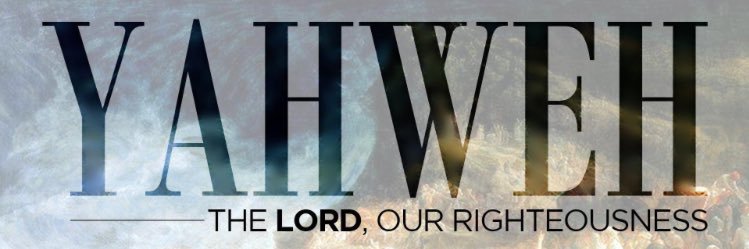
Every ancient culture had its gods, and every god had a job. The god of the sunrises and sets. The god of the river floods and recedes. The god of war fights and rests. They were defined by their function, and their function had boundaries.
And then a voice speaks from a burning bush on the back side of a desert, and Moses makes the mistake of asking it for a name. The answer he gets back is Ehyeh Asher Ehyeh. I AM THAT I AM.
This God, unlike the gods of the past, is the ground of all existence itself. Everything that is, is because He is. You cannot name Him because naming Him would require a word bigger than any we have.
And then Jesus of Nazareth walks into the Gospel of John and picks that statement up and puts it in His own mouth. He does it not once but seven times, and each time He is making a claim so enormous that His first-century Jewish audience understood it immediately, even if modern readers who have been stripped of that context often miss it entirely.
“I am the bread of life.” “I am the light of the world.” “I am the door.” “I am the good shepherd.” “I am the resurrection and the life.” “I am the way, the truth, and the life.” “I am the true vine.”
Every single one of those statements begins with ego eimi, which means I AM. Those are the same words the Greek Septuagint used to translate the unpronounceable name God gave Moses at the bush.
Jesus is not using a figure of speech. He is not reaching for a metaphor. He is invoking Exodus 3. He is saying that the uncategorizable, uncontainable, unnameable God that Moses met on the mountain is standing in front of you right now in human skin.
And in case there was any ambiguity left in the room, He removes it completely in John 8:58. The Pharisees are arguing with Him about Abraham, and Jesus says, “Before Abraham was, I AM.”
He does not say I was. He says I AM. He uses the present tense. And the Pharisees picked up stones to kill Him, not because they were confused but because they understood exactly what He was claiming. He was not claiming to be old. He was not claiming to be a prophet. He was claiming to be the voice from the bush.
The I AM statements only work if you understand Exodus. They only carry their world-breaking weight if you know the covenant history, the burning bush, and the divine name that was so holy it could not be spoken aloud.
Jesus did not appear out of nowhere with a startup religion and a set of inspirational quotes. He walked into a story that had been unfolding for two thousand years and said He was the one the story had been about the entire time.
When you cut the Jewish root, when you treat His heritage as incidental, you sever the I AM statements from their foundation.
Those statements are God fulfilling the promise He made at the bush by showing up in person to do what He said He would do.
“I will be what I will be.” And what He chose to be was one of us, a Jewish man from Nazareth who carried the unspeakable name in a body that could bleed.
That is the character of God, and it is the thing that makes the biblical narrative unlike any other religious text on earth. He is not a God who stays abstract and unapproachable, hidden safely. He is a God who came down. He is a God who showed up. He is a God who says I AM and then proves it by becoming someone you can touch.
And He is a God that died for all of our sins so that we may be saved.
English

At the deepest level of suffering that a human can experience, @MrsErikaKirk pointed to Jesus Christ and expressed her enduring faith in Him.
Untold numbers accepted Christ as Savior because her moment of suffering was redirected into His moment of suffering.
I am appalled by the attacks on Erika Kirk. I know that Satan will always attack the most valiant warriors for the Kingdom. As Brothers and Sisters in Christ, let’s continue to lift up the Kirk family in our prayers.
English
TJ أُعيد تغريده

When she goes to events, you demand she stays home. When she stays home, you question her motives. Whether she laughs, cries, or shows anger, it’s always too much or not enough. Erika’s not only ruthlessly condemned, she’s relentlessly mocked as if she’s not a real person navigating massive loss.
Yes, she’s a public figure, and as such she will receive critiques and questions. But if you can’t do that without hostility, without dehumanizing her, you’ve got a soul-level sickness that needs to be addressed.
English
For real…!!! No property tax for seniors!!
Gunther Eagleman™@GuntherEagleman
🚨 THIS IS COMMON SENSE 🇺🇸 End property taxes at 65, let seniors stay in their homes instead of being taxed out by greedy local governments. No more forcing retirees to sell the house they’ve paid off just to pay endless taxes. Protect our seniors.
English
TJ أُعيد تغريده


@naomirwolf @realBrandonGill Wait, you want alternatives to the barbaric shredding of bodies, tearing of limbs, and crushing of skulls first? Let's stop the killing please. Then we can absolutely all come together and be there for women AND their babies.
English

What policies do you propose to support desperate 21 year old women find alternatives? Sincere question @realBrandonGill and you can come on my podcast to spell out the policies. So tired of easy pro life clips which are heartrending but which propose no alternatives for desperate young women.
Congressman Brandon Gill@RepBrandonGill
The euphemisms exist for one reason — to obfuscate the truth.
English
@realBrandonGill Let’s not forget abortion pills wherein the first one taken kills the placenta and the baby starves to death before he/she is extracted by the second pill.
English

I will never stop exposing the barbaric truth about the abortion industry and will always unapologetically defend the right to life.
foxnews.com/politics/gop-r…
English
@KarenFo40438376 @RepShriThanedar Thank God. Let that light shine and join the fight to end abortion. Women have other options. 🙏
English

@RepShriThanedar Actually, this post may have changed my position on abortion. The way you callously described abortion is abhorrent, I never in my life thought about it like that, in all of my years in supporting choice. It hurts my heart to hear abortion described in that manner.😭
English

My favorite kind of abortion is the kind that's safe, legal, accessible, and none of your damn business to regulate.
And no amount of fearmongering by describing what goes on to a half-ounce fetus with no consciousness, self-awareness, or feeling of pain is going to change that.
Brandon Gill@realBrandonGill
Which abortion is your favorite? The one where the unborn baby's body is crush and sucked out with a hose or the one where the baby is cut apart with a knife? Please enlighten us.
English
@LivingGodsTruth Exactly…Slaves were called “property.” Jews were called “rats.” If you strip away their humanity, they are easier to kill. It’s sick and beneath contempt.
English

Abortion is not:
Healthcare
A Constitutional right
Reproductive rights
Women's rights
It's murder.
It's beyond evil to lessen the barbaric dismembering of a human being at it's earliest developmental stages of life.
Trying to dehumanize a person with language like, "a half-ounce fetus", for a political agenda is not new. It's the same strategy slave holders used to defend the evil of chattel slavery and Nazis used to murder Jewish people.
Congressman Shri Thanedar@RepShriThanedar
My favorite kind of abortion is the kind that's safe, legal, accessible, and none of your damn business to regulate. And no amount of fearmongering by describing what goes on to a half-ounce fetus with no consciousness, self-awareness, or feeling of pain is going to change that.
English

Democrats went from “safe legal and rare” to “SHOUT YOUR ABORTION.”
But, the moment they’re forced to confront the brutal, grotesque graphic reality of what ACTUALLY OCCURS in these abortions, they avoid and deflect.
Democrats may use language like “healthcare” to describe death, but their disingenuous euphemisms CANNOT hide the scientific truth - an individual person, with their own unique DNA is being killed. This is why we will NEVER stop fighting to protect innocent life.
Congressman Brandon Gill@RepBrandonGill
Today I asked an abortion advocate what her favorite method of abortion is.
English
@speakerwarroom Shout Your Abortion is an actual website and it even has a link to buy merch. Sick.
English