
Zaim
148 posts

Zaim
@TeslaZaim
Love classic cars and EV's, hate short sellers!
Glasgow, Scotland انضم Kasım 2018
551 يتبع73 المتابعون
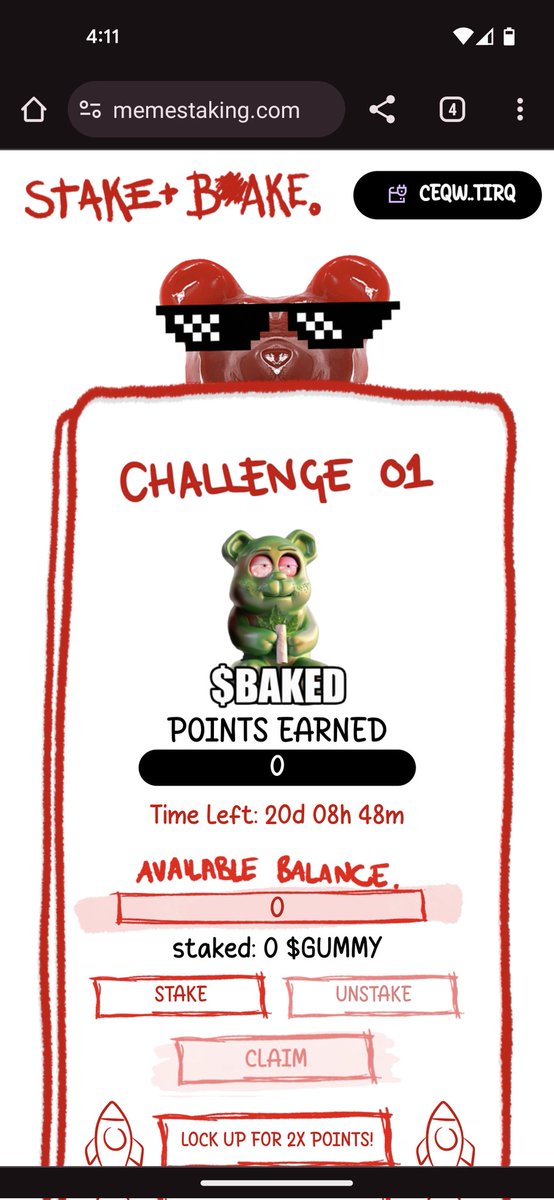
@Cryp67805875 @gummyonsolana I have exactly the same problem, all staked Gummy and points have vanished!! WTF?
English

@gummyonsolana What's going on I had over 5 mil points and it's not even saying I have any staked gummy now??
English


If I put $10,000 into a meme coin today, which one should I buy?
English
@gummyonsolana @Bybit_Official @deBridgeFinance @BloFin_Official $Tooker holders getting $GUMMY Airdrop??
English

Get FREE $GUMMY 👇🏼
🔴 20 days LEFT @Bybit_Official airdrop ($2.25 Million worth of tokens up for grabs) partner.bybit.com/b/gummyairdrop
🔴 Bridge $GUMMY with @deBridgeFinance app.debridge.finance/r/22357
🔴 Trade to win on @BloFin_Official blofin.com/rewards?activi…
🔴 Complete Sniper School cryptoschool.cryptobanter.com/sniper-school?…
English

@cryptomanran Yes, absolutely expose them. It's time someone cleaned up the space.
English

I think I'm being rugged by a memecoin team.... should I expose them?
English


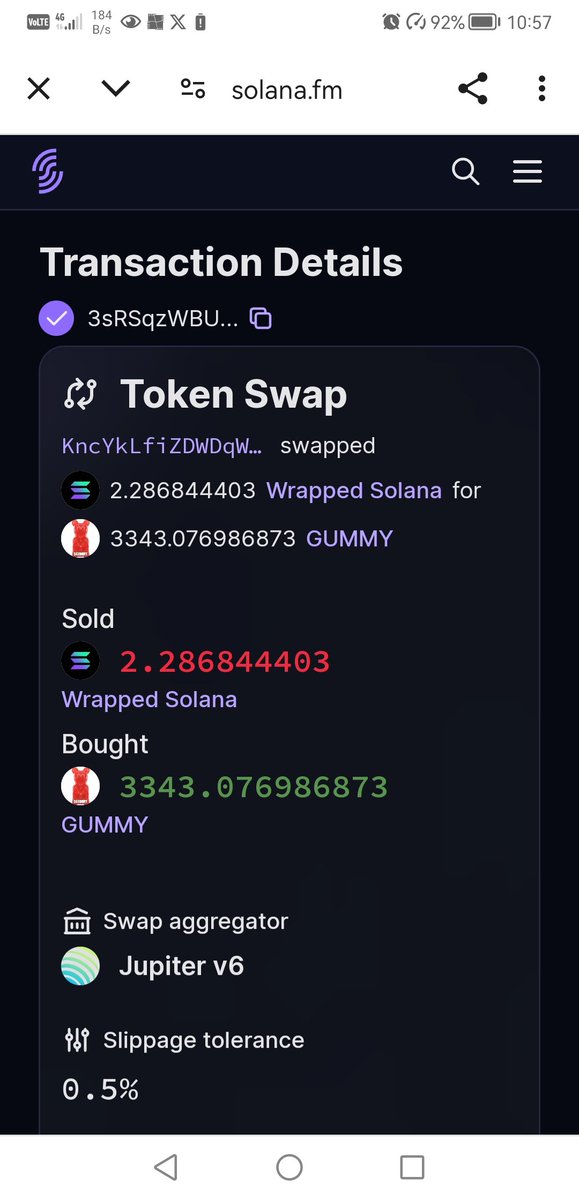
@cryptomanran There you go Bro.
Transaction ID:3sRSqzWBUmAEjsk4XvLEk5ez6cQJrj3XULaiLzD5kWPJvQJ6zswaHFkoW1rDvqJALk619FsfaC2EZ34gFGqhoRrS
Solana Wallet Address: KncYkLfiZDWDqW8JJXnbuFtSyF82H6kaXERpUkcHM3R

Polski
@gummyonsolana Transaction ID:3sRSqzWBUmAEjsk4XvLEk5ez6cQJrj3XULaiLzD5kWPJvQJ6zswaHFkoW1rDvqJALk619FsfaC2EZ34gFGqhoRrS
Solana Wallet Address: KncYkLfiZDWDqW8JJXnbuFtSyF82H6kaXERpUkcHM3R
Polski
@gummyonsolana Solstorm claim portal does not seem to work for claiming Gummy Airdrop for Tooker holders specifically; I have tried several times, it does not work..Solstorm says I have no allocation for holding $TOOKER
English
@gummyonsolana Could you please cover the $Gummy Airdrop for $TOOKER holders. I have been unable to claim my $Gummy Airdrop from Solstorm (as indicated in official $Gummy X post) for holding $TOOKER in wallet despite having above the required threshold of $TOOKER tokens before the deadline.
English
@cryptomanran Could you please cover the $Gummy Airdrop for $TOOKER holders. I have been unable to claim my $Gummy Airdrop from Solstorm (as indicated in official $Gummy X post) for holding $TOOKER in wallet despite having above the required threshold of $TOOKER tokens before the deadline.
English
@gummyonsolana Could you please cover $Gummy Airdrop for $TOOKER holders. I have been unable to claim my allocation from Solstorm (as indicated in official Gummy post); it advises I have no allocation despite holding $TOOKER above the required threshold prior to the deadline date and snapshot.
English
If the $GUMMY price holds the next airdrop will be a $10m drop!!
English
$TOOKER holders - if you had over 500 tokens in your wallet on Thursday, claim your airdrop by connecting same wallet here solstorm.com/claim
The ticker is $GUMMY

English
I want to spend $10,000 on a meme coin, which one do you recommend?
English
Want 1,000,000 FREE $GUMMY tokens?
1. Follow @gummyonsolana .
2. Like this tweet.
3. Post a solana address.
4. Retweet this tweet.

English
@investanswers Hello, I think you will find this assessment of BTC supply and demand dynamics of interest and may want to comment on the same.
x.com/NoelleInMadrid…
Noelle Acheson@NoelleInMadrid
I need to vent about this supposed #BTC “sell-side liquidity crisis” I’m seeing some people get excited about in my feed. 😡 Apparently, the big Wall St. institutions (ETFs) are “gobbling up” all the available BTC. This is wrong on many fronts. 1) First, markets don’t work like that. There will always be BTC for sale at a price – if collective eagerness to buy outweighs collective desire to sell, the price will rise until it finds a seller. I even read an article in crypto media worrying that exchanges would “run out” of BTC to sell. Exchanges don’t work like that, they don’t hold BTC in inventory. They are platforms on which buyers find sellers and vice versa (simplifying a bit) – the price moves to find a mutually acceptable level. In sum, exchanges will never run out of BTC to sell, and there will never be 0 sellers in the market. Pretty much everyone has a price at which they will part with their BTC – for some it is multiples higher than today, for others around these levels will be just fine, thank you. 2) Second, the “Wall Street” ETFs are not “gobbling up” all the available BTC. This is nuts. They are buying BTC on behalf of investors. Some are institutions, many are individuals who might otherwise be buying BTC on exchanges but would rather avoid the hassle and relative insecurity. (I’m not saying the ETFs are “better”, I am saying they are more convenient for many investors who are willing to accept the centralized risk tradeoffs.) Also, today’s spot ETF buyer may become a seller tomorrow, next month, next year, when they retire, whenever. The BTC the ETFs are “gobbling up” will find its way back to the market at some stage, maybe to be bought by other ETF buyers or maybe to be bought by a bank in Papua New Guinea or a doctor in Thailand. The BTC bought by the ETFs does not “leave” the market. It may rest for a while, but it could re-enter circulation at any time. 3) Third, I read a report review that said if ETF demand continues at the current rate, there might be only 12 months of BTC supply left to buy. What? The error might be with the review rather than the original report which is behind a paywall (although it does have the phrase “depleting available inventory” in the title). There is no “inventory” to deplete! BTC is held by individual savers, institutional investors, miners, traders, market makers, etc., each with different profit goals and time preferences. Given the diversity of the BTC investor base, there will always be sellers. Which means there will always be BTC available to buy. It just might be at a higher price, because there are fewer sellers willing to part with their BTC at this level than there are buyers eager to buy. The price will climb until it reaches a level a seller finds acceptable. The buyer then turns into a potential seller (at some point in time, at some price!), and the seller turns into a potential buyer, and market prices keep on moving to find a temporary balance between them. This makes me wonder if the spread of the “sell-side liquidity” fear could be social engineering to bid the price up further. I hope not, because it’s a totally wrong premise and false expectations won’t do the market’s image any good. There are enough valid reasons to expect the BTC price to climb over time, we really don’t need made-up ones. Of course, it could be that someone, somewhere, made a smart comment about how a pickup in net demand meeting a fixed supply would result in an upward price trend, and then an excited market distorted the message and ran with it. I sort of hope so, since not understanding markets is forgivable, they are complicated (and we all make mistakes). We saw this in the last bull run – collective hysteria encouraged otherwise smart people to repeat stupid claims in the hopes of getting engagement in a price-obsessed ecosystem. In this bull run, it’s way too early for that. In sum, there is no “sell-side liquidity crisis” in BTC! Its price is likely to go up as new demand has to pay more to find willing sellers. But it’s far from a “crisis”, it’s just how markets work.
English

#IASUBSTACK🚀 Mr. 100's buying frenzy, $BTC showdown🌪️, $1T could flow into Bitcoin, even 0.01 BTC becomes gold📈Plan ₿'s $60K floor - We're not just bullish; we're on the brink of history!📊open.substack.com/pub/investansw…

English