Michael Schossler, ACE-CPT

525 posts

Michael Schossler, ACE-CPT banner
Michael Schossler, ACE-CPT

Michael Schossler, ACE-CPT

@TheBodtrainer

Muscle preservation for adults 40+ | ACE-CPT, FNS | 16 yrs clinical wellness under MDs & NPs | Author, The Muscle Shield Method™ | https://t.co/ERFrsAlDPB

انضم Eylül 2024
101 يتبع115 المتابعون
تغريدة مثبتة
Michael Schossler, ACE-CPT
Michael Schossler, ACE-CPT@TheBodtrainer·
You have not lost your chance. If you are over 40 and watching your body change in ways you did not ask for, you are not imagining it. Muscle leaves quietly. The mirror does not show it. The doctor does not ask. A GLP-1 speeds it up. But muscle can be kept and rebuilt at any age. The body has not forgotten how. You are not declining. You are unsupported. The work that actually preserves muscle after 50 is simpler than most people expect. And almost no one is teaching it. There is a way.
English
0
0
2
203
Michael Schossler, ACE-CPT
Michael Schossler, ACE-CPT@TheBodtrainer·
The first thing to go isn't your strength. It's your speed. Watch someone older miss a step on a curb. They had the strength to catch themselves. They didn't have the speed to fire in time. Strength fades slowly with age. Power, the ability to produce force fast, fades faster. That gap is why people who still feel strong start to fall. Train strong, and you stay strong. Train fast, and you stay upright.
English
0
0
0
11
Michael Schossler, ACE-CPT
Michael Schossler, ACE-CPT@TheBodtrainer·
@NOgymNOlimits 90 years old. Frail. In a facility. And the muscle still answered. That is not a miracle. That is biology. The body keeps what you make it work for. At any age.
English
0
0
0
5
Hugo ☀️ NOgymNOlimits
Hugo ☀️ NOgymNOlimits@NOgymNOlimits·
Tenían 90 años y eran frágiles, vivían en una residencia, pero... ... en 8 semanas, la fuerza de sus piernas casi se triplicó. Te explico el número, porque suena a invento. Diez personas de entre 86 y 96 años, con una media de cuatro enfermedades crónicas cada una y bastón para andar, entrenaron la fuerza de las piernas. Tres días por semana. Subiendo el peso poco a poco durante dos meses. ¿El resultado? De media levantaban un 174% más que al empezar. Pasaron de unos 8 kilos a más de 20. El músculo del muslo les creció un 9%, y caminar en línea recta les costó casi la mitad de tiempo (Fiatarone et al., JAMA, 1990). A los 90, sí. Parte de ese salto se explica porque partían de muy abajo. Y ahí está justo el mensaje. Desde los 30 perdemos entre un 3% y un 8% de masa muscular por década, y el ritmo se acelera a partir de los 60 (Volpi et al., 2004). Eso explica la fila roja de esa imagen: la grasa que aparece, la fuerza que se va, el bastón que llega antes de tiempo. Pero el cuerpo responde. A los 40, a los 60 y, como acabas de ver, a los 90. El músculo crece. La fuerza vuelve. Y con ellas se queda lo que de verdad importa a esa edad: agacharte a jugar con un nieto, cargar tú las maletas, vivir en tu casa por tus propios medios. Aquellos abuelos lo consiguieron con una máquina y supervisión. Tú puedes aplicar el mismo principio en casa: darle a tus piernas un esfuerzo de fuerza, regular, que cada semana te pida un poco más. Las dos filas de esa imagen son reales. La diferencia entre una y otra la marcas tú, con lo que decides hacer esta semana. Y siempre estás a tiempo de cambiar de fila. 📩 Únete a mi Newsletter, cada semana escribo sobre cómo llegar con salud y fuerte a los 80, con estrategias basadas ciencia: Link en mi perfil y en comentaio. Hugo. Fiatarone MA, et al. High-intensity strength training in nonagenarians. JAMA, 1990;263(22):3029-3034. Volpi E, Nazemi R, Fujita S. Muscle tissue changes with aging. Curr Opin Clin Nutr Metab Care, 2004;7(4):405-410.
Hugo ☀️ NOgymNOlimits tweet media
Español
3
21
76
6.2K
Michael Schossler, ACE-CPT
Michael Schossler, ACE-CPT@TheBodtrainer·
In sixteen years of clinical wellness coaching I've watched the same story play out. The people who stayed independent didn't get lucky. They kept training while everyone else quit. The Muscle Shield Method™ is that work written down. A measurable system for adults over forty who intend to stay strong. The decline is optional. bodtrainer.com
English
0
0
0
3
Michael Schossler, ACE-CPT
Michael Schossler, ACE-CPT@TheBodtrainer·
You don't rise to your intentions. You fall to the strength you actually maintained. The way to stay independent at seventy-five is to keep depositing now, in your forties, fifties, and sixties. Independence isn't given. It's deposited.
English
0
0
0
4
Michael Schossler, ACE-CPT
Michael Schossler, ACE-CPT@TheBodtrainer·
@_AshleyRichmond This needs to be louder. The muscle loss after menopause is not about the gym. It is about whether you can get off the floor at 70. Lift heavy now so the body keeps what you will need later.
English
1
0
1
26
Ashley Richmond
Ashley Richmond@_AshleyRichmond·
The decade after menopause is when most muscle and bone is lost. But it isn't inevitable. • Lift heavy • Get your steps in • Eat enough protein Osteoporosis and frailty aren't your fate. They're a default you can override.
English
2
5
51
5.2K
Dr Danish
Dr Danish@operationdanish·
🤯 JUST IN: INCREDIBLE PHASE 3 DATA ON RETATRUTIDE PRESENTED AT ADA At ADA this weekend, Eli Lilly ($LLY ) presented new Phase 3 data from TRIUMPH-1 and TRANSCEND-T2D-1. BLUF: 28% (70 pounds) weight loss. Unreal. In TRIUMPH-1, participants receiving 12 mg of retatrutide lost an average of 70.3 pounds (28.3%) over 80 weeks. Nearly half achieved at least 30% weight loss, and 65.3% were no longer classified as obese (BMI <30) by the end of the study. Among participants who started with BMI ≥35 and continued treatment to 104 weeks, average weight loss reached 85 pounds (30.3%), with no evidence that weight loss had fully plateaued. What stood out more was the breadth of effect across obesity-related conditions: Knee osteoarthritis pain improved by 73.1% Obstructive sleep apnea severity improved by 60.6% Triglycerides fell by as much as 41.0% Non-HDL cholesterol declined by 24.2% Systolic blood pressure dropped by 12.3 mmHg Waist circumference decreased by 9.5 inches Meanwhile, in TRANSCEND-T2D-1, retatrutide produced A1C reductions of up to 2.0% from a baseline of 7.9%. 90% of patients achieved A1C <7% 85% achieved A1C ≤6.5% 46% reached A1C <5.7%, which is below the threshold used to define prediabetes Patients lost 36.6 pounds (16.8%) at 40 weeks, and weight loss was still ongoing at study end. Obesity medicine is increasingly becoming outcomes medicine. Historically, we have evaluated obesity drugs primarily on percent weight loss... but payers ultimately care about sleep apnea, osteoarthritis, diabetes, cardiovascular risk, and healthcare costs. The significance of TRIUMPH-1 and TRANSCEND-T2D-1 is that Lilly is beginning to show a coherent story across those endpoints, not just body weight. I expect this to expand coverage dramatically. Eli Lilly is the Nvidia of healthcare.
Dr Danish tweet media
English
33
92
642
255.7K
Michael Schossler, ACE-CPT
Michael Schossler, ACE-CPT@TheBodtrainer·
The walker at eighty is rarely a sudden medical event. It's the end of a slow decline that started decades earlier. Sarcopenia builds the cliff. A small fall just steps off it. Most of what we call aging isn't aging.
English
0
0
0
5
Michael Schossler, ACE-CPT
Michael Schossler, ACE-CPT@TheBodtrainer·
@DrSuneelDhand This is a great list. And number three is the one that determines whether the other four are even possible. Without the muscle, you cannot keep moving. You cannot recover from a fall. You cannot stay independent. Everything else depends on it.
English
0
0
0
43
Suneel Dhand MD
Suneel Dhand MD@DrSuneelDhand·
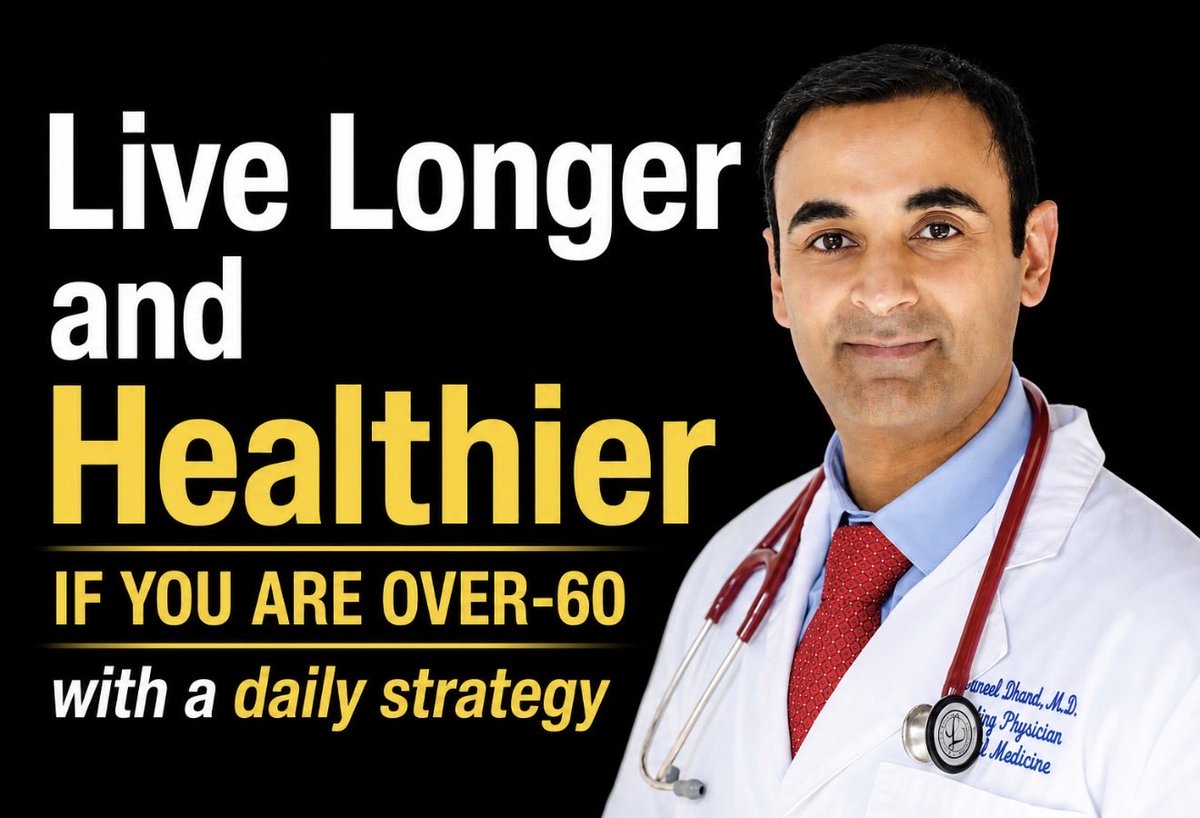
If you are over the age of 60 and want the longest healthiest life, here’s my 5 top pieces of advice: 1. Keep moving, never stop 2. Challenge your brain constantly: what do you know today that you didn’t know 6 months ago? 3. Maintain muscle mass. Sarcopenia (muscle loss) actually kicks in age 30, and dramatically accelerates after 60 4. Avoid social isolation, maximize social activities (unless it’s never been your thing) 5. Understand that Insulin Resistance is even more damaging after a certain age, and closely linked with excessive body fat percentage. Every disease out there is linked to having too much insulin floating around in your body. All of the above are natural methods. You can certainly (and statistically are more likely) to get sucked into the medical-industrial complex and more drugs/doctor visits— but you can always be the OUTLIER! That’s my sincere wish for you: maximum health and longevity. If you are over 60 and would like to understand some of these things better, especially insulin resistance reversal, here’s a video I made: youtu.be/gq0eZClEIkI?si… Good Luck. Be Well
YouTube video
YouTube
Suneel Dhand MD tweet media
English
9
30
161
6.5K
Michael Schossler, ACE-CPT
Michael Schossler, ACE-CPT@TheBodtrainer·
@thegarybrecka This is what more people need to hear. The muscle you lose after 40 is not the muscle you see. It is the muscle you use. To stand up, catch yourself, carry your own weight through a day. Resistance training is the only thing that tells the body to keep it.
English
0
0
3
333
Gary Brecka
Gary Brecka@thegarybrecka·
I am 55 years old and I train with weights three times a week. Not because I am trying to look a certain way. Because I know what the research says about muscle and longevity. After 40, you lose 3 to 8% of your muscle mass per decade without deliberate resistance training. After 60, that rate doubles. Less muscle means a slower metabolism, higher insulin resistance, weaker bones, greater fall risk, and a shorter, harder life. Muscle is your longevity organ. It is the most underutilized health asset most people have. ✅ Three sessions a week. You do not have to be an athlete. You just have to show up. 💪🏻
English
46
71
854
54.3K
Michael Schossler, ACE-CPT
Michael Schossler, ACE-CPT@TheBodtrainer·
The fear of getting bulky has cost women decades of the muscle that would have kept them strong. Building real bulk takes years of deliberate effort most people never approach. What lifting actually buys you is a body that stays capable as the years add up.
English
0
0
0
15
Michael Schossler, ACE-CPT
Michael Schossler, ACE-CPT@TheBodtrainer·
The scale won't warn you when muscle starts to leave. The number drops the same whether you lose fat or lose strength. Watch your lifts instead. If they hold while the weight comes off, you're losing the right thing. Your body keeps better score than the chart does.
English
0
0
0
10
Michael Schossler, ACE-CPT
Michael Schossler, ACE-CPT@TheBodtrainer·
@divyanshifr Tracking's useful. It shows you where you stand and helps you hold the line. But it's like the scale. Check it to stay honest, not every day. Past a point the numbers stop helping and start living in your head. The data should serve the training, not run it.
English
0
0
3
89
Divyanshi
Divyanshi@divyanshifr·
Unpopular opinion: tracking every metric, steps, reps, sets, Strava, Hevy, calories, has taken away the fun and mental clarity that working out used to give me. Sometimes it is good to let go of all of it and just enjoy the sheer privilege of being able to move your body.
English
25
18
187
10.2K
Michael Schossler, ACE-CPT
Michael Schossler, ACE-CPT@TheBodtrainer·
@micheal_ws18 The day it stops being about getting better and starts being about not losing what you have. For most people that's around 50, and most don't notice the switch until they're already behind it.
English
0
0
0
40
Micheal D
Micheal D@micheal_ws18·
At what age does fitness become non-negotiable for you?
English
37
1
25
2.6K
Michael Schossler, ACE-CPT
Michael Schossler, ACE-CPT@TheBodtrainer·
@Devsthetix Feels that way when you're going by the mirror. Track the actual numbers and it's less dramatic. The strength you built doesn't vanish in a week. A layoff dulls the edge, not the muscle underneath.
English
0
2
136
12.1K
D🪿
D🪿@Devsthetix·
Crazy how it takes 6 months to see progress in the gym but only 12 days to lose it.
English
77
652
14.5K
391.7K
Michael Schossler, ACE-CPT
Michael Schossler, ACE-CPT@TheBodtrainer·
@JAMA_current JAMA saying what the clinical floor has been showing for years. Patients lose weight. But without load, they lose the tissue that keeps them standing. The drug scaled. The protocol has not caught up yet.
English
0
0
0
18
JAMA
JAMA@JAMA_current·
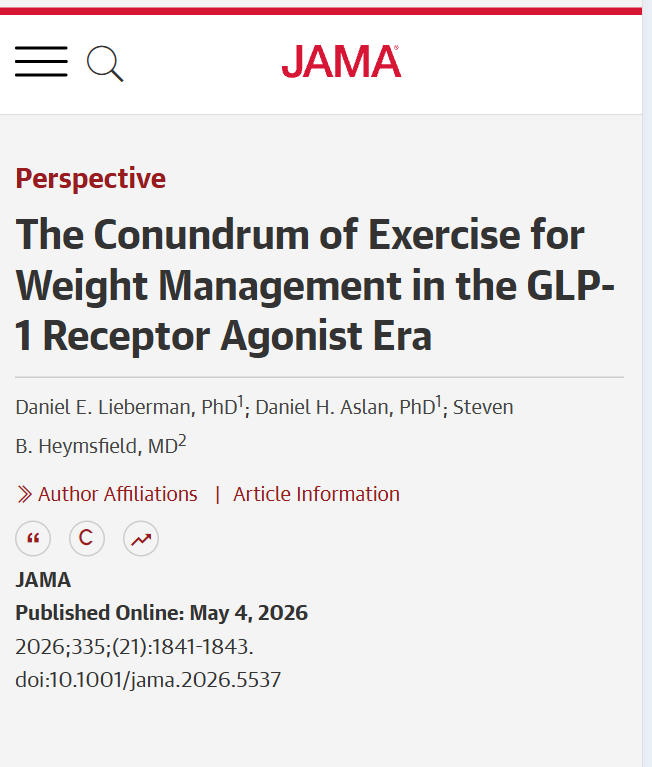
💬 Perspective: #GLP-1 receptor agonist therapy provides substantial #weight loss but increases risk of #muscle mass reduction; exercise, especially resistance training, shows efficacy in preventing weight regain and maintaining muscle mass. ja.ma/4xbYr5K
JAMA tweet media
English
3
17
55
27.6K
Michael Schossler, ACE-CPT
Michael Schossler, ACE-CPT@TheBodtrainer·
@HuffPost Most women do not realize they are losing muscle until something simple gets hard. A jar they used to open. A bag they used to carry. Doctors should be pushing this for every woman over 40. Strength training is how you stay independent instead of dependent.
English
0
1
0
286
HuffPost
HuffPost@HuffPost·
If you're between ages 40 to 65, this singular habit can boost bone health, mood, longevity and more — yet not enough people prioritize it. huffpost.com/entry/doctors-…
English
1
5
7
9.6K
Michael Schossler, ACE-CPT
Michael Schossler, ACE-CPT@TheBodtrainer·
@Jainadave_ Fit at 50 beats unfit at 25 at almost anything that matters. Lifting, carrying, climbing stairs, getting off the floor. Young is a head start you can waste. Trained is a lead you build at any age.
English
0
0
10
207
Jaina
Jaina@Jainadave_·
Can a fit 50-year-old outperform an unfit 25-year-old?
English
80
2
108
15.1K
Michael Schossler, ACE-CPT
Michael Schossler, ACE-CPT@TheBodtrainer·
Most of what women call menopause weight gain is muscle loss in disguise. Estrogen falls, muscle gets harder to hold, and fat moves in to fill the space the muscle left. The mirror changed, but the real story is happening underneath it.
English
0
0
0
26
Michael Schossler, ACE-CPT
Michael Schossler, ACE-CPT@TheBodtrainer·
@DrFrankLipman The longevity benefit is real. But the part people feel first is not the extra years. It is the strength to stay on your feet, recover from a fall, and keep doing the things that make those years worth it.
English
0
0
0
5
Frank Lipman MD
Frank Lipman MD@DrFrankLipman·
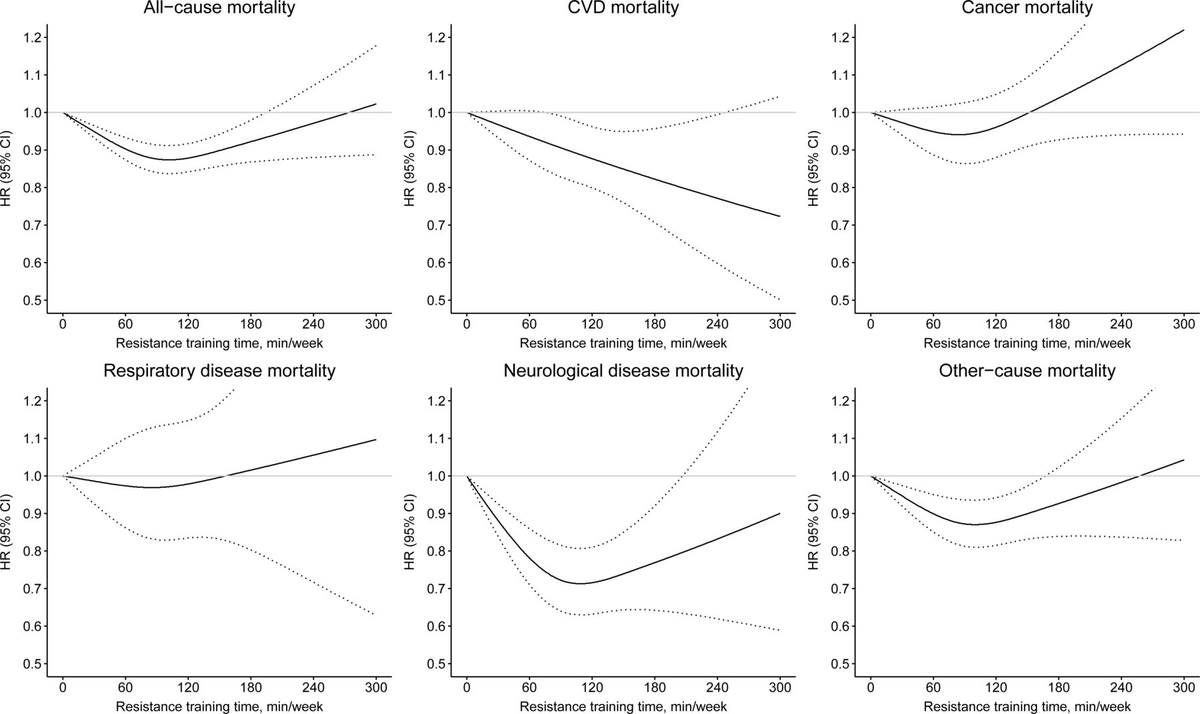
According to a 30 year study, a moderate amount of weekly strength training may be associated with the greatest longevity benefits, especially when paired with regular aerobic exercise ow.ly/lgqZ50Z7iZC
English
1
16
45
1.6K
Michael Schossler, ACE-CPT
Michael Schossler, ACE-CPT@TheBodtrainer·
@foundmyfitness The data backs what we see in practice. Strength training is not just reducing a number on a mortality chart. It is preserving the ability to stand, catch yourself, and stay out of a facility. That is what the 30% is actually measuring.
English
0
0
5
741
Dr. Rhonda Patrick
Dr. Rhonda Patrick@foundmyfitness·
Strength training for 90-120 minutes per week is associated with up to a 30% lower risk of death from all causes, CVD, cancer, and neurologic disease. That seems to be the upper limit - no additional benefit was observed above 120 minutes of strength training per week. These benefits were independent of total aerobic activity, but combining strength training with ~5-15 hours of moderate-to-vigorous-intensity aerobic activity reduced all-cause mortality risk by 45%! Clear message here is: "do both."
Dr. Rhonda Patrick tweet mediaDr. Rhonda Patrick tweet media
English
74
237
1.7K
176.5K