

Small rain
118 posts

How to run agents overnight 101
There's a difference between *running* agents overnight and running *agents* overnight. The difference is the loop you put them in
The first loop is closed. Come morning, the loop has resolved and you wake up to an answered question, a new feature, a completed project.
There are discrete tasks that stack one after the other, and your job is to launch the agents down that path.
The second loop is open; come daybreak, the question is still unanswered, but the search space has shrunk or the system has been further optimised on whatever metric you're measuring.
For those more astute, you'll have noticed: the former is exploit, the latter is explore. Both come with their own challenges.
Closed loops assume the answer is known and all that's required is the prerequisite work to make it true. Open loops assume you don't know what you're looking for until you find it.
Now, the earlier RALPH craze, is an example of former, and basically a "while loop". The agent chips away while some condition isn't true, until it is.
Earlier versions weren't designed great and brute-forced the problems to completion. No feedback. Just an expensive token-burning black hole. But from what I've seen most have to round to the beauty of a feedback loop.
Because designing a real loop means designing feedback. For a closed loop you have to manage context, tokens (if you fear the wrath of a usage limit), and the actual aspect to tackle...
getting the goal achieved, or at worst closer to it, by morning.
Context is the most important of these. If it's wrong or unstructured, a single agent making a few changes cascades into catastrophe and you wake up to burnt tokens, a broken codebase and a raging desire to throw your machine at the wall.
The fix, in its simplest form, is a relay system.
You begin by decomposing the task, hand it to an orchestrator who it manages the process. This is the easiest part.
The harder part is that the output comes out as middling if you're unlucky, or "good but not great" if you are,
And that's a sign that you weren't upfront or clear about the objective.
Open loops are more forgiving but no easier. You're optimising toward a metric or shrinking a search space, and the same principle applies: you still need a relay to manage context. Karpathy's AutoResearch is one flavour of this.
Without a relay system in place, you'll wake up to find that instead of researching or optimising, the agents decided to redo everything you'd already done or the reward hack their way to goal.
The reason it's called a relay is that each agent is passing a baton to the next one. That baton is usually a structured handoff that explains what has been done and what's left.
One of the key things to understand is that it's multiple loops. At the highest level, the orchestrator loops around the validators, who loop around the workers, who loop around the structured plan given to them by you, who is a strange loop. (hehe)
It all culminates in loop design.
The end goal of every loop is to be closed. The question to ask is: in 6–8 hours, how do I aim to close this loop? If I can't, what progress am I willing to be happy with?
Philosophy out of the way.
How do you actually do it?
Here's a few examples to study:
github.com/karpathy/autor… (open loop, optimising a metric overnight)
github.com/parcadei/Conti… (closed loop, orchestrator + validators + atomic workers)
github.com/snarktank/ralph (RALPH pattern with feedback loops and per-iteration memory)
The reason there is no universal overnight system is that "overnight" isn't the problem. You run a loop when you need a task to be done.
The idea that agents will run 24/7 without management is a different problem and a much harder one at that, because that's where you have to tackle memory and learning at scale.
Further, your system has to be able to regulate all the variety it will come to face. That's worth a massive post of its own.
The problem isn't that we can't run agents overnight, it's that the texture of the task will often surface interesting problems that need to be resolved, and were never tackled prior to launch.
i.e. The task decomposition wasn't atomic enough, or when researching, they ingested information that led them down the wrong path.
Or you didn't realise there was there information that existed in your mind that you assumed the agents would know, and instead they spent too long on the wrong thing.
And so on.
Ronan Berder@hunvreus
I had hoped some AI folks would prove me wrong and that you can indeed go to bed and have "agents running while you sleep". I'd love that. All I got was a bunch of vague posts, claims from folks who are "totally doing it" or "have a friend who does this all the time". Lots of anonymous anime accounts. Lots of folks butthurt by me merely asking for something more credible than "trust me bro". I was expecting links to videos or posts from credible developers explaining how they're making it happen. I mean, stuff like what @mitsuhiko or @badlogicgames put out here all the time about how they work and which tools they use. But nope. Crickets. x.com/hunvreus/statu…
English
Small rain أُعيد تغريده

Anthony’s reconstructed Melania’s life preTrump.
🚨There’s a mystery around a baby girl born when Melania was 15.
1985:
Epstein circling Wexner +helping Maxwell hide $ offshore.
Putin dispatched to Dresden.
Maxwell Iran Contra/PROMIS software/wDyson promoted Trump as peacemaker.
AnthonyAndrews@anthon7yandrews
There is practically 0 history to be found about Brina prior to her becoming famous. No parentage info in any news article or bio. She was born on October 20, 1985. Melania was 15 at the time & living 39 minutes from where Brina was born. Melania was born 40 min from home.
English
Small rain أُعيد تغريده

The Israel Lobby was a core reason the US, contrary to its security interests, picked a fight with Iran after 9/11.
The most reformist president in the history of the Islamic Republic, Muhammad Khatami, was elected in a shocking - Khamenei publicly endorsed his opponent - landslide in 1997 on a platform of normal relations with the West ("dialogue of civilizations"), and was in office through 2005. The Clinton Administration publicly expressed optimism about improved ties between the countries. This was despite the 1996 Khobar Tower Bombings by Saudi Hezbollah, which killed 19 American soldiers and in which the US suspected, but could not to Clinton's satisfaction prove, the IRGC played a role.*
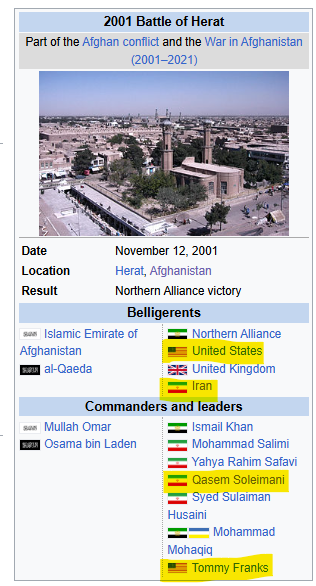
After the 9/11 attack by Al Qaeda (Sunni extremists supported by the Taliban), we now had a common enemy with Shiite Iran. The Khatami gov forcefully condemned the attack and organized public protests against 9/11 (which Iranian people also spontaneously condemned in great numbers). In October 2001, the IRGC collaborated with the US in the invasion of Afghanistan (which we attacked for the Taliban's sheltering of Al Qaeda), providing the US intelligence, access to Iranian air space, and coordinating the Northern Alliance to help us overthrow the Taliban, notably leading the 2001 uprising in Herat, where Hazaras, Northern Alliance fighters, and Quds Force elements (under the command of Qasem Soleimani) captured the city from the Taliban.
Yet months after Iran helped us in Afghanistan - even as an effective co-belligerent in Herat - Bush slammed the door: the January 2002 “Axis of Evil” speech lumped Iran with Iraq and North Korea as existential threats, with the US promising 'confrontation.' In 2003, Iran's grand-bargain proposal (offering an end to its nuclear program, and even an end to support for Hamas/Hezbollah in exchange for a two-state solution between Israel and Palestine), which sought security guarantees against a US attack, was rejected by the White House.
The pivot wasn’t driven by sudden new Iranian aggression; there is no such aggression one can point to in this period. (Tehran was pursuing a nuclear program, but it had for many years, as US Intelligence knew.) It was instead shaped by a network of senior Bush Administration officials who viewed Iran policy through the lens of their deep ideological attachment to Israel and its security interests. These officials included Richard Perle, Douglas Feith, and David Wurmser (@Wurmserscribit), all three of whom were among the eight co-authors of the "Clean Break" memorandum for Benjamin Netanyahu (@netanyahu), which called for overthrowing Saddam Hussein in Iraq and 'engaging' Hezbollah, Syria, and Iran militarily.
(Rather odd that three senior US officials were writing policy papers for Netanyahu, about how to ensure Israeli security, a few years before they joined a US Administration, but I digress.)
These men won the ideological battle against Bush Administration "realists" like Colin Powell, who favored a much less belligerent stance towards Iran. They persuaded Vice President Cheney in particular, and Bush (at least in the First Term), that Iran must be taken out as part of the Administration's doctrine of pre-emptively eliminating potential enemies after 9/11; and also that Iran would be an ideal staging ground for the Administration's "Freedom Agenda," by which pro-US democracies would be established in the Middle East. However, there can be little doubt from their history that these men were in truth ideologically committed to Israel's interests.
The Bush Administration would go on to dramatically intensify sanctions against Iran, as part of the largely successful US policy over the last two decades to impoverish that country. The only reason they didn't invade the country was that, following the 2003 invasion of Iraq, the US military became bogged down in a prolonged, fantastically violent insurgency, in the course of which hundreds of thousands of Iraqis and thousands of US soldiers were killed. In the course of this insurgency, the IRGC funded, trained, and equipped, Shiite militant groups in Iraq that killed hundreds of US soldiers, often via roadside bombs.
This was the so-called Iranian "aggression" against the US that is now used to justify the current war of aggression. In reality, the Americans blatantly picked a fight with the Iranians after September 11, who were actively seeking détente. And they did so in large part because of the influence of the pro-Israel Lobby in the Bush Administration.
* In assessing the allegation of IRGC involvement, it is noteworthy that the Saudis, who were keen to blame the Iranians for the bombing, refused the US access to a range of critical evidence in this case. Clinton's Defense Secretary during the attack, William J. Perry, did not believe Iran was involved in the attack, and Clinton himself did not believe the evidence was strong enough to justify armed retaliation against Iran.
English
Small rain أُعيد تغريده

In making sense of a complex event, it's often best to start with the facts and then work backwards from there. So what are we to make of this weekend in Iran?
My theory is we just saw an attempt to seize Iran's stockpile of enriched uranium unravel.
Down the rabbit hole.⬇️
Let's run through the timeline and the location of key events first:
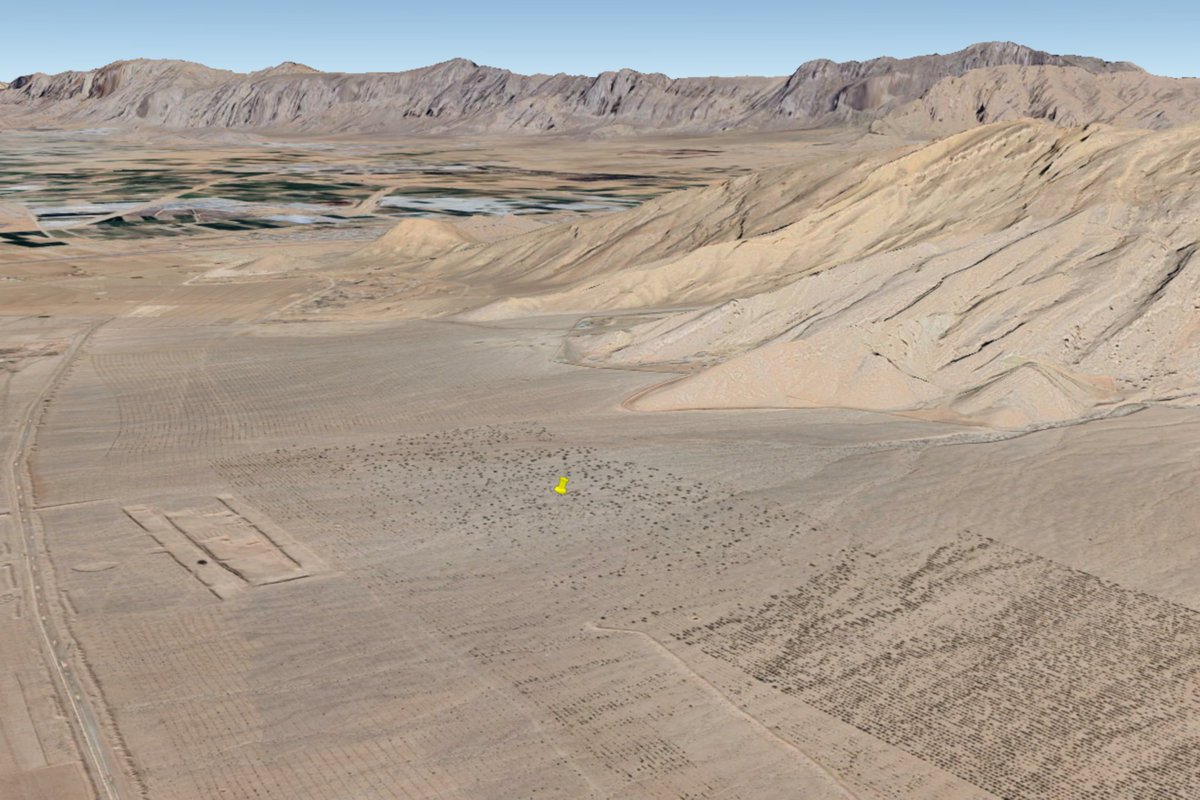
The evening of April 2nd, the Iranian military released a video of them shooting down a USAF aircraft. This was initially claimed as having occurred over the Persian Gulf, but apparently occurred near Isfahan. Wreckage corresponding to an F-15E of the 494th Tactical Fighter Squadron was recovered from a site south of Isfahan the morning of April 3rd, although geolocation of the very barren crash site took some time (fig. 1).
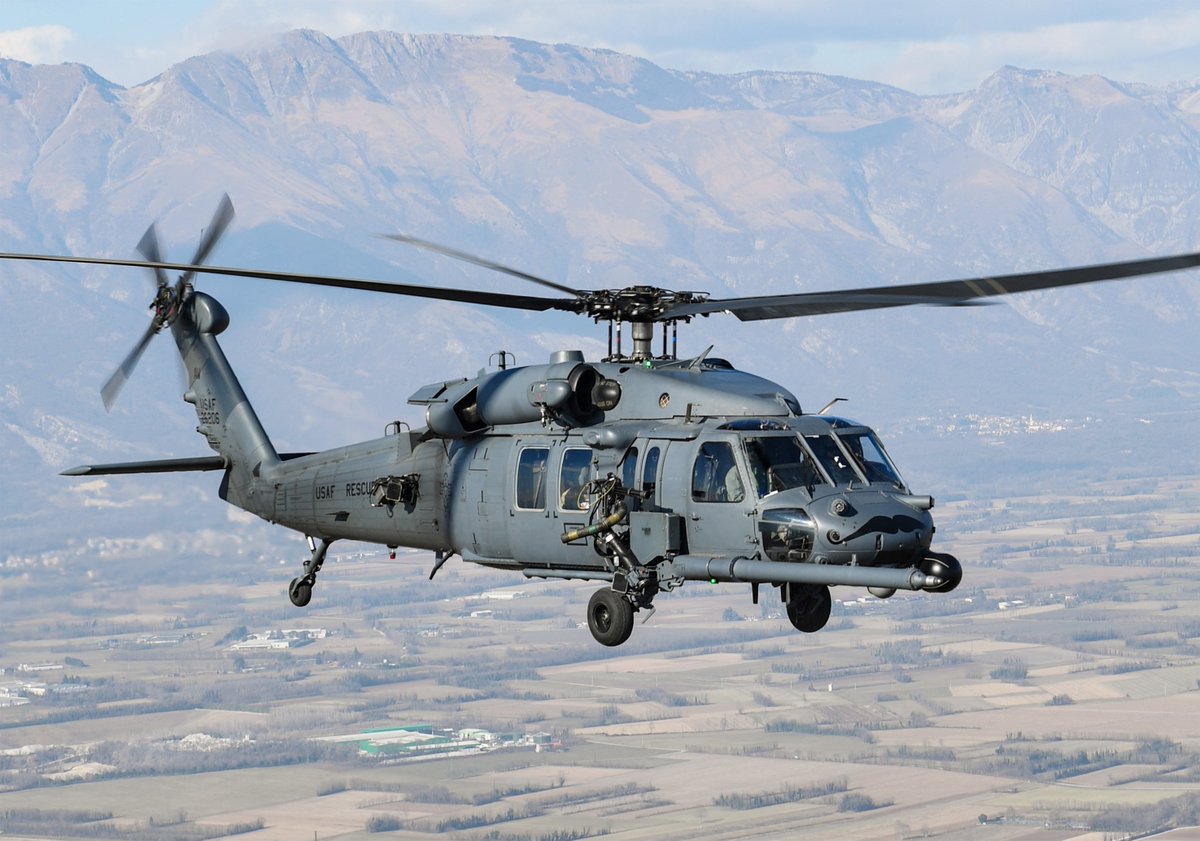
The afternoon of April 3rd, a number of USAF HH-60s and an HC-130 fueler (!) were spotted operating further south and west in Iran, over Kogiluyeh and Boyer-Ahmad Province, as well as at least one A-10, an MQ-9 Reaper, and apparently an F-35. An antiaircraft battle developed and the Combat Search and Rescue (CSAR) HH-60s (fig.2) and an A-10 were damaged, with the A-10's pilot ejecting over the Persian Gulf. The HH-60s were reported as "damaged" and one was photographed trailing smoke. Reports emerged at that time that the pilot of the F-15E (which had crashed near Isfahan, although this was then-unclear!) had been rescued, while the WSO remained at large. Provincial authorities in Kohgiluyeh asked civilians to be on the lookout for an American aviator around this time and numerous photos of militia searching for him emerged.
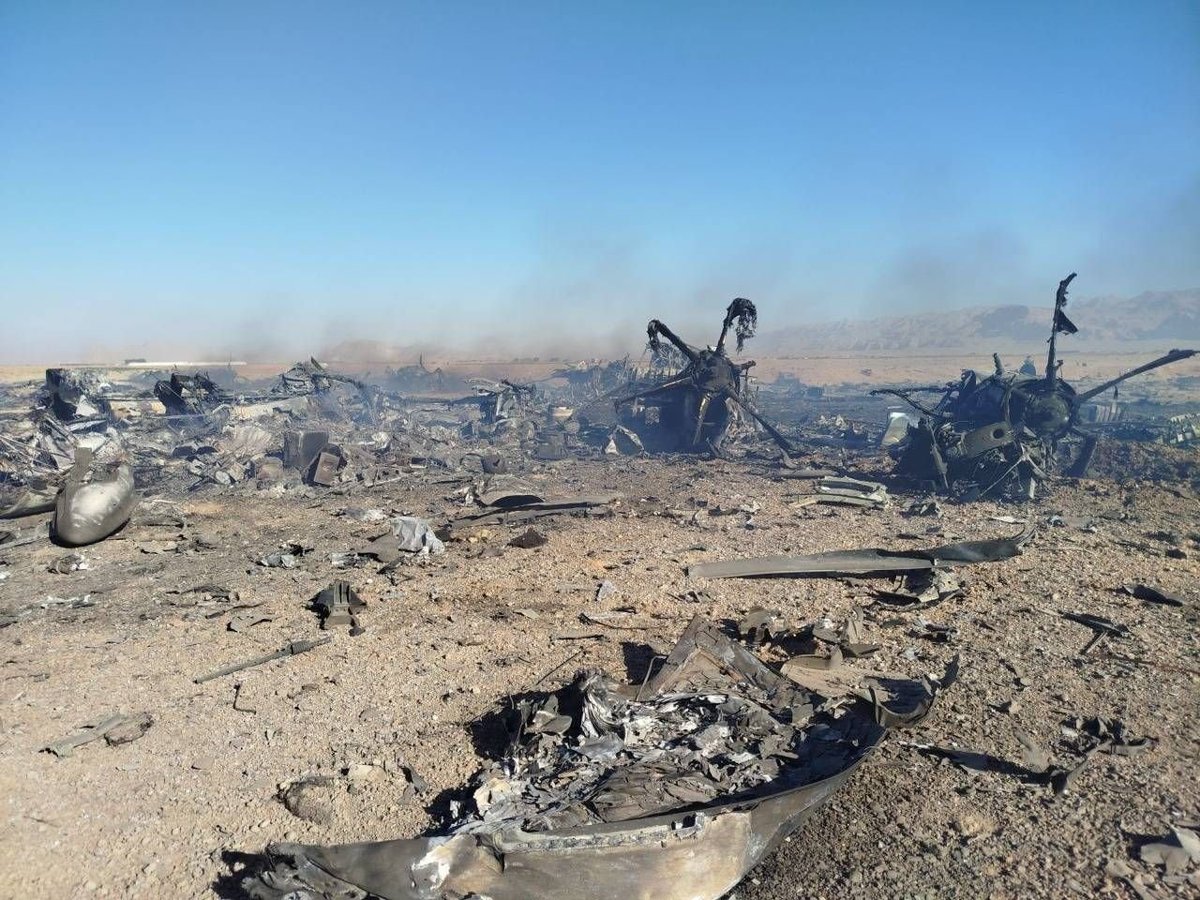
The next day passed relatively uneventfully. The evening of April 4th, however, there was a report of more helicopter activity slightly further north, in Chaharmahal and Bakhtiari Province, accompanied by a washed-out photograph of an unknown helicopter flying very low on a very dark night (fig. 3). Later that night news emerged that the F-15Es WSO had been rescued... and that C-130s had been abandoned and scuttled at a forward base in the Isfahan area during the withdrawal of a company-size SOF force that had landed in the area, over 100 operators ostensibly having been sent to rescue one aviator. Photographs that emerged as dawn broke showed two burned-out C-130s and several destroyed MH-6 Little Bird SOF assault helicopters, in a scene reminiscent of the aftermath of Operation Eagle Claw (fig. 4). A USAF C-295 tactical transport was caught on video around that time flying in Iran - presumably outbound - at extremely low altitude.
So, what are we to make of this?
First and foremost, the official story - that a huge direct-action SOF force landed near Isfahan with assault helicopters and heavy transport aircraft to rescue one fugitive airman - is nonsense. Not because the USAF won't go to extreme lengths to recover isolated personnel - it can, will, and did in this case - but because that's an absolutely nonsensical way to accomplish that mission. It's a totally inappropriate force package for a mission to go in, extract a single person from a remote area, and leave. Ergo this SOF task force was there on other business.
So how were the pilots actually recovered? In all likelihood, exactly the way you would expect them to be recovered - by USAF PJs in long-range helicopters, under cover of darkness. The rescue force probably recovered the pilot from the Isfahan area late at night on April 2-3 and were caught in daylight as they exfiltrated, leading to the aforementioned antiaircraft battle the morning of April 3rd and a high-risk refueling over Iranian territory that was filmed by many Iranians on the ground, as well as a shot-down A-10 trying to clear a path for the helicopters to exfiltrate. The WSO was likely recovered from his hide site near Isfahan by HH-60 in a quiet and deliberate operation the night of April 4-5. One or two birds, in and out under cover of darkness - a far cry from the gung-ho stories currently being spun.
So what about the SOF rodeo happening at the same time? Well, why was an F-15 flying downtown to Isfahan the evening of April 2nd to begin with? Probably because there was a huge direct-action raid planned in the Isfahan area for the night of April 4-5, likely going after enriched uranium at an underground facility in the region, and the Iranian air defenses around Isfahan weren't going to suppress themselves. The plan was likely to fly several MH-6 assault birds and a sizable force of operators via C-130 and C-295 to a forward staging area near Isfahan the evening of April 4th, hit a reported cache site or sites for enriched uranium, and try to make it out with the magic dust by daybreak on April 5th.
In any event the USAF wasn't going to send transports somewhere it wouldn't send strike aircraft. So the Air Force cashed its check on claims of air superiority and in went the strike package the evening of April 2nd - and lo and behold one of the F-15Es went down because reports of the demise of the Iranian air defense network had been greatly exaggerated. Any rational planner would have scrubbed the SOF operation at this point because they'd lost control of the situation and the Iranian defenses had proven more effective than planned.
We went ahead anyways and inserted the SOF task force the evening of April 4th. I strongly suspect that this force was immediately discovered by Iranian drones that would have been up and searching for this WSO, because five transport aircraft including at least two C-130s (about what would be required for a bunch of Little Birds and a company-sized element of operators with equipment) landing at a desert airstrip 50km from Isfahan (and in the same general area where the WSO was taking cover) would be pretty God-damn obvious to anything with thermals. Iranian troops immediately deployed and began converging, the task force probably took indirect fire, and the operational commander immediately aborted mission and retreated in the three remaining operational aircraft. Scuttling charges on delayed fuzes burned two C-130s and an unknown number of MH-6s that had been abandoned at the airstrip around dawn.
The story that they were there to rescue the WSO was concocted at that time to cover the disastrously failed raid, as were logistically implausible claims that the task force had been rescued by three additional aircraft after the two C-130s got stuck on the LZ and were scuttled - perhaps to minimize the scale of the effort. Claims that a large battle took place appear to be similarly exaggerated - video has emerged of a single group of Iranian militia apparently killed in a drone strike, but nothing of the nonstop bombing and firefights that were rumored across Telegram all night. I remind the reader that the events of the last few days have proven quite conclusively that Iranians seem to have plenty of internet access to post photos and video when they actually have something worthwhile to film.
I'd like to note that Hegseth fired General George - US Army Chief of Staff - on April 2nd, apparently because he just wasn't a good fit for the job and definitely not because he'd told him that this whole scheme was insane. It seems to me that the good General's advice should have perhaps been heeded.
English
Small rain أُعيد تغريده

The Iranians will make no deal with Trump. They get the same outcome with or without a deal.
This is what will happen next:
1) Counter-value strikes on Israel (civilian targets). This will exponentially raise the pressure on the Israeli government both militarily and internally.
2) Destruction of the GCC as a political entity. Iran has already achieved this by tearing Qatar and Oman away from the GCC's mainline stance, and now they're courting the Saudis to strike a deal. UAE, Bahrain and Kuwait won't survive as countries and will deal with the consequences of their hawkish stance.
3) Fracturing of NATO by making independent deals with the European member states through Turkish mediation. This will isolate the USA and piss them off even more than they presently are at NATO.
4) Reparations from the GCC -- Qatar has already reported paid a $6 billion "bribe" to Iran to exit the war and to apologize for its role in facilitating the US military. The rest of the guilty parties will either pay it by force via political dissolution or via a deal. Their natural gas and oil is useless with Iran controlling the Strait and having the ability to destroy their refineries/industrial operations.
5) An extremely pro-Iran deal with the USA or the unilateral American withdrawal without a deal. Both achieve the same outcome. This is why the Iranians aren't fussed about a deal until steps 1-4 are completed.
This war ends soon regardless of Trump's next move as the chessboard has been cleared off already.
That the USA had to spend $3 billion dollars in lost air frames just to recover 2 stranded F-15E pilots shows that the entire military campaign is unsustainable at current rates, let alone with a ground war.
From my post 3 weeks ago, Iranians are already at step 6) of the strategy matrix. Trump's desperate threats to target Iranian infrastructure and his already on-going counter-value (civilian targeted) attacks on Iran are just hasten 6) earlier than I thought.
The Iranians had been holding off from going fully counter-value since their interdiction campaign was unfolding flawlessly -- CENTCOM was destroyed and the US navy was kicked 1000+ kilometers away from theater (drastically reduces sortie rates and efficiency). Ontop of that, they have taken out almost half of the total amount of aerial high-altitude refuelers present in theater.
Their hand is being forced, and was naturally going to go for the counter-value option soon anyway. But at this stage of the war with the USA and Israel having exhausted >80% of their stand-off munitions and the Iranians activating state-of-the-art anti air systems, Iran has the upper-hand in a counter-value war and that will bring the entire conflict to a close sooner than thought.
That's the final act of the war and the most brutal.

COKE❄️@0xcoked
The entire Iranian strategy matrix has been easy as fuck to read this entire war: 1) Close the Hormuz to start the timeclock til Trump is forced to TACO 2) Inflict cost on GCC so they pressure Trump to fuck off, while bearing insane costs themselves 3) Destroy CENTCOM (in the GCC countries + Iraq) to eliminate US presence in the theater. 4) Destroy all radar equipment, including the Incirlik X-band radar in Turkiye, while striking a deal with Erdogan to let Turkish ships through the strait in exchange (seems like this backdoor deal was done). This will make Iranian ballistic missiles and drones exponentially more effective, and already has been. 5) Effect severe counterforce strikes on Israeli airbases, including if they evac to Cyprus, in order to neutralize all of their offense. 6) Keep the threat of intense counter-value strikes on the Gush Dan (Greater Tel Aviv area) in order to deter any major strikes on Iranian civilians. As Israel panics more and more, we will see #6 happen soon and that is what will ultimately seal the war in Iran's favor.
English
Small rain أُعيد تغريده

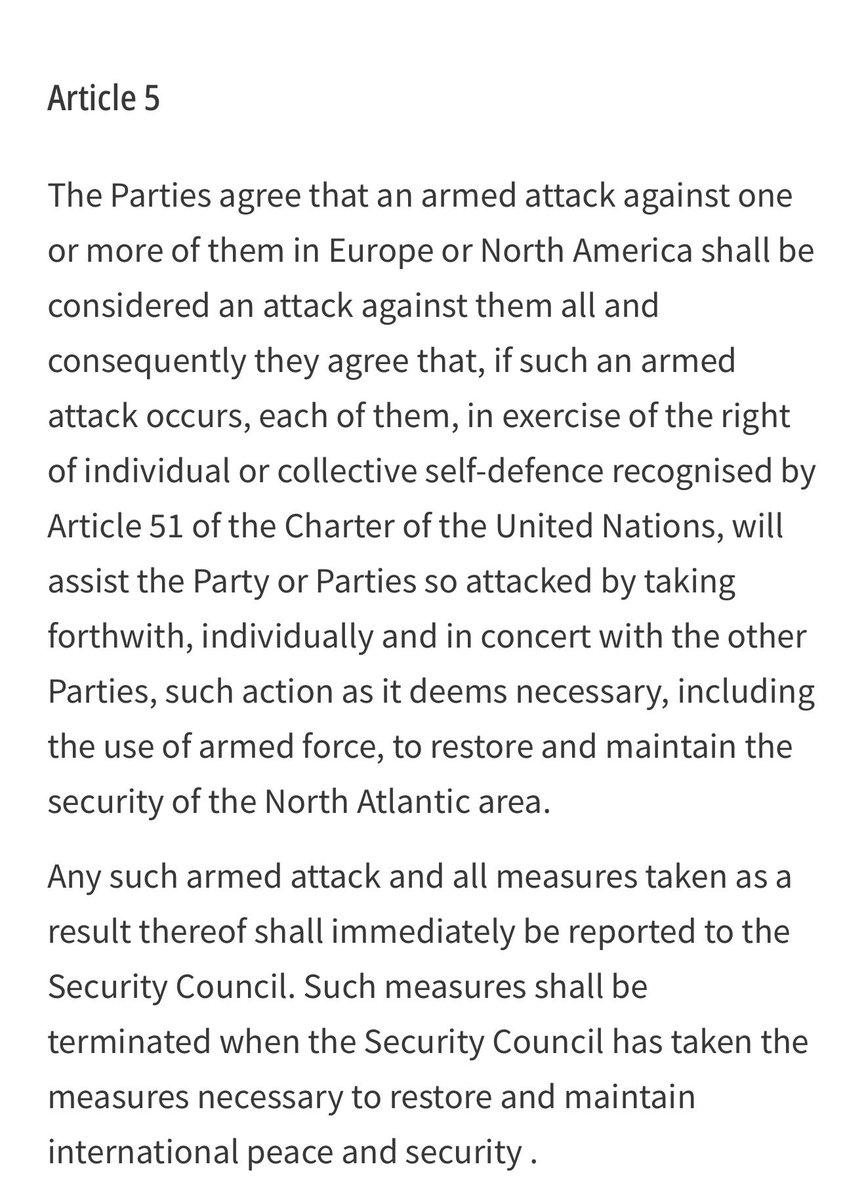
The Atlantic alliance treaty is very clear on what areas it covers. Iran isn’t one of them.
Mike Coté@ratlpolicy
The whole point of the Atlantic alliance is that it would be operative regardless of which politicians were elected in member nations. That's why we have treaties. If the US-Europe partnership is wholly dependent on the outcome of our elections, it's essentially already dead.
English
Small rain أُعيد تغريده

A good military planner is a committed student of the enemy. He’s desperate to learn about the enemy, about the enemy’s forces, about how the enemy sees the world, what he values, what he cares about. He wants to know everything there is to know about how the enemy thinks, how he operates. He wants to anticipate every move of the enemy.
A good commander RESPECTS the enemy. Admires him even. At the minimum, he must have STRATEGIC SYMPATHY for the enemy. This means that he appreciates what the enemy is doing and understands why the enemy is doing what he is doing.
The sort of contempt we have seen at the highest levels has no place in the world of the military planner. He knows that the greatest of all military errors is to underestimate the enemy.
He knows too that a single strategic error can decide the war. That is why he is totally anal, especially when it comes to intelligence, estimates and assessments of the enemy.
The great problem raised by information operations is that they introduce noise into these calculations.
Did information operations conducted by parts of the state confound the military’s assessments? Did Israel and the lobby introduce misperceptions of Iranian strength? Almost certainly.
Why were American bases not properly evacuated before hostilities? Who determined that Iran will not respond by attacking them? Did they also think that Hormuz could be forcibly reopened with little difficulty? If not, why was the president left with the impression that it could done?
Why did prewar estimates of Iranian capabilities turned out to be so badly wrong? Why do they have to be revised upwards constantly? Did not one step back and look at the political incentives of the sources?
And who is being served by the media suppression of US damages? by the suppression of satellite photographs?
Every failed war is first and foremost an intelligence failure. There’s going to be a lot to answer for. The failures seem to have been systematic and comprehensive. Not just by the yahoos but even the generals.
Policy Tensor@policytensor
In a major war, the main objective is the armed forces of the enemy. You have to follow the best available plan to destroy the enemy’s forces, whatever the political war aims or issue under dispute. China has to prepare to fight the US military. Taiwan is a secondary consideration, operationally speaking, although a fait accompli would help greatly. Likewise, the US must prepare to fight the PLA across the entire operational theater and perhaps well beyond. Neither side can dictate arbitrary limits to the conflict; intrawar deterrence and war limitation is possible only in as much as both sides agree, at least tacitly.
English
Small rain أُعيد تغريده

Something about this F15 crew rescue doesn't add up. Why would one need C130s (carry 60-70 troops) for rescuing one or two aircrew and maybe a few troops whose helicopter got shot down during the rescue. It looks more like spl forces were in a temporary base with C130s etc. 1/3
English
Small rain أُعيد تغريده
Obama failed to deliver the sanctions relief that was agreed in the JCPOA. Trump tore it up. The Iranians, in a remarkable achievement of European diplomacy, kept their side of the bargain. But Biden refused to go back to the deal, demanding further concessions.
The problem is far deeper than Trump. And it is deeper than even party politics. A serious state would’ve built on the opportunity for a broader rapprochement to solve the problem posed by Iran. But that idea could not even be proposed bc of the hold of the lobby and the broader warmongering community of the Blob. We’re institutionally incapable of good policy it seems.
In the fantasy world of the Biden mechanics, the Palestinians could be put in a box, Iran could be put in a box permanently. When the illusion was broken on Oct 7, there was no serious reconsideration. Instead, we supported the genocide and Bibi’s wars of aggression. It was all going to be fine, bc we were just so fucking powerful. Who needs soft power when you have bombs?
There is no room for any serious thinking on foreign affairs. It is impossible to point out, for instance, that the Israeli idea of imposing military primacy on the whole region cannot possibility work. No sir, we will bash our heads against the wall but not control our outlaw protectorate.
This is how we got here, why we are watching the destruction of the American world position.
Eric Brewer@BrewerEricM
I think most people who supported the JCPOA (myself included) were keenly aware of its limitations. But let’s take these criticisms point by point. These arguments seem historical, but they have relevance for the present and the future. 1/
English
Small rain أُعيد تغريده
Let me just add that the fantastical idea of eliminating Iran is very new. It was never seriously entertained before Oct 7, 2023.
What has happened is not just entrapment and capture. Equally important is the new Israeli radicalism and their policy of aggression.
Israeli society and elites have radicalized in a staggering way that is hard to comprehend. Israel’s policy of aggression seeks to eliminate all regional rivals, starting with Iran.
Had Iran not defeated the US-Israeli aggression, the Israelis wanted to go after Turkey next. Having destroyed Gaza, now they’re depopulating southern Lebanon and have gone a rampage in the West Bank. Israel is now the most aggressive power in modern history since Germany under Hitler.
They have completely lost their fucking marbles. Do they really think they can secure Israel by raining death and destruction on all their neighbors in perpetuity and break up all the regional powers in accordance with the Yinon plan?
So the final decisive capture of their great power ally couldn’t have come at a worse time in the history of US-Israeli relations.
Amerikanets 📉@ripplebrain
I continue to see influential accounts on here insist that this war is not primarily driven by Israeli foreign policy goals. It's possible to argue against this by sifting through media reports about who called who in the lead up to the war, and this is the tack most people take. But I'd like to build a case for Israeli strategic primacy through a different route. Place yourself in the shoes of an Israeli strategic planner, and assume that your principal strategic goal is Israeli hegemony over the Middle East. It should be uncontroversial to assert that eliminating Iran is a necessary (and perhaps the most important) component of this goal, so I'll skip over justifying that. How can this be accomplished? The IDF consists of 170k active duty personnel, and is suffering recruitment and retention issues. The IAF packs an outsized punch considering Israel's size, but it's ultimately a mid-tier air force with ~250 fighter airframes (most of which are F-16s and F-15s), no bombers, and only 11 refueling tankers. The Israeli Navy is a souped-up coastal defense force and can't be expected to operate in the Persian Gulf. Compare this to Iran, which has a manpower pool an order of magnitude larger, tens of thousands of drones and thousands of ballistic missiles, an asymmetric naval force focused on area denial, extensive proxy forces, and hugely favorable terrain for defensive operations. There's no chance of deploying an IDF ground component onto Iranian soil. It's an impossible prospect on a political level for any other state in the region to support this, and Iraq and Syria stand between Israel and Iran. Even if the Iranians didn't outnumber the IDF by a huge margin, sustaining some kind of invasion simply isn't on the table. The best you can do in terms of direct offensive operations is the following: • Launch a short campaign (remember you're limited by refueling aircraft) of aerial attacks using standoff munitions like ALBMs • Insert agents into Iran and have them launch drones from within the country • Try to arm and support proxy forces within Iran, or organize multiple small invasions • Orchestrate political violence, protests, terrorist attacks, etc The Israelis have attempted all of these, and so far none of them have seemed to fundamentally shift the strategic picture. This leaves one option on the table: get the United States to fight Iran for you. Considering this has been an Israeli goal for decades, and one administration after another has balked at the prospect, it's not an easy task. You'll draw vast sums of money out of a network of American Zionist billionaires to influence an election. You'll need the closest possible connections to US leadership, ideally agents within the executive's own family. You'll want to have your people involved in the US foreign policy apparatus, putting them in between the US government and Iran, so you can control negotiations. You'll need people within the Department of War, though having an agent as Secretary of War would draw too much attention. Once all of this is achieved, you'll stand a chance of orchestrating events to suck the US gradually into direct combat with Iran. You start off by provoking the Iranians into attacking you. Hit some embassies, assassinate IRGC personnel, launch airstrikes on Tehran. Keep pushing about the dangers of an Iranian nuclear weapon, make sure the US treats it like a red line. Pressure the administration into participating in a limited strike. Bide your time when necessary, then suddenly escalate again. When it seems like an off-ramp might be coming up, find a red line and cross it. Keep going until American hegemony itself is on the line. The sunk cost fallacy will ensure events unfold in your favor until American boots hit the ground. This is, of course, exactly what we're seeing. You can make a case that this war is really about China, or energy markets, or defense industry profits. There are sound arguments that some US interests overlap with Israeli goals. But it is *very* hard to make a case that this war isn't significantly the result of decades of Israeli soft power, influence operations, and espionage.
English
Small rain أُعيد تغريده

Never ask:
A woman her age
A man his salary
The White House why the president is getting a secret medical procedure that makes him unable to do public appearances for the first 2-4 days of almost every month since September 2025.
English
Small rain أُعيد تغريده

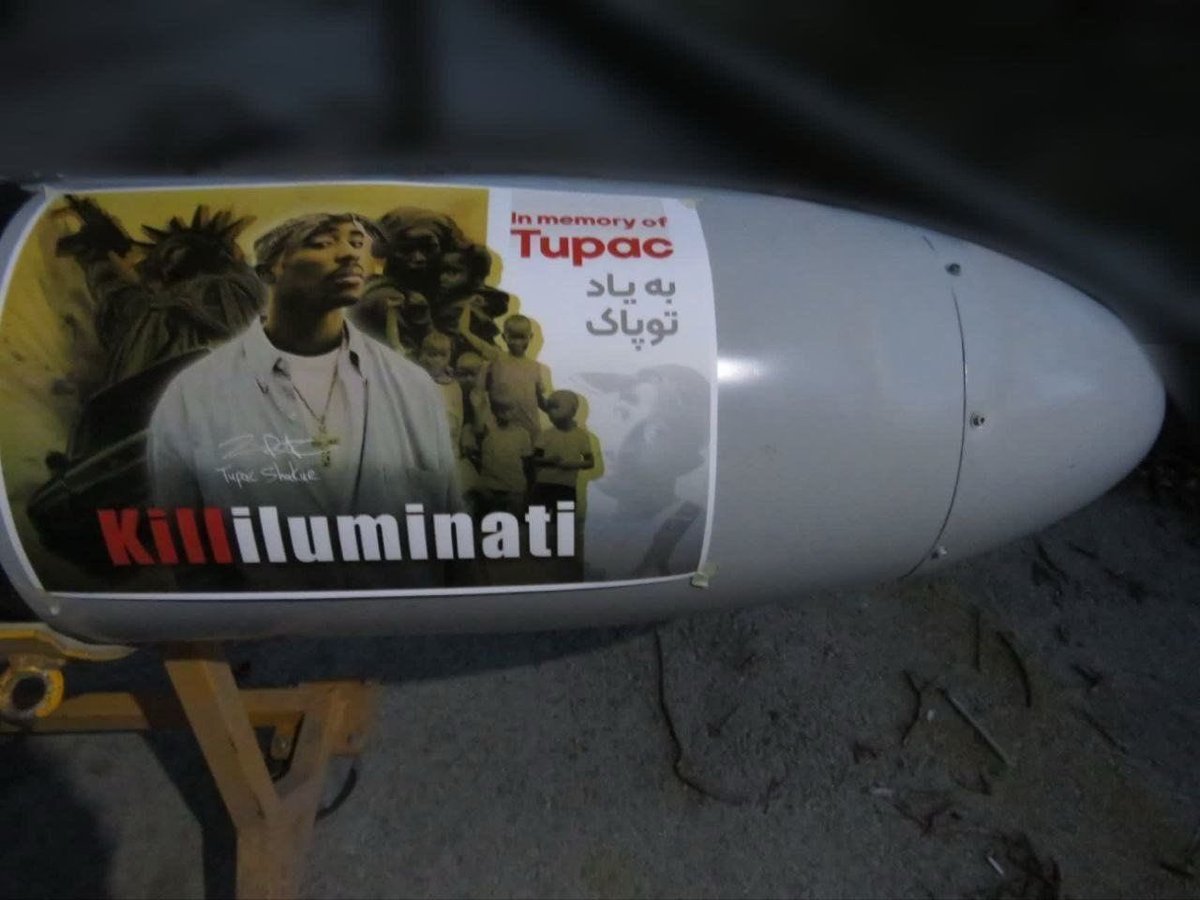
💢 An Iranian Shahed drone heading toward enemy targets today was seen bearing a sticker reading “In memory of Tupac Shakur” and “Killuminati,” referencing his 1996 album The Don Killuminati: The 7 Day Theory.
The album’s opening track, “Bomb First (My Second Reply),” is about defiance, survival, and resistance to power — themes that closely mirror Iran’s wartime messaging.
Iranian forces and allied groups have increasingly incorporated global anti-establishment pop culture into their messaging and psychological warfare — in their viral LEGO videos and with references like this.
🎶 Lines from the track resonate with that framing:
“We didn’t even come to hurt nobody… but it’s my life or your life”
“Got nothin’ to lose, got nowhere to go”
“Ride for the cause… I’ll die for the cause”
“Plan, plot, strategize… and bomb first”
English
Small rain أُعيد تغريده

Cursor is raising at a $50 billion valuation on the claim that its “in-house models generate more code than almost any other LLMs in the world.” Less than 24 hours after launching Composer 2, a developer found the model ID in the API response: kimi-k2p5-rl-0317-s515-fast.
That’s Moonshot AI’s Kimi K2.5 with reinforcement learning appended. A developer named Fynn was testing Cursor’s OpenAI-compatible base URL when the identifier leaked through the response headers. Moonshot’s head of pretraining, Yulun Du, confirmed on X that the tokenizer is identical to Kimi’s and questioned Cursor’s license compliance. Two other Moonshot employees posted confirmations. All three posts have since been deleted.
This is the second time. When Cursor launched Composer 1 in October 2025, users across multiple countries reported the model spontaneously switching its inner monologue to Chinese mid-session. Kenneth Auchenberg, a partner at Alley Corp, posted a screenshot calling it a smoking gun. KR-Asia and 36Kr confirmed both Cursor and Windsurf were running fine-tuned Chinese open-weight models underneath. Cursor never disclosed what Composer 1 was built on. They shipped Composer 1.5 in February and moved on.
The pattern: take a Chinese open-weight model, run RL on coding tasks, ship it as a proprietary breakthrough, publish a cost-performance chart comparing yourself against Opus 4.6 and GPT-5.4 without disclosing that your base model was free, then raise another round.
That chart from the Composer 2 announcement deserves its own paragraph. Cursor plotted Composer 2 against frontier models on a price-vs-quality axis to argue they’d hit a superior tradeoff. What the chart doesn’t show is that Anthropic and OpenAI trained their models from scratch. Cursor took an open-weight model that Moonshot spent hundreds of millions developing, ran RL on top, and presented the output as evidence of in-house research. That’s margin arbitrage on someone else’s R&D dressed up as a benchmark slide.
The license makes this more than an attribution oversight. Kimi K2.5 ships under a Modified MIT License with one clause designed for exactly this scenario: if your product exceeds $20 million in monthly revenue, you must prominently display “Kimi K2.5” on the user interface. Cursor’s ARR crossed $2 billion in February. That’s roughly $167 million per month, 8x the threshold. The clause covers derivative works explicitly.
Cursor is valued at $29.3 billion and raising at $50 billion. Moonshot’s last reported valuation was $4.3 billion. The company worth 12x more took the smaller company’s model and shipped it as proprietary technology to justify a valuation built on the frontier lab narrative.
Three Composer releases in five months. Composer 1 caught speaking Chinese. Composer 2 caught with a Kimi model ID in the API. A P0 incident this year. And a benchmark chart that compares an RL fine-tune against models requiring billions in training compute without disclosing the base was free.
The question for investors in the $50 billion round: what exactly are you buying? A VS Code fork with strong distribution, or a frontier research lab? The model ID in the API answers that.
If Moonshot doesn’t enforce this license against a company generating $2 billion annually from a derivative of their model, the attribution clause becomes decoration for every future open-weight release. Every AI lab watching this is running the same math: why open-source your model if companies with better distribution can strip attribution, call it proprietary, and raise at 12x your valuation?
kimi-k2p5-rl-0317-s515-fast is the most expensive model ID leak in the history of AI licensing.
Harveen Singh Chadha@HarveenChadha
things are about to get interesting from here on
English

Background on the Hormuz Crisis
You can skip this long section but know this: THIS IS ALL ABOUT SHIPS, SHIPS, SHIPS... and the US Navy giving them permission to pass.
The Strait of Hormuz is twenty-one miles wide. Two shipping channels, each two miles across, separated by a two-mile buffer. The normal traffic separation scheme runs through Iranian territorial waters, past the islands of Qeshm and Larak, where the IRGC has radar stations, missile batteries, and fast-attack craft bases overlooking every transit.
Twenty million barrels of oil and petroleum products flow through this gap every day. One-fifth of global consumption. There is no alternative. Saudi Arabia’s East-West Pipeline to Yanbu and the UAE’s pipeline to Fujairah can handle maybe 5 million barrels combined. The math doesn’t work. The bottleneck is not political. It’s geological and hydrographic.
When those seven P&I clubs belonging to the International Group issued 72-hour cancellation notices for war risk coverage in the Persian Gulf, they didn’t just raise costs. They made transit impossible.
Here’s why.
P&I clubs insure roughly 90% of the world’s ocean-going tonnage. Without their coverage, ships can’t sail. Port authorities won’t let them dock. Banks won’t finance the cargo. Charterers won’t book the vessel. The entire system, from loading berth to discharge terminal, is underwritten by a chain of contracts that begins with a club in London, Oslo, or Tokyo.
When the clubs pulled war risk extensions on March 5, that chain broke. Not for a few ships. For the global fleet.
War risk premiums jumped from 0.25% to 1% of hull value, renewable every seven days. VLCC charter rates quadrupled to nearly $800,000 per day. Over 1,000 vessels are now trapped in the Persian Gulf, burning charter costs with nowhere to go. By March 3, only four ships crossed the Strait, down from a seven-day average of seventy-seven.
This is the part almost nobody in the media understands. Every TV analyst is talking about minesweepers and carrier strike groups. The binding constraint on Hormuz in the first week was not a minefield. It was spreadsheet in London.
Then Trump did something remarkable.
He ordered the U.S. International Development Finance Corporation to create a $20 billion maritime reinsurance facility, with Chubb as lead underwriter, making the United States government the insurer of last resort for Gulf shipping.
A sovereign nation has positioned itself as the backstop for war risk insurance on the world’s most critical maritime chokepoint. The DFC facility, coordinated with CENTCOM and Treasury, offers hull, machinery, and cargo coverage on a rolling basis to eligible vessels.
The United States now controls the on/off switch for the Strait of Hormuz. Not through naval firepower. Through insurance.
But here’s the tell.
The DFC facility covers hull, machinery, and cargo. It does not cover P&I liability: pollution, crew injury, third-party claims. Moody’s flagged this immediately. Without liability cover, most shipowners still won’t sail. The facility is deliberately incomplete.
If the White House wanted the Strait fully open tomorrow, it could expand the DFC facility to cover P&I liability with one directive. It hasn’t.
That gap is not an oversight. It’s a strike price on an option the administration is choosing not to exercise. Yet.
But now that insurance is mostly settled the ships still aren't sailing. Why?
That insurance isn't backed by the DFC, it's backed by a green light from the US Navy. A green light that hasn't appeared.
Read the latest @DOTMARAD Navy warning carefully: U.S.-flagged, owned, or crewed commercial vessels that are operating in these areas should maintain a minimum standoff of 30 nautical miles from U.S. military vessels to reduce the risk of being mistaken as a threat
They can't pass without Naval ships stepping aside to let them through.
English
Let's unpack this..
What if the White House has no intention of reopening the Strait of Hormuz?
What if this war is really about ships & tariffs?
I had a long discussion with senior DOE official yesterday on background. I can’t share any details but it’s clear everyone’s Strait of Hormuz calculus is wrong.
We need to go back to the drawing boards.
That's it. That's the tweet. Now a hypothetical 🧵 with my personal thoughts.
Ezra A. Cohen@EzraACohen
English
Small rain أُعيد تغريده

I feel like I am going insane and no one has read the articles. It appears that OpenAI has not brought about harmony and still has the "all lawful use" clause in their contract that was the issue in the first place? I think they've negotiated functionally the same contact they've always been offered.
Senior Official Jeremy Lewin@UnderSecretaryF
For the avoidance of doubt, the OpenAI - @DeptofWar contract flows from the touchstone of “all lawful use” that DoW has rightfully insisted upon & xAI agreed to. But as Sam explained, it references certain existing legal authorities and includes certain mutually agreed upon safety mechanisms. This, again, is a compromise that Anthropic was offered, and rejected. Even if the substantive issues are the same there is a huge difference between (1) memorializing specific safety concerns by reference to particular legal and policy authorities, which are products of our constitutional and political system, and (2) insisting upon a set of prudential constraints subject to the interpretation of a private company and CEO. As we have been saying, the question is fundamental—who decides these weighty questions? Approach (1), accepted by OAI, references laws and thus appropriately vests those questions in our democratic system. Approach (2) unacceptably vests those questions in a single unaccountable CEO who would usurp sovereign control of our most sensitive systems. It is a great day for both America’s national security and AI leadership that two of our leading labs, OAI and xAI have reached the patriotic and correct answer here 🇺🇸
English
Small rain أُعيد تغريده

It's really striking that Israel and the US launched their attack a few hours after Oman's foreign minister claimed that Iran had agreed to almost everything the US wanted to ensure that it wouldn't develop nuclear weapons. I hope that journalists will look into this to figure out exactly what the Iranians offered, because if the deal was as good as Albusaidi claimed, it will make this attack even more outrageous.
Badr Albusaidi - بدر البوسعيدي@badralbusaidi
Good to sit down with Margaret Brennan on Face the Nation to explain that a peace agreement between the US and Iran is now within reach. No nuclear weapons. Not ever. Zero stockpiling. Comprehensive verification. Peacefully and permanently. Let’s support the negotiators in closing the deal.
English
Small rain أُعيد تغريده

The differences between OpenAI's contract with the DoD and Anthropic's ask from the DoD appear to be the following:
- OpenAI contract probably states something like: "The DoD is authorized to use our models for all lawful purposes. For the avoidance of doubt, 'lawful purposes' do not include [list of statutes and regulations prohibiting domestic mass surveillance and autonomous AI weapons]."
OpenAI contract also includes various safety mechanisms, including: (i) technical safeguards to ensure the models behave as they should; (ii) deployment of OpenAI FDEs to ensure safety of the models; and (iii) models are to be deployed on cloud networks only (DoD does not get its local copy).
- Anthropic wanted something like: "U.S. government may not use our models for domestic mass surveillance or autonomous AI weapons without our consent".
Two problems for the DoD with this:
(a) Terms like "domestic mass surveillance" may be vague (not statutorily defined), so Anthropic could allege that a lawful action constitutes "domestic mass surveillance".
(b) What happens if Anthropic does not consent? Does it get to pull the plug on the DoD's use of Claude, potentially leaving the DoD scrambling in the middle of some critical engagement (e.g., fighting a war involving the use of AI weapons)?
Per Jeremy Lewin's tweet below, the OpenAI contract terms were offered to Anthropic. Anthropic rejected them.
Senior Official Jeremy Lewin@UnderSecretaryF
For the avoidance of doubt, the OpenAI - @DeptofWar contract flows from the touchstone of “all lawful use” that DoW has rightfully insisted upon & xAI agreed to. But as Sam explained, it references certain existing legal authorities and includes certain mutually agreed upon safety mechanisms. This, again, is a compromise that Anthropic was offered, and rejected. Even if the substantive issues are the same there is a huge difference between (1) memorializing specific safety concerns by reference to particular legal and policy authorities, which are products of our constitutional and political system, and (2) insisting upon a set of prudential constraints subject to the interpretation of a private company and CEO. As we have been saying, the question is fundamental—who decides these weighty questions? Approach (1), accepted by OAI, references laws and thus appropriately vests those questions in our democratic system. Approach (2) unacceptably vests those questions in a single unaccountable CEO who would usurp sovereign control of our most sensitive systems. It is a great day for both America’s national security and AI leadership that two of our leading labs, OAI and xAI have reached the patriotic and correct answer here 🇺🇸
English
Small rain أُعيد تغريده

Sam Altman is famous for being an effective wordsmith, so here are a few questions journalists and employees might want to be asking tonight:
- “Human responsibility for the use of autonomous weapons” does not at all sound like a prohibition on autonomous weapons. Does this just mean a human just has to sign off on the decision to deploy autonomous killbot before it’s used in the field? Or write a report about its inevitable mishaps?
- “Prohibitions on domestic surveillance” is an interesting use of plural. Is this a categorical prohibition or something narrower — prohibiting a few extreme examples?
- Does “putting these principles into the agreement” mean the DoD has agreed to abide by these ambiguous usage restrictions, or that the agreement makes mention of OpenAI’s principles while still only constraining DoD behavior to all lawful use?
- If OpenAI thinks all companies should be getting the same offer — and government coercion shouldn’t be used — did they consider making their acceptance of the contract conditional on revoking the supply chain risk designation from competitors?
Sam Altman@sama
Tonight, we reached an agreement with the Department of War to deploy our models in their classified network. In all of our interactions, the DoW displayed a deep respect for safety and a desire to partner to achieve the best possible outcome. AI safety and wide distribution of benefits are the core of our mission. Two of our most important safety principles are prohibitions on domestic mass surveillance and human responsibility for the use of force, including for autonomous weapon systems. The DoW agrees with these principles, reflects them in law and policy, and we put them into our agreement. We also will build technical safeguards to ensure our models behave as they should, which the DoW also wanted. We will deploy FDEs to help with our models and to ensure their safety, we will deploy on cloud networks only. We are asking the DoW to offer these same terms to all AI companies, which in our opinion we think everyone should be willing to accept. We have expressed our strong desire to see things de-escalate away from legal and governmental actions and towards reasonable agreements. We remain committed to serve all of humanity as best we can. The world is a complicated, messy, and sometimes dangerous place.
English
Small rain أُعيد تغريده

if you work at @OpenAI , you have a social responsibility to ask to see the full contract unless you are somehow ok with handing over the tech you build to the DoW (not the USG, important distinction). silence is complicity.
Sam Altman@sama
Tonight, we reached an agreement with the Department of War to deploy our models in their classified network. In all of our interactions, the DoW displayed a deep respect for safety and a desire to partner to achieve the best possible outcome. AI safety and wide distribution of benefits are the core of our mission. Two of our most important safety principles are prohibitions on domestic mass surveillance and human responsibility for the use of force, including for autonomous weapon systems. The DoW agrees with these principles, reflects them in law and policy, and we put them into our agreement. We also will build technical safeguards to ensure our models behave as they should, which the DoW also wanted. We will deploy FDEs to help with our models and to ensure their safety, we will deploy on cloud networks only. We are asking the DoW to offer these same terms to all AI companies, which in our opinion we think everyone should be willing to accept. We have expressed our strong desire to see things de-escalate away from legal and governmental actions and towards reasonable agreements. We remain committed to serve all of humanity as best we can. The world is a complicated, messy, and sometimes dangerous place.
English
Small rain أُعيد تغريده

The 2 best explanations I can think of for the different treatment here (not mutually exclusive):
1. the technical guardrails won't matter
2. Brockman's $25M to Trump got them special treatment
Axios@axios
NEW: The Pentagon has agreed to OpenAI's rules for deploying its technology safely in classified settings, though no contract has been signed, a source tells Axios. The department appears to have accepted conditions similar to those put forth by Anthropic. axios.com/2026/02/27/pen…
English