
Giulia
63 posts



Giulia أُعيد تغريده

I just completed a full ETH Zürich semester while interning full-time at Apple.
Context: After 2 semesters of trying to build start-ups, I faced frustration & urgency. I spent the past year with constant late nights building/studying, skipping family/friends/events and yet what was the outcome? 0 credits passed and no successful start-up??
(Obviously lots of hidden growth esp. on programming/marketing/sales, but as it’s not quantifiable it seemed like I wasted a whole year)
So at the beginning of this semester, I wanted to get through as many credits & learn as fast as possible.
The issue: I have a strong tendency to procrastinate on studies. I find it much harder to obsess over countless dummy course assignments compared to useful, large side-projects.
During my previous summer at AWS though, I found a really good system for me: work 9h-17h, study 17h-22h, gym 22h-24h.
9-5 means I’m forced to wake up, I waste no time on food (can buy at office), I even have my own desk. Switching from work to study is also much easier (already in the zone + limited time encourages me to get things done)
For this semester, I adopted the same approach: I completed a 3 month internship (March 1st - May 30) and passed 28 credits during the same period (Advanced Systems Lab, Digital Humans, Cloud Computing, Large-Scale AI)
It was tough. Not a single weekend or evening free. If I felt too tired, I would go to the gym earlier, come back and then continue studying. Every evening/weekend I was alone in the office, and took the last bus home at midnight.
The last weeks were especially intense:
- The uncertainty of negotiating ~$20K in VC sponsorships for the Zurich OpenAI Robotics Hack (~2 weeks before the event)
- Sleeping 4-5hrs a day during the final sprint weeks of internship & course projects
An interesting note - despite passing, I feel the 3 months have little useful longterm impacts on my life:
- Courses are too superficial/short-term to allow any meaningful/deep expertise (i.e. I was nowhere near ready to speak to a world expert in the field)
- It’s hard to learn/grow in a 9-5, especially if it’s not with the right team & not obsessive (i.e. ~100hr weeks)
Overall, I’m glad I found a new upper bound for what’s possible.
It has also helped me internalize why I should go all-in on a long-term project/vision (rather than spreading focus across many courses & projects).
I don’t recommend this to others but if you want to just lock-in, it worked well (at least for me).
It feels like staring into the abyss and eating glass, but there’s something rewarding in this struggle :)
English



@techno0ptimist Can you share wich lab when you find it? I’m from eu and also searching for a lab
English

I’ll be going back to Europe at the end of June & I’ll have to find a lab to continue my training. Any pointers are appreciated! 🇪🇺 (pref. longevity focus)
English
You can just do things. Like deciding that you care enough about the space you want to build in to dedicate the next few months (years?) to immerse yourself in it completely.
I have just started training in wet lab & diving deeper into bioinformatics! 🧬👩🔬
I will dedicate the following month(s) to learning basic wet lab methodology + theory of genetic engineering.
I’m starting by learning basic techniques on bacteria (including CRISPR) before moving on to mammalian cell work. 🧫
(For my 1st experiment I will engineer bacteria to overexpress spermidine!)
My plan (once I achieve a minimum level of fluency) is to join a lab for at least 4-6 months (more if that allows me to complete more complex experiments). I want to get real hands-on experience in biotech and make sure my models of biology are solid.
People keep telling me I don’t need this to build a company, but I want to be able to trust my own judgement and feel confident in my understanding of the space. (Plus: it’s fun!)
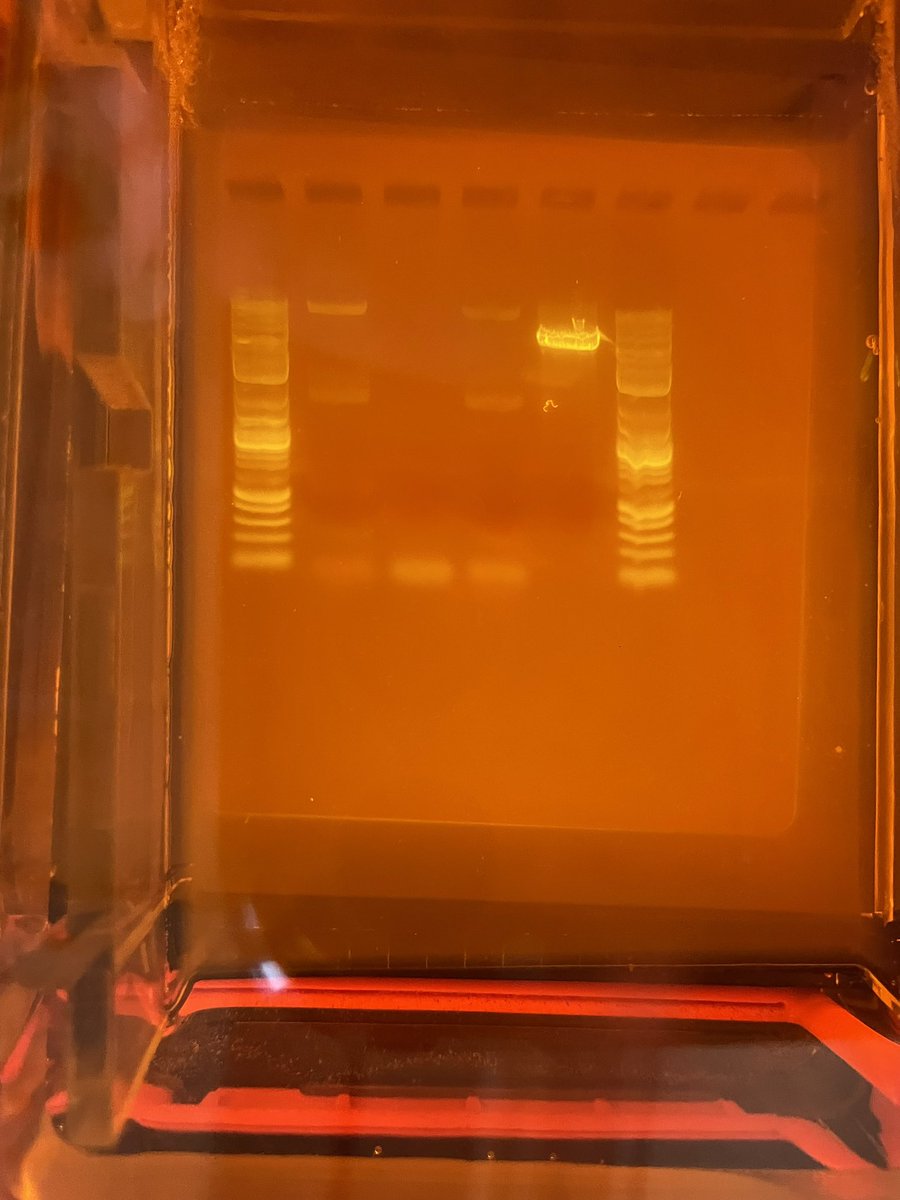
Anyway, here’s my first attempt at gel electrophoresis :’) thanks @koeng101 for the masterclass! (and thanks @ThatMrE for all the mentoring at @BiopunkLab 🔬)

English
@NikoMcCarty Can you use them for mitigating toxic sulfide buildup that harms roots? or maybe research how to cultivate them in lab & generate new bioelectronic components? Very cool topic!
English
Giulia أُعيد تغريده

Cable bacteria were discovered more than a decade ago, but I haven't seen a deep article on them yet.
Last year, I visited Aarhus University in Denmark (where they were discovered) to learn more about them. So let me break down why I think these microbes are so fascinating...
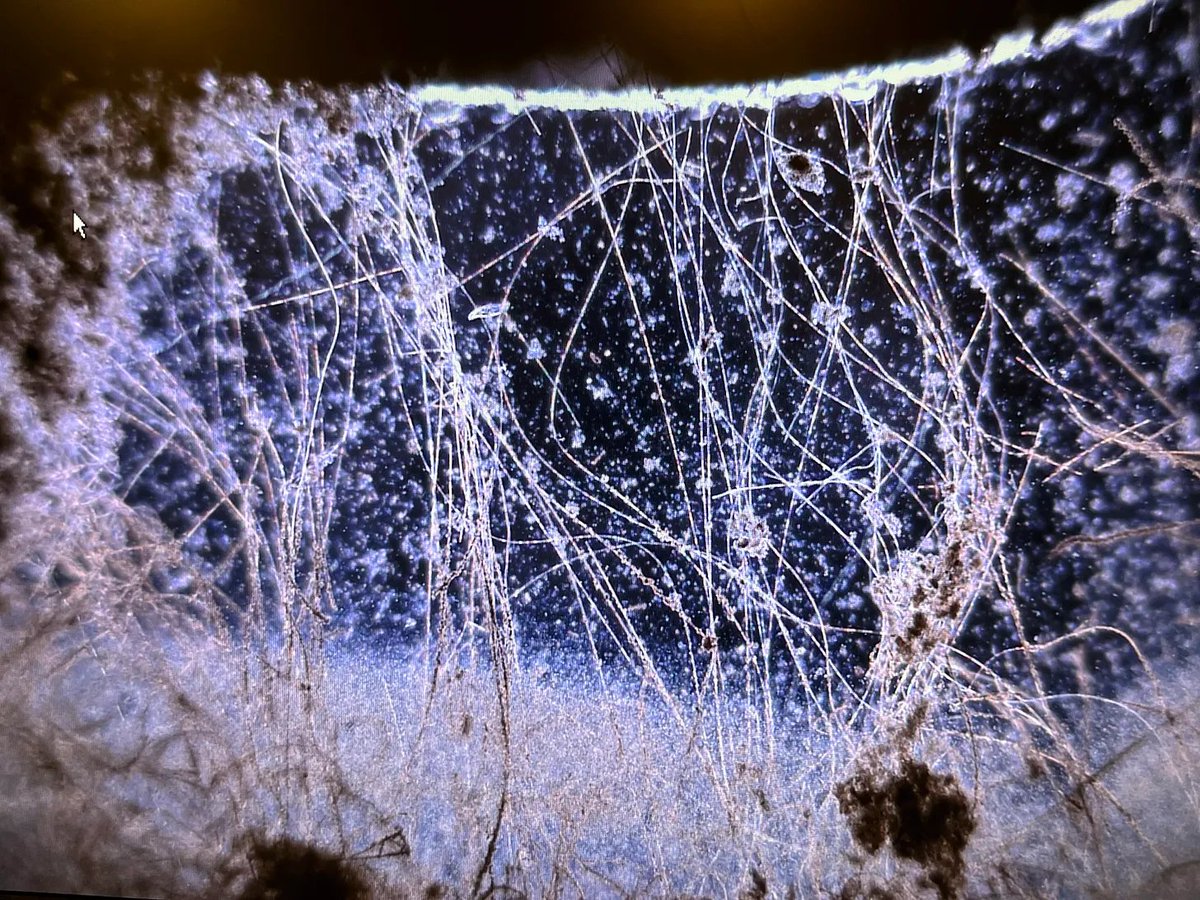
First, some context. Danish researchers found these weird microbes in a lake near Aarhus, and published their discovery in 2012. Peering at the microbes beneath a microscope, they found that the cells resembled human hair. It turns out that these microbes link together, end to end, to form centimeters-long chains. There are hundreds or thousands of microbes in each of these chains.
Cells located near the middle of the chain form physical structures that allow electrons to flow through the length of the filament. These structures are built from protein-based fibers running through the periplasm (the space between the inner and outer membranes) and act like little “conduction channels.” Basically, cable bacteria act like living wires.
One tip of the microbial chain oxidizes (or strips electrons from) sulfides in the mud. These electrons then race up the chain, toward the surface, where the cell on the other tip reduces oxygen or nitrate. By creating this electron bridge, cable bacteria have basically evolved a super unique way to spatially separate redox reactions to power their collective metabolism. This stands in stark contrast to a long-held assumption in biology that every living cell independently generates its own energy supply.
And amazingly, nobody has ever isolated these cells in the laboratory! They do not grow in the typical media! So researchers basically just go to the lake where they were initially found, scoop up a bunch of mud, and do all their studies with that mud.
Cable bacteria may also seem like just a niche organism. And there are lots of weird and fun organisms to learn about in biology! But cable bacteria could also have some serious applications in agriculture.
First, you should know that sulfate reducing microbes and methanogens compete for the same resources. So in 2020, researchers took some cable bacteria and added them to soil pots where rice had been planted. Because the cable bacteria oxidize sulfide (and increase sulfate levels by ~5-fold), they also stifle methanogens. And this, in turn, led to "the reduction of methane emissions by 93%." (See the Nature Comms paper by Scholz V.V. et al.)
(Quick context: Methane emissions are an important contributor to climate change, and about 11% of all anthropogenic methane emissions come from rice fields!)
In other words, it's possible that we could spray cable bacteria into rice fields and seriously reduce methane emissions. A bunch of Stanford researchers got a grant to start scaling this approach just last year.
And there's more stuff about cable bacteria, too. If you're interested, let's talk about them and figure out how to write something together!

English
English

English

Judging by our Flux applications -- biotech is the biggest new tech wave. Bigger than space, bigger than AI, bigger than robotics.
English