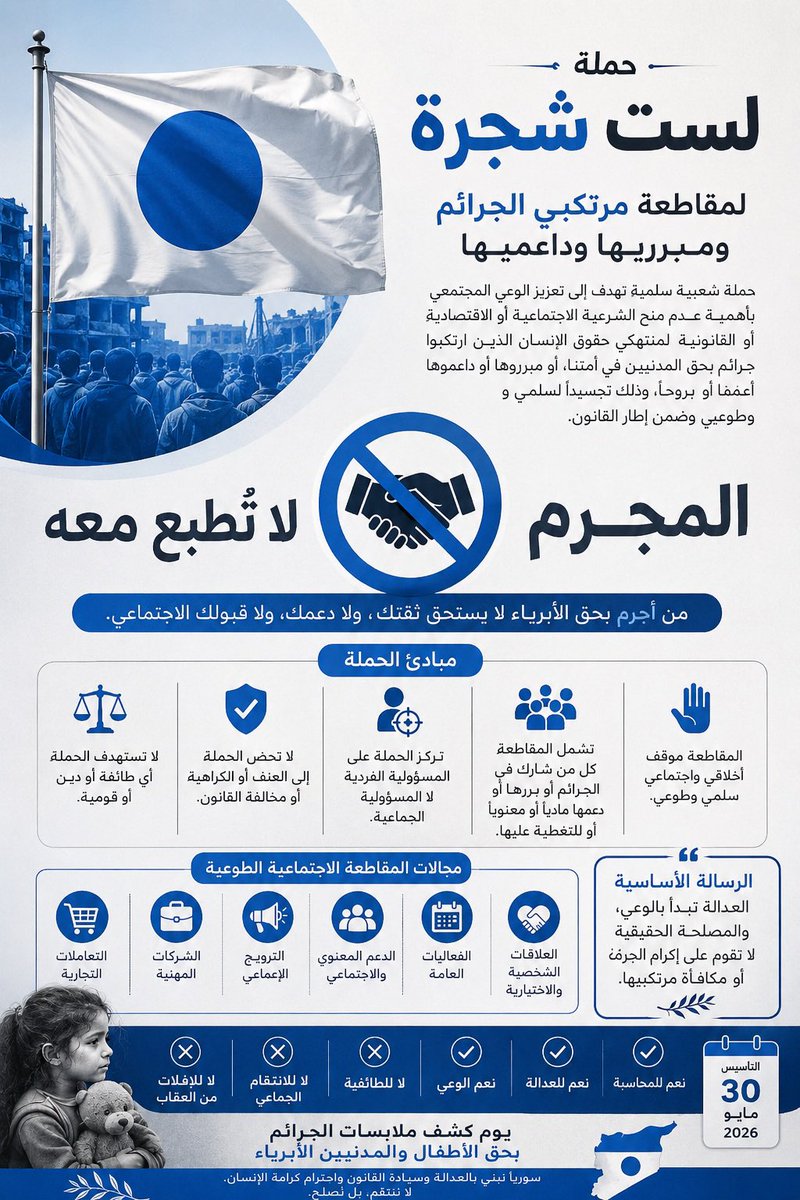
تغريدة مثبتة

لماذا يعادي انصار امجد يوسف هذه الحملة و يتهكموا عليها و يحملوها اشاعات و مبالغات و تدليس متعمد و غير صحيح؟!
لماذا يصدف ان اغلب المعادين من الاقليات في سوريا و خاصة العلويين؟
اسئلة بحاجة لصفن 🙄😏

العربية
SYRIA TRUTH
19K posts

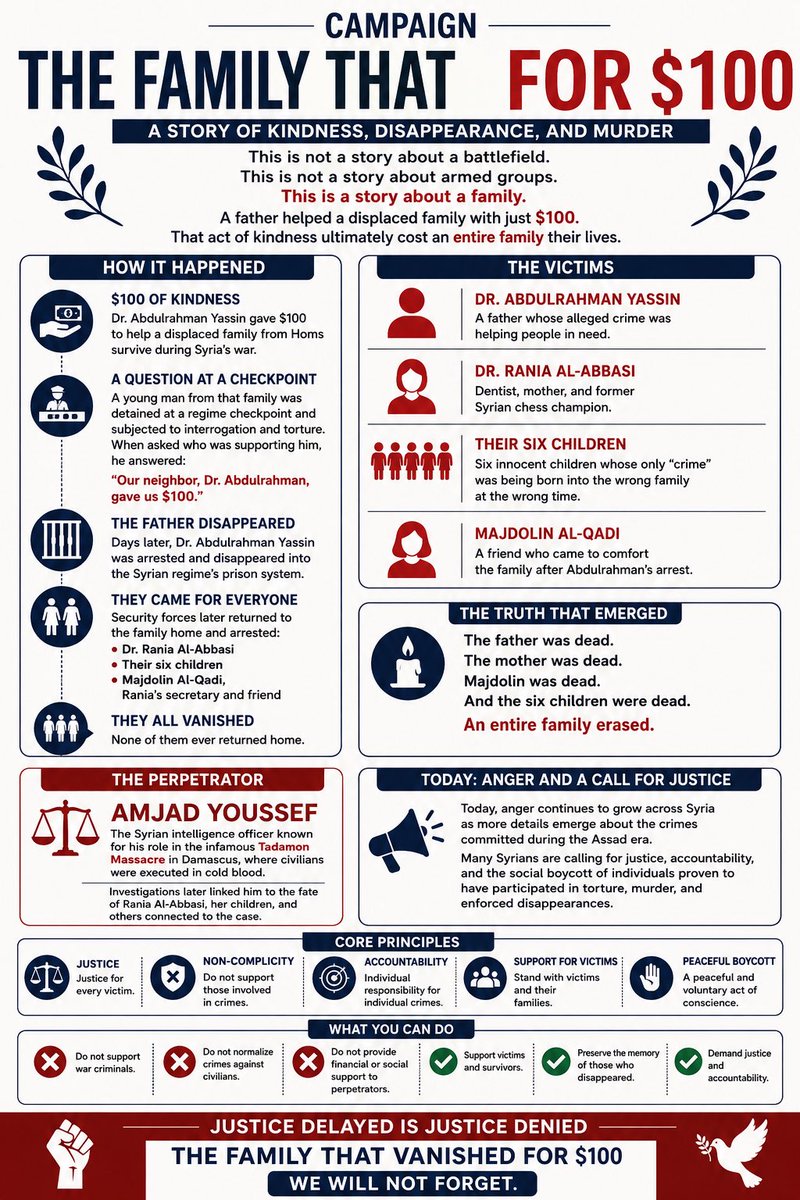
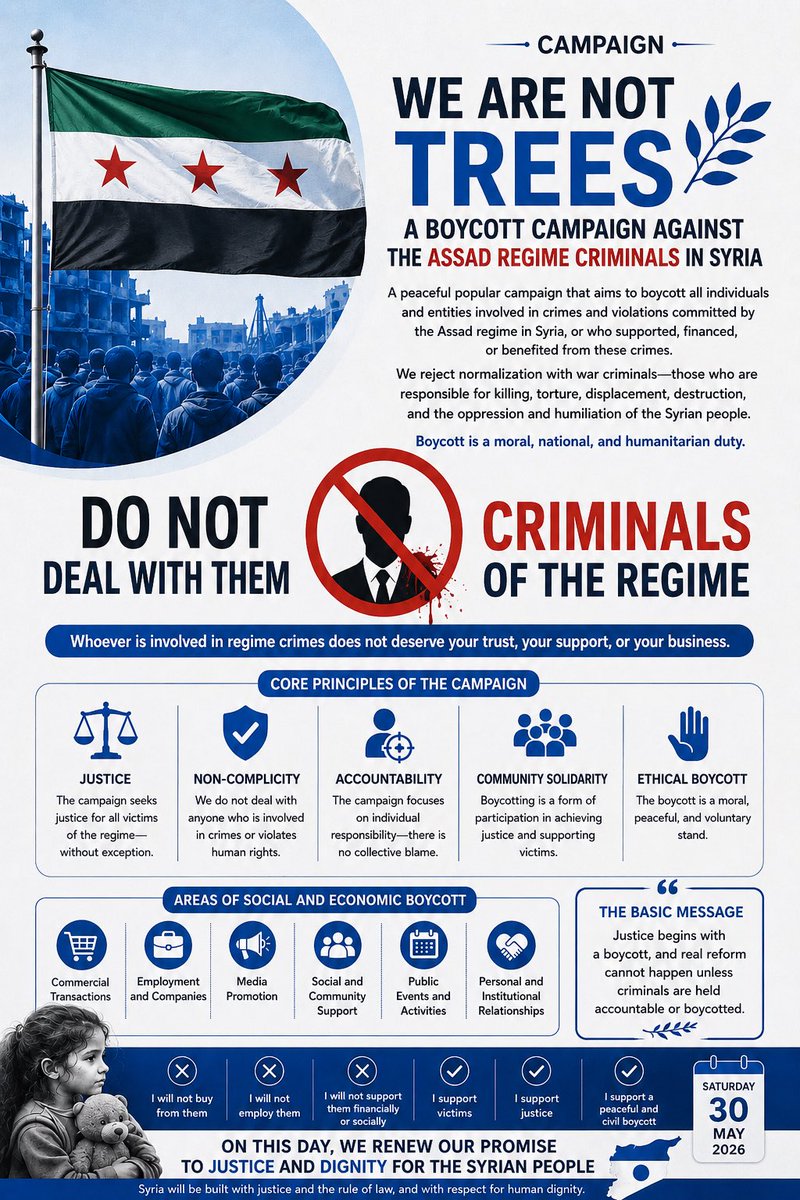
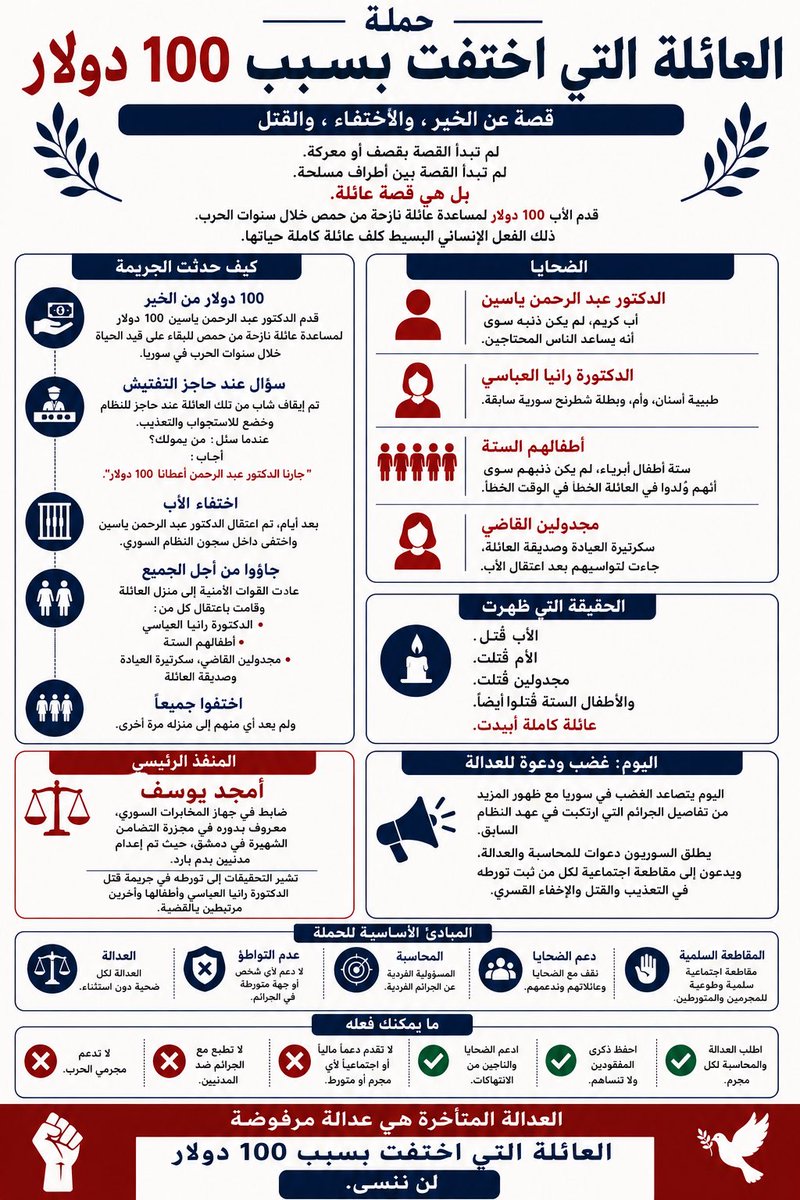
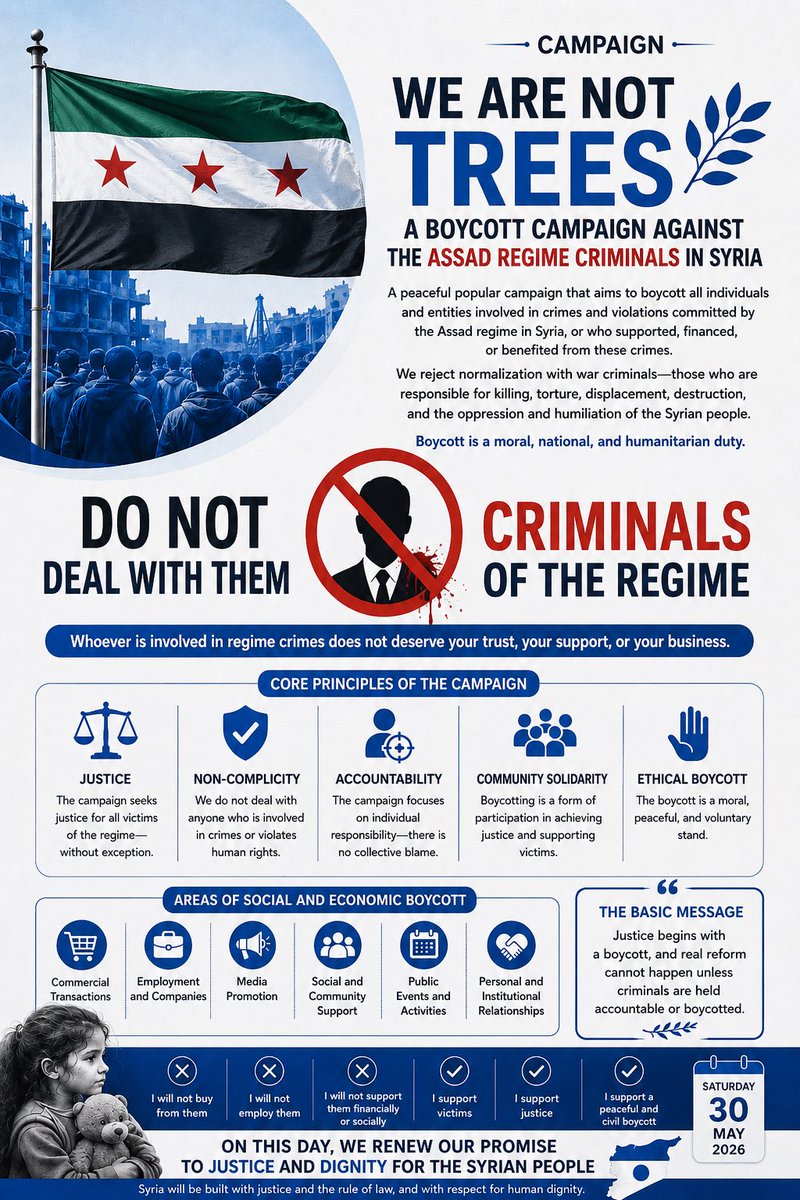
The Family That Vanished for $100! It did not begin with a bombing, a battle, or a conspiracy. It began with $100. Just one hundred dollars given by Dr. Abdulrahman Yassin to help a displaced family from Homs survive during Syria’s war. Later, a young man from that family was stopped at a regime checkpoint and subjected to interrogation and torture. When asked who was supporting him, he gave the only truthful answer he knew: “Our neighbor, Dr. Abdulrahman, gave us $100.” Days later, Dr. Abdulrahman disappeared into the Syrian regime’s prison system. His wife, Dr. Rania Al-Abbasi, a respected dentist and former Syrian chess champion, was left waiting for answers that never came. Then the security forces returned. This time they came for everyone. Rania was arrested. Her six children were arrested. So was Majdolin Al-Qadi, Rania’s secretary and friend, whose only mistake was visiting the family to offer comfort after Abdulrahman’s arrest. That day, they all vanished. Years passed. Relatives clung to hope, imagining the children might still be alive somewhere, waiting to come home. But the truth that slowly emerged was far more devastating. The father was dead. The mother was dead. Majdolin was dead. And the six children—children who had committed no crime and posed no threat to anyone—were dead as well. Their story is one of the most heartbreaking tragedies of modern Syria. Not because it involved soldiers, politicians, or armed groups. But because it involved a family. A father whose alleged crime was helping people in need. A mother whose crime was being his wife. A friend whose crime was showing compassion. And children whose only crime was being born into the wrong family at the wrong time. Perhaps the most haunting part of this story is how ordinary it all began. Not with violence. Not with weapons. But with an act of kindness. One hundred dollars. A small gesture that, according to the widely circulated account of events, ended with an entire family disappearing forever. Perhaps the most chilling detail is that the man suspected of carrying out these killings is Amjad Youssef — the same regime officer whose name became synonymous with the infamous Tadamon Massacre in Damascus. The man seen executing civilians in one of the most shocking documented atrocities of the Syrian war is now also suspected of involvement in the fate of Rania Al-Abbasi and her six children. Today, anger is rising across Syria, and calls are being made for a social boycott of the criminals, most of whom, unfortunately, belong to the Alawite sect. #syria


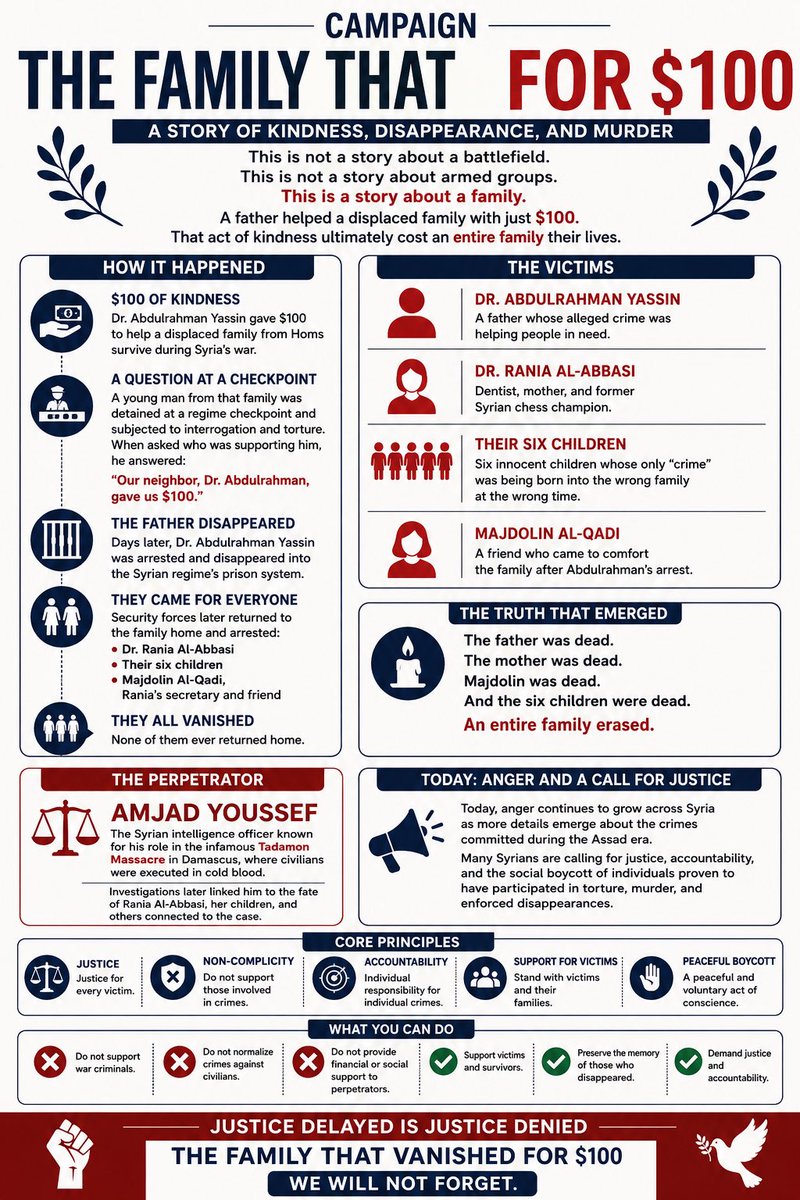
The Family That Vanished for $100! It did not begin with a bombing, a battle, or a conspiracy. It began with $100. Just one hundred dollars given by Dr. Abdulrahman Yassin to help a displaced family from Homs survive during Syria’s war. Later, a young man from that family was stopped at a regime checkpoint and subjected to interrogation and torture. When asked who was supporting him, he gave the only truthful answer he knew: “Our neighbor, Dr. Abdulrahman, gave us $100.” Days later, Dr. Abdulrahman disappeared into the Syrian regime’s prison system. His wife, Dr. Rania Al-Abbasi, a respected dentist and former Syrian chess champion, was left waiting for answers that never came. Then the security forces returned. This time they came for everyone. Rania was arrested. Her six children were arrested. So was Majdolin Al-Qadi, Rania’s secretary and friend, whose only mistake was visiting the family to offer comfort after Abdulrahman’s arrest. That day, they all vanished. Years passed. Relatives clung to hope, imagining the children might still be alive somewhere, waiting to come home. But the truth that slowly emerged was far more devastating. The father was dead. The mother was dead. Majdolin was dead. And the six children—children who had committed no crime and posed no threat to anyone—were dead as well. Their story is one of the most heartbreaking tragedies of modern Syria. Not because it involved soldiers, politicians, or armed groups. But because it involved a family. A father whose alleged crime was helping people in need. A mother whose crime was being his wife. A friend whose crime was showing compassion. And children whose only crime was being born into the wrong family at the wrong time. Perhaps the most haunting part of this story is how ordinary it all began. Not with violence. Not with weapons. But with an act of kindness. One hundred dollars. A small gesture that, according to the widely circulated account of events, ended with an entire family disappearing forever. Perhaps the most chilling detail is that the man suspected of carrying out these killings is Amjad Youssef — the same regime officer whose name became synonymous with the infamous Tadamon Massacre in Damascus. The man seen executing civilians in one of the most shocking documented atrocities of the Syrian war is now also suspected of involvement in the fate of Rania Al-Abbasi and her six children. Today, anger is rising across Syria, and calls are being made for a social boycott of the criminals, most of whom, unfortunately, belong to the Alawite sect. #syria


The Family That Vanished for $100! It did not begin with a bombing, a battle, or a conspiracy. It began with $100. Just one hundred dollars given by Dr. Abdulrahman Yassin to help a displaced family from Homs survive during Syria’s war. Later, a young man from that family was stopped at a regime checkpoint and subjected to interrogation and torture. When asked who was supporting him, he gave the only truthful answer he knew: “Our neighbor, Dr. Abdulrahman, gave us $100.” Days later, Dr. Abdulrahman disappeared into the Syrian regime’s prison system. His wife, Dr. Rania Al-Abbasi, a respected dentist and former Syrian chess champion, was left waiting for answers that never came. Then the security forces returned. This time they came for everyone. Rania was arrested. Her six children were arrested. So was Majdolin Al-Qadi, Rania’s secretary and friend, whose only mistake was visiting the family to offer comfort after Abdulrahman’s arrest. That day, they all vanished. Years passed. Relatives clung to hope, imagining the children might still be alive somewhere, waiting to come home. But the truth that slowly emerged was far more devastating. The father was dead. The mother was dead. Majdolin was dead. And the six children—children who had committed no crime and posed no threat to anyone—were dead as well. Their story is one of the most heartbreaking tragedies of modern Syria. Not because it involved soldiers, politicians, or armed groups. But because it involved a family. A father whose alleged crime was helping people in need. A mother whose crime was being his wife. A friend whose crime was showing compassion. And children whose only crime was being born into the wrong family at the wrong time. Perhaps the most haunting part of this story is how ordinary it all began. Not with violence. Not with weapons. But with an act of kindness. One hundred dollars. A small gesture that, according to the widely circulated account of events, ended with an entire family disappearing forever. Perhaps the most chilling detail is that the man suspected of carrying out these killings is Amjad Youssef — the same regime officer whose name became synonymous with the infamous Tadamon Massacre in Damascus. The man seen executing civilians in one of the most shocking documented atrocities of the Syrian war is now also suspected of involvement in the fate of Rania Al-Abbasi and her six children. Today, anger is rising across Syria, and calls are being made for a social boycott of the criminals, most of whom, unfortunately, belong to the Alawite sect. #syria


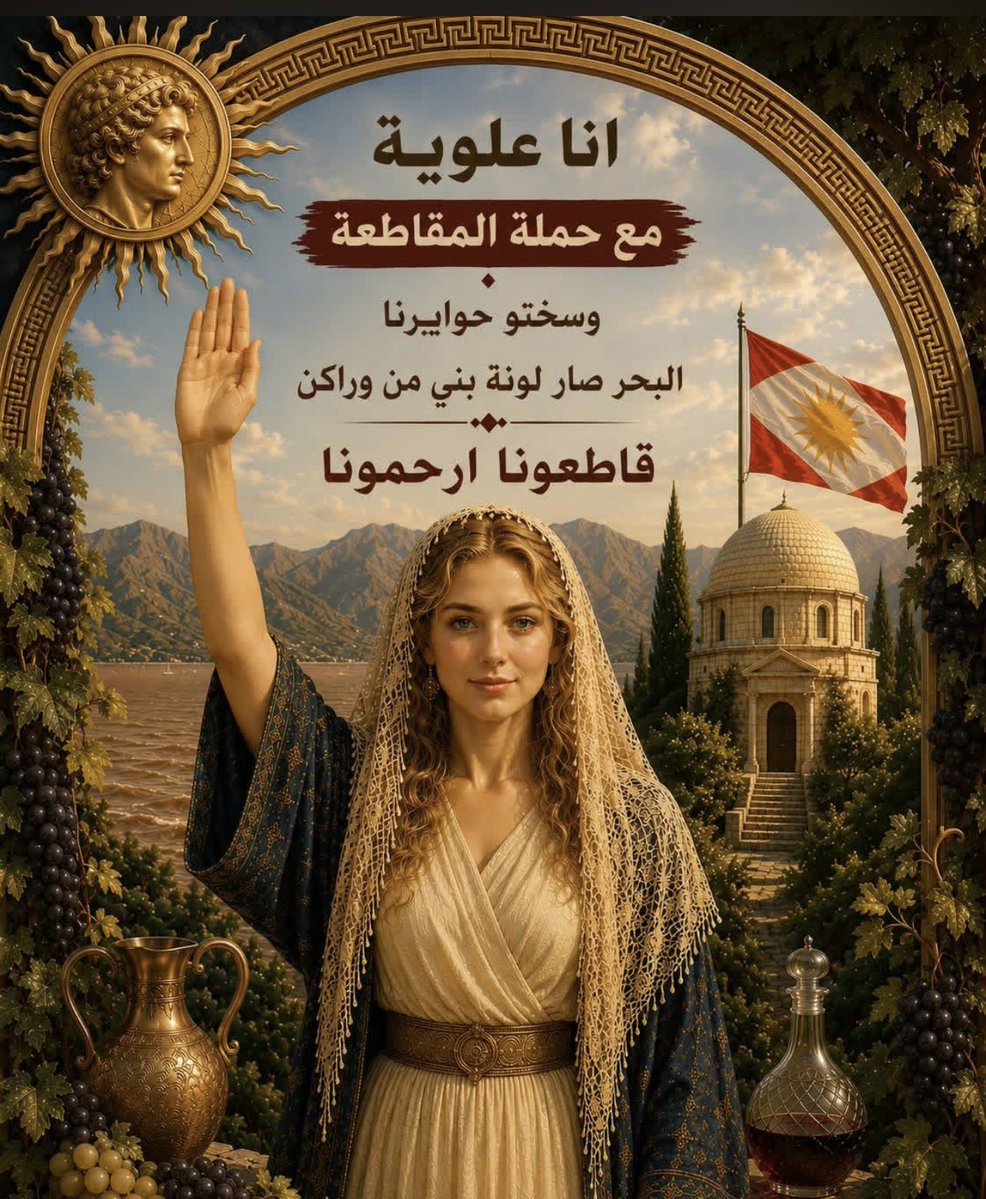

The Family That Vanished for $100! It did not begin with a bombing, a battle, or a conspiracy. It began with $100. Just one hundred dollars given by Dr. Abdulrahman Yassin to help a displaced family from Homs survive during Syria’s war. Later, a young man from that family was stopped at a regime checkpoint and subjected to interrogation and torture. When asked who was supporting him, he gave the only truthful answer he knew: “Our neighbor, Dr. Abdulrahman, gave us $100.” Days later, Dr. Abdulrahman disappeared into the Syrian regime’s prison system. His wife, Dr. Rania Al-Abbasi, a respected dentist and former Syrian chess champion, was left waiting for answers that never came. Then the security forces returned. This time they came for everyone. Rania was arrested. Her six children were arrested. So was Majdolin Al-Qadi, Rania’s secretary and friend, whose only mistake was visiting the family to offer comfort after Abdulrahman’s arrest. That day, they all vanished. Years passed. Relatives clung to hope, imagining the children might still be alive somewhere, waiting to come home. But the truth that slowly emerged was far more devastating. The father was dead. The mother was dead. Majdolin was dead. And the six children—children who had committed no crime and posed no threat to anyone—were dead as well. Their story is one of the most heartbreaking tragedies of modern Syria. Not because it involved soldiers, politicians, or armed groups. But because it involved a family. A father whose alleged crime was helping people in need. A mother whose crime was being his wife. A friend whose crime was showing compassion. And children whose only crime was being born into the wrong family at the wrong time. Perhaps the most haunting part of this story is how ordinary it all began. Not with violence. Not with weapons. But with an act of kindness. One hundred dollars. A small gesture that, according to the widely circulated account of events, ended with an entire family disappearing forever. Perhaps the most chilling detail is that the man suspected of carrying out these killings is Amjad Youssef — the same regime officer whose name became synonymous with the infamous Tadamon Massacre in Damascus. The man seen executing civilians in one of the most shocking documented atrocities of the Syrian war is now also suspected of involvement in the fate of Rania Al-Abbasi and her six children. Today, anger is rising across Syria, and calls are being made for a social boycott of the criminals, most of whom, unfortunately, belong to the Alawite sect. #syria
فيديو للتوثيق الشيخ مروان كيوان صديق الهجري وموجود في #السويداء وصف سيدنا عمر بن الخطاب بأبشع الاوصاف وشتم السـ,ـنة .. والمدن السورية عددها وهو يشـ,ـتمها