

ohadpr

8.7K posts

ohadpr banner
ohadpr

ohadpr

@ohadpr

انضم Aralık 2007
723 يتبع1.5K المتابعون
ohadpr
ohadpr@ohadpr·
@karpathy There’s a natural generalization of this pattern to include read-it-later lists, ‘subscribing’ to topics without relying on RSS just on an agent to follow and find things of interest to me
English
0
0
0
79
Andrej Karpathy
Andrej Karpathy@karpathy·
Wow, this tweet went very viral! I wanted share a possibly slightly improved version of the tweet in an "idea file". The idea of the idea file is that in this era of LLM agents, there is less of a point/need of sharing the specific code/app, you just share the idea, then the other person's agent customizes & builds it for your specific needs. So here's the idea in a gist format: gist.github.com/karpathy/442a6… You can give this to your agent and it can build you your own LLM wiki and guide you on how to use it etc. It's intentionally kept a little bit abstract/vague because there are so many directions to take this in. And ofc, people can adjust the idea or contribute their own in the Discussion which is cool.
Andrej Karpathy@karpathy

LLM Knowledge Bases Something I'm finding very useful recently: using LLMs to build personal knowledge bases for various topics of research interest. In this way, a large fraction of my recent token throughput is going less into manipulating code, and more into manipulating knowledge (stored as markdown and images). The latest LLMs are quite good at it. So: Data ingest: I index source documents (articles, papers, repos, datasets, images, etc.) into a raw/ directory, then I use an LLM to incrementally "compile" a wiki, which is just a collection of .md files in a directory structure. The wiki includes summaries of all the data in raw/, backlinks, and then it categorizes data into concepts, writes articles for them, and links them all. To convert web articles into .md files I like to use the Obsidian Web Clipper extension, and then I also use a hotkey to download all the related images to local so that my LLM can easily reference them. IDE: I use Obsidian as the IDE "frontend" where I can view the raw data, the the compiled wiki, and the derived visualizations. Important to note that the LLM writes and maintains all of the data of the wiki, I rarely touch it directly. I've played with a few Obsidian plugins to render and view data in other ways (e.g. Marp for slides). Q&A: Where things get interesting is that once your wiki is big enough (e.g. mine on some recent research is ~100 articles and ~400K words), you can ask your LLM agent all kinds of complex questions against the wiki, and it will go off, research the answers, etc. I thought I had to reach for fancy RAG, but the LLM has been pretty good about auto-maintaining index files and brief summaries of all the documents and it reads all the important related data fairly easily at this ~small scale. Output: Instead of getting answers in text/terminal, I like to have it render markdown files for me, or slide shows (Marp format), or matplotlib images, all of which I then view again in Obsidian. You can imagine many other visual output formats depending on the query. Often, I end up "filing" the outputs back into the wiki to enhance it for further queries. So my own explorations and queries always "add up" in the knowledge base. Linting: I've run some LLM "health checks" over the wiki to e.g. find inconsistent data, impute missing data (with web searchers), find interesting connections for new article candidates, etc., to incrementally clean up the wiki and enhance its overall data integrity. The LLMs are quite good at suggesting further questions to ask and look into. Extra tools: I find myself developing additional tools to process the data, e.g. I vibe coded a small and naive search engine over the wiki, which I both use directly (in a web ui), but more often I want to hand it off to an LLM via CLI as a tool for larger queries. Further explorations: As the repo grows, the natural desire is to also think about synthetic data generation + finetuning to have your LLM "know" the data in its weights instead of just context windows. TLDR: raw data from a given number of sources is collected, then compiled by an LLM into a .md wiki, then operated on by various CLIs by the LLM to do Q&A and to incrementally enhance the wiki, and all of it viewable in Obsidian. You rarely ever write or edit the wiki manually, it's the domain of the LLM. I think there is room here for an incredible new product instead of a hacky collection of scripts.

English
1K
2.7K
25.9K
6.5M
ohadpr
ohadpr@ohadpr·
@bcherny Does it work if you’re already in a worktree?
English
0
0
0
286
Boris Cherny
Boris Cherny@bcherny·
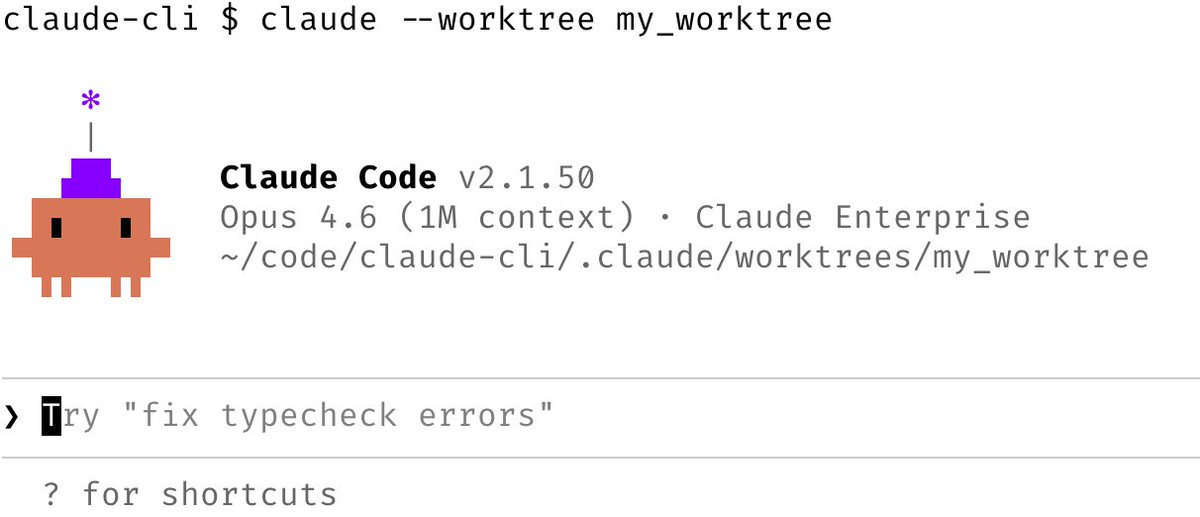
1/ Use claude --worktree for isolation To run Claude Code in its own git worktree, just start it with the --worktree option. You can also name your worktree, or have Claude name it for you. Use this to run multiple parallel Claude Code sessions in the same git repo, without the code edits clobbering each other. You can also pass the --tmux flag to launch Claude in its own Tmux session.
Boris Cherny tweet media
English
34
37
669
91.2K
Boris Cherny
Boris Cherny@bcherny·
Introducing: built-in git worktree support for Claude Code Now, agents can run in parallel without interfering with one other. Each agent gets its own worktree and can work independently. The Claude Code Desktop app has had built-in support for worktrees for a while, and now we're bringing it to CLI too. Learn more about worktrees: git-scm.com/docs/git-workt…
Boris Cherny tweet media
English
441
846
11K
1.3M
ohadpr
ohadpr@ohadpr·
@sama Is the sign-on bonus open to Clawback?
English
0
0
1
40
Sam Altman
Sam Altman@sama·
Peter Steinberger is joining OpenAI to drive the next generation of personal agents. He is a genius with a lot of amazing ideas about the future of very smart agents interacting with each other to do very useful things for people. We expect this will quickly become core to our product offerings. OpenClaw will live in a foundation as an open source project that OpenAI will continue to support. The future is going to be extremely multi-agent and it's important to us to support open source as part of that.
English
4.9K
4.3K
46.2K
16.8M
ohadpr
ohadpr@ohadpr·
@peduarte Pedro you guys are missing the basics: Let me type something and you figure out if I’m searching for a file or typing an equation or a contact name or whatnot. Having to pick a ‘sub app’ so I can focus Raycast on files/contacts/whatever makes it a no go
English
0
0
0
45
Pedro Duarte
Pedro Duarte@peduarte·
hacking on raycast today what's something you wish raycast could do? ai related
English
56
0
74
8.5K
ohadpr
ohadpr@ohadpr·
@gokulr @HarryStebbings The power is in not reading code. In an IDE, it’s unavoidable - files open and pull you in, even with a fully agentic setup. Drop the IDE and commit to the terminal, and something shifts. Files stay closed, the guilt disappears, and you can focus entirely on driving the agent.
English
0
0
0
127
Gokul Rajaram
Gokul Rajaram@gokulr·
This is a great question @HarryStebbings. I use Claude Code within Cursor, so Cursor is the IDE and Claude Code is the coding agent. One of the primary benefits of Cursor (for me) is that it supports multiple coding agents. I fully expect OpenAI’s Codex to catch up or be better than Claude Code on some dimensions, and the same for the Gemini / xAI coding agents. My hope for the future is that Cursor can be used to manage a diverse fleet of agents. This would let me route different tasks to whichever agent is strongest for that particular problem, from a unified interface. tldr if we believe that there won’t be one supreme coding agent that’s better than the others on every dimension, there is a lot of value in a neutral third party IDE. Similar to the role OpenRouter and others of its ilk play for LLM APIs. @martin_casado wdyt?
Harry Stebbings@HarryStebbings

Every single dev and product team I speak to in the last 30 days has moved from Cursor to Claude Code. 1. Is this permanent? 2. If so, what happens to Cursor?


English
50
12
201
76.1K
ohadpr
ohadpr@ohadpr·
@martin_casado @Rafael_L_Spring So git is not required because the code itself is assumed to be generated on the fly, interesting. From prompt to a server running your ephemeral software.
English
1
0
0
36
martin_casado
martin_casado@martin_casado·
The higher order thing for me is that the agent becomes a full execution context. So I can just spin up a sprite with an agent in a couple of seconds. Have the agent custom build software ... I don't worry about environment setup or any of that, it handles all of it. And then that new is fully available in the cloud. Before I'd have a local dev environment. Then I'd create a Docker image of that environment. Then I'd deploy to that fly or wherever. And that's great if you're developing a large software project. But for a lot of agent use I just want it to build and run code without worrying too much about the environment, network reachability, etc.
English
2
0
7
185
martin_casado
martin_casado@martin_casado·
The sprite model really feels like the future. Basically full linux environments running an AI agent. Full persistent with checkpoints. No need for git. Spin up as many as you want. Just little AI compute gremlins in the cloud. sprites.dev
English
47
19
486
97K
ohadpr
ohadpr@ohadpr·
@anothercohen Personal tools are the future, I’ve built myself a similar thing combining my most used parts of Obsidian and Soulver
English
0
0
0
57
Alex Cohen
Alex Cohen@anothercohen·
I vibe coded a personal to-do app that uses AI chat to create, update, and prioritize my task list. I just drop a bunch of unstructured stuff into the chat, the AI figures out what tasks to create (or asks me questions), sets the priority, and then dynamically updates my “Today” list based on urgency and estimated time to complete the task. Works pretty well!
English
32
10
242
45.2K
ohadpr
ohadpr@ohadpr·
Who’s the contrarian saying “Reinforcement Learning good”? 😄
ohadpr tweet media
English
0
0
2
80
ohadpr
ohadpr@ohadpr·
@cramforce @thefubhy A human-in-the-loop can be part of a workflow but that doesn’t make the human a workflow.
English
1
0
0
40
Malte Ubl
Malte Ubl@cramforce·
@thefubhy Agents are always part of workflows and their tools are workflows. They are part of the workflow graph. You can disagree with that but only by warping the definition of workflows until it is so specific that you win on a technicality.
English
3
0
19
2.8K
ohadpr
ohadpr@ohadpr·
@thefubhy Agents become workflows only in retrospect, once their run is complete. Before they start, Agents have agency, not the rigidity you’d expect from workflows.
English
0
0
1
78
ohadpr
ohadpr@ohadpr·
@trq212 This is a great pattern. Why not dump all tool call results into the filesystem, at the harness level, and let the agent act on the results from there?
English
0
0
0
38
Thariq
Thariq@trq212·
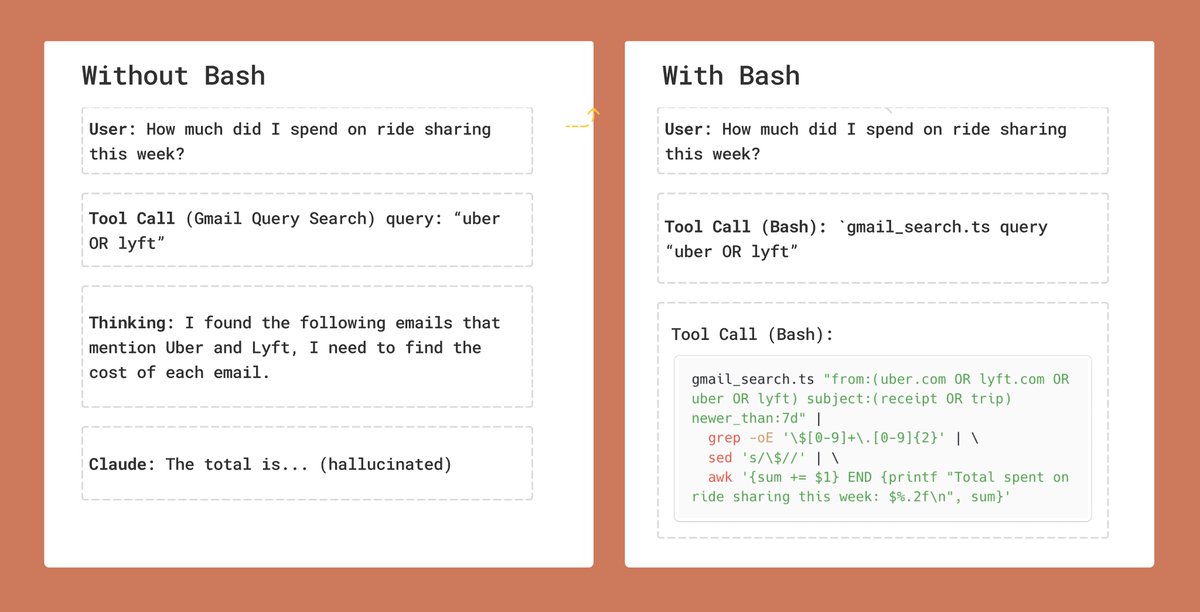
Why even non-coding agents need bash I've done dozens of calls with companies making general agents over the past few weeks and my advice generally boils down to: "use the bash tool more" Here's a concrete example from my email agent:
Thariq tweet media
English
54
74
989
293K
ohadpr
ohadpr@ohadpr·
@trq212 I think devs would find this useful: a sample repo showing a Node server managing multiple Claude agent instances, focusing on keeping them alive and powering multiple front-end chats, each tied to one agent session. Session hydration best practices would be next on my list.
English
0
0
1
128
Thariq
Thariq@trq212·
🧵How do you host an agent? We recently added skills to Claude.ai,which require the agent to have a file system & run bash commands How did we do it? Every agent is in a sandboxed container. You can do the same for your agents on the Claude Agent SDK:
English
22
28
353
49.4K
Claude
Claude@claudeai·
We're also releasing a temporary research preview called "Imagine with Claude". In this experiment, Claude generates software on the fly. No functionality is predetermined; no code is prewritten. Available to Max users for 5 days. Try it out: claude.ai/imagine
English
64
136
1.5K
760.6K
Claude
Claude@claudeai·
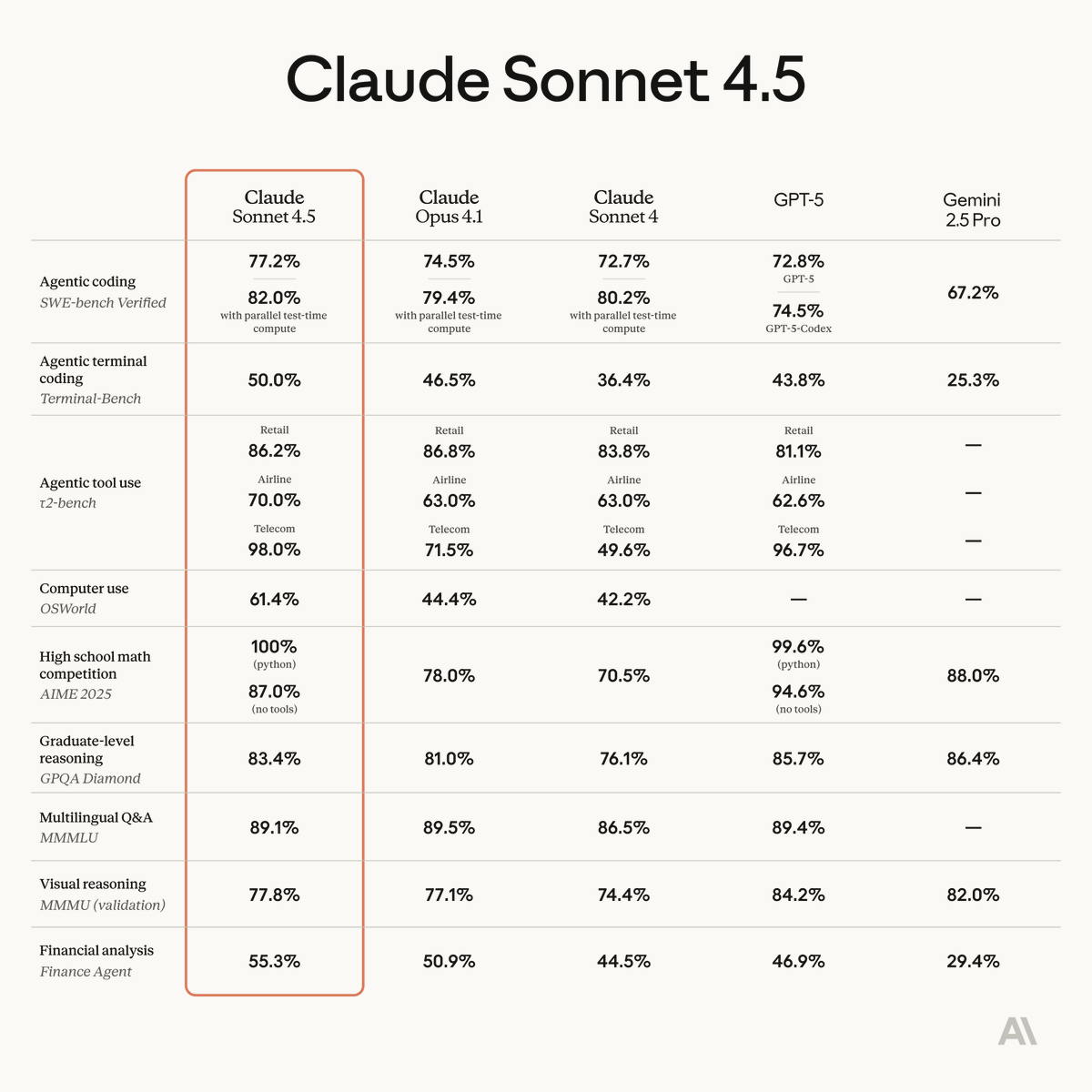
Introducing Claude Sonnet 4.5—the best coding model in the world. It's the strongest model for building complex agents. It's the best model at using computers. And it shows substantial gains on tests of reasoning and math.
Claude tweet media
English
1.1K
3.2K
20.1K
5M
ohadpr
ohadpr@ohadpr·
@YaronGalai Very true. In terms of upside imagine OpenAI cracking a Google-like business model
English
0
0
1
96
Yaron Galai
Yaron Galai@YaronGalai·
The major AI companies are all advertising companies that don’t yet know they’re advertising companies.
English
7
1
21
2.4K
Jonathan Libov
Jonathan Libov@libovness·
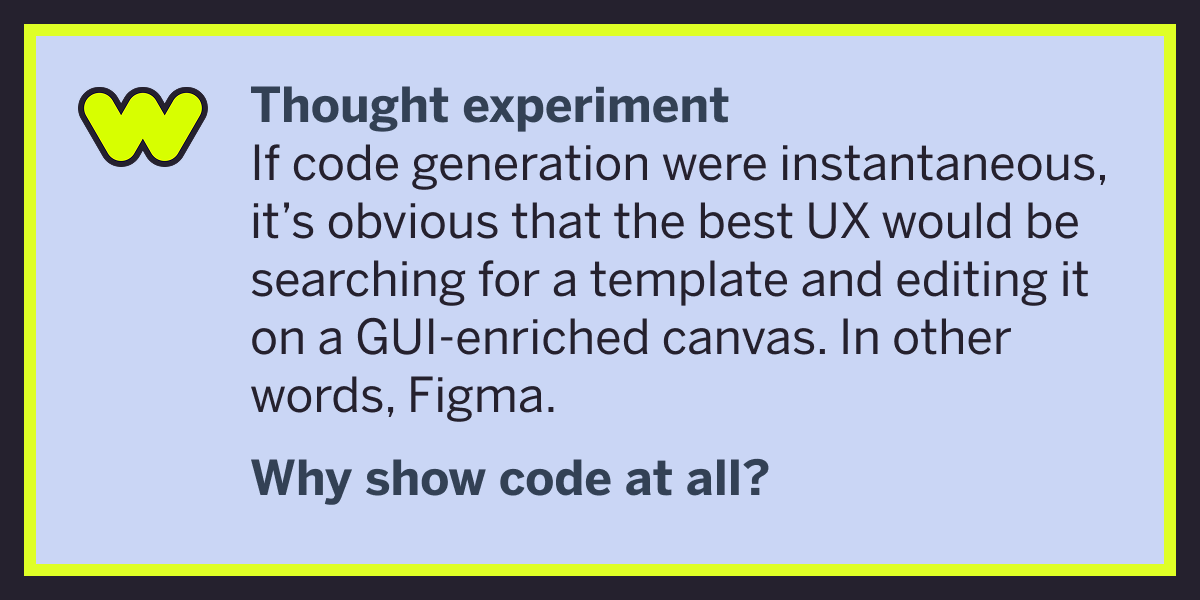
New post on Whoops: Vibecoding is skeuomorphic because code generation is slow
Jonathan Libov tweet media
English
3
1
4
1.6K
ohadpr
ohadpr@ohadpr·
@LouisKnightWebb Just heard you on @latentspacepod with @swyx talking @vibekanban. When Claude’s coding and I drift off to browsing, it feels like waiting for code to compile back in the day, same behavior. Funny how that vanished with instant web dev and now came back.
English
0
0
1
81
ohadpr
ohadpr@ohadpr·
I built something with AI. The model isn't building the app. It is the app. Voidware. Software that doesn’t exist until you use it. ohad.com/2025/07/10/voi…
English
2
5
16
2.5K