
تغريدة مثبتة
Adrien Tsagliotis
4.4K posts

Adrien Tsagliotis
@scoolada
Tech writer @JDNebusiness - Author @dunod - Lecturer @sorbonneparis1
Behind you انضم Temmuz 2010
3.2K يتبع885 المتابعون
Adrien Tsagliotis أُعيد تغريده

Marc Theermann (Boston Dynamics) : "Boston Dynamics débutera la commercialisation du robot Atlas en début d'année", par @scoolada : journaldunet.com/intelligence-a… via @journaldunet
Français

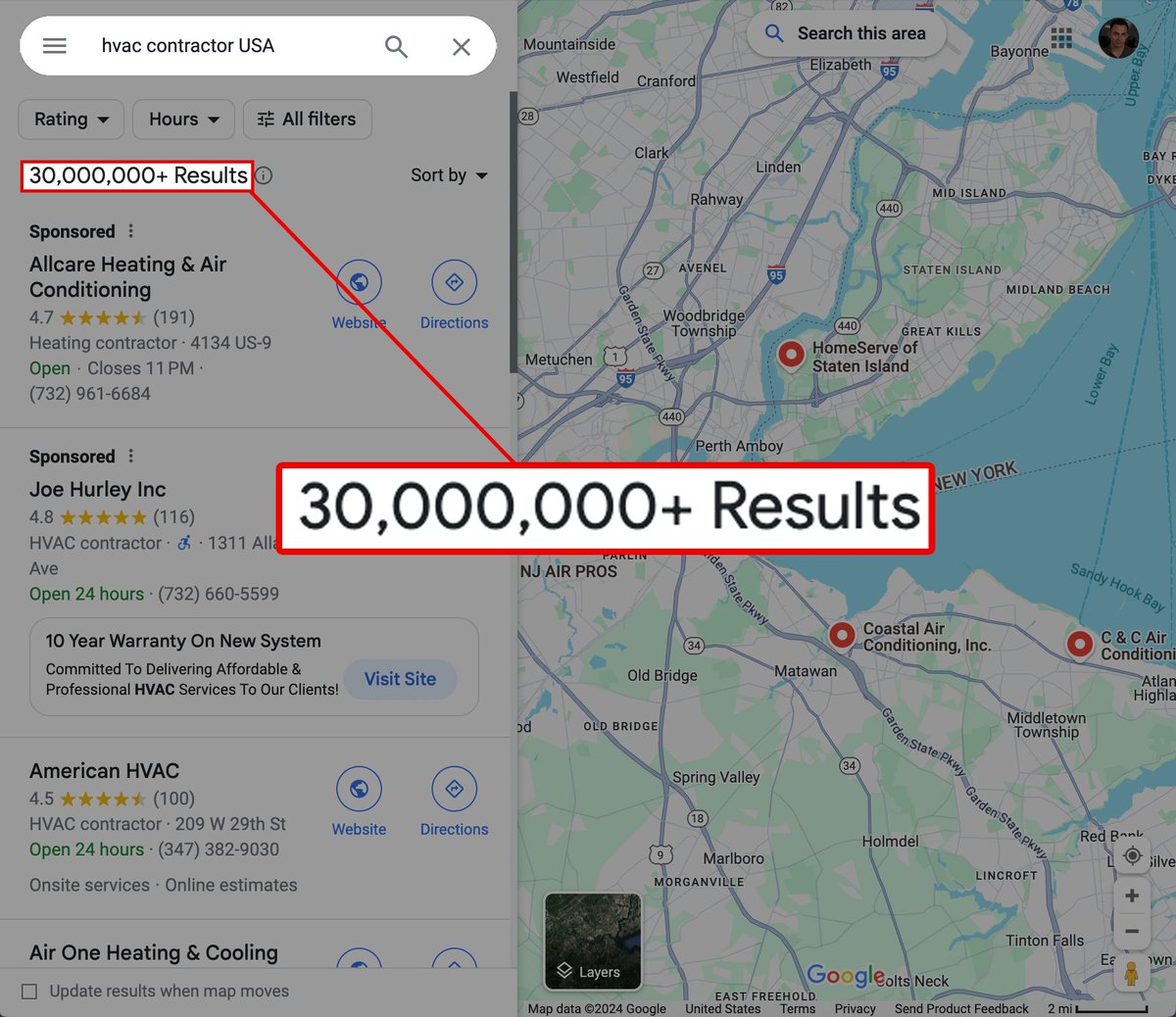
I MIGHT GET SUED FOR THIS, BUT YOLO:
I just found a way to scrape over 200 million local businesses..
You can use this for cold email, cold calling or even door knocking..
And craziest part — IT'S COMPLETELY FREE.
Comment "G" and I'll send it to you. (24h only)
(DONT SHARE)
English

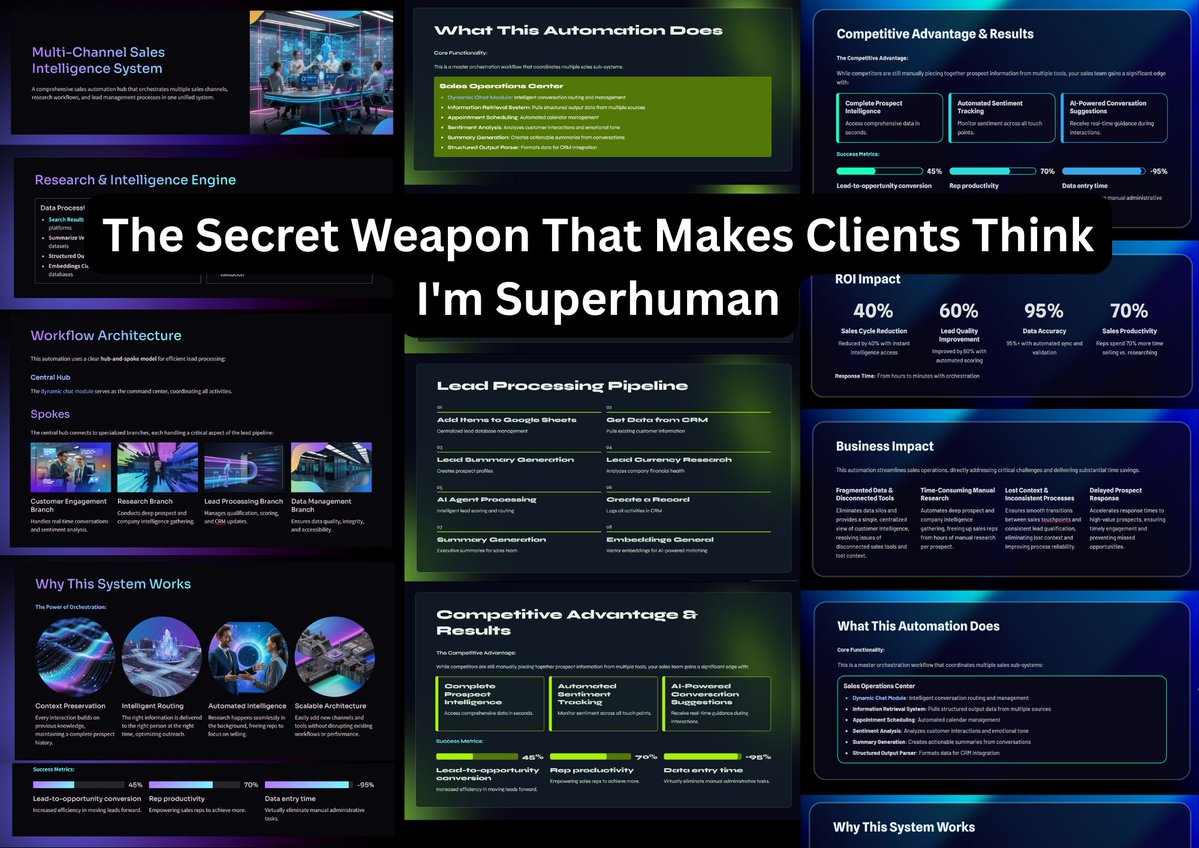
Gamma + Claude + n8n is absolutely WILD
This combo is absolutely insane for turning meetings into professional decks automatically.
No manual notes. No "I'll send that over later." No remembering who needs what.
Just AI tools working together like a professional operations team.
Here's how it works:
→ Meeting ends, n8n trigger fires and pulls Fireflies transcript
→ Claude analyzes everything and creates professional presentation structure
→ Gamma API generates designer-quality deck with interactive link + PDF
→ Slack sends you preview with Approve/Reject buttons
→ Hit Approve, system emails deck to ALL participants with action items
→ They get PDF attachment + Gamma link before you even close Zoom
Perfect for founders and sales teams who want to look impossibly organized.
The power is in the combo:
n8n = zero-click automation that runs itself
Claude = extracts what matters, structures it professionally
Gamma = designer-quality decks that look like you hired a team
While others are scrambling to remember action items, your deck is already in their inbox.
Close deals faster.
Look impossibly organized.
Never miss follow-up again.
Like, RT + reply with "GAMMA" and I'll DM the complete system
(Must be following so I can DM)
Skip this and keep manually building slide decks at 11pm.
English
Adrien Tsagliotis أُعيد تغريده

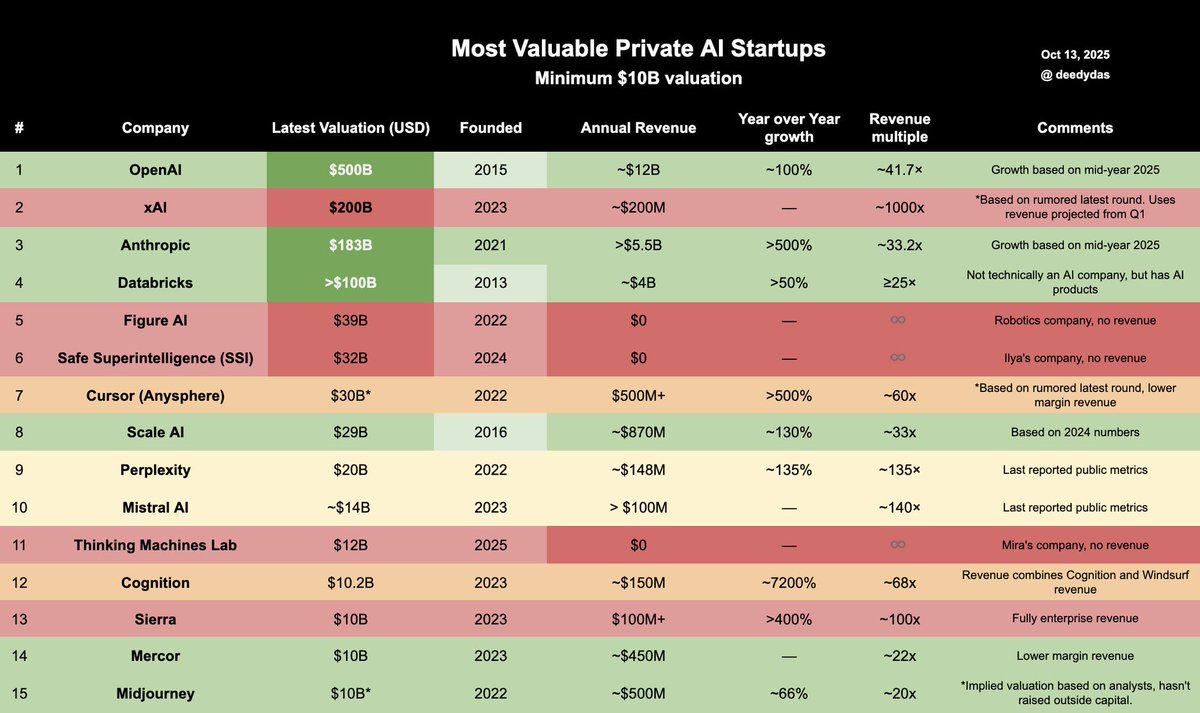
La situation sur les multiples et la valorisation des principaux acteurs de l'IA fondationnelle.
Français
Adrien Tsagliotis أُعيد تغريده

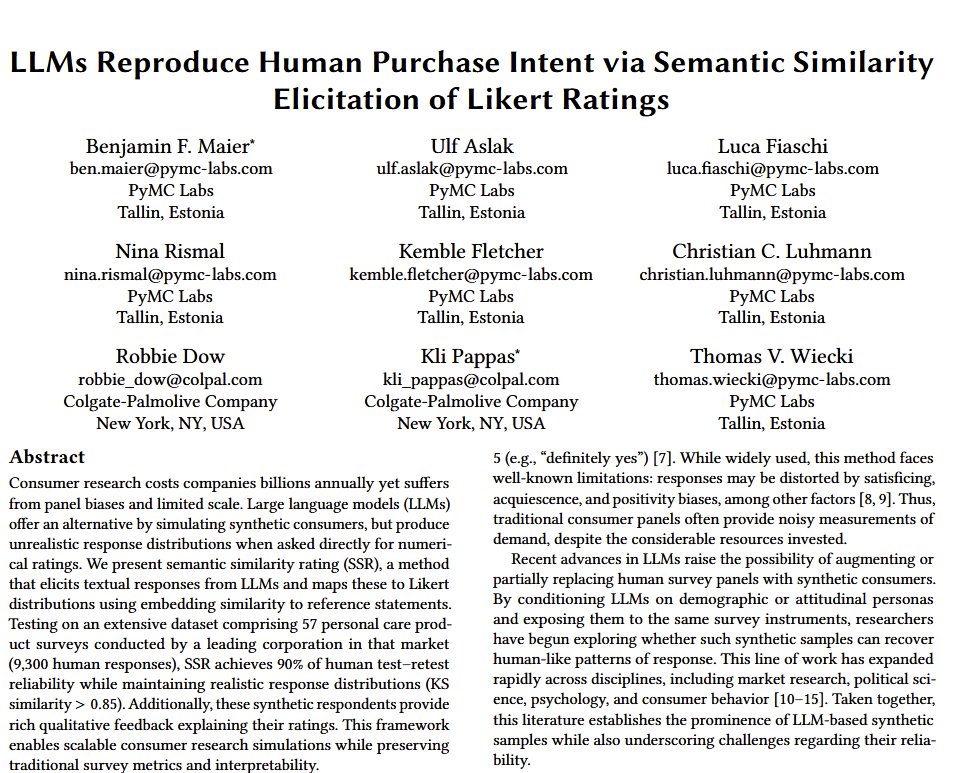
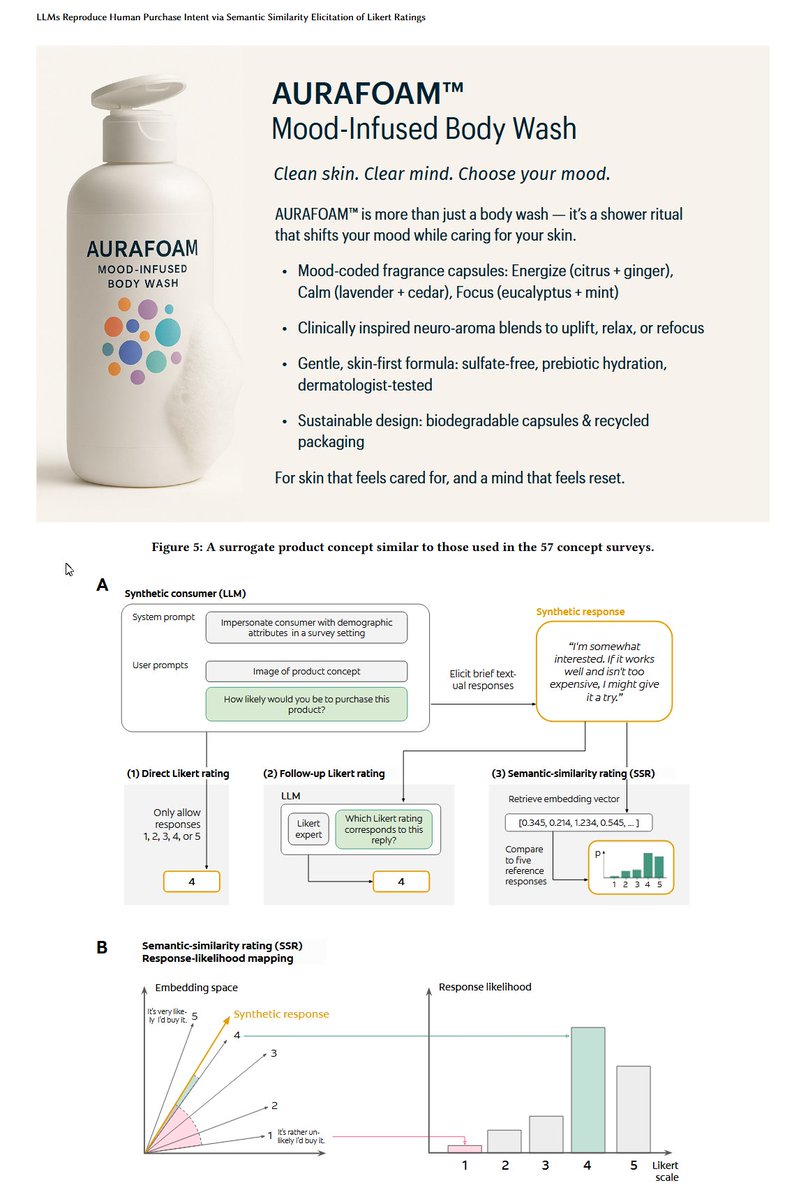
This paper shows that you can predict actual purchase intent (90% accuracy) by asking an LLM to impersonate a customer with a demographic profile, giving it a product & having it give its impressions, which another AI rates.
No fine-tuning or training & beats classic ML methods.

English

Sora 2 API + n8n is genuinely insane 🤯
This AI system creates unlimited UGC videos using n8n + the new Sora 2 API.
Fully automated.
Zero watermarks.
HD quality.
Game changer for e-commerce brands & creative agencies scaling content production.
Most teams spend $10k+/month on influencer content...
But now with the Sora 2 API:
Drop a single product photo → generate 50+ HD videos with zero watermarks → own full commercial rights → pay a few bucks per video.
Here's the workflow:
→ Drop product image into n8n form
→ Write your creative brief + choose video length
→ Sora 2 API generates HD UGC content automatically
→ Creates unboxings, demos, lifestyle clips & product showcases
→ Videos delivered instantly with ZERO watermarks
100% built in n8n.
Production-ready quality.
Want the complete n8n workflow?
> Comment "SORA"
> Like this post
And I'll send it over (must be following so I can DM)
English

You don’t to spend $1000s on market research. You just need the right prompt.
I built a competitor research template that runs on @perplexity_ai comet browser that finds the top 10 rivals for your product, pulls pricing/features/proof, and auto-builds a positioning brief.
What you get:
- Side by side feature comparison
- Pricing landscape real sources
- Momentum read (last 12 months)
- 3 gaps you could exploit
- Looks like a $5K report-without the report.
What you need to do:
- Download comet browser
- Fill in the template & run the prompt
Like + RT + comment “PROMPT” and I’ll DM you the exact prompt template
English

Adrien Tsagliotis أُعيد تغريده
The invention of modern writing instruments like the typewriter made writing easier, but they also led to the rise of writer’s block, where deciding what to write became the bottleneck. Similarly, the invention of agentic coding assistants has led to a new builder’s block, where the holdup is deciding what to build. I call this the Product Management Bottleneck.
Product management is the art and science of deciding what to build. Because highly agentic coding accelerates the writing of software to a given product specification, deciding what to build is the new bottleneck, especially in early-stage projects. As the teams I work with take advantage of agentic coders, I increasingly value product managers (PMs) who have very high user empathy and can make product decisions quickly, so the speed of product decision-making matches the speed of coding.
PMs with high user empathy can make decisions by gut and get them right a lot of the time. As new information comes in, they can keep refining their mental models of what users like or do not like — and thereby refine their gut — and keep making fast decisions of increasing quality.
Many tactics are available to get user feedback and other forms of data that shape our beliefs about users. They include conversations with a handful of users, focus groups, surveys, and A/B tests on scaled products. But to drive progress at GenAI speed, I find that synthesizing all these sources of data in a PM's gut helps us move faster.
Let me illustrate with an example. Recently, my team debated which of 4 features users would prefer. I had my instincts, but none of us were sure, so we surveyed about 1,000 users. The results contradicted my initial beliefs — I was wrong! So what was the right thing to do at this point?
- Option 1: Go by the survey and build what users told us clearly they prefer.
- Option 2: Examine the survey data in detail to see how it changes my beliefs about what users want. That is, refine my mental model of users. Then use my revised mental model to decide what to do.
Even though some would consider Option 1 the “data-driven” way to make decisions, I consider this an inferior approach for most projects. Surveys may be flawed. Further, taking time to run a survey before making a decision results in slow decision-making.
In contrast, using Option 2, the survey results give much more generalizable information that can help me shape not just this decision, but many others as well. And it lets me process this one piece of data alongside all the user conversations, surveys, market reports, and observations of user behavior when they’re engaging with our product to form a much fuller view on how to serve users. Ultimately, that mental model drives my product decisions.
Of course, this technique does not always scale. For example, with programmatic online advertising in which AI might try to optimize the number of clicks on ads shown, an automated system conducts far more experiments in parallel and gathers data on what users do and do not click on, to filter through a PM's mental model of users. When a system needs to make a huge number of decisions, such as what ads to show (or products to recommend) on a huge number of pages, PM review and human intuition do not scale.
But in products where a team is making a small number of critical decisions such as what key features to prioritize, I find that data — used to help build a good mental model of the user, which is then applied to make decisions very quickly — is still the best way to drive rapid progress and relieve the Product Management Bottleneck.
[Original text: deeplearning.ai/the-batch/issu… ]
English
Very interesting demo on how to make infinite videos
fabian@fabianstelzer
Kling 2.5 "infinite" videos are HYPE rn, so here's a 15 min full tutorial that shows you exactly how you can create your own - I made a custom agent that does everything for you so you can focus on the creative direction:
English
Adrien Tsagliotis أُعيد تغريده

Adrien Tsagliotis أُعيد تغريده

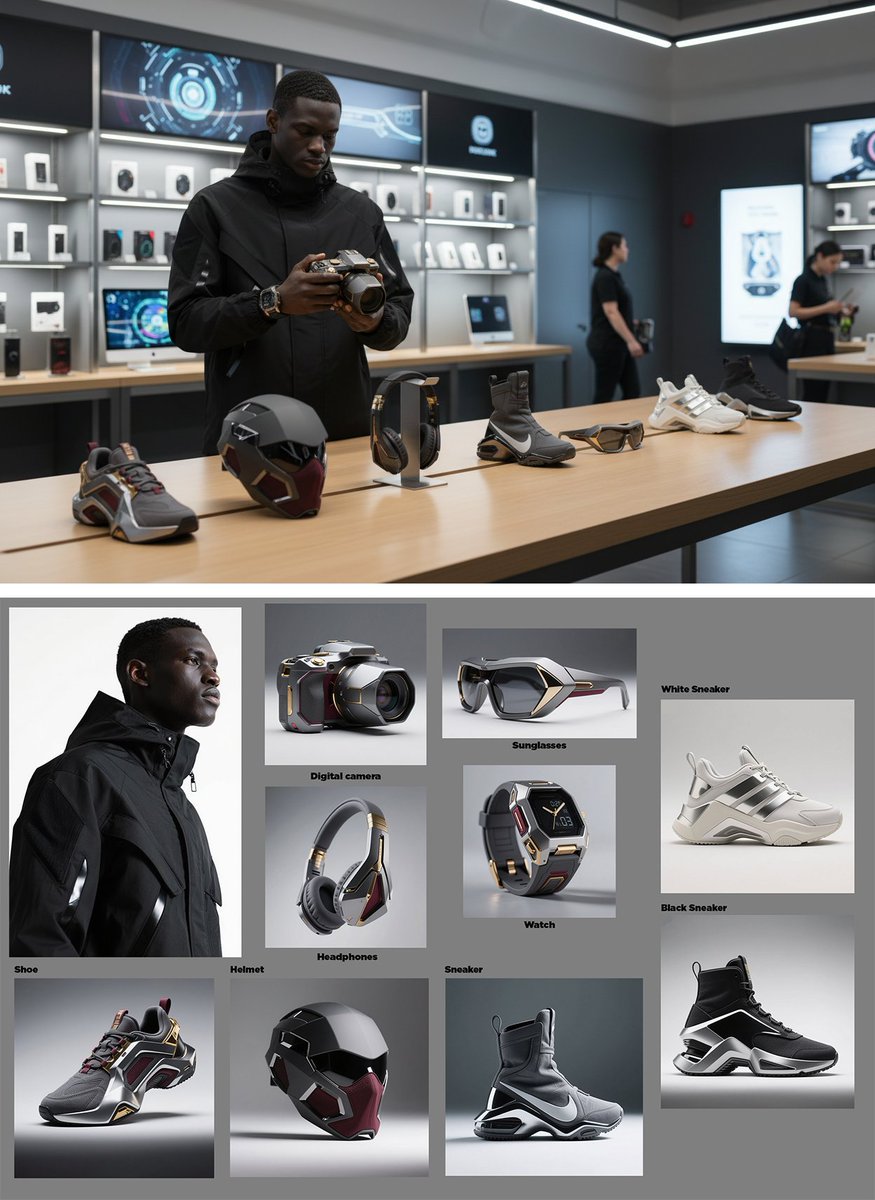
I think I'm the first person to generate more than 8 items into a single image using Google Gemini Flash Image (Nano Banana). I have even exceeded the 8 upload limit on Freepik. How did I do this? Create a collage with everything and label each item on the image. When you upload the image, be descriptive and give each item the same name you labeled it on the image. Look at the end result, 10 items in a single image with excellent accuracy (Only thing not super accurate is the watch). I think this method is even more accurate than uploading individual photos. Go and try it!
The prompt I used to generate 10 items into a single image is as follows: A man is standing in a modern electronic store analyzing a digital camera. He is wearing a watch. On the table in front of him are sunglasses, headphones on a stand, a shoe, a helmet and a sneaker, a white sneaker and a black sneaker
English
@framer_x I actually used Einstein as a character for consistency.
Script (and « jokes ») by ChatGPT, voice with ElevenLabs
English
@framer_x Cool! These AI models enabling multi-shot generation are such a game changer and a huge time saver.
I made this quick video back in January :
At that time everything was done with Runway and Kling, without any multi-shot option (which would’ve made the video more dynamic).
English

@SOL_Trending @framer_x Yes, it’s because I actually screenshotted the CapCut result
Nope, not available on YouTube (it was just a quick video I made for my nephews and nieces and to try these multi-shots models)
English
The next Walt Disney could be a 12-year-old making a brilliant movie from their bedroom and sharing it on YouTube. These are exciting times! 🍿
Framer 🇱🇹@Framer_X
This is Hopeless Steve. A cartoon character you've created with AI. You grew up watching Simpsons, South Park and now you dream of Hopeless Steve becoming the next big IP. So you start posting short sketches on Youtube, TikTok, IG, etc. Then one day... 👇
English

@framer_x I usually ask ChatGPT to keep the same character and place them in a different situation, since Veo3 isn’t always great at generating a totally unrelated scene.
What tool do you use for switching from one scene to another?
English