Albert Chern

176 posts

Albert Chern banner
Albert Chern

Albert Chern

@theAlbertChern

Assistant Professor in @ucsd_cse doing computer graphics, differential geometry, computational physics.

San Diego, California انضم Mayıs 2021
39 يتبع3K المتابعون
Albert Chern
Albert Chern@theAlbertChern·
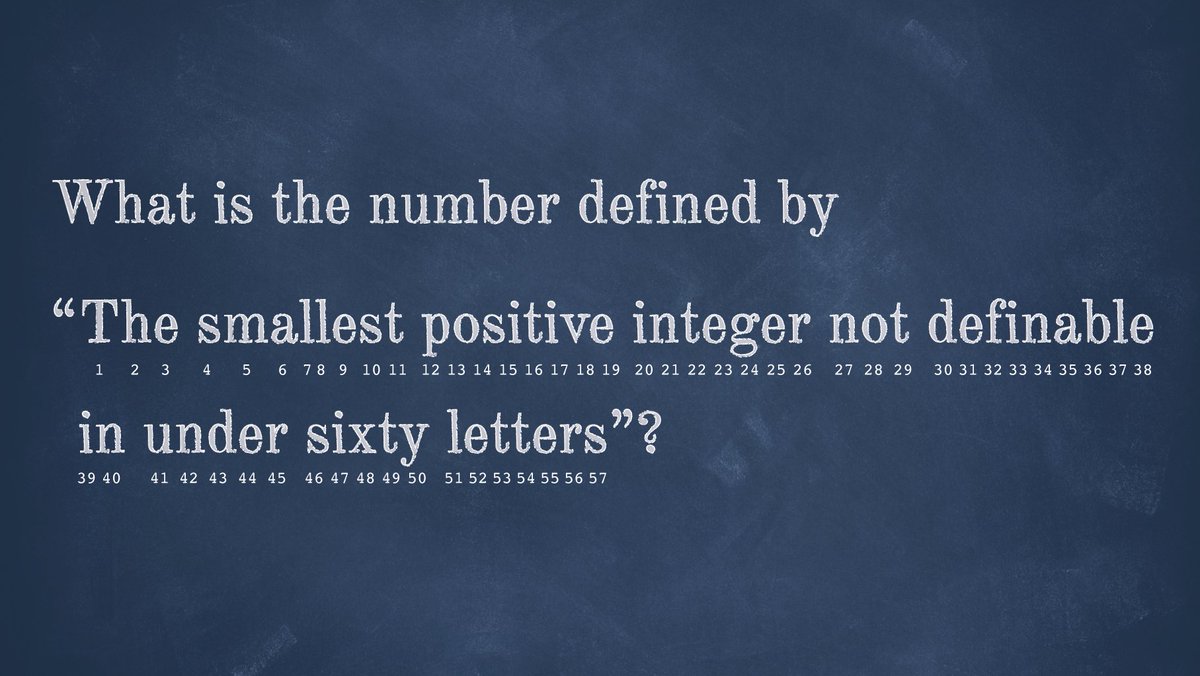
There are only at most 26^60 integers that can be defined in under sixty letters. Therefore there must exist "the smallest positive integer not definable in under sixty letters" (which is a phrase with 57 letters).
Albert Chern tweet media
English
4
3
22
4.1K
Albert Chern
Albert Chern@theAlbertChern·
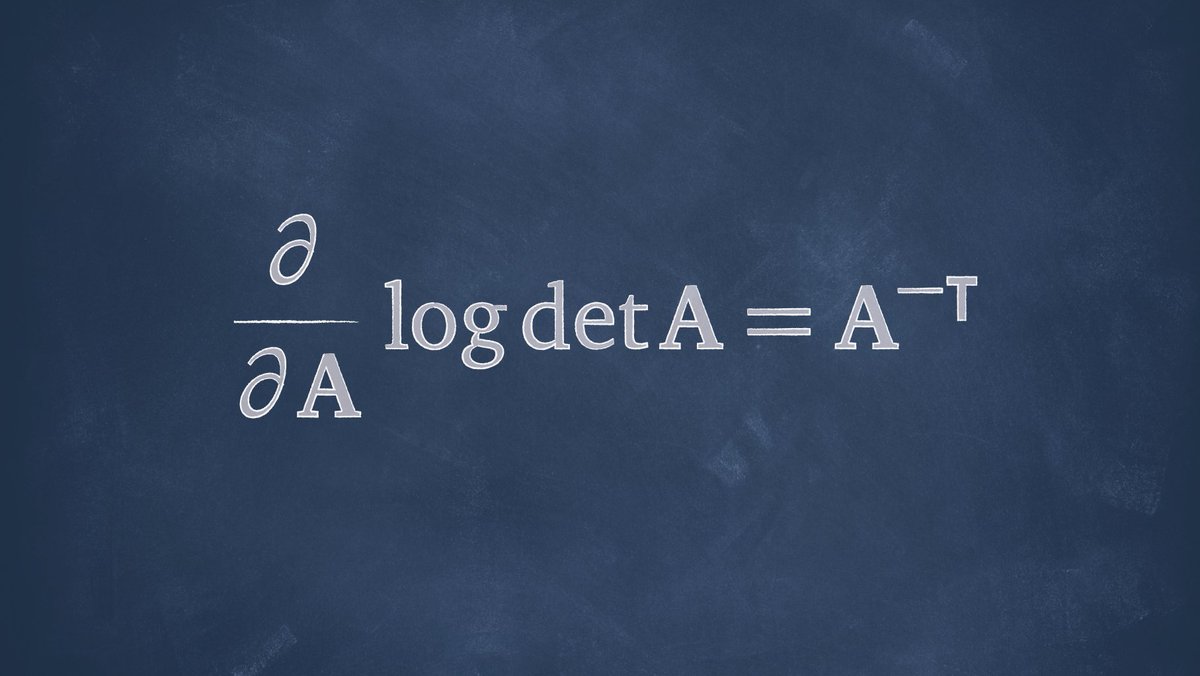
@JamesAndersonQ The differentiation of a scalar function u(A) of a matrix A is arranged as a matrix whose ij-term is the partial derivative of u(A) wrt to A_ij.
English
1
3
90
6.2K
Albert Chern
Albert Chern@theAlbertChern·
This is neat. The gradient of the log of determinant is inverse transpose.
Albert Chern tweet media
English
33
220
2.2K
194.8K
Albert Chern
Albert Chern@theAlbertChern·
For any given quadrilateral, the lines that connect the midpoints of its sides and diagonals intersect at a single point.
Albert Chern tweet media
English
8
19
104
12.5K
Albert Chern
Albert Chern@theAlbertChern·
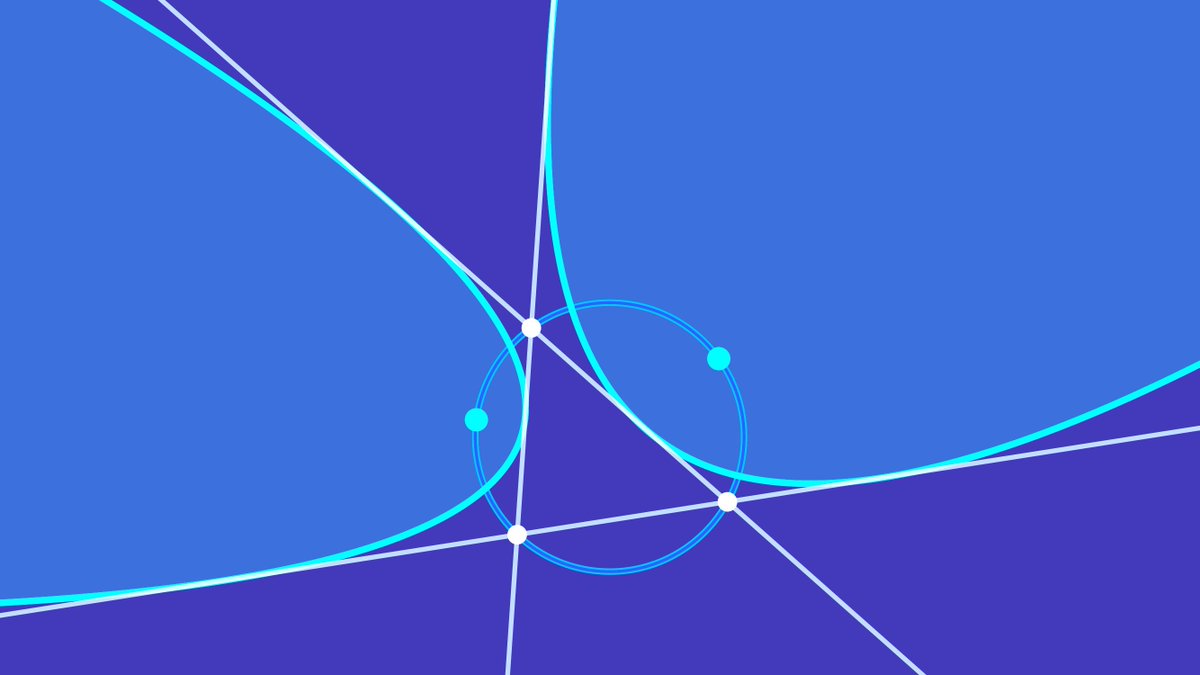
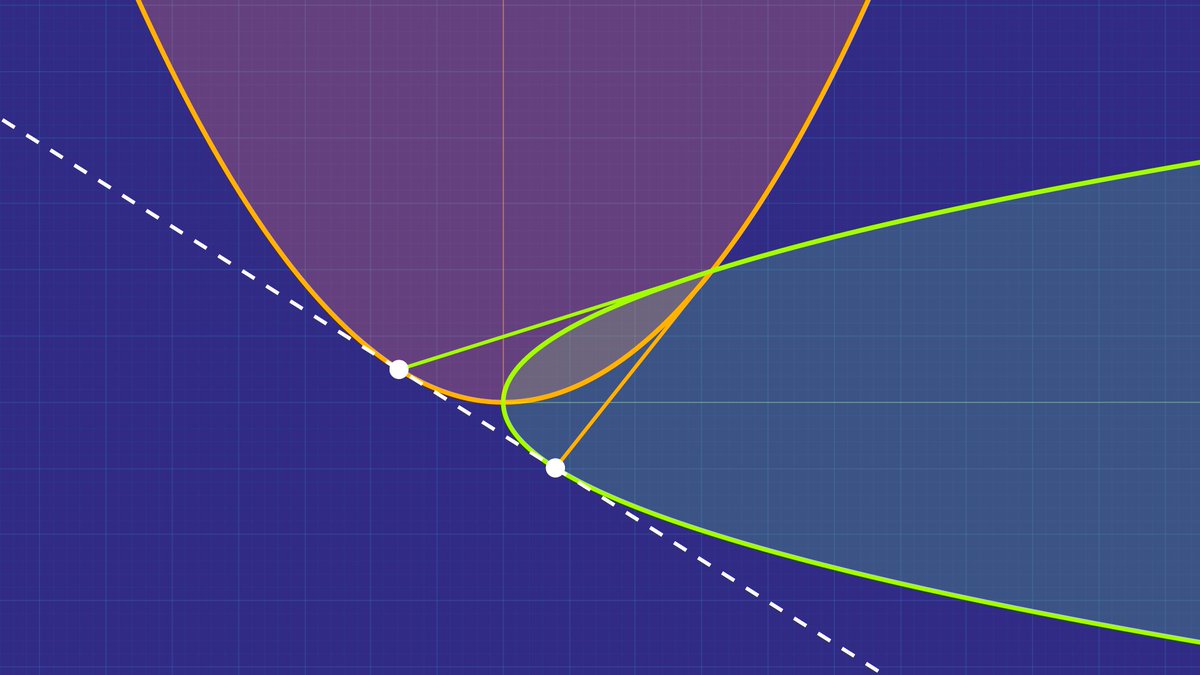
For any two parabolas, the foci and all intersections of the common tangents always lie on a circle.
Albert Chern tweet media
English
2
7
49
0
Albert Chern
Albert Chern@theAlbertChern·
@mleingang Yes they need to be 90 degrees apart for this configuration to hold.
English
0
0
3
0
Albert Chern
Albert Chern@theAlbertChern·
Consider a vertical and a horizontal parabolas sharing the same vertex. The tangents at their intersection will meet the contact points of their common tangent!
Albert Chern tweet media
English
6
49
370
0
Albert Chern
Albert Chern@theAlbertChern·
@c_d_patterson The vertex of a parabola is that point on the parabola with maximal curvature.
English
0
0
3
0
Albert Chern
Albert Chern@theAlbertChern·
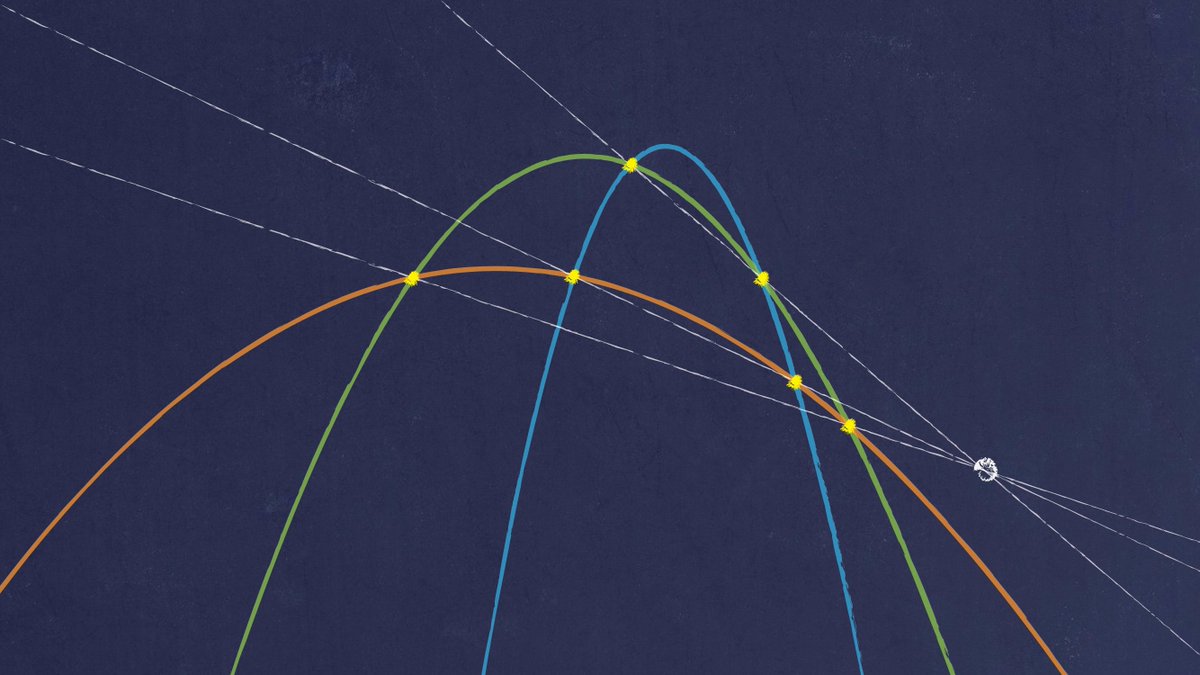
The chords of intersections from 3 (commonly oriented) parabolas always meet at a point.
Albert Chern tweet media
English
3
42
275
0
Albert Chern
Albert Chern@theAlbertChern·
@MatthewArcus It is probably easier the other way around: Due to this concurrence of the diagonals, the hexagon has an inscribed conic (as a consequence of the converse of the Brianchon's Thm).
English
1
0
0
0
Matthew Arcus
Matthew Arcus@MatthewArcus·
@theAlbertChern I'm guessing that the hexagon envelopes a conic, so we can apply Brianchon's theorem.
English
1
0
0
0
Albert Chern
Albert Chern@theAlbertChern·
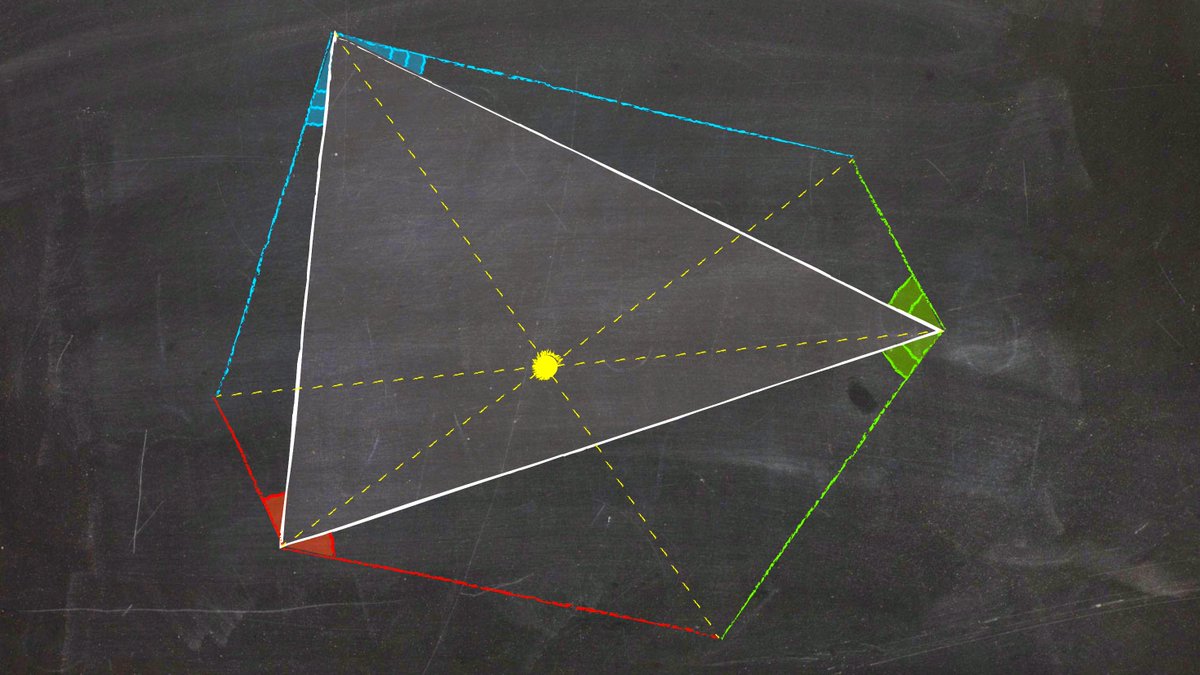
For each corner of any triangle, pick an arbitrary angle and draw two rays, each apart from the adjacent edges by that angle. Then we will get a hexagon whose opposite diagonals are concurrent.
Albert Chern tweet media
English
2
13
62
0
Albert Chern
Albert Chern@theAlbertChern·
Carnot's Theorem is a generalization of the Pythagorean Theorem. The total red area equals to the total blue area.
English
3
82
386
0
Albert Chern
Albert Chern@theAlbertChern·
For any triangle, the feet of the secondary altitudes lie on a circle.
English
4
44
278
0
Albert Chern
Albert Chern@theAlbertChern·
@gregeganSF This is called the Taylor circle. I made up the term "secondary altitude."
English
0
0
3
0
Greg Egan
Greg Egan@gregeganSF·
@theAlbertChern Nice! Is this your own result, or is it classical? I can find no relevant hits when I search for “secondary altitude”.
English
2
0
2
0
Albert Chern
Albert Chern@theAlbertChern·
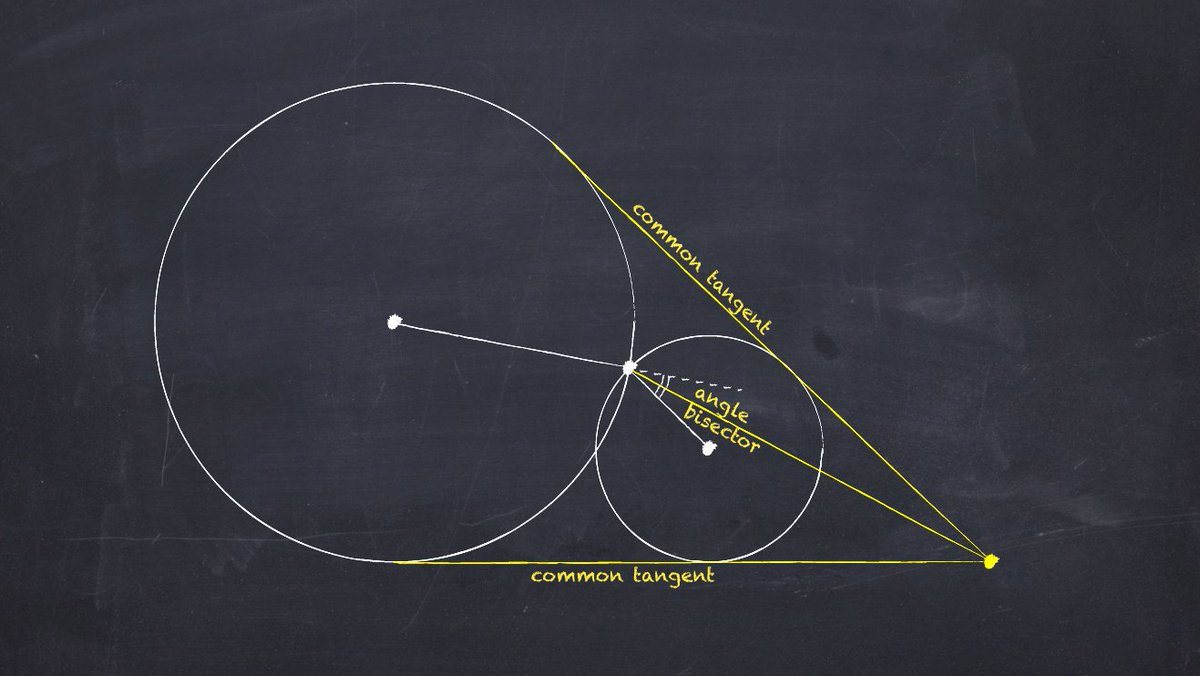
From the intersection of two circles, the angle bisector of the radii meets both common tangents at a point.
Albert Chern tweet media
English
1
7
46
0