

Post

Nice one.
Reason(with examples):
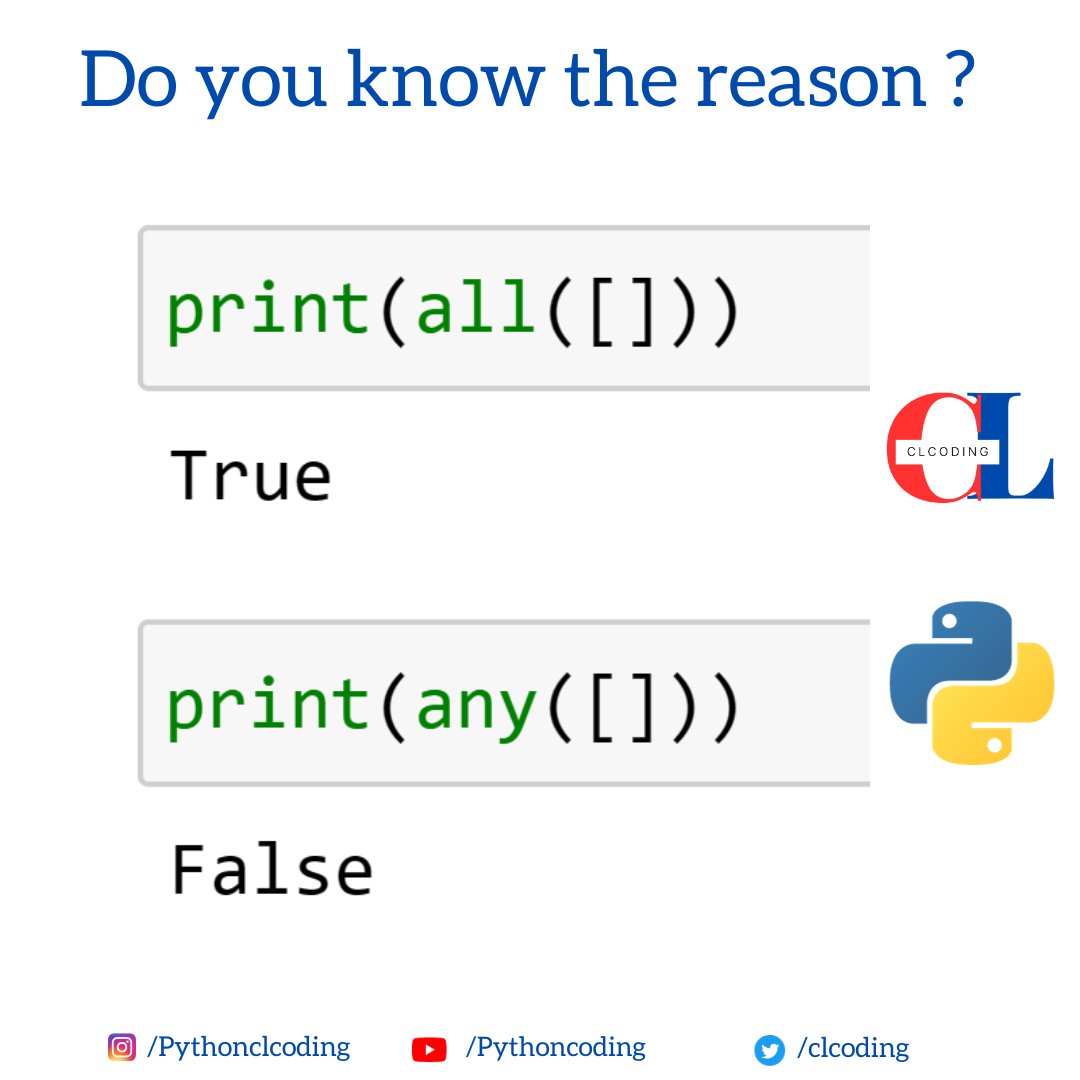
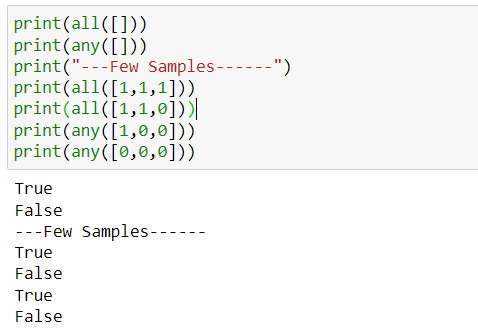
all(): Returns True if all elements of the iterable are true (or if the iterable is empty). If any element is false, it returns False.
any(): Returns True if at least one element of the iterable is true. If the iterable is empty or all the false, it returns False.
Check screen show for examples:
English

@clcoding True because all elements (zero in this case) are true. False because it assumes none of the elements are true.
English

@clcoding check this course: codaffeine-academy.thinkific.com/courses/Python
English

@clcoding I'm a beginner anyone who knows about git hub please tell me
English



@clcoding As per Python doc, all returns True if bool(x) is True for all values x in the iterable. If the iterable is empty, returns True. While any returns True if bool(x) is True for any x in the iterable. If the iterable is empty, returns False.
English