20th Century Boxing: Icons, Memories & More

8.2K posts
20th Century Boxing: Icons, Memories & More banner
20th Century Boxing: Icons, Memories & More

20th Century Boxing: Icons, Memories & More

@20thCentBoxIMM

Brief glimpses into fights, and fighters, of the 20th century; the great, the near great, the very good, the journeymen, the opponents and much more.


Beigetreten Nisan 2025
249 Folgt360 Follower
Rep. Malcolm Kenyatta
Rep. Malcolm Kenyatta@malcolmkenyatta·
What Republicans are doing in Tennessee today and across the country is a stain on our nation’s soul. This Supreme Court will be remembered as the most corrupt in history.
English
4.5K
3.4K
13.2K
198.2K
Eva.
Eva.@Bunny_ngl·
I need a dog name that sounds like it comes from a wealthy family!
English
16.2K
425
12.1K
2.7M
Vinny’s Corner
Vinny’s Corner@VinnysCorner1·
Roberto Duran vs Manny Pacquaio 🥊 Who wins this mythical matchup at LIGHTWEIGHT⁉️
Vinny’s Corner tweet media
English
123
15
100
7.7K
AlphaFox
AlphaFox@alphafox·
Nothing says I'm poor like pretending to look rich.
English
2.1K
903
15.6K
927.6K
20th Century Boxing: Icons, Memories & More
Pacquiao got starched in 1996 in his 12th pro fight by a guy who finished with a 15-8-6 pro record, Rustico Torrecampo, who was 11-4-5 at the time. Name another guy, on anybody's top-ten P4P list that got KO'd by a guy as he neared his prime, with that bad a record? I love pacquaio but he doesn't belong in the top-ten of any serious P4P list.
English
1
0
0
30
stokedsports
stokedsports@stokedsport·
Is Manny Pacquiao top 3 greatest boxers of all time? 🤔🥊
stokedsports tweet media
English
42
6
51
7K
𝐁𝐢𝐠 𝐍𝐨𝐧𝐬𝐨🏂
The story of George Stinney The youngest person ever sentenced to Death. Only 14 years old and was accused of killing 2 white girls. He was sentenced and killed in the electric chair. 70yrs later in 2014, he was proven innocent. His last words were : “Johnny, I didn’t do it, i didn’t do it,Why would they kill me for something I didn’t do”💔
𝐁𝐢𝐠 𝐍𝐨𝐧𝐬𝐨🏂 tweet media𝐁𝐢𝐠 𝐍𝐨𝐧𝐬𝐨🏂 tweet media
Como_Jason🇮🇹@Como_Jason07

What’s the saddest racism experience or story you’ve ever heard? 😔

English
1.3K
11.6K
55.5K
4M
OrsonPrattPartyMachine
OrsonPrattPartyMachine@OrsonPratt65·
@20thCentBoxIMM Never held the title but IMO Charles is the greatest 175er ever to live. Three wins over Archie Moore, including a KO, and basically fought/beat everyone.
English
1
0
2
17
20th Century Boxing: Icons, Memories & More
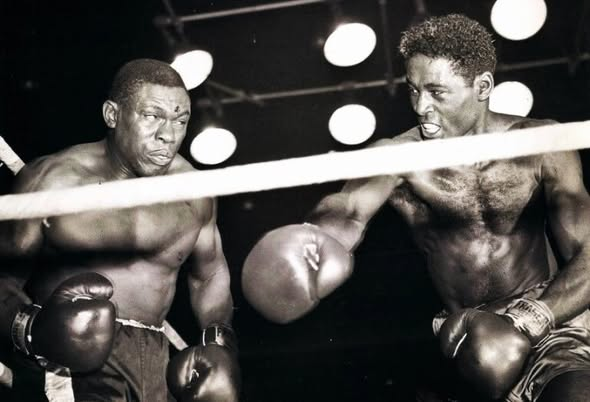
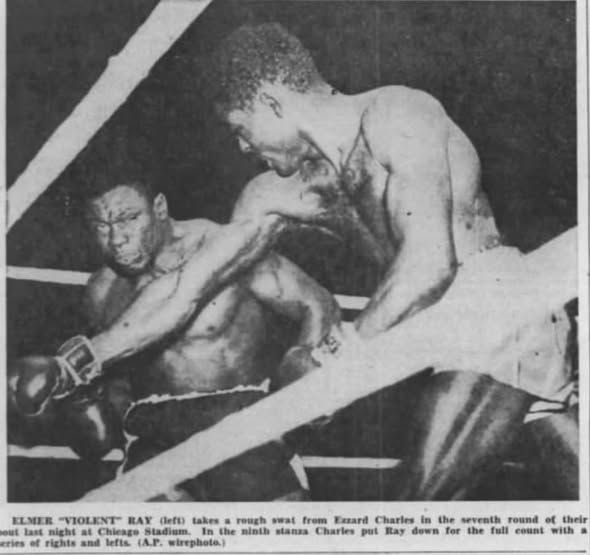
Ezzard Charles (right, in both pics) KO's Elmer "Violent" Ray in the 9th round at Chicago Stadium on May 7, 1948. Ray came into this fight the 2nd ranked heavyweight in the world. United Press would report: "Hammer-fisted Ezzard Charles racked up a knockout over Elmer Ray today and called for a shot at light heavyweight champion Gus Lesnevich. The fast moving Charles hanged the aging Ray right out of heavyweight boxing with a left hook at 2:43 of the 9th stanza." Chicago Promoter Irving Schoenwald would wire Gus Lesnevich a $50,000 offer to defend his Light Heavyweight Title against Charles in an outdoor show in Chicago for that summer but that never happened. Charles would eventually defend the Heavyweight Championship against Lesnevich, in August of 1949, scoring a 7th round RTD win at Yankee Stadium. Ezzard Charles started 1948 off with an 8th-round KO of Archie moore in Cleveland and would go onto decision Jimmy Bivins in September at Griffith Stadium. Finishing the year with an 11th round TKO of Joe Baksi, it was evident that Charles would now seek the Heavyweight Title. ---------------------------------------------------------- Elmer "Violent" Ray went 15-0 in 1946 with 14 KO's,14-0 with 14 KO's in 1945, 15-0 with 15 KO's in 1944, and hadn't lost a fight since August of 1943 (a decision to Turkey Thompson), in the midst of a 50-fight win streak. All without getting a title shot. He'd finally lose, a decision, to Jersey Joe Walcott in March of 1947. 96-23-11 with 69 KO's, Elmer "Violent" Ray was the #1-ranked heavyweight contender by early 1947. He lost that ranking and a potential title fight with Joe Louis, when he was defeated by Jersey Joe Walcott on March 1st of 1947. Ray would subsequently go on to defeat future champion Ezzard Charles on a split decision, before Charles knocked him out in the 9th round on May 7, 1948, in a rematch, ending his title hopes for good. Ray would split two fights with Charles, go 1-2 against Walcott, and have wins over Lee Savold (KO2) and Obie Walker (Two decisions) as well. In 2003, Elmer Ray made the Ring Magazine's list of 100 greatest punchers of all-time at # 44. ---------------------------------------------------------- There's a tendency, sadly, particularly by the more historically illiterate and ignorant boxing fans, for many to look at Ezzard Charles' career record and dismiss him when speaking about the best pound-for-pound fighters in the history of the sport. Ezzard Charles was in the midst of one of the most sensational runs in boxing history, he had lost only one fight since December of 1944 - a decision to Elmer "Violent" Ray which he'd later avenge with this 9th round KO - right to the Heavyweight Title and would not lose again until July of 1951. In that seven and a half year span; Charles beat Archie Moore three times, Llloyd Marshall twice, Oakland Billy Smith twice, Jimmy Bivins twice, Jersey Joe Walcott twice, Elmer Ray, Gus Lesnevich, Joey Maxim and Joe Louis. Keep in mind that Charles also won UD's over the great, and in his prime, Charley Burley in both of their meetings in 1942. Charles took their first fight on three days notice, as well, dropping burley in round four and almost knocking him out in the final round. At the time that Charles lost his title to Walcott his record stood at 71-5-1, his only losses to future Middleweight Champion Ken Overlin (UD10), a split decision to Kid Tunero (one of the best Cuban fighters to never win a world title), a UD to the great Jimmy Bivins, a 9th round TKO loss to the great Lloyd Marshall, and that decision to Elmer Ray. One of the most underrated great boxers in the sport's history, Charles wasn't afforded the opportunity to fight for a world title until his 68th pro fight, already nine years into his career. Ezzard Charles is an All-Time, Top-Ten, Pound-for-Pound boxer.
20th Century Boxing: Icons, Memories & More tweet media20th Century Boxing: Icons, Memories & More tweet media
English
2
2
15
471
NoTimeFoWotlessGal
NoTimeFoWotlessGal@TrueSchoolSemi·
@20thCentBoxIMM @SportzNFood @stokedsport Pac’s gotta be at minimum top ten. Tell me a fighter in boxing history that came from 105-108, fought at 147-154, and do so fighting PFP ranked/HOF dudes for a decade. Maybe top 25? Lol
English
2
0
0
30
stokedsports
stokedsports@stokedsport·
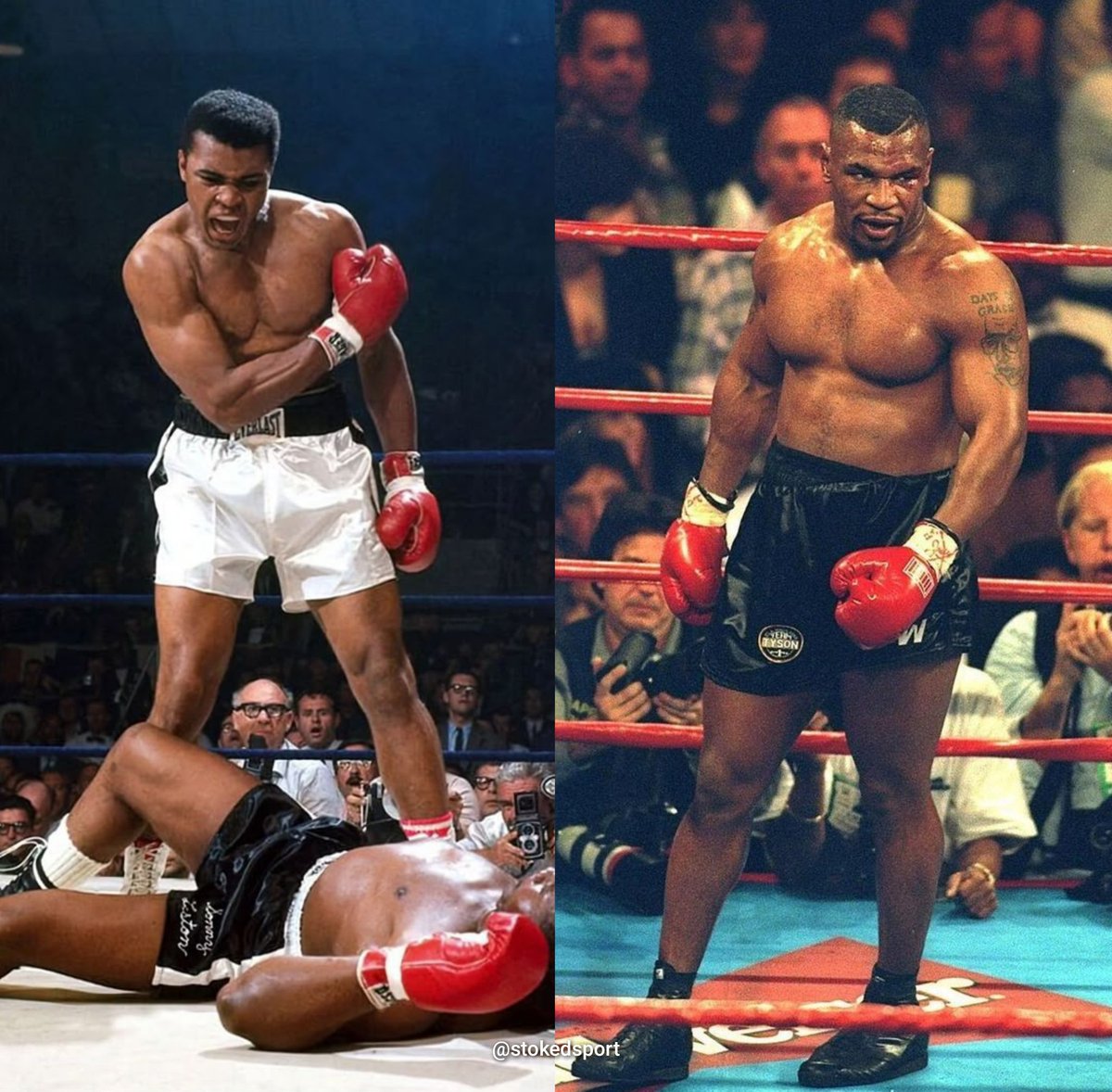
Unpopular opinion Mike Tyson had more influence in boxing than Muhammad Ali.
stokedsports tweet media
English
29
7
28
2.1K
20th Century Boxing: Icons, Memories & More
20th Century Boxing: Icons, Memories & More. Proud to bring a ventury of boxing history to the historically and knowledgeably illiterate of the boxing world 24/7/365. (Also on FB and Instagram. Expanding soon to other social media venues.)
20th Century Boxing: Icons, Memories & More tweet media20th Century Boxing: Icons, Memories & More tweet media20th Century Boxing: Icons, Memories & More tweet media20th Century Boxing: Icons, Memories & More tweet media
English
0
0
1
48
20th Century Boxing: Icons, Memories & More
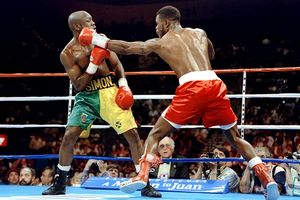
"Terrible" Terry Norris (left) regains the WBC Super Welterweight Championship, on May 7, 1994, with a 12-round unanimous decision over Simon Brown at the MGM Grand in Las Vegas. Norris, who had a tendency to be all offense at times, had been stunned by Brown in December of 1993, in his 11th title defense, getting KO'd in the 4th round. That fight was The Ring magazine's 1993 "Upset of The Year." From The Los Angeles Times report on this bout: A grinning, assured, immeasurably wiser and nimbler Terry Norris found redemption, regained his World Boxing Council super-welterweight title and showcased a blazing new fighting style in a unanimous decision over Simon Brown Saturday night at the MGM Grand. Norris, whose knockout loss to Brown last December raised serious questions about both his chin and aggressive style, dominated Brown Saturday night by moving in for bursts of action, then immediately swooping away from any danger. "He outmoved me and he outboxed me," said Brown, whose record dropped to 41-3. "He moved a lot. I expected that, but he just wouldn't stand still at all." Norris (38-4) won easily on all three cards. He said he hurt his right hand in the first round, which increased his desire to stay out of a war. "I thought the difference was I was able to move," Norris said. "I boxed superbly. I think I surprised Simon Brown more than anybody by my ability to box, and I'm pleased with my performance." Before his rematch, Norris said he had learned his lesson from his chin-first, knockout-or-be-knocked-out attack in the first Brown fight, and he never wandered from his stick-and-move game plan. In the second round, Norris hurt Brown early with a straight left hand on the chin and followed it up 30 seconds later with three chopping right hands on the forehead of a bending Brown. In between attacks, Norris stuck to his strategy of moving away from danger and, in the early going, was not touched with anything heavy. But Brown rocked him in the third with a right to the chin, and Norris' retreats got quicker after that. "Tonight was Boxing 101," said Norris' manager, Joe Sayatovich. When Brown started to showboat in the fourth, circling his right hand high as a taunt, Norris crushed Brown with a huge left hook under Brown's right arm that sent Brown whirling against the ropes. By the 11th, Brown was clearly frustrated with the unsuccessful chase, and several times in the round backed away--demanding that Norris come to him, which only shortened the time Brown had to make up lost ground.
20th Century Boxing: Icons, Memories & More tweet media
English
0
0
1
45
20th Century Boxing: Icons, Memories & More
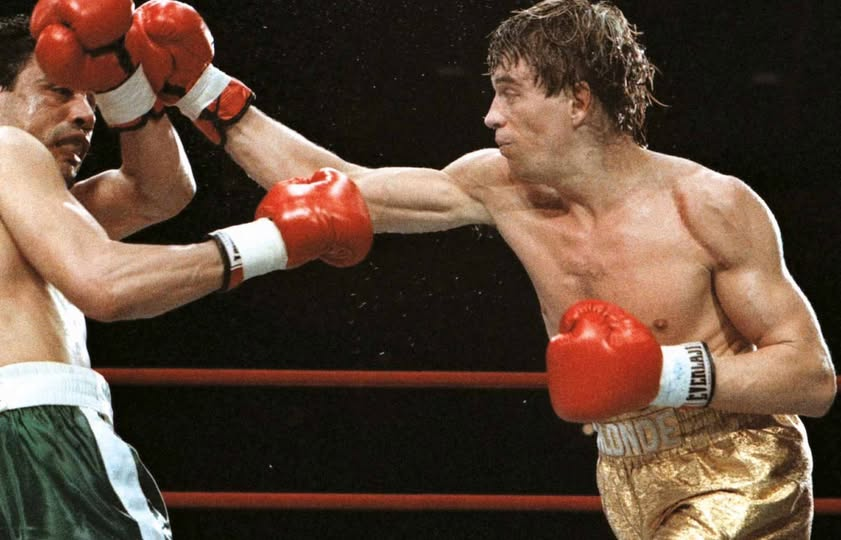
Donny Lalonde (right) wins a 12-round unanimous decision over Mustafa Hamsho, on May 7, 1987 at The Felt Forum in New York City to claim the vacant WBC Continental Americas Light Heavyweight Championship. Hamsho came in off of four straight wins following his second unsucessful challenge for Marvin Hagler's middleweight title. LaLonde, who goes to 28-2-0, earns a meeting with Eddie Davis for the WBC Light Heavyweight Championship vacated by Thomas Hearns. LaLonde will win via 2nd round TKO. Hearns had vacated the title, in a rarely seen move, to go down in weight and fight Juan Domingo Roldan for the vacant WBC Middleweight Championship, winning on a 4th round KO.
20th Century Boxing: Icons, Memories & More tweet media
English
0
0
0
33
20th Century Boxing: Icons, Memories & More
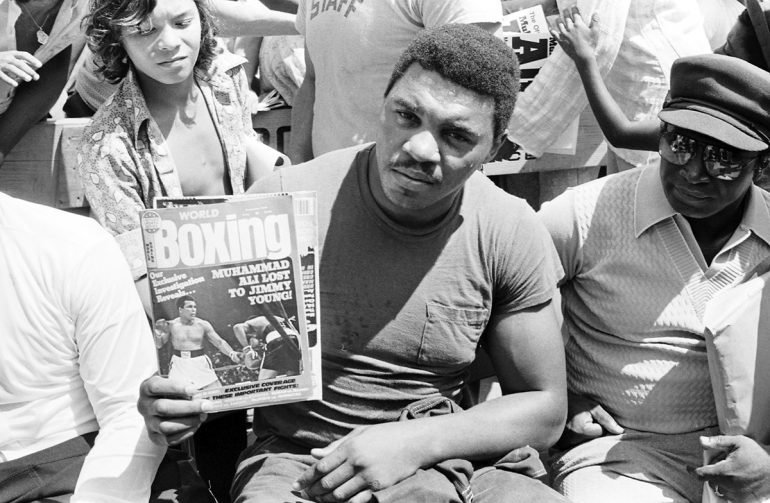
Heavyweight contender Jimmy Young holds up the latest issue of World Boxing on May 7, 1976, which seems to be reading his mind, and the minds of many that watched his April 30th fight with Heavyweight Champion Muhammad Ali.
20th Century Boxing: Icons, Memories & More tweet media
English
1
7
30
1.5K
20th Century Boxing: Icons, Memories & More
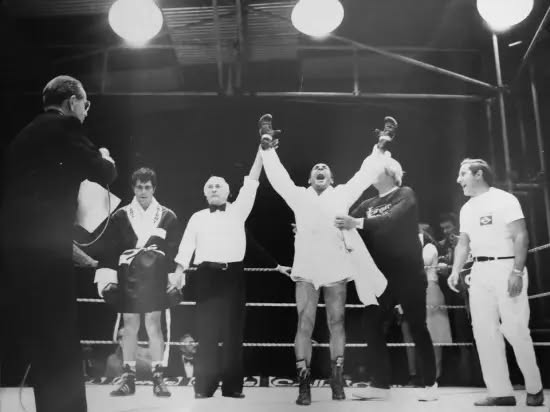
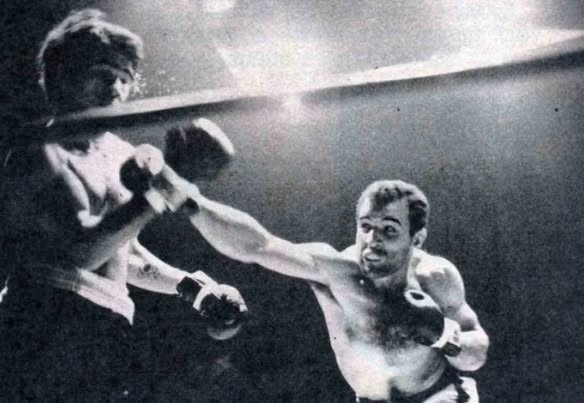
Brazil's Miguel de Oliveira (white trunks and robe) wins the vacant WBC Super Welterweight Championship, on May 7, 1975, scoring a 15-round unanimous decision over Spain's Jose Duran at Stade Louis II in Fontvieille, Monaco. The third time is the charm for the Brazilian who had previously lost decisions for this title, in both 1973 and 1974, to Koichi Wajima. de Oliveira, who goes to 41-1-1 with the win, will lose the title in his first defense retiring on his stool after the 12th round against Elisha Obed of Bahamas (another good story we will eventually get to here).
20th Century Boxing: Icons, Memories & More tweet media20th Century Boxing: Icons, Memories & More tweet media
English
0
1
2
50
20th Century Boxing: Icons, Memories & More
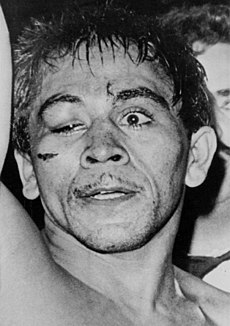
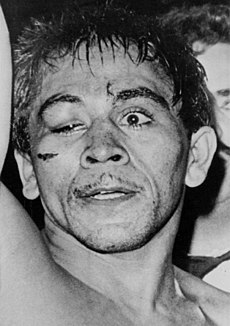
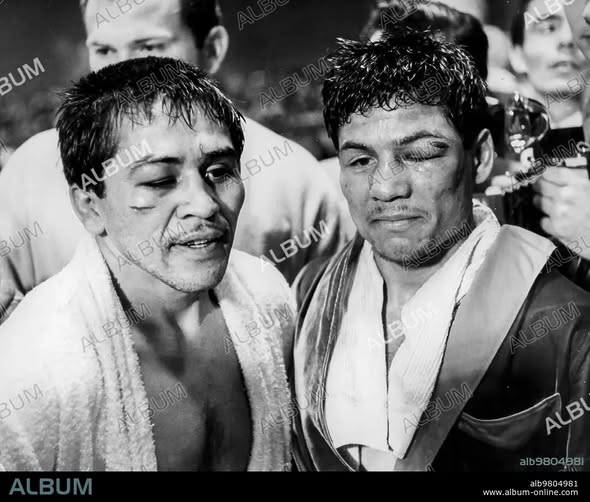
Featherweight Champion Vicente Saldivar (pictured) looks like he's been in a war, on May 7, 1965, after scoring a 15th round TKO of challenger Raul Rojas (right, with Saldivar post-fight) at the LA Memorial Coliseum. The Associated Press, which unofficially had it 12-1-1 for the champion at the time of the stoppage, would write: "Vicente Saldivar, Mexico City, retained his featherweight title Friday night with a 15th round knockout over Raul Rojas. The champion dominated Rojas of San Pedro, Calif., throughout their bout and had a decision clinched when referee Tommy Hart stopped it with just 10 seconds remaining. After three slow rounds, Saldivar opened up. Throwing his southpaw jab in Rojas' face, he kept the challenger off balance and then shot his lightning left. The fighters differed on whether the referee was right in stopping the bout, but Saldivar was unleashing a vicious attack at the end. Rojas, although staying on his feet, was offering only token resistance and was badly hurt." "I'm a referee not a timekeeper." said referee Tommy Hart, when asked why he didn't let Rojas finish the fight, as he stopped it with 10 seconds to go in that final round. "I'd like to fight Laguna as a featherweight or even Jofre. But I want to stay a featherweight, that's my natural class." said the champion, Saldivar, in the post-fight interview. ---------------------------------------------------------- Southpaw Vicente Samuel Saldivar Garcia, aka El Zurdo de Oro ("The Golden Lefty"), was the first great Mexican Featherweight Champion. It'd do some internet boxing 'Experts' some good to read up on great boxers like him while they daily proclaim the 'GOAT' over and over without knowing the sport's history. Born in one of the more violent barrios on the outskirts of Mexico City, Saldivar at an early age would often get into fights both on the streets and in school. Fearing that Vicente would head down the wrong path, his father made the decision to try to guide his son's energy into a sport where he could get recognition and praise for fighting: Boxing. So he took Vicente into a boxing gym where he would fall in love with the sport and became one of Mexico's most successful amateurs, winning the Mexican Golden Gloves as a Bantamweight. That victory would grant the 17-year-old Saldivar a spot on the Mexican Olympic team for the 1960 Olympics in Rome (You may recall a young man named Cassius Clay would win a gold medal at Light Heavyweight and make quite a name for himself). Saldivar's Olympic dream wouldn't last long as he would be eliminated in the first round of the tournament against Ernst Chervet of Switzerland. Saldivar was as a dynamic as a fighter as there could be. He could box with the same beauty and grace as another Featherweight legend Willie Pep or could brawl with the same brutality as 3-weight champ Henry Armstrong and being a southpaw made him twice as difficult for many. And just like Armstrong, Saldivar would be found to have an unusually slow heart-rate, allowing him to have an incredible amount of stamina, which would prove very useful as he scored 7 KOs after the 7th round. In his first few years as a pro, Saldivar built up a record of 16-0 (13 KOs) before he would suffer his first defeat at the hands of Cuba's Baby Luis, via DQ, in 1962. The following year he fixed the wrong by knocking out Luis in the 8th round of their rematch. He fought 3 more times that same year before, in 1964 he would get a chance to win the Mexican Featherweight title against Juan Ramirez, knocking him out in 2 rounds. He had defended that title once when he got an opportunity he couldn't refuse, a fight with the #1 ranked Featherweight in the world at the time, Ismael Laguna of Panama, with the winner receiving a world title shot. By the time he faced Saldivar, Laguna was a seasoned pro whose record stood at 34-1, and he had won the Panamanian Featherweight title. In the battle of the two Featherweight prospects, Saldivar would take a 10 round decision. With the victory, he had received his shot at the world title, and so that same year, he would fight the then WBC and WBA Featherweight Champion, Cuban-Mexican Sugar Ramos. Ramos, not long from the Davey Moore tragedy, would be making his 4th title defense against Saldivar. In an epic and thrilling war between the two boxers fighting out of Mexico City, Saldivar surprised many by taking the initiative and wearing down the Cuban-born Mexican with his vicious body attack. It was simply too much for Ramos, and after the 11th round, 'Ultimino' retired on his stool. Vicente Saldivar was now the new WBA and WBC Featherweight Champion of the World. Saldivar would choose to defend his Mexican Featherweight Championship in his next bout, and almost lost it, against Delfino Rosales. Rosales almost scored an upset as he dropped Vicente in the 1st round and had him in trouble for almost the entire fight. But Saldivar persevered and in the 11th round, behind on the scorecards, Vicente caught his man as he stopped him at 2:05 of the 11th. Following that fight, Saldivar vacated the Mexican title and would start his lengthy first reign as world champion. He'd make his first world title defense in this fight, against Rojas, whoes youth had been even more troubled and violent than Saldivar's. ---------------------------------------------------------- Raised in Watts and East Los Angeles, Raul Rojas would be in and out of reform school more times than could be counted during his youth. He was part of a family of 12, two of his brothers had already been sent to San Quentin State Prison. Rojas was known as "Little Roy" and he led a gang appropriately named "Little Roy's Gang." One day, when the gang was hanging around a street corner, a shot was fired, and the boy next to Raul toppled over, dead. There was a chase, a fight, and more shooting. After it was over, Rojas was sent to the California Youth Authority. Upon his release in 1962, the warden told him if he got into any similar trouble again, it would probably mean the gas chamber at San Quentin. So instead, Raul decided to take up boxing, turning pro a year after his release and building up a record of 23-0-1 (16 KOs) before facing Saldivar at the Memorial Coliseum in Los Angeles. After a comparatively slow first three rounds, the action started to pick up until it became a bitterly fought affair, but one in which Saldivar had a clear edge, simply having too much for tough, brawling Rojas to handle. Upon the 15th and final round, Saldivar came on like a train, battering the Los Angeles-based fighter and knocking him through the ropes when the referee Tommy Hart decided that Raul had had enough and stopped the fight. Following this win over Rojas, Saldivar's next foe would be the only fighter in the Featherweight division at the time who could stake the same claim to being the best Featherweight in the world. He was a man who was on such even ground with Saldivar, that their trilogy would define the careers of both men. Forgotten to most, their rivalry would become one of boxing's great trilogies. He was known as 'The Welsh Wizard' and His name was Howard Winstone. Winstone, like Saldivar, was a highly successful amateur, holding a record of 83-3, winning the Amateur Boxing Association Bantamweight title, and a gold medal in 1958 British Empire and Commonwealth Games. During his early amateur days, Winstone was more of a brawler, but while working at a toy factory, he would lose the tips of three of his fingers on his right hand in an accident. He recovered, but the accident would reduce the power of his right hand, so he had to change his style from a two-fisted, free-swinging brawler to a beautiful boxer with an ability to move his head at the right moment, his left jab becoming a sword-like weapon that would bruise and bewilder his opponents. He turned pro in 1959 and 2 years later, in 1961 he would beat Terry Spinks for the BBBofC Featherweight Championship. By the time Winstone had reached the world titleconsideration level, he had become an idol in his native Wales and many believed he could, and would, become Featherweight Champion. But there was an obstacle on his way to that championship, a man who refused to give up what Howard wanted; That man was Vicente Saldivar. The two would fight each other 3 times over 2 years, all following the relatively same pattern: Winstone would out-box Saldivar for the first few rounds, he would tire out, and then Saldivar would turn up the heat and punish Winstone enough to get a points decision, which was exactly what happened in their first fight at Earls Court Arena in London. Saldivar would make three defenses; a 2nd round KO of Floyd Robertson followed by two fights with fellow southpaw, Japan's Mitsunori Seki, in which he scored a decision and a TKO. 1967 would see chapter two and three of Saldivar's trilogy with Winstone. In Cardiff, in June, Saldivar would drop Winstone twice in the 14th round enroute to a 15-round unanimous decision win. Then in October, in Mexico, Saldivar would dominate their third bout scoring a 12th round TKO. He'd take the microphone at ring center, afterwards, and announce his retirement. Saldivar's retirement would last just under two years, as he came back in July of 1969 to win a 10-round UD over Jose Legra. That would earn Saldivar a shot against WBC Featherweight Champion Johnny Famechon. Saldivar would deck Famechon in the 13th round and take the title via UD. It would also be Johnny Famechon's last fight at he would retire afterwards at the age of only 25 with a record of 56-5-6(20 KOs). His second reign, unlike his first, would be a short one for Saldivar. On December 11th of 1970, in his first defense, Saldivar would reitre on his stoll following the 12th round, ceding the title to Kuniaki Shibata. Eight months later, Saldivar would decision Frankie Crawford and retire. Just over two years later the bug would bite Saldivar again and he would return to challenge the great Eder Jofre for the WBC Featherweight Championship losing on a 4th round KO. Vicente Saldivar would retire for good with a final record of 37-3-0 with 26 KO's. Saldivar has frequently been ranked amongst the greatest in the history of that division by many noted boxing historians. He currently holds the record for the most wins in unified/undisputed featherweight title bouts and the longest unified featherweight championship reign in boxing history at 8 title bouts and 7 title defenses respectively. Many boxing historians consider him among the greatest southpaws in boxing history.
20th Century Boxing: Icons, Memories & More tweet media20th Century Boxing: Icons, Memories & More tweet media
English
0
0
2
42
20th Century Boxing: Icons, Memories & More
Lightweight Champion Joe Brown defends his title against Ralph Dupas on May 7, 1958. "Old Bones" retains the crown with an 8th round TKO in Houston, Texas.
20th Century Boxing: Icons, Memories & More tweet media
English
0
0
0
31