20th Century Boxing: Icons, Memories & More

10.2K posts
20th Century Boxing: Icons, Memories & More banner
20th Century Boxing: Icons, Memories & More

20th Century Boxing: Icons, Memories & More

@20thCentBoxIMM

Brief glimpses into fights, and fighters, of the 20th century; the great, the near great, the very good, the journeymen, the opponents and much more.

Katılım Nisan 2025
309 Takip Edilen528 Takipçiler
Larkin🦇🤘
Larkin🦇🤘@My_comments_R·
@20thCentBoxIMM Leon was an USMC Veteran, Olympic Gold Medalist and Heavyweight Champion of the world. Amazing accomplishments for someone so early in their life.
English
1
0
1
45
20th Century Boxing: Icons, Memories & More
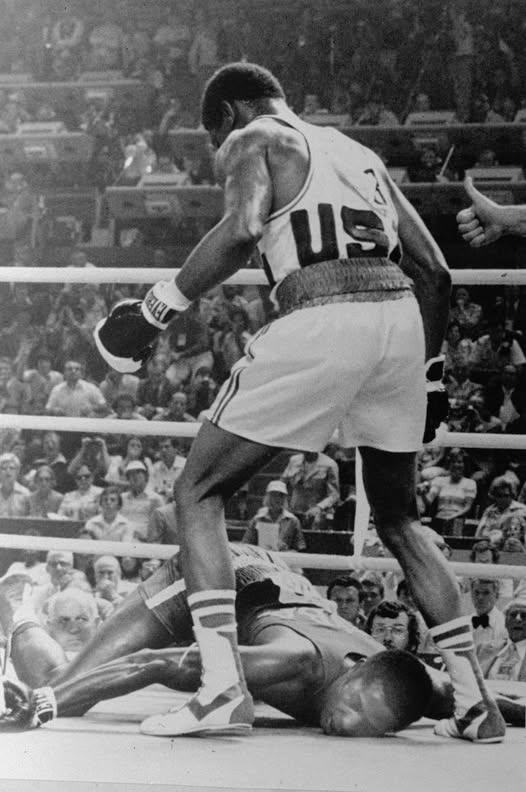
Leon Spinks of St. Louis, Mo, stands over Cuba’s Sixto Soria on Saturday, July 31, 1976, after knocking him down in the Olympic Light Heavyweight Final in Montreal. Spinks won the Gold Medal in the event.
20th Century Boxing: Icons, Memories & More tweet media
English
1
5
38
678
20th Century Boxing: Icons, Memories & More
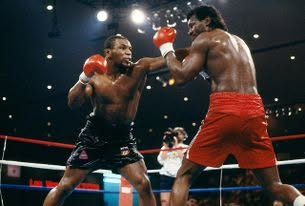
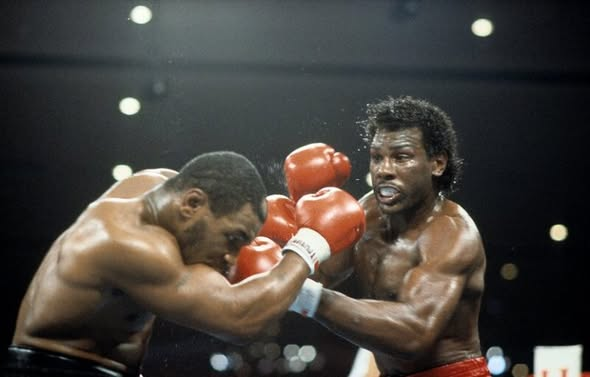
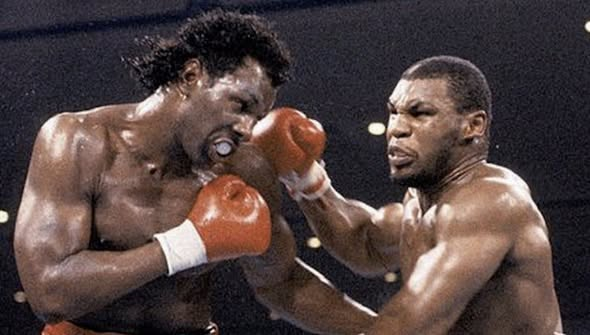
WBA/WBC Heavyweight Champion Mike Tyson wins a 12-round unanimous decision over IBF Heavyweight Champion Tony Tucker (In the red trunks), on August 1, 1987, in Las Vegas to unify the three titles. Phil Berger reported the following in the August 2nd edition of the New York Times: Boxing has an undisputed heavyweight champion, and he is Mike Tyson. Tyson hammered out a unanimous 12-round decision over Tony Tucker tonight at the Las Vegas Hilton Center. But it was not a vintage performance by the victor, who had a problem landing more than a single punch at a time. That was because Tucker, the International Boxing Federation champion, fought a survivalist's fight. Though he rattled Tyson's head with jarring right uppercuts and straight right leads early in the match, Tucker lost the snap in his punches after the fourth round and mostly fought to make it through the 12-round distance. He did last the distance. He circled and grabbed. He sidestepped Tyson's charges or deflected them by pushing Tyson with his gloves. Sometimes he neutralized his opponent by pressing Tyson's head down as the 21-year-old slugger came forward. But Tyson, the World Boxing Council-World Boxing Association champion, landed the big punches over the last two-thirds of the fight. Tucker came alive again only in the final round when he landed a thudding left hook against Tyson's head. All three judges voted for Tyson, with Phil Newman scoring it 119-111; Julio Roldan, 118-113, and Bill Graham, 116-112. There were no knockdowns. Tucker used the sort of tactics that have frustrated Iron Mike in previous bouts - against James (Bonecrusher) Smith last March and for a few rounds against Pinklon Thomas in May. But Tyson showed patience tonight, using his jab to establish his offense more than he had in the past when opponents grabbed and clinched excessively. Pat Putnam would report the following in the August 10th issue of Sports Illustrated: Tyson made the title whole again in Las Vegas as HBO's 16-month, $22 million heavyweight unification series came to a close. . . . It was a historic moment, and, of course, they had to mess it up. In a tasteless ceremony dubbed "the coronation" by promoter Don King, an embarrassed Tyson was wrapped in a chinchilla robe, courtesy of Lenobel Furriers of Las Vegas; handed a jeweled scepter from Felix the Jeweler, Las Vegas; and topped with a crown that King described as studded with "baubles, rubies and fabulous doodads." It looked as if it had been found in Emmett Kelly's trunk. The fight was originally scheduled for 15 rounds, but it was reduced to a 12 rounds after the three governing bodies met and approved the change on the morning of July 31st. Both came in undefeated; Tyson at 30-0 (27 KO's) and Tucker at 34-0 (29 KO's), in what was the final fight of HBO's heavyweight unification tournament. When the series was formally announced in January of 1986, the network planned to spend six million for a seven-fight series. But with various contingencies, the series eventually increased to 10 fights that cost HBO $22 million. Originally, the WBA/WBC champion was going to face the winner of a fight between Michael Spinks, the IBF champion, and Tucker, the IBF's #1 contender, in the tournaments final. However, instead of facing Tucker, Spinks chose to fight Gerry Cooney for a much larger purse and was stripped of the title on February 26th of 1987. Three months later, on the undercard of Tyson-Pinklon Thomas, Tucker would defeat James "Buster" Douglas, the IBF's #2 contender, by a 10th-round TKO to win the vacant IBF heavyweight title. Next for Tyson would be a defense, in October, against undefeated (15-0) Tyrell Biggs. Tony "TNT" Tucker would follow this with 14 straight wins and earn a shot at Lennox Lewis, then the WBC Champion, in 1993 losing a 12-round UD.
20th Century Boxing: Icons, Memories & More tweet media20th Century Boxing: Icons, Memories & More tweet media20th Century Boxing: Icons, Memories & More tweet media
English
0
1
2
215
20th Century Boxing: Icons, Memories & More
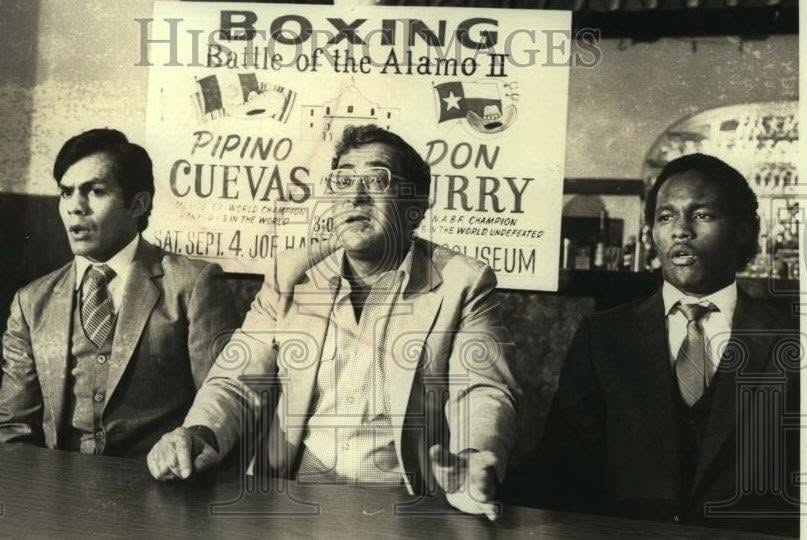
From "The Fights That Never Happened" department: Former WBA Welterweight Champion Jose "Pipino" Cuevas and future titlist Donald "Cobra" Curry flank promoter Bob Arum, on August 1, 1982, at the press conference for their September 4th bout in Fort Worth, Texas. Curry, 14-0 at the time, was coming off of a 10-round UD over Adolfo Viruet, while Cuevas hadn't fought since losing a 10-round UD to Roger Stafford in November of 1981. UPI would report, on September 1st, on the bouts cancellation as follows: SAN ANTONIO, Texas -- Texas Boxing Commission doctors said Wednesday former World Boxing Association welterweight champion Pipino Cuevas has suffered a rotator cuff injury to his left shoulder and would be unable to meet Donald Curry in a nationally televised 10-round bout this Saturday. Promoters of the fight said they would attempt to substitute a fighter for Cuevas, but any substitute would have to be approved by both Curry, of Fort Worth, Texas, and the network, ABC. A spokesman for Cuevas, of Mexico City, said the boxer injured his shoulder during a workout Monday, but went through a light workout anyway on Tuesday. When he awoke Wednesday, Cuevas could not raise his left arm above his shoulder. Doctors said Cuevas could not resume workouts for at least 30 to 45 days. Cuevas, 2-1 since his brutal loss to Thomas Hearns, wouldn't fight again until his 1983 loss to Roberto Duran.
20th Century Boxing: Icons, Memories & More tweet media
English
0
1
4
143
20th Century Boxing: Icons, Memories & More
Undefeated (20-0-0 coming in) Tony Ayala Jr. TKO's Robbie Epps (30-2-0 coming in) in the 1st round at Freeman Coliseum in San Antonio, Texas on August 1, 1982. ---------------------------------------------------------- Ayala, a promising junior middleweight, moves to 21-0 as a pro but his demons will cost him dearly. The first sign of the troubled young man Ayala was may have been after his ninth pro bout when, instead of shaking hands with his beaten opponent (Jose Luis Baltazar), he reportedly spit on him in response to a perceived pre-fight insult. Ayala will be remembered by many as a fierce, gifted and troubled, young fighter who became the #1-ranked junior middleweight contender in the world before a rape conviction sent him to prison in 1983. His older brothers Mike Ayala and Sammy Ayala, as well a younger brother Paulie Ayala, were also professional boxers, and very good ones. Mike unsuccessfully fought for a world title three times, once as a featherweight and twice as a super bantamweight, and Sammy was a world-ranked super lightweight. All four brothers were trained by their father, Tony Ayala Sr. As an amateur, Tony Ayala Jr. compiled a record of 140-8 (with 60 KOs). He won the National Junior Olympics Light Middleweight Championship in 1977 and 1978, and the 1979 National Golden Gloves Middleweight Championship in 1979. As he progressed rapidly as a pro, an article about Ayala appeared in the October 19th of 1981, issue of Sports Illustrated. In the article, promoter Bob Arum called Ayala "the best young fighter I've ever seen in my life," and trainer Angelo Dundee said, "There's no telling what he can do. He's going to be champion." Ayala had been scheduled to meet Roberto Duran on November 19th of 1982, but the fight was called off after Duran lost, in a big upset, to Kirkland Laing on September 4th. On November 20, 1982, Ayala fought Carlos Maria del Valle Herrera, the WBA's #1-ranked junior middleweight contender, in a title eliminator. Ayala won by a 3rd-round KO and became the mandatory challenger for then WBA Junior Middleweight Champion Davey Moore. Ayala would appear on the cover of the December, 1982 issue of The Ring with the caption "Boxing's Bad Boy." It would prove to be prophetic as Ayala's demons would destroy his promising career and his life. Tony Ayala Jr. was scheduled to fight Davey Moore for the WBA Junior Middleweight Championship in May of 1983, but the fight would be called off after Ayala was arrested in January for raping a woman at knifepoint. He would serve 16 years in prison. After a night of drinking to celebrate the New Year, Ayala returned to his apartment complex in West Paterson, N.J., in the early morning of January 1, 1983. The Duva's had relocated him there, they stated, to keep him away from "bad influences" in San Antonio. But instead of going home, he broke into the apartment of a 30-year-old schoolteacher by climbing through a window. Once inside, he tied the woman to her bed, and then raped and sodomized her at knifepoint. The woman's roommate, who was in another room, confronted Ayala, but he threatened her with the knife. She slipped out of the apartment and telephoned the police. When the police arrived and searched the grounds of the complex, they found Ayala stripped to the waist and wandering about in a drunken stupor. He was arrested shortly after 6 a.m. and arraigned later in the afternoon. On January 10th, a Passaic County, New Jersey, grand jury indicted Ayala on seven counts. He was charged with burglary, aggravated assault, aggravated sexual assault, making a threat to kill, making a terroristic threat, and two counts of possession of a weapon for unlawful purposes. After a two-week trial in April 1983, a jury took three and a half hours to find him guilty. Judge Amos Saunders of Passaic County Superior Court sentenced him to 35 years in prison with the stipulation that he serve 15 years before becoming eligible for parole. After his parole, Ayala would stage a comeback, he'd go 9-2 and finish his career at 31-2 with 27 KO's. Truth is, a long litany of incidents had been covered up on Ayala's behalf in his early years and he would revert to those self-destructive habits yet again. Ayala would claim that he began drinking and shooting heroin in his early teens. He also said that he was molested by a family friend between the ages of 9 and 11, telling no one until he disclosed it to a prison counselor. "Looking back, that was ground zero of what set everything on its course," Ayala said, referring to the molestation, in a 1998 prison interview with The New York Times. "I don’t blame everything on that, because I made the decisions to do the things I did. But it explains why I did what I did." In 1978, Ayala had attacked and attempted to assault a teenaged girl in a drive-in movie theatre restroom. Ordered to stand trial as an adult, Ayala pleaded guilty to a charge of aggravated assault, reduced from attempted aggravated rape, and was sentenced to 10 years in prison in March 1980. The sentence was reduced to 10 years' probation in June of 1980 after the girl appeared in court and testified that she felt both she and Ayala had suffered enough. According to a newspaper report, the girl's suffering was eased by a substantial cash payment. "We paid a large amount of money to get out of it," Tony Sr. told the Dallas Times Herald. "I won't say how much. But Bob Arum needed a commitment from us for television. So he says, 'Pay the damn girl off.' We paid X amount of dollars, and that's actually all they were looking for." He was arrested on August 16, 1982, in San Antonio and charged with a burglary. Ayala said he had been drinking and had stumbled into the wrong house. The New York Times reported on August 22, 1982, that Ayala would enter a clinic for a minimum of 28 days in an attempt to solve 'emotional problems'. "Tony needs help," said promoter Dan Duva, son of Lou Duva, Ayala's co-manager. "He definitely has emotional problems. He is not a criminal. He doesn't need to be put in jail." Ayala would be indicted three days later on another burglary charge. After his release from prison his self-induced troubles continued. On December 12, 2000, Ayala was shot in the shoulder and then jailed on charges of breaking into a woman's home. the woman, awakened by her roommate that a man had climbed in through a window shot him when he said "I'm here for you." While he awaited trial, Ayala recovered from his injury and won his next fight while wearing an electronic monitor around his ankle. Ayala was jailed again, on July 8, 2004, for violating the terms of his probation after a traffic stop. He was charged with possession of drug paraphernalia, driving without a license and no proof of insurance, as well as speeding. He then allegedly refused to take a drug test and told a probation officer that he had used heroin and was in possession of a sexually oriented magazine, all of which were violations of his probation. On July 28th, Ayala was sentenced to 10 years in prison for violating terms of his probation. Ayala was released in April of 2014, nine days after his father's death, and lived without further incident until he was found dead at his family’s boxing gym in San Antonio on May 12th of 2015. Heroin and a syringe were found next to the body, San Antonio police disclosed in a report that investigators suspected a drug overdose killed Ayala. According to the police report, the items were found on a desk next to Ayala's body, which was found face-down on the floor next to the desk and chair. Investigators said the syringe contained what appeared to be a narcotic and that a ball of heroin wrapped in tape was found on the desk with a cooker cap and a spoon. No sign of trauma was found on the body, police said. Tony Ayala was 52-years of age.
20th Century Boxing: Icons, Memories & More tweet media
English
0
0
0
199
20th Century Boxing: Icons, Memories & More
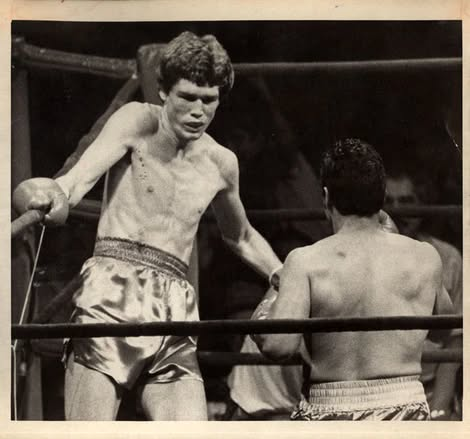
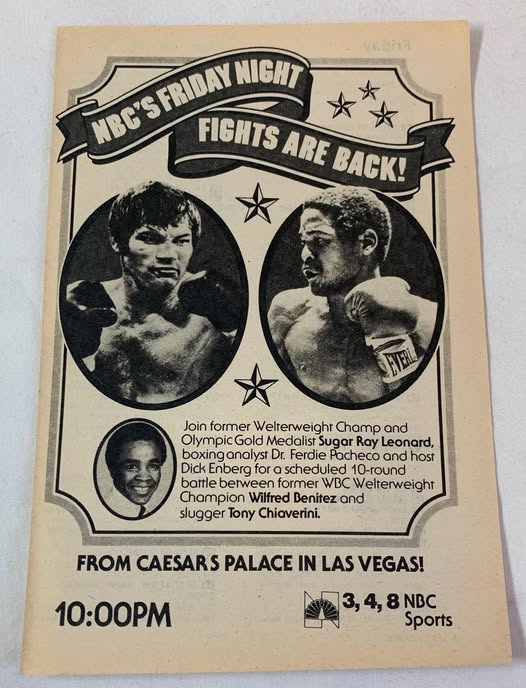
Wilfred Benitez TKO's Tony Chiaverini in the 8th round on August 1, 1980 at Caesar's Palace in Las Vegas. "Dundee gave me a couple of rounds to get something going and I tried. But I couldn't get it going." explained Chiaverini. "He couldn't get his shots off. He was taking a licking in there. I won't let one of my guys take a licking." explained Angelo Dundee, Chiaverini's manager, who requested the bout be stopped after the 8th round. The AP reported: "Wilfred Benitez, with an 8th round TKO win over Tony Chiaverini under his belt, wants another shot at the welterweight title he lost only eight months ago. In a nationally televised junior middleweight fight at Caesar's Palace, Benitez, of San Juan, Puerto Rico, held a commanding lead on the scorecards of all three judges and the AP until Chiaverini's manager, Angelo Dundee, stopped the scheduled 10-round fight after eight rounds. Chiaverini, of Kansas City, had a large hometown rooting section backing him but managed to win only the 2nd round in the bout. His obvious strategy in the first few rounds was to cut off the ring and keep Benitez on the ropes. But the former champion managed to break free from the tactic in the 5th round, then scored heavily on Chiaverini in the 6th. He met Chiaverini with a looping right hand at the start of the round, followed up with three quick rights to the head, a left, then a punishing left-right combo that left Chiaverini reeling." Roberto Duran held the WBC belt at this time, his rematch with Sugar Ray Leonard scheduled for November, while Thomas "Hitman" Hearns would take the WBA Belt from Pipino Cuevas the very next day (August 2nd).
20th Century Boxing: Icons, Memories & More tweet media
English
0
2
4
172
20th Century Boxing: Icons, Memories & More
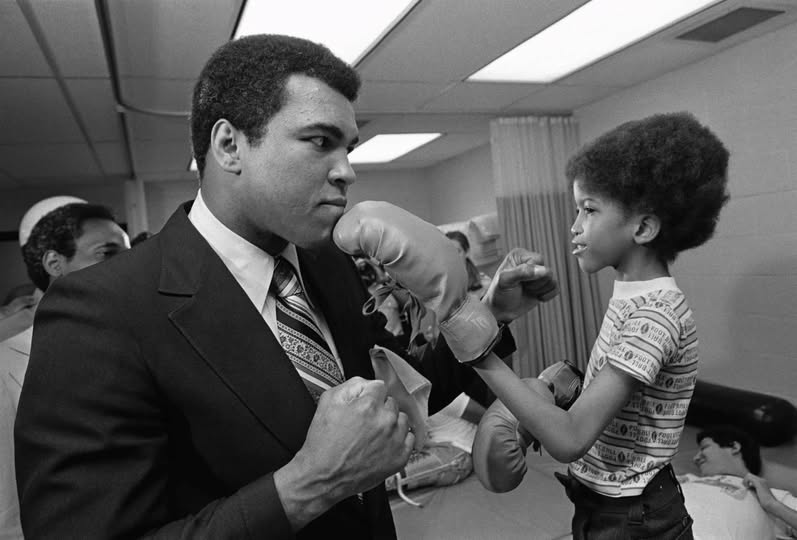
Roland Ward, 8, a patient at the Crippled Children’s Hospital, plays with former Heavyweight Titlist Muhammad Ali on Tuesday, August 1, 1978, in New Orleans, during Ali’s visit. Ali, who is in town to promote his September 15th rematch with Leon Spinks, autographed a pair of boxing gloves for the youngster.
20th Century Boxing: Icons, Memories & More tweet media
English
0
2
16
236
20th Century Boxing: Icons, Memories & More
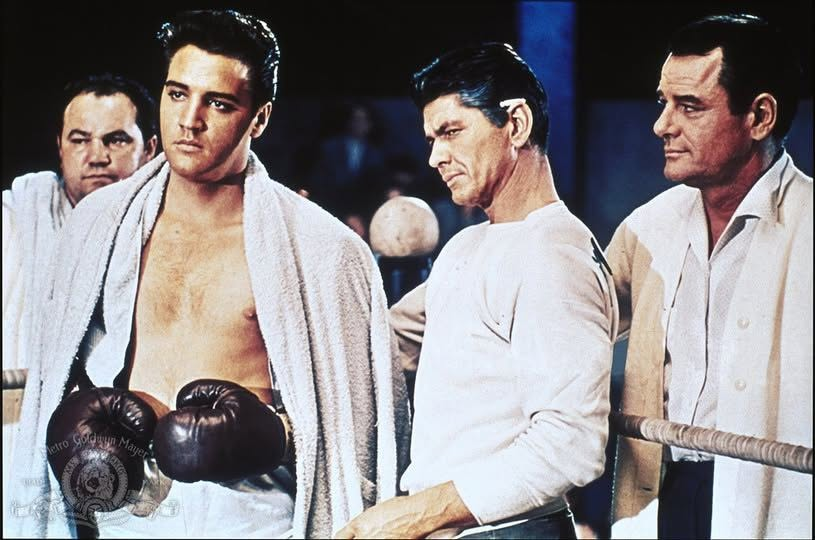
"Kid Galahad" is released on August 1, 1962. Elvis plays Walter "Kid Galahad" Gulick and, yes, that is Charles Bronson as Lew Nyack, along with an uncredited cameo by Ed Asner of the 'Mary Tyler Moore' and 'Lou Grant' tv shows. The film is a remake of the 1937 version (in which United Artists Television through Associated Artists Productions distributed for TV airings at that time) starring Edward G. Robinson, Bette Davis and Humphrey Bogart and directed by Michael Curtiz, who also directed the 1958 Presley film King Creole. Willy Grogan is a small-time boxing promoter and innkeeper based in the Catskills resort region of Cream Valley, New York. He is a contemptible man who is in debt and pays little attention to the woman who loves him, Dolly, a chain-smoking, love-starved woman residing at the camp. Walter Gulick arrives, a young man recently discharged from the army who loves the peaceful setting almost as much as he loves working on old cars. Walter wishes to find work as a mechanic at a nearby garage. When Willy's younger sister Rose shows up unexpectedly, she becomes interested in Walter. Willy objects because he doesn't want Rose to fall for a "grease monkey" mechanic and two-bit boxer. Dolly is envious of the young couple's romance and resents Willy's interference. Walter, in need of work, accepts a job as a sparring partner and knocks out one of Willy's top fighters. Willy is persuaded to let Walter, known as Galahad, try his hand in a real bout. Both men are reluctant but need money. Walter begins training under the watchful eye of Lew, Willy's top trainer. After several successes in the ring, Walter is readied for his biggest fight. Gangsters want him to take a dive so that Willy can pay off his debts to them, but Walter throws his muscle behind Willy and emerges victorious. He wins the big fight against Ramon "Sugar Boy" Romero as well as Willy's approval, retiring undefeated to his vintage car and his new love. Little known fact: Elvis Presley went out for the boxing team at Humes High in North Memphis. The late Walt Doxey, the Humes coach, once described Elvis’s short-lived boxing career thusly: “I put him in the ring against Sambo Barrom and this guy bloodied Elvis’s nose pretty good. Then Elvis came to me and said, `Coach, I hate to tell you this, but I’m quitting the team. I’m a lover, not a fighter.’ ” From the Mississippi Sports Hall of Fame website: Apparently, Ali and Presley were huge fans of one another. Ali once said, “People don’t realize what they have until it’s gone … like my man Elvis Presley. I was the Elvis of boxing.” Ali also has told the story of the time Elvis visited his training camp in Pennsylvania and stayed two weeks. “Nobody knew about it,” Ali said. “One night I said, `Elvis, do me a favor. I got a guitar. Please come with me down to Pottsville, a little town nearby, to this redneck place called Spoonies.'” (FYI, my late brother Steven lived in Pottsville, PA from the 1980's on, it's an old mining town) It was a Saturday night. Ali called ahead to the owner and told him to let them in the back door. “Elvis went up to the mike with a towel over his face, took it off,” Ali said. The King broke into, “You ain’t nuthin’ but a hound dog, cryin’ all the time.” He sang just the one song. “Then we flew out of the door again,” Ali said. “Can you imagine being in a little one-horse town and Elvis Presley runs on stage? Man, people ran all outta the place lookin’, gettin’ into cars, tryin’ to find us. “Elvis said, `Champ, I’ve never done that before in my life.’ ” Longtime Memphis sports personality George Lapides remembers back when Elvis would visit his newspaper office. “Elvis was a huge sports fan,” Lapides says. “He would just come and sit around sometimes, like he was just another guy. “I knew him to be a bigger pro football fan than boxing fan, but he liked all sports,” Lapides continues. “He was fascinated with our wire machines. He would read the sports news coming off the AP and UPI wires.” Lapides remembers a chance meeting with Elvis at a football game at Liberty Bowl Memorial Stadium. Lapides and Presley were waiting at the press box elevator for Charley Rich, while Rich sang the national anthem. Only Rich apparently was drunk and kept messing up the lyrics. “When Rich finally got to the elevator, Elvis said, `Tough song, huh Charley.’ “Rich looked at Elvis and said, `Elvis, it damn sure ain’t Behind Closed Doors.” Although Elvis professed to be a lover, not a fighter, The King was not adverse to putting up his dukes if a fight couldn’t be avoided. Grenada legend has it that Elvis once cold-cocked a guy in front of the old Chicken Inn on Highway 51. The guy’s girlfriend apparently was sweet on Elvis, and the guy didn’t like it. The King made short work of him. A more well-documented bout took place on Oct. 18, 1956, at a Memphis gas station. The station’s manager apparently asked Elvis to leave because he was attracting a crowd. The guy was not polite. Witnesses said the manager cuffed Elvis on the back of his head, and Elvis responded, “Hey man, don’t be messin’ with my hair.” The two came to blows, and Elvis was the clear winner. Another attendant took a shot at Elvis, and he, too, is said to have paid dearly in bruises and cuts. Charges of assault were filed against Presley. But a judge acquitted Elvis and fined the two service station workers.
20th Century Boxing: Icons, Memories & More tweet media
English
0
0
0
119
20th Century Boxing: Icons, Memories & More
Doug Jones loses a 10-round unanimous decision to Zora Folley on August 1, 1962 at Denver's Auditorium Arena. The AP, which unofficially had it 47-45 for Folley, would report: "Heavyweight Zora Folley pounded out a close 10-round unanimous decision Wednesday night over Doug Jones, second-ranked light heavyweight contender from NYC. Folley weighed 196½, Jones 180½. Both fighters traded heavy artillery throughout most of the bout, with Folley having the edge. Jones landed a combo early in the 10th round that staggered Folley, but the Arizonan countered and had Jones in trouble the rest of the round." ---------------------------------------------------------- Doug Jones would be the cover subject of the March of 1963 issue of The Ring due to his 7th round KO of Folley in their December rematch at Madison Square Garden. Jones had fought a draw with undefeated (33-0-3) Erich Schoppner (Schoppner went 33-1-5 as a pro but never fought outside of Europe) in his next fight and followed that up with an 8th round TKO of undefeated (then 9-0) Bob Foster at MSG. Foster had been a substitute for Folley in this bout. Jones knocked Foster down for a nine-count in the 1st with a right hand. Foster was staggered badly in the 7th and 8th and as he was staggering in the 8th round, referee Teddy Martin stepped in and stopped the bout. The KO loss to Jones would cost Folley a shot at Heavyweight Champion Sonny Liston. Folley was ahead on two of the three official scorecards at the time of the KO, and even on one, and UPI would report: Folley Loses Chance To Fight Liston Light-heavyweight contender Doug Jones of New York climbed off the canvas in the first round December 22nd and scored the year's major boxing upset by knocking out heavyweight contender Zora Folley in the seventh round of their nationally televised return fight. Jones, weighing the heaviest of his career at 185 pounds but still much lighter than Folley's 195 3/4, avenged in Madison Square Garden the decision defeat he had suffered at Folley's hands in Denver, Colo., last Aug. 1. Jones, 25, dropped Folley for the full count with a left-right combination to the chin in the seventh round. Folley, the 12-5 favorite, dropped to his hinds and then completely to the canvas, where he supported himself on his left elbow and hip. He tried to rise as referee Arthur Mercante reached the count of eight, but Folley stumbled and fell forward on the canvas as the count reached 10. He was counted out at 1:56 of the seventh round, and suffered the fifth kayo and sixth defeat in his career of 70 fights. The defeat broke Folley's victory string at nine bouts. Folley's prowess had made him the third ranking contender on the Ring Magazine's rating sheet. Coincidentally, Jones — who had lost a decision in his attempt to wrest the light-heavyweight crown from Harold Johnson on May 12 — is still ranked third among the 175-pound contenders. Jones, a 25-year-old who never has been stopped, scored his 21st victory in 25 bouts and his 13th knockout. ---------------------------------------------------------- Doug Jones next bout, following his KO of Folley in 1963, would be his controversial decision loss to then undefeated (17-0) Cassius Clay at MSG in March of 1963.
20th Century Boxing: Icons, Memories & More tweet media
English
0
0
0
65
20th Century Boxing: Icons, Memories & More
Arthur Persley (pictured) drops a 10-round unanimous decision in a non-title fight to Lightweight Champion Carlos Ortiz on August 1, 1962 at Araneta Coliseum, Barangay Cubao, Quezon City, Metro Manila, Philippines. Filipino fans protested the decision in Ortiz' favor and actually started small fires within the arena due to adopting Persley as a hometown fighter since he had relocated to the Philippines. UPI reported on the bout: "World lightweight champion Carlos Ortiz hammered out a unanimous decision over aging but sturdy Arthur Persley Wednesday night in their 10 round non-title match before 30,000 fans at the huge Araneta Coliseum. There were no knockdowns although both fighters went all-out slugging each other throughout their bruising match. While Ortiz rocked his 39 year old opponent several times during the match with lightning swift left jabs and punishing body blows, he appeared in the end to have suffered the most. He had a cut below his right eye and also showed a swollen left eye from the effects of Persley's counter-punches. Except for the 3rd and 6th rounds and the 2nd, 4th and 5th rounds, which were even, Ortiz dominated the fight. He repeatedly caught Persley with rapid fire left jabs and damaging body punches during the infighting." Arthur Persley, 94-26-5 with 30 KO wins in a 28-year career (1941-69 though he was inactive from 1942-46 likely due to military service), never fought for a world title though he did face Joe Brown, Virgil Akins, Wallace Bud Smith, Tony DeMarco and Carlos Ortiz.
20th Century Boxing: Icons, Memories & More tweet media
English
0
0
4
76
20th Century Boxing: Icons, Memories & More
Former Heavyweight Champion Joe Louis gives some advice to a young, Canadian heavyweight named George Chuvalo, on August 1, 1960, as he prepares to defend the Canadian Heavyweight Title against Bob Cleroux on the 17th. Chuvalo, 17-4-1 at the time of this AP photo, will lose a somewhat controversial (most unofficial scoring had Chuvalo winning the bout) split decision at DeLormier Stadium in Montreal.
20th Century Boxing: Icons, Memories & More tweet media
English
0
1
5
106
20th Century Boxing: Icons, Memories & More
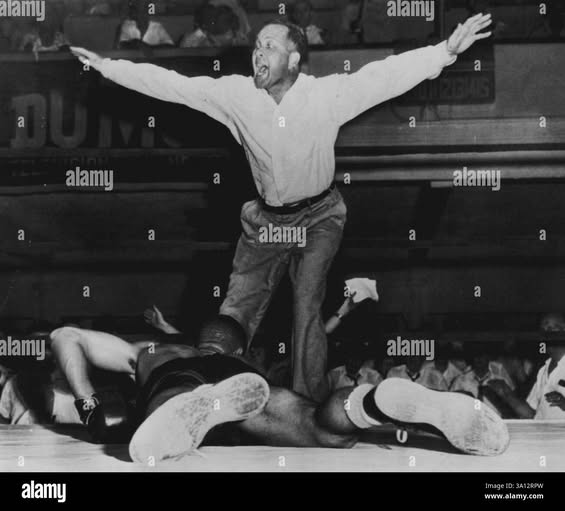
Referee Mark Conn signals that the fight's over on August 1, 1955 as Tony Anthony is KO'd by Bobby Boyd in the 3rd round at St. Nicholas Arena in New York City. United Press reported: "An underdog at 3-1, young Chicago middleweight Bobby Boyd knocked out New Yorker Tony Anthony at 1:32 of the 3rd round Monday night in their thrilling fight at St. Nick's Arena. A straight right to the chin dropped slender Anthony face-down on the canvas for the full count, but Boyd emphasized Tuesday, "it was a left-right to the body that nearly doubled him earlier in the round and set him up for the KO." Boyd weighed 157 3/4 to Anthony's 161 3/4." We've covered both Bobby Boyd and Tony Anthony here several times. If you'd like to read more on them now you can check out their bios in previous posts on my FB page/group. We're likely to get to both of them fairly soon again. ---------------------------------------------------------- Mark Conn, who died in 2011 at the age of 95, was the third man in the ring for 222 bouts from 1946-86. Conn handled two fights in Florida, in 1983 and 1986, but for all intents and purposes, his full-time third man job ended with a November 1974 Felt Forum card. His first title fight was Ike Williams 10th round TKO of Jesse Flores in September of 1948 at Yankee Stadium. He also worked the Jake LaMotta-Tiberio Mitri Middleweight Title fight at MSG in July of 1950. Conn also handled Ezzard Charles decision win over Joe Louis in defense of the Heavyweight Championship at Yankee Stadium. Other title fights he handled were Gavilan-Graham in 1951, Benvenuti-Griffith in 1967, and his final title fight was Bob Foster's devastating KO of Dick Tiger for the Light Heavyweight Title in 1968. ---------------------------------------------------------- 'The Wave', Rockaways (NY) newspaper since 1893, would eulogize Conn in print in 2011: Rockaway Born, Famous Boxing Referee Passes Away At 95 An Appreciation by the Conn Family - October 14, 2011 The world has lost one of the best professional boxing referees in the country in Mark Conn, who was born in Arverne and died on September 29 at the age of 95 in Florida. Conn was the referee in major fights including bouts that involved legends like heavyweights Joe Louis and Muhammad Ali. From 1945- 1970, Conn refereed countless fights in Madison Square Garden, Yankee Stadium and other famous venues. Then from 1970 to 2000, he became a boxing judge in Southern Florida. Conn graduated from Far Rockaway High School and New York University. “Champ” as he was called by his family and friends, was a lightweight Golden Gloves Champion in New York City in 1936 and boxed on the American International Team in England and the Far East. He was a winner of the Yale Rubin Trophy in 1936 for the outstanding “Golden Gloves Champion of the Year.“ He served in the U.S. Army at Fort Knox, Kentucky in 1941-42 when Conn introduced mass boxing instruction to thousands of troops. He joined the Army Air Corps serving with the Flying Tigers in China and as Athletic Director before his promotion to Major. This was a proud moment since his raise in rank was a promotion by General Claire Chennault. He introduced boxing to the Chinese army and in 1945 won the All China Welterweight Championship. From 1946 to 1970 Mark Conn was a director of athletics for 800 schools in the NYC Board of Education. He held a bachelor’s degree and a master’s degree in Health and Physical Education. Dad had mastered many sports including tennis, golf, basketball, baseball, handball and, of course, boxing, which is why he loved his work and was given the nickname ‘CHAMP.’ After his retirement, the family moved from Belle Harbor to Pompano Beach, Florida. There he joined Toastmasters, winning awards again. His favorite times were when he was teaching someone or making them laugh. He won the Florida Regional Humor contest in Toastmasters. He was a gifted speaker at hundreds of organizational affairs keeping everyone “laughing” at every chance he could find. Conn made it “all the way to his 95th birthday with pride and laughter,“ says his daughter, Susan Rice. “He was a gifted bridge player and a self-taught musician. Back in the 1950s Dad wanted to improve his movement around the boxing ring, so he took up Ballroom Dancing from Ben and Gloria Vitucci (Harvest Moon Ball winners) and that’s how he kept in shape till the age of 95. His last eight years were spent in Pompano Beach; he entertained his friends and neighbors at The Court At Palm Aire where he resided. He is survived by his son Frank Conn (Santa Monica), his daughter Susan Rice (Coconut Creek, FLA), and in later years, his best friend Boots Conn Lenox. As Mark would tell us he is now “in the big boxing ring in the sky.“ We all miss you, Champ.
20th Century Boxing: Icons, Memories & More tweet media
English
0
0
0
143
20th Century Boxing: Icons, Memories & More
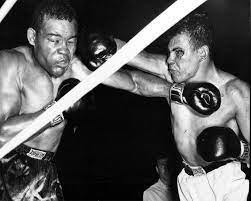
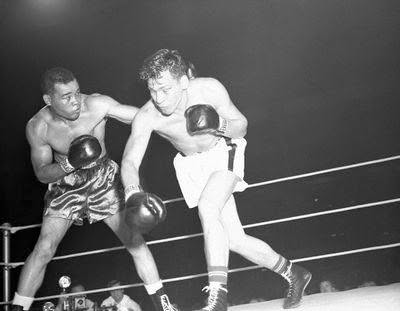
Former Heavyweight Champion Joe Louis wins a 10-round unanimous decision over Cesar Brion (white trunks), on August 1, 1951, at The Cow Palace in Daly City, California. The Associated Press reported: "A crowd of approximately 12,000 paid $66,525 to see Louis batter the game South American all over the ring in the closing rounds. Brion stood up under punishment that would have flattened many a fighter. He was groggy from the seventh through the tenth. His face was puffed and blood flowed from cuts on the side of each eye. It was Louis’ second 10-round win over Brion. This one was far more decisive than their melee in Chicago last November." This was the 7th of 8th straight wins for Louis following his decision loss to Heavyweight Champion Ezzard Charles in September of 1950 that would lead to his final career bout, an 8th round TKO loss to undefeated (37-0) prospect Rocky Marciano in Ocrober of 1951. Brion, 32-5-0 at the time of his second meeting with Louis, trained in the same stable of fighters as Rocky Marciano. Out of Argentina, he would finish 49-11-0 with 22 wins via KO. Brion's biggest win was likely his 2nd round TKO of Tami Mauriello in 1949. Mauriello would announce his retirement following that defeat.
20th Century Boxing: Icons, Memories & More tweet media20th Century Boxing: Icons, Memories & More tweet media
English
0
1
3
177
20th Century Boxing: Icons, Memories & More
LA Times ad from August 1, 1925 promoting the 'Grand Opening' of what would become one of boxing's most famed arenas; Olympic Auditorium in Los Angeles, California. On August 5th, Heavyweight Champion Jack Dempsey attended the program and was introduced to the crowd. Former Heavyweight Champion James J. Jeffries and famed actor Rudolph Valentino were also in attendance. As for the card: Joe Layman would win a 6-round points decision over undefeated (6-0-0) Johnny Kane. Harry Wallach would win a 6-round points decision over Babe Picato. Picato substituted for Dandy Danny Dillon, who had come down with a stomach illness. Sammy Shack won a 6-round points decision over Young Nationalista. Phil Salvadore won a 6-round points decision over Julius Jessick. Newsboy Brown would win a 6-round points decision over Frankie Grandetta. This was the inaugural boxing card at the Olympic Auditorium, which would hold approximately 2,700 shows until 2005. (I'll post Uppercut Magazine's tribute to Olympic Auditorium in the comments in my FB group for those that may have missed it a month or so ago.)
20th Century Boxing: Icons, Memories & More tweet media
English
0
0
0
47
20th Century Boxing: Icons, Memories & More
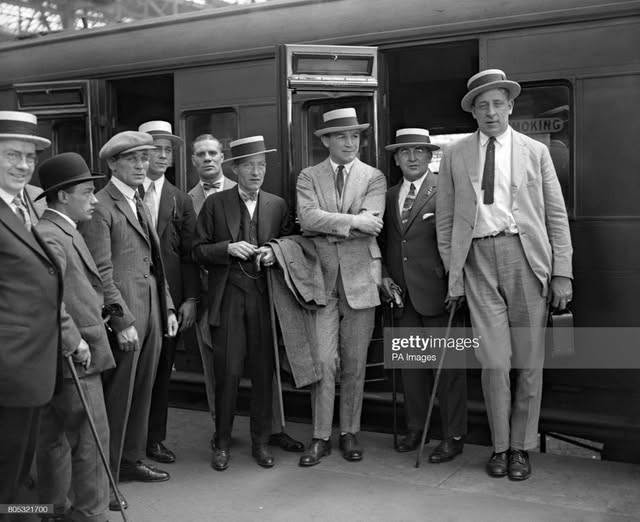
Tommy Gibbons, third from right, arrives in London on August 1, 1924 for his fight with Jack Bloomfield. On August 9th, Gibbons will KO Bloomfield, in the 3rd round, in the first-ever boxing event at Wembley Stadium. ---------------------------------------------------------- Tommy Gibbons, 56-4-1 (48 KO's), has to be on any list of the best fighters to never win a world title. Famous for being the only man to last fifteen rounds against boxing immortal Jack Dempsey, Tommy Gibbons was an accomplished fighter in his own right, and he fought some of the best fighters of the "Golden Age of Sports" from middleweight to heavyweight, including five future hall-of-famers. ---------------------------------------------------------- From Tommy Gibbons boxrec bio: Gibbons got his start in boxing as a young man in St. Paul at the local YMCA. He turned professional in 1911 as a welterweight at the age of twenty, knocking out one Oscar Kelly in Minneapolis. He relocated to New York before his third bout and went undefeated in first twelve outings to secure a match with fellow up-and-comer Billy Miske in 1914. The fight, held in Hudson, Wisconsin, lasted a full ten rounds, but as state law forbade official decisions at the time, the bout was declared a no-decision. Still, more reporters at ringside felt that Gibbons had the better of the action. In 1915 the pair fought a rematch, to another no-decision which again was felt to be Gibbons's fight. Almost immediately following this, Gibbons leapt into a match with Pittsburgh's Harry Greb, a wild-swinging middleweight brawler who would later be recognized by The Ring magazine as the single greatest middleweight in history. According to reporters, only Greb's fabled toughness saved him from a knockout. The fight went the distance and was officially a no-decision, but no one doubted who the winner was. Gibbons spent the next several months traveling and fighting less than stellar opponents in Canada, Missouri, Milwaukee, New York, and Scranton before taking on Battling Levinsky, who was the reigning light heavyweight champion of the world at the time, though, because Gibbons was only a middleweight, the title would not be on the line. Though Gibbons was by now undefeated in twenty-four pro fights, Levinsky was a veteran of an amazing 181 fights. Again the fight ended in a no-decision, but reporters gave their verdict to Gibbons. Gibbons continued his undefeated streak for the next three years--fighting a variety of competition and fighting in places such as Dayton, Pittsburgh, Scranton, Baltimore, Akron, Terre Haute, Des Moines, Buffalo, Denver, Minneapolis, Calgary, Seattle, Peoria, and Edmonton. On May 15, 1920 he fought a second no-decision against Greb. Even Greb's hometown paper reported that Gibbons handed him "the licking of his life." In a rematch two months later, which took place in a thunderstorm at the open air Forbes Field in Pittsburgh, the fight was closely contested in the early goings but Greb's aggressive style made all the difference in the final third of the bout. The newspapers gave their verdict to Greb. Technically, though, Gibbons was still undefeated and he continued to be so through his bouts with moderate level fighters like Chuck Wiggins and Dan (Porky) Flynn in the next few months. On June 22, 1921 he knocked out Willie Meehan, the San Francisco "Fat Boy," who had twice beaten the great Jack Dempsey earlier in his career. Against Gibbons, Meehan lasted less than a round. In fact, for all of 1921, Gibbons scored twenty-one knockouts, ten in the first round. On March 13, 1922, Gibbons was back in the ring with his old nemesis, Harry Greb. This time Greb was the more active fighter and walked away with a fifteen round decision, handing Gibbons his very first professional defeat. A few months later a disqualification against Billy Miske became a second defeat. Gibbons did go undefeated in his next six however and, when Jack Dempsey's handlers was looking for his first title challenger in two years, they picked Gibbons as a credible contender who would still be an easy mark. Gibbons's first and only title shot occurred on July 4, 1923, in the oil town of Shelby, Montana--challenging Jack Dempsey. Dempsey was rusty and Gibbons exploited that fact by using his terrific defense and slick movement to keep his opponent uncomfortable and off-balance. Despite this, Gibbons used virtually no offense. He was content to keep the heavyweight champion at a distance and avoid any confrontations. Through fifteen rounds, neither man landed anything of significance. When it ended, Dempsey, who had been the aggressor throughout, was declared the winner. Because a disappointing turn out of 8,000 failed to cover the expenses of putting on the fight, three banks of Shelby went bankrupt paying Dempsey his guarantee of $300,000. That left nothing for Gibbons, who was not even reimbursed for his traveling expenses. His only payment was the satisfaction in knowing that he was the only man ever to last the fifteen round championship distance against the rampaging Dempsey. After putting together a string of four consecutive knockout victories, Gibbons took on yet another future hall of famer, Georges Carpentier--the former light heavyweight champion of the world. Carpentier was an extremely popular fighter and a veteran of the ring with great skills, although he was on the down slope of his career. The bout went ten rounds and was declared a no-decision, but the next day's newspapers declared Gibbons the deserving victor. Six follow-up knockout wins--including a sixth round stoppage of light heavyweight contender Kid Norfolk--led to a match against Gene Tunney, the future heavyweight champion of the world. Like Gibbons, Tunney was a slick, skilled fighter who had already faced some of the world's best boxers, but Tunney was an up-and-comer still in his prime. Gibbons, at age thirty-four, tired as the fight went on. Tunney knocked him out in the twelfth round, the only knockout defeat suffered by Gibbons in his 106 professional bouts. In retirement, Gibbons worked as an insurance salesman as well as the sheriff of his native St. Paul. He died on November 19, 1960 at age 69. In 1993 Gibbons posthumously won induction into the International Boxing Hall of Fame.
20th Century Boxing: Icons, Memories & More tweet media
English
0
0
0
110
20th Century Boxing: Icons, Memories & More
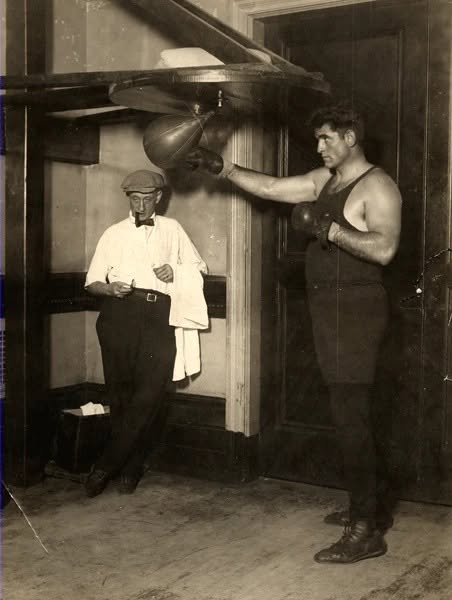
Luis Firpo, with his trainer Jimmy Deforrest on August 1, 1923, as he prepares for his upcoming fight (August 13th) with Charley Weinert. Firpo will prevail via 2nd round TKO at Shibe Park in Philadelphia, and then face Heavyweight Champion Jack Dempsey, on September 14th, in one of the most memorable title bouts in heavyweight history. Jimmy DeForrest (sometimes spelled with one "R") was an early 20th century trainer of Stanley Ketchel and Jack Dempsey. He had been a circus performer, then got into amateur boxing. He later became the matchmaker at the Polo Grounds. He also promoted the Harry Greb vs. Mickey Walker bout. DeForrest had an extensive collection of boxing memorabilia, much of which was lost in a house fire. Among the boxers trained were: James J. Corbett, James J. Jeffries, Joe Gans, George Dixon, Joe Walcott (The original not "Jersey Joe"), Kid McCoy, Tommy Ryan, Philadelphia Pal Moore, Jack Sharkey and Luis Angel Firpo. ---------------------------------------------------------- From the July 15th (1923) edition of The New York Times: FIRPO NOT READY YET FOR DEMPSEY; Jimmy DeForest, His Trainer, Says Luis Needs Six Months' More Schooling. URGES OTHER BOUTS FIRST Suggests Matches With Floyd Johnson and Tom Gibbons Before Championship Battle. Jimmy DeForest, the veteran trainer of boxers who prepared Jack Dempsey for his championship fight with Jess Willard at Toledo and also trained Luis Angel Firpo for his fight with Jess Willard, yesterday declared that it would be a mistake to send Firpo against Dempsey inside of six months. He asserted that, while the South American is a natural fighter and knows a great deal more about boxing than some critics are prone to give him credit for, he still needs quite a little polishing and more experience before he will be ready to engage Dempsey in a fight for the world's heavyweight championship. "I think that Firpo should engage some of the lesser lights before he tackles Dempsey." said DeForest. "I would suggest matching him with Floyd Johnson and Tom Gibbons before matching him with Dempsey. There is nothing like actual boxing experience to prepare a man for a big test. But don't make the mistake that Firpo does not know anything about boxing. Some have declared that he is crude, that he knows nothing but to hit with his right hand. That is a mistake. They are judging by what he showed against Willard. They forget that he entered the ring with instructions to fight just the way he did." "He can hook with his left and he can jab with it, but I knew that it would take his heavy right to beat Willard. I knew that Jess could not stand the gaff and I haven't been fooled very often in sizing up fighters. Firpo followed instructions. I told him to fight with his right for the body and head. That is what he did and it won for him." "Firpo is one of the most apt pupils I ever have handled. He will be ready for Dempsey six months from now. When I say he will be ready I mean just that. Give Luis that much more schooling and then Dempsey will have to look out." ---------------------------------------------------------- From the October 13, 1932 edition of the NYT: LONG BRANCH, N. J., Oct. 12.- James (Jimmy) De Forest, whose death, which occurred last night, recalled his fame as a trainer of ring champions, will be buried Friday at dusk beside his wife. Her death on Jan. 5, 1930, marked the beginning of his final illness. The Rev. Morton A. Barnes will conduct the funeral service at 5 o'clock in the De Forest home. It was at his quarters there that many notable fighters, including Jack Dempsey, Luis Firpo and Kid McCoy were trained. Too proud to ask old friends for help, De Forest was almost forgotten during his last days, and even the fact that he was seriously ill was unknown to many of the boxers he had trained and managed. The "grand old man" of the ring went into partial retirement soon after he had worked with Firpo, but Bobby McNeil, local Negro boxer, continued the training camp for local boxers as De Forest gradually lost his strength. Although the spectators at the outdoor boxing matches here saw the familiar figure at the ringside once or twice last Summer, he had spent much of his time in the Monmouth and Hazard Hospitals for the last year. Telegrams were beginning to pour in tonight from fighters, sports writers and other friends to his son, James De Forest Jr. of Allenhurst, and his daughter, Mrs. S. M. Russell of Port-au-Peck. The son said he would ask well-known sporting figures to serve as pallbearers. Long Branch officials will probably attend the funeral in a body, and the Masons may assist in the rites. Burial will take place in the family plot in Woodbine Cemetery, Oceanport, N. J. Connected With Ring 35 Years. The sporting world, and particularly associates of the sport of boxing, yesterday mourned the death of Jimmy De Forest. The man whose wise training counsel and reliable competitive advice had no small part in the crowning of Jack Dempsey as world's heavyweight champion back in 1919 has been out of the limelight for the last few years. De Forest was about 66 years of age, according to Billy Newman, retired boxing promoter, who yesterday recalled how he gave De Forest one of his early positions in boxing. He had been associated with the sport and with the conditioning of athletes and business men for the last thirty-five years. Dempsey yesterday paid his tribute to De Forest. "I give Jimmy De Forest credit for having a lot to do with my winning the heavyweight title from Willard," said Dempsey. "It was De Forest who trained me for that fight, and his methods of training equipped me to fight a battle that brought me the title when few, aside from De Forest and others associated with me, gave me much chance against Willard. Even after we ended relations, I tried to follow in training for other fights the methods Jimmy taught me. I am indeed sorry to hear of his death." Luis Angel Firpo was another heavyweight of outstanding importance whom De Forest developed to the estate of a first-class man of the ring, where he earned a fortune. De Forest was trainer for Firpo in the South American giant's ring engagements leading to his memorable encounter in 1923 with Dempsey, taking charge of the crude Firpo at the insistence of the late Tex Rickard, promoter, and developing him to the stage where Firpo came within a split second of winning the title from Dempsey the night he bowled the champion clear through the ropes and out of the ring in their battle here. Another South American of dynamic fighting force with whom De Forest was at one time associated was Justo Suarez, lightweight, who advanced to a point where he threatened the world's title. His Many Rôles. In his long career in boxing De Forest was a trainer, manager, adviser, matchmaker, promoter, timer and critic. In the late years of his life De Forest was conspicuous as a critic at the ringside for important battles. Lacking association with professional fighters of importance, he, in recent years, turned his attention to the development of amateur boxers, in whom he took a fatherly interest, and imparted the knowledge of the game he had accumulated in long years of association and travel to distant boxing centres. De Forest was born in this city, one of a family of circus performers, and for a time, in his early days, followed the life of the big tent with the old Barnum & Bailey circus. He was a trapeze performer of note until he injured a leg, and gave up this career. Always interested in boxing, and attracted to the sport, he turned his attention to the ring. Billy Newman yesterday related how he assisted in getting De Forest his first boxing position, as trainer at the old Manhattan Athletic Club, then on Madison Avenue at Forty-fifth Street. De Forest specialized in boxing thereafter, save for the period of the marathon craze here, which developed after Johnny Hayes's historic victory over Dorando, the Italian, in London in 1908. At this time he trained Tom Longboat, famous Indian distance runner of the day. Kid McCoy First Important Pupil. His early enthusiasm for boxing led De Forest to try the sport competitively for a time, but his ring career didn't last long, and was never recorded in record books. He was associated with the training of Kid McCoy in his first important boxing post, and through subsequent years was associated as trainer or adviser with the luminaries of the ring until his period as trainer of Suarez. Leach Cross, Charlie White, Pal Moore of the Philadelphia Moore family and Irish Patsy Cline were among the fighters he trained or helped train. In addition, he was friend and intimate of every great heavyweight champion from the days of John L. Sullivan. In late years De Forest occupied his attention with a correspondence school for advising youths contemplating a ring career on proper methods of training and the fundamentals of boxing competition. He was a daily visitor to Madison Square Garden, the hub of local boxing, until a year or so ago, when his illness interfered. Few, however, knew he was seriously ill until word of his death spread like wildfire yesterday in sport circles.
20th Century Boxing: Icons, Memories & More tweet media
English
0
1
3
404
20th Century Boxing: Icons, Memories & More
20thCB:IM&M gives you 100 years of boxing every single day, all year round, unmatched by nay other page or group on social media!!! Stanley Ketchel, Gene Tunney, Len Matthews, Les Darcy, the 1976 Olympic Gold medal bouts featuring Stevenson, Sugar Ray Leonard, Howard Davis Jr., Leo Randolph, and Leon And Michael Spinks!!! How about Hugo Kelly, Eddie McGoorty, Junius Washington, Rodolfo Gonzales, Candy McFarland, Billy Joiner, Muhammad Ali, Ruben Navarro, Bob Cleroux and Jose Napoles all in one day to boot!!! Hop on board!!! Tomorrow, we'll cover 23 different boxers, ten fights, a hospital visit from a champion, and a boxing movie!!! the other pages and groups will give you the same old sh*t on the same old twenty boxers and bouts!!! Stop wasting your time on reruns and join the ride through boxing history with 20thCB:IM&M!!!
20th Century Boxing: Icons, Memories & More tweet media
English
0
0
6
151
Duke Santos 2.0
Duke Santos 2.0@unashamedusa·
@20thCentBoxIMM He was a worldwide phenom close to Ali level, but in the decades since, has somehow become an underrated figure. He not only had Mayweather-level boxing, but twice the power.
English
2
0
3
24
20th Century Boxing: Icons, Memories & More
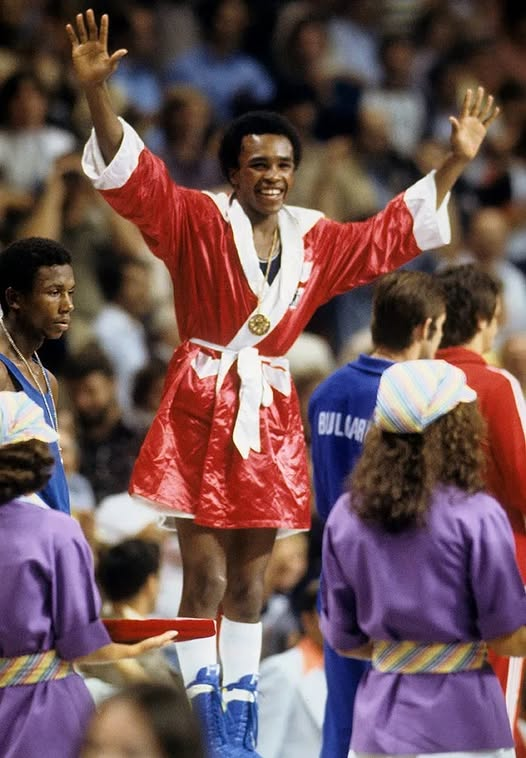
Ray Leonard, soon to be known as "Sugar" Ray Leonard, wins the Gold Medal, on July 31, 1976, at the Summer Olympic Games in Montreal. In the final, Leonard boxed the great Cuban knockout artist Andrés Aldama, who scored five straight knockouts to reach the final. Leonard landed several good left hooks in the first round. In the second, he dropped Aldama with a left to the chin. Late in the final round, he again hurt Aldama, which brought a standing eight count from the referee. With only a few seconds left in the fight, a Leonard combination forced another standing eight count. Leonard was awarded a 5–0 decision and the Olympic gold medal. Afterward, Leonard announced, "I'm finished...I've fought my last fight. My journey has ended, my dream is fulfilled. Now I want to go to school." He was given a scholarship to the University of Maryland, a gift from the citizens of Glenarden, Maryland. Leonard remains, to this day, the only boxer to not lose a round en route to his Gold Medal as he won all six of his fights by 5-0 decisions. He planned to study business administration and communications. He finished his remarkable amateur career with a record of 165–5 and 75 KOs. Leonard was the National Golden Gloves Champion at Lightweight in 1973 (beating future world titlist Hilmer Kenty in the final), the 1974 National Golden Gloves Champion at Light Welterweight, and 1975 Nattional AAU Champion at Light Welterweight with a crate full of Pan Am Games Gold Medals and other assorted National Amateur titles on his resume. He'd go on, as we all know, to a legendary, though injury interrupted, pro boxing career.
20th Century Boxing: Icons, Memories & More tweet media
English
5
8
40
1.1K
20th Century Boxing: Icons, Memories & More
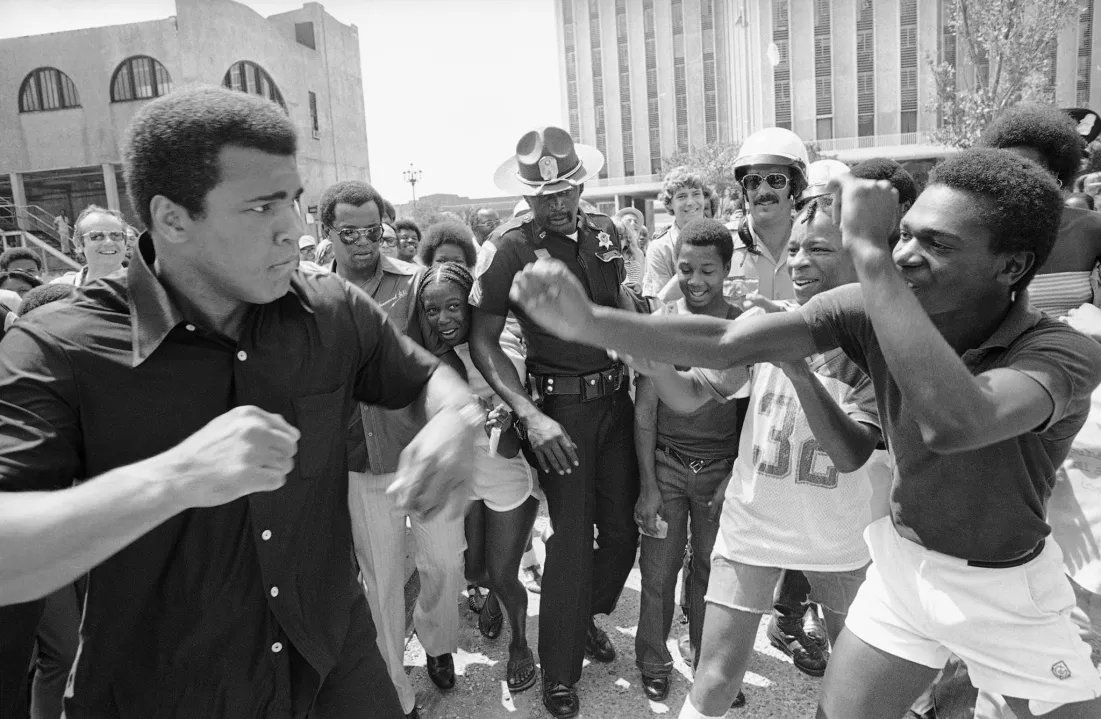
Muhammad Ali playfully spars with a man on Canal Street in New Orleans, Louisiana on July 31, 1978. Ali will be attempting to win the Heavyweight Title for the 3rd time on September 15th against, the man he lost it to, Leon Spinks.
20th Century Boxing: Icons, Memories & More tweet media
English
0
1
4
127