

𝟛𝟛.𝕄𝔼𝕋𝔸𝕃
3.5K posts

𝟛𝟛.𝕄𝔼𝕋𝔸𝕃
@33TDBN
$XPR ⚛️ $METAL Ⓜ️ $LOAN 🏦 $XMD 💰 $XPRPUSSYDAO 😻 𝕋𝔻𝔹ℕ ⛓️
YHWH Is Within You Beigetreten Aralık 2021
792 Folgt869 Follower

@9Justin1Wilson8 Everyone needs the act in the USA
English
@coachbpaige777 @BiggBagWolf RIPPLE Connecting Through A Third Party 😂
METALLICUS Connects Directly ⚛️
English

@BiggBagWolf Ripple Treasury connecting to FedNow via Clear Connect Gateway, along with Metal, creates a lot speed and redundancy for transactions...especially when FedNow starts going cross-border....
English


@Bucks_Hall @JoelKatz @Ripple @MetalDollarXMD @LOAN_Protocol Ripple Is A Liquidity Extractor….Greedy MFs
English

I evaluated a lot of DeFi bridging systems for use by RLUSD. I was almost exclusively focused on the security and risk aspect. One thing I noticed is that most schemes were very well designed and had really strong mechanisms available to protect against exactly the type of attack the the KelpDAO/rsETH situation seems to have been caused by.
However, one thing I noticed was that they generally in effect recommended not bothering to use the most important security mechanisms because they have convenience and operational complexity costs. We were frequently pitched the simplicity and ease of adding more chains, for example, with the implicit assumption we wouldn't bother using the best security features they had!
Their sales pitch was that they have the best security features but they're easy to use and scale assuming you don't use the security features.
I have a funny feeling part of the problem is going to be something like KelpDAO choosing not to use key LayerZero security features out of convenience.
I hope I'm wrong.
English


Everytime I see someone say $XRP is a scam, I buy more.
English

@AndrewZywiecMD Most people who throw this rhetoric around are closeted homosexuals.
English


I believe in unstoppable freedom technology. I won’t ever stop building it, even once we are free.
English

👀👀
Does he make good points or is he a HATER?
Business defamation if not true..?
English
@XPROGTDBN28 @Capita_L12 Remember Gematria : “Ripple Exit Scam” We All Seen That One…
English

I’ve been saying this for years about $Xrp and every time I bring it up I get labeled a “hater” or told I don’t know what I’m talking about. Funny how that works. Now someone with actual credibility and a leadership position comes out and says the exact same thing and suddenly it’s worth paying attention? Or is he a “hater” too?
The reality is, the facts have been out there. This isn’t new information. It’s just that some people choose to ignore it because it doesn’t fit the narrative they’ve already committed to. And once people get emotionally or financially invested in something, logic tends to take a back seat.
What’s even more frustrating is how quick people are to argue without actually looking into the details. It’s easier to dismiss, deflect, or attack than to reassess your position. But disagreement doesn’t change reality. Ignoring facts doesn’t make them disappear.
At some point, people have to decide whether they care more about being right or actually understanding what’s going on.
Crypto X AiMan@CryptoXAiMan
🚨XRP BREAKING NEWS: Cardano Founder JUST DROPPED A HUGE WARNING on Ripple XRP!!!🚨 Ripple is DUMPING XRP to fund their business - and none of the value accrued by Ripple goes to XRP holders, according to Charles Hoskinson.😳 Is he right? Is Ripple DUMPING XRP? If you own any $XRP and $ADA, watch this NOW!👀 #XRP #Ripple #Cardano #Crypto #Bitcoin #Altcoins BTCC (Sign-up NOW!) 👉btcc.com/market-promoti…
English
@NoLimitGains Watch this tank like world liberty fi token
English


This NEVER aired on bloomberg and this video is clearly AI slop!
You use "missed it on bloomberg?" for the appearance of legitimacy as if it aired and upload your fake video to your own channels.
XDC is just two Indian scammers.
XDC Network@XDCNetwork
Featured on Bloomberg | Now on XDC Network YouTube This interview with @riteshkakkad , Co-Founder of @XDCNetwork , was originally broadcast on @Bloomberg Recorded at the World Trade Center in New York, the discussion explores how blockchain is moving beyond experimentation into real institutional use cases, from stablecoins and real-world asset tokenization to ETFs, regulatory clarity, and cross-border settlement. We’re sharing this on our YouTube channel for community members who may have missed the original broadcast. Watch the full interview on @YouTube , link in thread 👇
English


Elon Musk's proposal of 'universal high income' to combat AI job losses baffles economists: 'So wrong on this' trib.al/OMUOuCz

English
@XPRvision @XPRNetwork There Was A Time Wen No One Was Paying Attention…
𝟛𝟛.𝕄𝔼𝕋𝔸𝕃@33TDBN
There Will Be Signs ᗧ···ᗣ···ᗣ·· Gematria : Pacman = 288 🔄 588 x.com/cryptocom/stat…
English

Gobbling up those $XPR over here like Pac-man 3D.
Short staking, long staking, NFT sales, market making, whatever it takes. @XPRNetwork gives you so many ways to accumulate...
$METAL $LOAN $MTL

XPRPOTUS@MetalPotus
You need to be accumulating like your life depends on it and staking farming, lending like it's no body's business because the APR/APY will not stay the same forever (as adoption increases). This is the time to compound the most as possible while we in this moment.
English
@Cypher_HQ_ Will Cypher Be Accepted On The Western Union App As Payment Method In The Future?
English

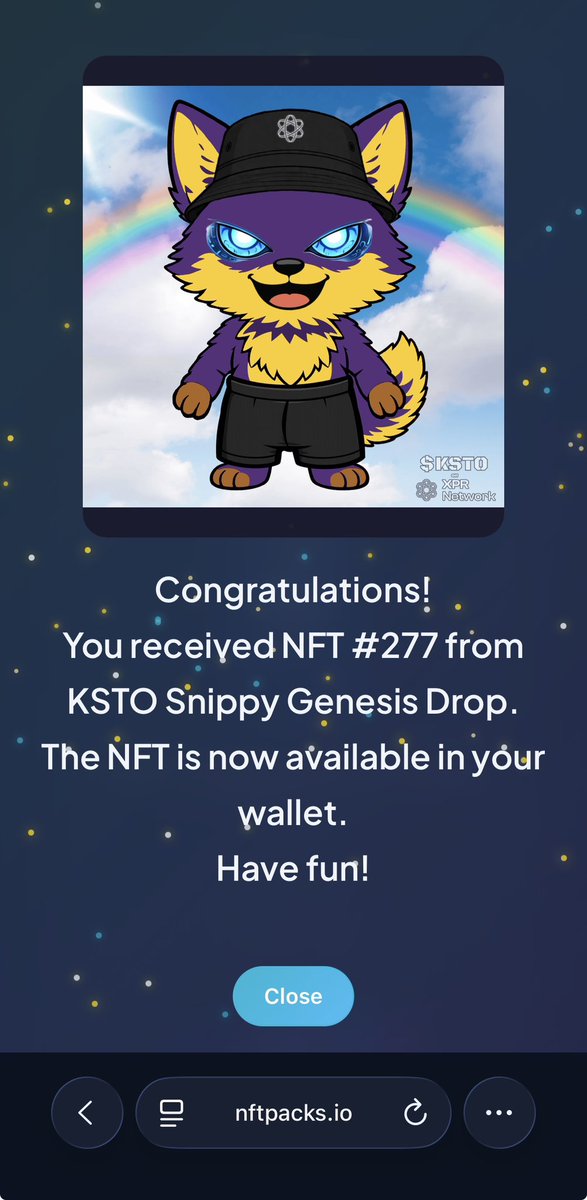

🔥 Just minted my @Keep_Snipping NFT 🔥
This one came out 🔥… the art, the traits, the randomness, next level.
Huge shoutout to @bloxprodio for building out ⚛️ NFTpacks.io
This changes the game for how NFTs are minted on @XPRNetwork.
333 total. Limited. Randomized.
If you know… you know.
Don’t fade this.
Join the movement👇
t.me/Keepsnippingto…
$XPR #NFTs #KeepSnipping #SimpleDEX

English
@xprmike @GrimaceXPR_8888 @rayedenkin @TecN1Dn @protonpussymeme @Tunde_Laleye Proton Pussy Is The One….😻
English


English