Julius M.

17.4K posts

Julius M. banner
Julius M.

Julius M.

@AstroJulius89

Eratosthenes

Kenya Beigetreten Kasım 2012
3.3K Folgt373 Follower
Julius M. retweetet
Leah Cheshier
Leah Cheshier@LeahCheshier·
It’s been the honor of a lifetime to help share this mission. I hope you carry this wonder with you.
English
248
697
13.5K
135.6K
Julius M.
Julius M.@AstroJulius89·
@SirAlexas Atmospheric braking. The spacecraft will not be accelerating towards earth surface, but performing a careful descent maneuver by plunging into the atmosphere at 40,230 km/h but it will be decelerated as it plunges through the denser parts of the atmosphere and land at 32 km/h.
English
2
0
9
1.9K
Aleckie Ronald
Aleckie Ronald@SirAlexas·
Re entry is tomorrow around 2.53am and by 3.07 they would have splashed at Pacific? Damn how fast is that rocket??...
English
22
49
500
24.7K
Julius M.
Julius M.@AstroJulius89·
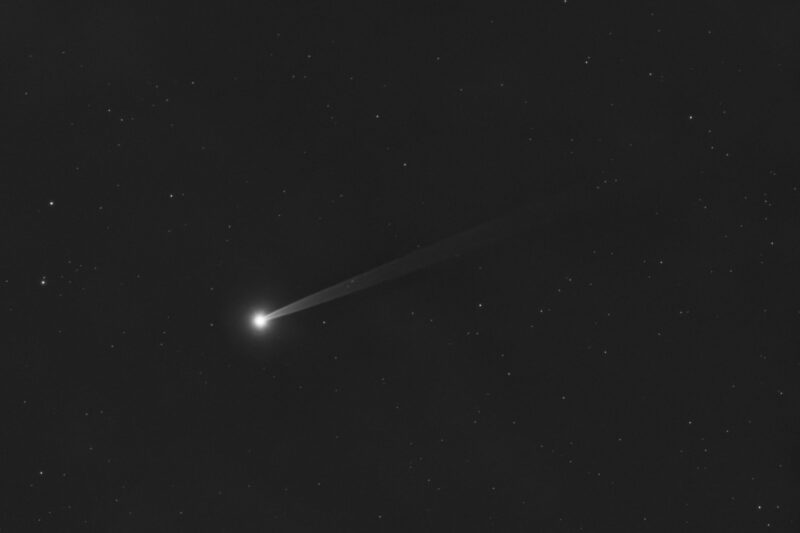
Planet Mercury has a comet-like tail mainly composed of sodium atoms which extends up to 24 million kilometers into space away from the direction of the Sun. Image Credit
Julius M. tweet media
English
0
0
1
16
Julius M.
Julius M.@AstroJulius89·
A dense interstellar cloud with a significant high hydrogen would shrink our heliosphere to less than 1AU. Can cause depletion of the ozone layer and oxygen. Past extinction events on earth maybe related to a passage of our solar system through a dense interstellar cloud.
Julius M.@AstroJulius89

However, the G cloud is about 30 times dense than the local interstellar cloud. Consequently, our heliosphere will be squashed, exposing the planets in the solar system to higher than normal exposure to cosmic rays.

English
0
0
0
27
Julius M.
Julius M.@AstroJulius89·
Carbon-14 is a radioactive isotope. Can be formed when galactic cosmic rays from distant stars interact with our atmosphere. Some of the radioactive isotopes found in our oceans may indicate evidence of our solar system's past interstellar cloud passages.
Julius M.@AstroJulius89

However, the G cloud is about 30 times dense than the local interstellar cloud. Consequently, our heliosphere will be squashed, exposing the planets in the solar system to higher than normal exposure to cosmic rays.

English
0
0
0
7
Julius M.
Julius M.@AstroJulius89·
A number of stars in our Milky Way Galaxy actually belong to a separate galaxy that merged with the Milky Way. For instance, the ESA Gaia telescope discovered Shiva & Shakti, two ancient stars believed to have been merged with the Milky Way Galaxy 12–13 billion years ago.
English
2
0
0
19
Julius M.
Julius M.@AstroJulius89·
@Astrophysicslad Yes, in the craters on the poles in the permanently shadowed regions.
English
1
0
9
14.1K
Julius M.
Julius M.@AstroJulius89·
@jkobuthi Look for a book titled, "How to hide an empire". You'll further understand why America has over 1,000 military bases all over the world, including some in Kenya.
English
0
0
0
3
Julius M.
Julius M.@AstroJulius89·
Scientific studies reveal that 2 to 3 million years ago, our solar system entered the dense cloud of cold gas and dust in the local cloud. This may have triggered the influx of hydrogen atoms into Earth's atmosphere, forming noctilucent clouds and triggering the ice ages.
Julius M.@AstroJulius89

While oscillating the galactic plane, our solar system is steadily moving from its local interstellar cloud into the G cloud. This transition will roughly take 3,000 years to complete.

English
0
1
1
81
Julius M.
Julius M.@AstroJulius89·
Our solar system oscillates up and down on the Milky Way's galactic plane every 60–70 million years. It oscillates roughly 100 light-years above and below it.
English
0
1
1
156
Julius M.
Julius M.@AstroJulius89·
When the Sun's cycle is at solar maximum, most of the galactic cosmic rays (GCRs) from distant stars are pushed away by the intense Sun's magnetic field. The reverse is true. As of present, we're in a solar maximum. Artemis II crew may have had a low exposure of the GCRs.
English
0
1
1
65