
Angehefteter Tweet
BakeThePie
9.3K posts

BakeThePie
@BakeThePie
Pepperidge farm remembers Xbox gamers will believe anything their PR will say just as long as an influencer says it to him
The Moon Beigetreten Ocak 2017
13 Folgt41 Follower
@Boxenberger @asha_shar @mattbooty @aarongreenberg HAVE SOME DIGNITY! STOP BEGGING THESE CORPORATE ASSHOLES. They have AI to do your job you are #Expendable
GIF
English

@asha_shar @mattbooty @aarongreenberg
This message is written on behalf of many German and European Xbox creators I’ve spoken with. Under the new Xbox leadership and the New Spirit, we are genuinely hopeful for real change.
However, it is still extremely difficult for us to get game codes, early previews, event invites or just getting noticed. There is no direct contact to local Xbox teams — everything routes through third-party agencies.
This creates endless back-and-forth: agencies refer us to the US Xbox team, the US team sends us back because we’re not American, and eventually the 3rd party agencies reject us with generic excuses that they “can’t help”. Many talented creators have already given up trying to get in contact with Team Xbox.
This loop directly results in significantly less high-quality Xbox-focused content in one of Europe’s biggest markets. If Xbox truly wants to grow in Germany or Europe under this New Spirit, the local creator scene needs proper support: direct communication channels, fair access, and real investment in the region. We believe in the New Spirit and want to create great Xbox content with you. Please help us help Xbox succeed here.
Sorry for the longer post — this is written in close consultation with many European creators. We’re all very aware that most of our channels aren’t as big as US-based ones yet, but that’s exactly the classic chicken-and-egg problem. Many of us also know Xbox would prefer content in local languages, but gaming connects people across Europe and the world — which is why so many European creators run their channels in English. Having a Europe based channel in English should not be a reason to prevent contact with the local Xbox team.
— Boxenberger on behalf of many European creators 🙏

English
Look at these begging influencers
Listen.. you are doing your PR for them for free and that's the worst thing you could do!
You will never get respect unless you fully kneel and spread ass to #Xbox Poppa Booty. Lmao this is just sad
GIF
Boxenberger@Boxenberger
@asha_shar @mattbooty @aarongreenberg This message is written on behalf of many German and European Xbox creators I’ve spoken with. Under the new Xbox leadership and the New Spirit, we are genuinely hopeful for real change. However, it is still extremely difficult for us to get game codes, early previews, event invites or just getting noticed. There is no direct contact to local Xbox teams — everything routes through third-party agencies. This creates endless back-and-forth: agencies refer us to the US Xbox team, the US team sends us back because we’re not American, and eventually the 3rd party agencies reject us with generic excuses that they “can’t help”. Many talented creators have already given up trying to get in contact with Team Xbox. This loop directly results in significantly less high-quality Xbox-focused content in one of Europe’s biggest markets. If Xbox truly wants to grow in Germany or Europe under this New Spirit, the local creator scene needs proper support: direct communication channels, fair access, and real investment in the region. We believe in the New Spirit and want to create great Xbox content with you. Please help us help Xbox succeed here. Sorry for the longer post — this is written in close consultation with many European creators. We’re all very aware that most of our channels aren’t as big as US-based ones yet, but that’s exactly the classic chicken-and-egg problem. Many of us also know Xbox would prefer content in local languages, but gaming connects people across Europe and the world — which is why so many European creators run their channels in English. Having a Europe based channel in English should not be a reason to prevent contact with the local Xbox team. — Boxenberger on behalf of many European creators 🙏
English
@haji_musteey Maybe 50 has a small dick lol she isn't satisfied by the fake.
English

If I were 50 Cent, I'd probably do way more than this.
Seeing my baby mama involved in something like that would definitely mess with my mental health and make me dislike Diddy even more.
His baby mama, Daphne Joy, reportedly requested sex with two men.
Sly Diggler pleased her while P. Diddy played cameraman.
Diddy was also masturbating the entire time.
No wonder 50 can't seem to let it go.
That's pure humiliation.

English

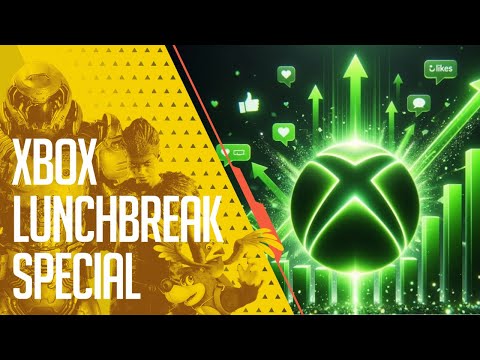
A NEW Report Points Out The @XBOX Has Seen A Rise In Popularity With Gamers, But Will @Playstation Logo's At The Upcoming #XboxGamesShowcase Sour The Mood Of Millions Of Fans Because Of The "Same Old, Same Old @XBOX" Way Of Doing Business? We GO LIVE at 12pm ET!
youtube.com/live/TVWHEYlkr…
YouTube

English

Battlefield 6 players are calling for more crossplay options, with a popular community request asking DICE to let Xbox and PlayStation users play together while excluding PC matchmaking.
Many console players say they want the larger player pool of console crossplay without having to face PC opponents, arguing it would improve balance, gunplay, and the overall experience.

English

Daphne Joy speaks out after alleged sex tape featuring her, Diddy & another man leaks online:
“It took me all day to find the courage to rewatch my abuse.. having to watch this tape was triggering and painful”

English

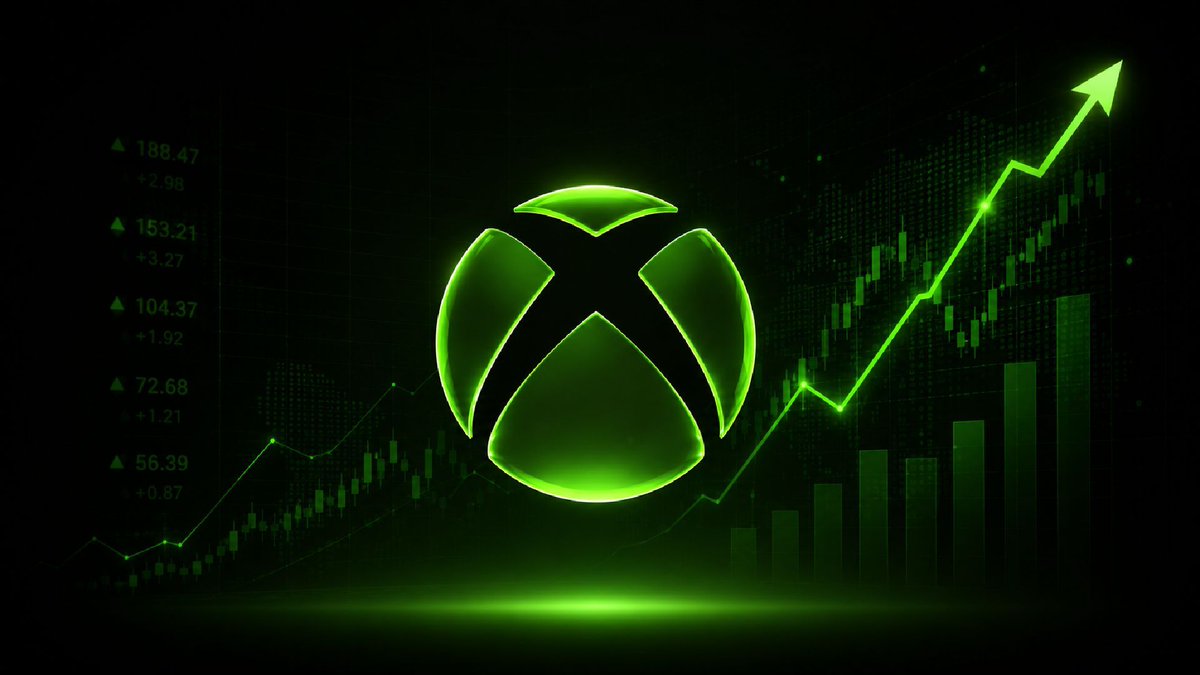
New YouGov data indicates Xbox is rebuilding momentum and winning back gamers.
Key metrics showing improvement:
🔹 Brand buzz
🔹 Customer satisfaction
🔹 Value perception
🔹 Overall brand perception
To quote the findings: "The early signs are encouraging" as the brand recovers traction. windowscentral.com/gaming/xbox/th…
English
@xboxuk @GearsofWar Stand up Xbox gamers don't watch let Xbox have there bots watch. This is your last chance to stand against them.
English

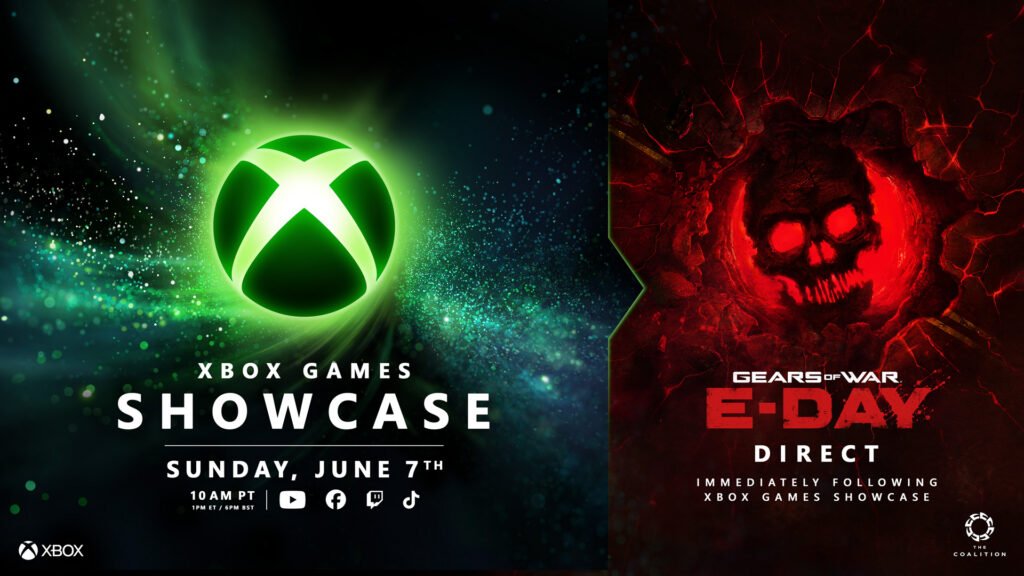
Let the countdown begin ⏱
We're 7 DAYS out from XBOX Games Showcase followed by @GearsofWar E-Day Direct on June 7 | #XBOXShowcase
English
@verge PlayStation has something to prove Xbox is already lost. They're the same company they were before Phil Spencer left and they'll be the same company after lying to their customers
English

Xbox and PlayStation have a lot to prove theverge.com/entertainment/…
English
I'm actually looking forward to the future without Microsoft. I don't want anything they are shoveling I don't want their games I don't want their computers I don't want shit from them
English
In case you were wondering I am not watching Xbox #SummerGameFest I don't give a flying fuck what they do I'm waiting on the next new console that's not #Xbox and then I'm saying goodbye to them like I said goodbye to #Sega. Never again to touch a dime of my money
GIF
English

You held the line, now get ready to lock the fuck in. See you on June 7 at 10am PT for the Worldwide Reveal of Gears of War: E-Day
xbx.social/6015QxVyW

English
@NextGenNero And they're paid by Microsoft and they have a checkmark and they talk to Xboxes PR campaign You're almost there..
English

@AnaAnsan3 Seriously what fucking gamer says stupid shit like this? Do you sit there and talk about monthly active user metric? @Microsoft fuck your influencers man. No matter how much money you pay these fucks I'm going to expose them all

English

He is too scared to say it...
These PlayStation units are nothing but sleeping nodes or "shipped"😂😂😂😂😂
This is why XBOX is defeating PlayStation by 5 to 1 in the Monthly Active Users metric. 😘
#XBOX
#XBOXGamePass
#XBOXPlayAnywhere

English
@vicious696 As if anybody didn't know this already he gets paid by Microsoft for these influencer posts. Another person who can't be trusted. I'm just going to expose them all

English

@HazzadorGamin Another bought and paid for Microsoft Xbox shill that gets the PR template and post this on his account. He can't be trusted at all
English

XBOX: "This year marks 25 years of XBOX, and this Showcase is poised to be a true celebration, offering world premieres, new gameplay, fresh updates and more for a swathe of projects we cannot wait to share."
news.xbox.com/en-us/2026/06/…
English
And like the new asshole Asha She uses the naivety of Xbox gamers thinking that they care about them. I'll say it again the day Phil Spencer turned on crapgamer was the day I realized that they can't be trusted. Crapgamer is dog shit but he was loyal and Phil shitted all over him
JB@JBishie
Phil Spencer didn’t sell us a vision of XBOX as a de facto third‑party publisher. He sold us a future where “great exclusive games… ship on platforms where Game Pass exists” - his words, not ours. Outside of contractual or legacy obligations, that was the expectation he set. You can’t market hardware on the strength of exclusives, then pivot to platform‑agnostic publishing, and act confused when the people who bought into the ecosystem feel misled. And before anyone tries to cite his 2018 comments about the future of the brand, those remarks were about Microsoft’s cloud ambitions, not a signal that they planned to release their games everywhere. He was talking about expanding access through streaming, not abandoning hardware, dissolving platform identity, or repositioning the division as a third‑party publisher. The subsequent One X, Scarlett, and Series X campaigns made it abundantly clear that hardware remained central to the strategy. Analysts, press, and even Bethesda leadership expected games to be exclusive, including The Elder Scrolls VI. The internal emails revealed during the 2023 FTC v. Microsoft trial revealed that Pete Hines expressed frustration that Bethesda was told to make its games exclusive to console and PC while Microsoft simultaneously reassured regulators that Call of Duty would remain multiplatform. This wasn’t invented by fans - it was documented inside Microsoft’s own communications. So if the company is now promoting every platform its games appear on, how does this benefit XBOX users specifically? Because when every major game goes everywhere, the hardware’s value proposition collapses. When the platform’s relevance in the hardware space dwindles, the people who actually bought the console are left with a weaker offering. When Microsoft treats the console as optional, media outlets follow suit and stop prioritising it in comparisons. When the install base shrinks and confidence erodes, third‑party publishers begin skipping the platform entirely. And at that point, it becomes reasonable to ask whether those of us who bought into the original vision are going to be compensated for a strategic reversal that leaves us at a disadvantage.
English
@WinC_Gaming No one gives a fuck about logos That's your influencers and it's funny you people take your hints from Windows Central the same people who make money off of this. How stupid are you Xbox fans?
English

To whom it may concern, the Xbox fan backlash to competitor logos in the Xbox Showcase isn't about gatekeeping. It's about distrust.
OPINION: windowscentral.com/gaming/xbox/xb…
Every hint that Microsoft shows that it isn't serious about competing conjures memories of years of broken promises, inconsistencies, and its graveyard of killed platforms.
English
They make Black History month 28 days but they give gay pride month 30. If that's not white people telling you to go fuck yourself I don't know what is. They accept men having sex with other men more than except black people in their country. And people still defend
GIF
English

