

Grahame Lynch
3.8K posts

Grahame Lynch
@Commsday
What's happening today in ANZ telecoms
Sydney, Australia Beigetreten Şubat 2009
1.9K Folgt1.8K Follower

If Australians were taxed at the OECD average, the tax take would need to rise by around $120 billion per annum.
Australia is a very low tax country as this chart shows
13ft7@13foot7
Overall - tax to GDP (by OECD methodology - Aust has no social security contributions)
English
The complication there is that many voters see the economy and immigration as entwined when it comes to cost of living and housing. But totally agree that the Liberals need to regain their previous image as superior economic managers which was the reason many people used to vote for them, if through gritted teeth on the cultural stuff
English

One Nation will continue to surge ahead of the Liberals so long as the national debate focuses on immigration and culture.
The Liberals’ path back to primary opposition is through economic policy - yet when was the last time you heard a Liberal MP talking about the economy?
It’s also an opportunity for One Nation to expand its support if it can mature into a party that demonstrates economic competency in the years ahead.
And it isn’t like Labor’s economy isn’t a target rich environment.
English
@clairlemon There is an amazing fascination with 9/11 among young kids. It is their World War 2
English

Listening to my son explain 9/11 to his younger sister and then realising he knows more about it than me 🤔
English

If Earth were 4 inches closer to the sun, we would all burn up and die.
If gravity was .1% stronger, every star would explode instantly.
If the Universe expanded 1 mph faster, human life would be impossible.
None of this is random. God is real, and his design is perfect.
English


@Paul_Karp Yup and inevitable that the national parliament will become a one party hegemony just as the ACT is.
English

There are three stories about on post-Liberal politics:
* AFR says teals and Liberal moderates chatting
* SMH says One Nation expects more recruits and to eat Nationals
* Daily Tele says Reform Australia will register.
These can't all succeed. The right is disintegrating.
English
@clairlemon @Quillette A great Australian publishing success story. You should be proud of what you have achieved.
English
The ABC's Radio National kindly invited me onto Sunday Extra to talk about @Quillette turning ten
abc.net.au/listen/program…
English

Every time someone says a new housing development in Sydney "will end up like Hong Kong!" I get excited in anticipation of a cream bun bakery on every corner and a metro every 90 seconds in peak hour
English
@KosSamaras Umm the answer to the first question shows there is no problem which needs to be legislated.
English

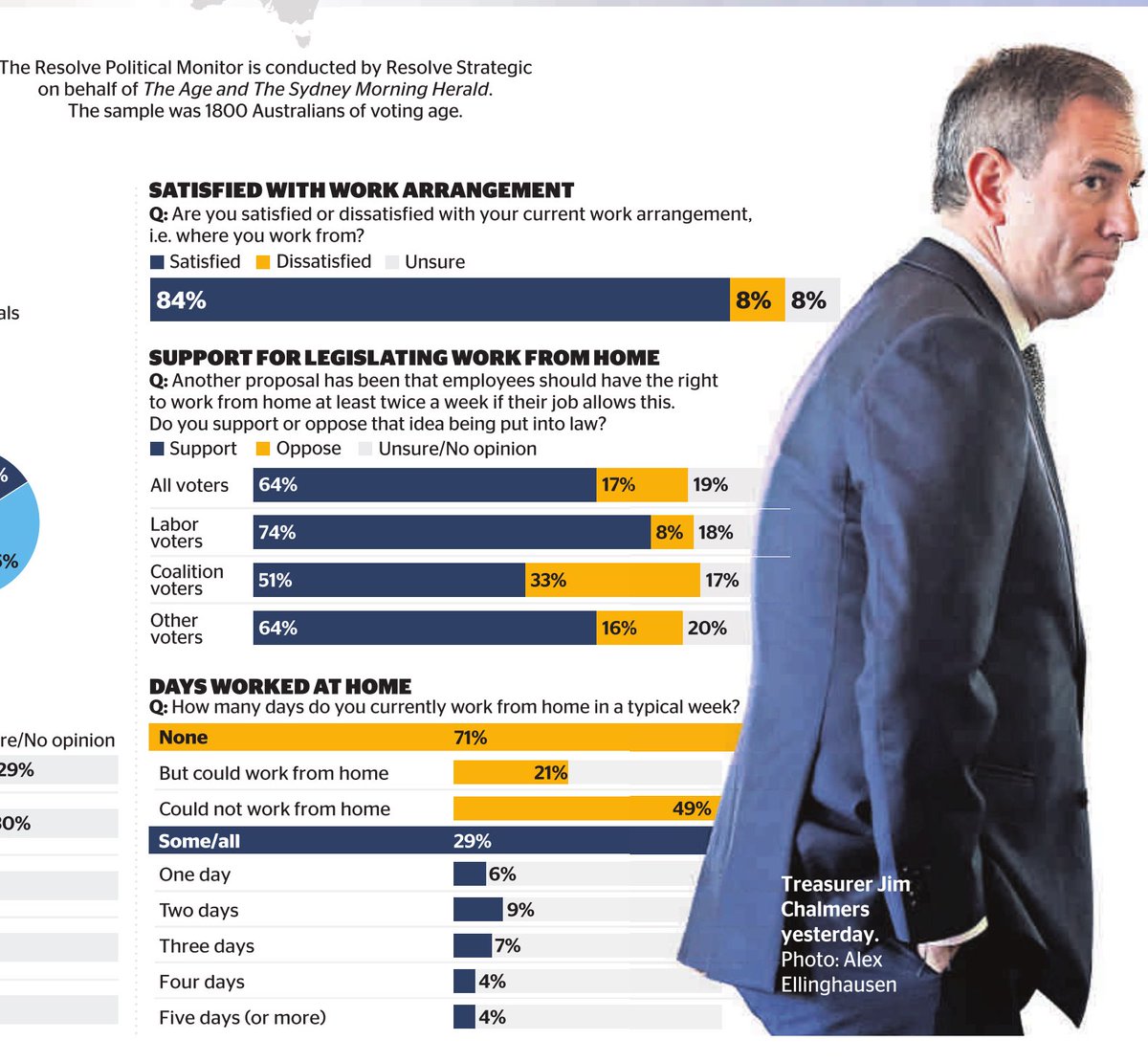
The connection between opponents of work from home and flat earthers.
Opposition to the Allan Government’s proposal to make working from home a legal right doesn’t just ignore the crystal-clear message delivered at the May 3 federal election, it actively pretends it never happened. And the level of support for that opposition? So vanishingly small it makes flat-earth societies look like mass movements. To cling to it is less a policy stance than a kind of cult ritual, recited in defiance of reality while the rest of the country rolls its eyes and laughs at them.
Resolve poll on working from home rights.
English
@Dart47 @MikeCarlton01 Exactly. Outside of being a novelty item in American themed restaurants, cannot really see it finding a market here.
English

@MikeCarlton01 I suspect American beef will prove to be so unpopular in Australia that, in practice, lifting the ban will be but a minor concession to Trump. He won't care how it turns: he has already had his big, beautiful boast
English
Who wants to eat American beef FFS ? smh.com.au/politics/feder…
English

A lot of people here tonight complaining that this is some wicked ABC plot to undermine the government. No it’s not, it’s information the public is entitled to know. If some bureaucrat releases it by mistake, too bad… abc.net.au/news/2025-07-1…
English
@KosSamaras I don't dispute your analysis but certainly at a loss as to how propping up a soft-left statist monoparty quells any of their issues.
English
A more detailed response into some of the delusional comments I have seen, since we published our Victorian State poll.
May 3rd wasn’t an outlier - it was a confirmation.
Recent state-based polling in Victoria shows the trend is hardening. The Coalition’s support continues to erode in urban younger and diverse communities. Even in Queensland, where the LNP is relatively moderate and professional, they’re still struggling in Brisbane.
Some conservatives reach for the usual scapegoat: immigration. Others cling to the fantasy that Millennials and Gen Z will one day “mature” into Baby Boomer voting patterns. But both views completely miss the point.
This generation has been forged by a very different world, housing crises, wage stagnation, insecure work, the GFC, a pandemic, and a loss of trust in almost every major institution. Now they’re working in an economy being reshaped by AI, where their degrees risk being rendered obsolete by code. Nearly of them are or will live a life of lesser quality than previous generations.
They’re more diverse, more educated, more globally connected and they’re not watching legacy news, reading the same op-eds, or voting out of loyalty. They don’t trust the old gatekeepers. And they certainly don’t wait for permission to challenge them.
Some conservatives need to face a confronting reality: this isn’t just a demographic trend, it’s a structural social reset as profound as the industrial revolution. And it’s not going away.
But this isn’t just a message for the Right. Some on the radical Left are equally deluded, more interested in chasing social media clout than building coalitions that win actual first preferences. That too was the big message arising from the May 3rd election result.
Trying to interpret their behaviour through a 1990s, or worse, 1950s, lens isn’t just outdated. It’s politically DUMB.
The commentators and parties who fail to grasp this generational shift will keep misreading the play because they’re still speaking to a country that no longer exists.
English
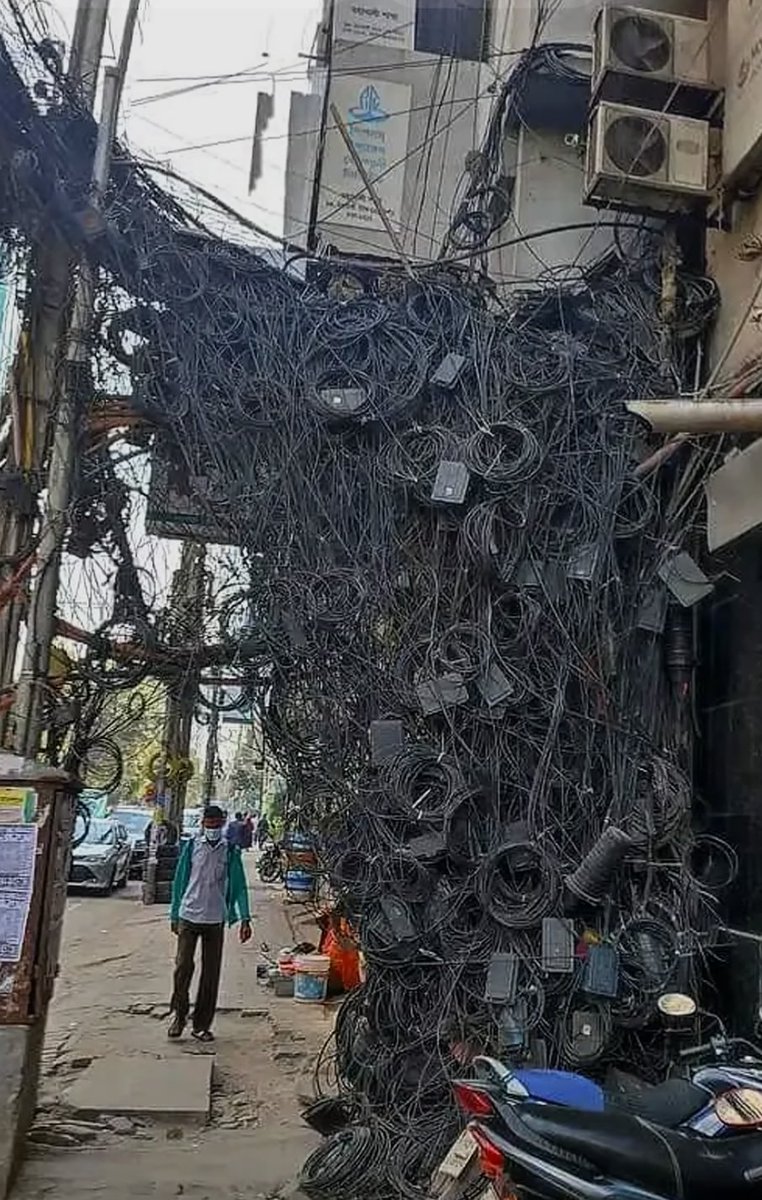
This is something you see in poorer countries often with ground water (flood) issues. It helps keeps power and telecommunications more affordable and quicker to deploy. As countries get richer, they tend to underground things, regardless of attitudes to regulation. Cities that flood alot tend to be poorer.
English

Libertarians: ‘I don’t see why regulations matters.’
Every part of the world with inadequate regulatory law:
English
@AlanLevinovitz Partly because the quality of audio mixing is so terrible these days. Dialogue is suppressed under a wall of sound
English

What’s up with the younger generations (I’m 44) watching everything with closed captions on? Not just the weird Scottish accent stuff like I do, but *everything *!!
English

@KosSamaras Was there ever a time where the Coalition was genuinely popular with under 40s though?
English
The Coalition's geographic inefficiency matters - here is why. A state perspective. Victoria.
In early April, before the wheels came off the federal Coalition’s campaign, we published a state-level Victorian poll in the Herald Sun. It showed Labor at 49% 2PP - seemingly vulnerable. But buried in that data were some serious warnings for the Coalition.
At face value, the statewide headline looked like trouble for Labor. A narrow lead for the Coalition. Falling support among older Victorians. Growing disaffection in some outer suburbs.
But the full breakdown told a different story a deeper generational and cultural realignment underway. One we witnessed fully express itself at a national level on May 3rd.
The very same demographic groups that tore through the Coalition’s hopes federally were already showing strong alignment with Labor at a state level in Victoria:
Gen Z & Millennials – 61% 2PP
Uni-educated Gen Z & Millennials – 65% 2PP
Renters – 62% 2PP
Diverse Victorians - 54% 2PP
These aren’t marginal pockets of voters. In Victoria, these voters dominate:
Growth corridors
Inner suburbs
Outer metro seats
Highly diverse electorates in the North and West
They are the new majority, particularly in the seats that decide elections.
So what would happen if an election were held today?
Despite the tighter overall TPP (51–49 to Labor), our modelling suggests Labor would win 47–50 seats in the 88-seat Legislative Assembly.
That’s enough to govern in majority comfortably.
Why? Because the Coalition’s vote is becoming geographically inefficient.
It is enjoying big swings in safe rural/regional seats but a weak primary in outer metro Melbourne.
It struggles with multicultural & younger voters who now dominate suburban marginal seats, across critical strategic areas.
Even with a slight statewide swing, the numbers just aren’t there for the Coalition unless they can:
Win over renters
Win over diverse communities
Connect with younger, uni-educated voters in outer suburbs
They are not close to doing this. They have to meet maximum expectations because many of these groups have never voted Liberal. - but they are growing in number every electoral cycle.
English
@JohnRuddick2 The joint party room never signed off on the mobile towers policy and it was quietly squeezed out by the Nats 2 days before the election. Hardly a major commandment
English

My hunch as to why National Party leader David Littleproud chose a dramatic ‘trial separation.’
Australian political history is littered with leadership challenges. Typically a challenger has a crack at the leader and loses. The challenger then bides their time for six months or so, waits for the leader to stumble and then has a second crack and wins the leadership.
Matt Canavan challenged Littleproud last week and lost. But Canavan is popular among the base and has the stature of a leader.
I suspect Littleproud calculated that a second Canavan challenge was (a) likely and (b) likely to be successful … so Littleproud decided to posture as a ‘National Party supremacist’ in the hope his party room rallies behind their ‘gutsy’ leader.
This view is strengthened by the four purported policy differences that were oh so important that Littleproud had to split the Coalition.
1. Pro nuclear
2. Anti supermarkets
3. Pro pork barrelling
4. Pro mobile phone towers in remote places.
These are insufficient reasons to blow up what has been a very successful Coalition since 1923. They’re particularly insufficient when the Liberals haven’t said yes or no to any policies - they are correctly taking some time to let the dust settle before formulating policy.
It feels like those policies were dreamed up post the decision to split … to mask the real intent (shoring up Littleproud’s leadership long term).
The first time I saw Littleproud interviewed (years ago) he made a big deal out of being a believer in global boiling. That was posturing - he wanted legacy media to be nice to him (it worked).
Canavan’s challenge was based on one policy - ending net zero BS. That’s popular with National Party branch members and voters (because they’re smart). Littleproud couldn’t go that far (and lose his legacy media support) … so he dreamed up four other less contentious policies and pretended they were ‘a line that couldn’t be crossed.’
Canavan is right. Australia has fallen for climate change BS because of weak Coalition leadership on this issue.
Australia desperately needs Matt Canavan.
English

Well we had better brace ourselves because Bowen feels he has a mandate for this lunacy. Bring it on I say, I have 7 days of diesel fuel backed up power at home... you can make a lot of popcorn over those 7 days.
Ben Beattie@EnergyWrapAU
South Australia: If you sum the non-RE supply over this 3-day period you get 63.6 GWh. Total output for all wind and solar was 49.2 GWh. Capacity factors over the 3 days were 0.13, 0.2 and 0.08 for rooftop, large solar and wind respectively. 63.6 + 49.2 = 112.8 GWh At those capacity factors you need 2.3x the existing capacity of 6,000 MW renewables to cover the full 112.8 GWh. That’s over 13,000 MW to supply an average demand of 1,500 MW. There’s already nearly 6,000 MW of installed capacity renewables in SA. There is no path for a high renewable system to reduce consumer costs.
English
If doubling of home broadband speed from 10 Mbps to 20 Mbps might correlate with higher productivity, how many of us believe that relationship holds if speeds double at higher levels (500 Mbps to 1 Gbps, for example).
dlvr.it/TKcRwP
English