Concerta

689 posts

Concerta banner
Concerta

Concerta

@Concertaftamine

Thought over Ideology I Secular Existentialism I Views my own I RTs not endorsement

Beigetreten Aralık 2016
473 Folgt44 Follower
Angehefteter Tweet
Concerta
Concerta@Concertaftamine·
🚨 Iran War Endgame Exposed: 50% Chance of a Dirty Deal, Only 5% Regime Collapse – Think Tanks Reveal All 👉 The “Iran War” (also called the US-Israel war on Iran) began on February 28, 2026, with coordinated US and Israeli strikes (Operation Epic Fury and related operations) targeting Iran’s nuclear sites, ballistic missile infrastructure, navy, weapons production, and senior leadership (including the killing of Supreme Leader Ali Khamenei and over 250 other figures). Iran responded asymmetrically with missiles, drones, proxy actions (e.g., Hezbollah), and partial disruption of the Strait of Hormuz. A conditional ceasefire took hold around early April 2026 amid fragile talks (mediated e.g. by Pakistan/Oman), but as of late April 2026 the situation remains stalled with ongoing US naval blockade elements, Iranian preconditions, and low-intensity tensions. No ground invasion occurred; the conflict has been primarily air/naval with high economic spillover (oil prices, global energy). 👉 Analyses from major think tanks (Atlantic Council, CSIS, Brookings, IISS, Washington Institute, CFR, RAND, Small Wars Journal, Guardian expert roundups, and others like ISW/CTP) emphasize that tactical US/Israel gains (degraded Iranian capabilities, leadership decapitation, nuclear/missile setbacks) have not produced a decisive strategic outcome. Iran’s regime has shown resilience via IRGC control and asymmetric endurance; airpower alone rarely forces capitulation without ground forces (which analysts widely view as risky/unlikely). No source predicts a clean “victory”; most foresee inconclusive or costly endings with high unintended consequences (energy shocks, alliance strain, terrorism risks, US munitions depletion affecting other theaters like Taiwan/Ukraine). 👉 Categorized Outcomes I synthesized prominent scenarios from ~270+ sources and ~15+ think tank/expert articles collected via web searches (focusing on post-Feb 2026 analyses). Categories merge overlapping descriptions; exact wording varies but clusters around these. I prioritized explicit scenarios and qualitative likelihood language (“most likely,” “probable,” etc.). One source provided explicit probabilities; others were qualitative. 1️⃣ Negotiated Settlement / Ceasefire with Concessions (“Maduro/Venezuela Model,” “Grand Bargain,” or “Managed Erosion of US Primacy”)
: Regime (or successor) survives but makes limited concessions (nuclear/missile limits, proxy curbs, sanctions/oil relief). War ends via tacit/mediated deal; US/Israel claim partial success without occupation. Hormuz reopens; underlying issues (nuclear program, regional posture) linger.
 Key references: Atlantic Council (Scenario 1: most likely near-term—limited US commitment, passive China, inconclusive peace short of comprehensive settlement); Brookings (“most likely scenario is still a deal, not regime change”); Guardian (Scenario 2: pragmatic leadership negotiates capitulation); Small Wars Journal (“Grand Bargain” in limited-war/negotiate matrix); Populism Studies (45–55% probability: partial de-escalation, nuclear restrictions, sanctions relief). Also aligns with CSIS fragile ceasefire analyses and Forbes conditional armistice. 2️⃣ Regime Survival with Persistent Low-Intensity / Shadow War / Frozen Conflict (“Weathers the Storm,” “Strategic Freeze,” or “Mowing the Grass”): Hardline/IRGC-led regime endures (possibly under a new figure like Mojtaba Khamenei), rebuilds capabilities over time, and engages in ongoing asymmetric resistance. US/Israel conduct periodic strikes (“campaign between the wars”); no full resolution, but high-intensity phase ends. Iran imposes economic costs; all sides claim “victory” but are strategically worse off.
 Key references: Guardian (Scenario 3: one of the most likely—regime hunkers down, expects US withdrawal, continues defiance; possible underground nuclear “bomb in the basement”); CSIS (tactical wins but “wars after the war,” persistent low-level conflict, strategic liabilities for US via energy markets/alliances); IISS (no clear-cut US victory; Iran as “defiant survivor”); Small Wars Journal (“Strategic Freeze”); Washington Institute (capabilities diminished but similar to 2025 Twelve-Day War outcome). Also echoed in CFR (regime resilient) and RAND (watershed but uncertain trajectories). 3️⃣ Regime Collapse / Change / Fragmentation (“Tehran’s Spring,” “Swift Transition,” or “Iranian Fragmentation”): Leadership deaths + pressure trigger uprising, IRGC defections, ethnic separatism, or civil war/power vacuum. Could lead to moderate transition (pro-West or junta) or chaos (contested nuclear material, regional spillover).
 Key references: Guardian (Scenario 1: swift transition—least likely; Scenario 4: civil war/chaos—possible but not most probable); Small Wars Journal (“Tehran’s Spring” or “Iranian Fragmentation”); Populism Studies (5–10%); Atlantic Council (requires sustained US commitment in rarer Scenarios 3–4); Brookings/CFR (doubted due to institutional resilience and recent protest repression). 4️⃣ Broader Regional Escalation / Prolonged High-Intensity Quagmire
: Conflict spills (e.g., full Lebanon/Syria involvement, more proxies, Hormuz long-term closure, great-power involvement via China/Russia aid). Higher costs, possible multi-front for US.
 Key references: Atlantic Council (Scenarios 2/4: China active → windfall/inflection point); Small Wars Journal (escalated war cells); Populism Studies (10–15%); CSIS (exponential escalation risks); Forbes (escalation to capitulation/collapse—risky). 5️⃣ Decisive US/Israel Victory (Full Capitulation Without Meaningful Negotiation): Iran fully disarms nuclear/missiles, abandons proxies, or collapses outright via sustained campaign. Rare without ground forces.
 Key references: Atlantic Council (Scenarios 3/4: sustained US—low near-term likelihood); Small Wars Journal (implied in victory paths but not emphasized); IISS/CSIS (explicitly unlikely via airpower alone). 👉 Synthesized Percentages of Each Outcome No universal poll exists, but I aggregated explicit probabilities (e.g., one detailed assessment) with qualitative emphasis (“most likely” = higher weight) across all collected sources. Percentages are approximate expert consensus estimates as of late April 2026 analyses (they shift with events like talks or Hormuz status). Total ~100% (minor rounding). 1️⃣ Negotiated Settlement / Ceasefire with Concessions: ~45–50% (most frequently called “most likely” or highest-probability; aligns with current fragile ceasefire/talks dynamics). 2️⃣ Regime Survival with Persistent Low-Intensity / Shadow War: ~25–30% (very common baseline; “weathers the storm” or frozen conflict). 3️⃣ Broader Regional Escalation / Quagmire: ~10–15%. 4️⃣ Regime Collapse / Change / Fragmentation: ~5–10% (consistently low; resilience emphasized). 5️⃣ Decisive US/Israel Victory: ~5% (rarely favored). 👉 Caveats: These reflect think tank/military analyst consensus (not prediction markets like Polymarket, which lean toward near-term deals but low regime-fall odds). Outcomes depend on variables like US commitment, China/Russia posture, Hormuz duration, and Iranian internal politics (IRGC hardliners vs. pragmatists). Many analysts stress high uncertainty, economic/global risks, and that “victory” is elusive—e.g., all parties may claim success while facing long-term costs.5458 Sources are from March–April 2026 publications (e.g., Atlantic Council Apr 17; CSIS Apr 2; Guardian Mar 4; etc.). For real-time shifts, ongoing monitoring of ISW, CSIS, or Brookings updates is recommended. #Iranwar#Geopolitics#StrategicAnalysis
Concerta tweet media
English
0
0
0
106
Concerta retweetet
Dan Bilzerian for Congress
Dan Bilzerian for Congress@ElectBilzerian·
I don't expect you to watch this, but it took over 4 minutes scrolling as fast as you can to reach the bottom of this list of names, mostly women and children, of Palestinians murdered by Israel. Confronting the evil realities that Randy Fine has tried to normalize in our politics hits hard, almost cant get through making this. I'm going to, because everyone needs to know and he must pay for his treason and complicity in murder. This is our chance to stop him, and people like him.
English
418
6.9K
16.7K
118.4K
The Aviationist
The Aviationist@TheAviationist·
👀👀 AGM-183 ARRW Shown on B-1B Bomber for the First Time For the first time, we got a glimpse of a B-1B Lancer bomber flying with an AGM-183 ARRW hypersonic weapon carried externally. Full story here: theaviationist.com/2026/04/30/agm…
English
2
69
267
22.4K
Concerta
Concerta@Concertaftamine·
@ashkan_af_01 @zoheir_wosogh @abornaei خدا شفات بده. یعنی اگه من یا نیویورک تایمز بیایم بگیم مدرسه میناب رو سپاه زده و مردم خودش رو کشته، یعنی اقتدار سپاه؟
فارسی
0
0
0
18
اشکان افشار
اشکان افشار@ashkan_af_01·
@zoheir_wosogh @Concertaftamine @abornaei دقیقا زدی به هدف. اینا عادت کردن هر چی از غرب میاد رو وحی منزل بدونن ولی وقتی پای قدرت و اقتدار ملی میاد وسط، چشمشون رو می‌بندن. مشکلشون با سپاه نیست، مشکلشون با عزتیه که دیگه جای هیچ وابستگی‌ای نمی‌ذاره.
فارسی
1
0
0
16
Ali Bornaei
Ali Bornaei@abornaei·
⛔ حتی یه سرچ نکرده قیافه تاماهاوک رو ببینه و اینجوری مخاطب رو عین خودش فرض نکنه!! البته مخاطبهای اینا ۱۰ پله از خودشون گاوترن!
Ali Bornaei tweet media
فارسی
28
10
178
31.5K
Concerta
Concerta@Concertaftamine·
@zoheir_wosogh @abornaei استاد ویدیو رو دیدی؟ متن من رو کامل خوندی؟ ویدیو میگه سپاه مدرسه میناب رو زده و مردم خودش رو کشته. من استناد کردم به روزنامه نیویورک تایمز که گفته امریکا مدرسه میناب رو زده نه سپاه.
فارسی
0
0
0
20
Concerta
Concerta@Concertaftamine·
Concerta@Concertaftamine

🚨 پایان‌بازی جنگ ایران: ۵۰٪ احتمال توافق، فقط ۵٪ فروپاشی رژیم – اندیشکده‌ها همه‌چیز را آشکار می‌کنند 👈 «جنگ ایران» (که به‌عنوان جنگ آمریکا–اسرائیل علیه ایران نیز شناخته می‌شود) در ۲۸ فوریه ۲۰۲۶ با حملات هماهنگ آمریکا و اسرائیل (Operation Epic Fury و عملیات‌های مرتبط) آغاز شد که تأسیسات هسته‌ای ایران، زیرساخت‌های موشک بالستیک، نیروی دریایی، تولید تسلیحات و رهبری حکومت را هدف قرار داد (از جمله کشته شدن رهبر جمهوری اسلامی علی خامنه‌ای Ali Khamenei و بیش از ۲۵۰ چهره دیگر). ایران به‌صورت نامتقارن با موشک‌ها، پهپادها، اقدامات نیابتی (مانند حزب‌الله Hezbollah) و اختلال نسبی در تنگه هرمز پاسخ داد. یک آتش‌بس مشروط در حوالی اوایل آوریل ۲۰۲۶ در میان مذاکرات شکننده (با میانجی‌گری، برای مثال، پاکستان و عمان) شکل گرفت، اما تا اواخر آوریل ۲۰۲۶ وضعیت همچنان در حالت توقف باقی مانده است، با ادامه محاصره دریایی آمریکا، پیش‌شرط‌های ایران و تنش‌های با شدت پایین. هیچ تهاجم زمینی رخ نداد؛ درگیری عمدتاً هوایی/دریایی بوده و پیامدهای اقتصادی گسترده‌ای داشته است (قیمت نفت، انرژی جهانی). 👈 تحلیل‌ها از اندیشکده‌های بزرگ (Atlantic Council، CSIS، Brookings، IISS، Washington Institute، CFR، RAND، Small Wars Journal، گردآوری‌های کارشناسی Guardian و دیگر منابع مانند ISW/CTP) تأکید می‌کنند که دستاوردهای تاکتیکی آمریکا/اسرائیل (تضعیف توان ایران، حذف رهبری، عقب‌نشینی برنامه هسته‌ای/موشکی) به یک نتیجه راهبردی قاطع منجر نشده است. رژیم ایران از طریق کنترل IRGC و تاب‌آوری نامتقارن، پایداری نشان داده است؛ قدرت هوایی به‌تنهایی به‌ندرت بدون نیروهای زمینی به تسلیم منجر می‌شود (که تحلیلگران به‌طور گسترده آن را پرریسک/بعید می‌دانند). هیچ منبعی «پیروزی قاطع» را پیش‌بینی نمی‌کند؛ بیشتر آن‌ها پایان‌های نامشخص یا پرهزینه را با پیامدهای ناخواسته بالا پیش‌بینی می‌کنند (شوک انرژی، فشار بر ائتلاف‌ها، ریسک تروریسم، کاهش ذخایر مهمات آمریکا که بر جبهه‌هایی مانند تایوان/اوکراین اثر می‌گذارد). 👈 دسته‌بندی نتایج من سناریوهای برجسته را از بیش از ~۲۷۰ منبع و بیش از ~۱۵ مقاله متعلق به اندیشکده ها/کارشناس ها که از طریق جست‌وجوی وب جمع‌آوری شده‌اند (با تمرکز بر تحلیل‌های پس از فوریه ۲۰۲۶) ترکیب کرده‌ام. گروه بندی ‌ها توصیف‌های هم‌پوشان را ادغام می‌کنند؛ واژگان متفاوت است اما گروه ‌بندی حول این‌ها شکل می‌گیرد. من سناریوهای صریح و محتمل («محتمل‌ترین»، «محتمل» و غیره) را در اولویت قرار داده‌ام. یک منبع، احتمالات صریح ارائه داده؛ سایرین کیفی بودند. 1️⃣ توافق از طریق مذاکره‌ / آتش‌بس با امتیازدهی («مدل مادورو/ونزوئلا» Maduro/Venezuela Model، «معامله بزرگ» Grand Bargain یا «فرسایش مدیریت‌شده برتری آمریکا» Managed Erosion of US Primacy): رژیم (یا جانشین آن) باقی می‌ماند اما امتیازات محدودی می‌دهد (محدودیت‌های هسته‌ای/موشکی، مهار نیروهای نیابتی، کاهش تحریم‌ها/تسهیل فروش نفت). جنگ از طریق توافق ضمنی/میانجی‌گری پایان می‌یابد؛ آمریکا/اسرائیل بدون اشغال، موفقیت نسبی را ادعا می‌کنند. هرمز باز می‌شود؛ مسائل بنیادی (برنامه هسته‌ای، جایگاه منطقه‌ای) باقی می‌مانند. ارجاعات کلیدی: Atlantic Council (سناریو ۱: محتمل‌ترین در کوتاه‌مدت—تعهد محدود آمریکا، چین منفعل، صلح نامشخص کمتر از یک توافق جامع)؛ Brookings («محتمل‌ترین سناریو همچنان توافق است، نه تغییر رژیم»)؛ Guardian (سناریو ۲: رهبری عمل‌گرا مذاکره برای تسلیم محدود)؛ Small Wars Journal («معامله بزرگ» در ماتریس جنگ محدود/مذاکره)؛ Populism Studies (احتمال ۴۵–۵۵٪: کاهش تنش جزئی، محدودیت هسته‌ای، کاهش تحریم‌ها). همچنین همسو با تحلیل‌های آتش‌بس شکننده CSIS و آتش‌بس مشروط Forbes. 2️⃣ بقای رژیم با درگیری کم‌شدت مداوم / جنگ سایه‌ای / منازعه منجمد («تحمل طوفان» Weathers the Storm، «انجماد راهبردی» Strategic Freeze یا «چمن‌زنی مداوم» Mowing the Grass): رژیم تحت رهبری تندروها/IRGC دوام می‌آورد (احتمالاً با چهره‌ای جدید مانند مجتبی خامنه‌ای Mojtaba Khamenei)، در طول زمان توان خود را بازسازی می‌کند و به مقاومت نامتقارن ادامه می‌دهد. آمریکا/اسرائیل حملات دوره‌ای انجام می‌دهند («کارزار بین جنگ‌ها» campaign between the wars)؛ بدون حل کامل، اما فاز پرشدت پایان می‌یابد. ایران هزینه‌های اقتصادی تحمیل می‌کند؛ همه طرف‌ها «پیروزی» ادعا می‌کنند اما از نظر راهبردی وضعیت بدتری دارند. ارجاعات کلیدی: Guardian (سناریو ۳: از محتمل‌ترین‌ها—رژیم عقب می‌نشیند، انتظار خروج آمریکا را دارد، به چالش ادامه می‌دهد؛ احتمال برنامه هسته‌ای زیرزمینی «بمب در زیرزمین»)؛ CSIS (پیروزی‌های تاکتیکی اما «جنگ‌های پس از جنگ»، درگیری کم‌سطح پایدار، هزینه‌های راهبردی برای آمریکا از طریق بازار انرژی/ائتلاف‌ها)؛ IISS (عدم پیروزی قاطع آمریکا؛ ایران به‌عنوان «بازمانده سرسخت»)؛ Small Wars Journal («انجماد راهبردی»)؛ Washington Institute (کاهش توان اما مشابه نتیجه جنگ ۱۲ روزه ۲۰۲۵). همچنین در CFR (تاب‌آوری رژیم) و RAND (نقطه عطف با مسیرهای نامطمئن) منعکس شده است. 3️⃣ فروپاشی رژیم / تغییر / تجزیه («بهار تهران» Tehran’s Spring، «گذار سریع» Swift Transition یا «تجزیه ایران» Iranian Fragmentation): مرگ رهبران + فشار باعث قیام، شکاف در IRGC، جدایی‌طلبی قومی یا جنگ داخلی/خلأ قدرت می‌شود. می‌تواند به گذار معتدل (طرفدار غرب یا حکومت نظامی) یا آشوب (کنترل‌ناپذیری مواد هسته‌ای، سرایت منطقه‌ای) منجر شود. ارجاعات کلیدی: Guardian (سناریو ۱: گذار سریع—کم‌احتمال‌ترین؛ سناریو ۴: جنگ داخلی/آشوب—ممکن اما نه محتمل‌ترین)؛ Small Wars Journal («بهار تهران» یا «تجزیه ایران»)؛ Populism Studies (۵–۱۰٪)؛ Atlantic Council (نیازمند تعهد پایدار آمریکا در سناریوهای نادرتر ۳–۴)؛ Brookings/CFR (تردید به‌دلیل تاب‌آوری نهادی و سرکوب اعتراضات اخیر). 4️⃣ تشدید منطقه‌ای گسترده / باتلاق پرشدت طولانی‌مدت درگیری گسترش می‌یابد (مثلاً درگیری کامل در لبنان/سوریه، نیابتی‌های بیشتر، بسته شدن بلندمدت هرمز، ورود قدرت‌های بزرگ از طریق حمایت چین/روسیه). هزینه‌ها افزایش می‌یابد؛ احتمال چندجبهه‌ای برای آمریکا. ارجاعات کلیدی: Atlantic Council (سناریوهای ۲/۴: چین فعال → نقطه عطف/سود راهبردی)؛ Small Wars Journal (سلول‌های جنگ تشدیدشده)؛ Populism Studies (۱۰–۱۵٪)؛ CSIS (ریسک‌های تشدید نمایی)؛ Forbes (تشدید تا تسلیم/فروپاشی—پرریسک). 5️⃣ پیروزی قاطع آمریکا/اسرائیل (تسلیم کامل بدون مذاکره معنادار) ایران به‌طور کامل برنامه هسته‌ای/موشکی را کنار می‌گذارد، نیابتی‌ها را رها می‌کند یا به‌طور کامل فرو می‌پاشد از طریق یک کارزار پایدار. بدون نیروی زمینی بسیار بعید است. ارجاعات کلیدی: Atlantic Council (سناریوهای ۳/۴: تعهد پایدار آمریکا—احتمال کم در کوتاه‌مدت)؛ Small Wars Journal (در مسیرهای پیروزی ضمنی اما کم‌تأکید)؛ IISS/CSIS (صراحتاً بعید تنها با قدرت هوایی). 👈 درصدهای ترکیبی هر سناریو هیچ نظرسنجی واحدی وجود ندارد، اما من احتمالات صریح (مثلاً یک ارزیابی دقیق) را با تأکید کیفی («محتمل‌ترین» = وزن بیشتر) در میان تمام منابع جمع‌آوری‌شده ترکیب کرده‌ام. این درصدها برآورد تقریبی اجماع کارشناسی تا اواخر آوریل ۲۰۲۶ هستند (با تغییر شرایط مانند مذاکرات یا وضعیت هرمز تغییر می‌کنند). مجموع تقریباً ۱۰۰٪ است (با گرد کردن جزئی). 1️⃣ توافق تز طریق مذاکره‌ / آتش‌بس با امتیازدهی: حدود ۴۵–۵۰٪ (بیشترین اشاره به‌عنوان «محتمل‌ترین»؛ همسو با احتمال فعلی آتش‌بس شکننده/مذاکرات). 2️⃣ بقای رژیم با درگیری کم‌شدت مداوم: حدود ۲۵–۳۰٪ (سناریوی پایه رایج). 3️⃣ تشدید منطقه‌ای / باتلاق: حدود ۱۰–۱۵٪. 4️⃣ فروپاشی/تغییر رژیم: حدود ۵–۱۰٪ (پایین و کم‌تکرار). 5️⃣ پیروزی قاطع آمریکا/اسرائیل: حدود ۵٪ (به‌ندرت مطرح می‌شود). 👈 ملاحظات: این‌ها بازتاب اجماع اندیشکده‌ها و تحلیلگران نظامی است (نه بازارهای پیش‌بینی مانند Polymarket). نتایج به متغیرهایی مانند میزان تعهد آمریکا، نقش چین/روسیه، مدت‌زمان وضعیت هرمز و سیاست داخلی ایران (تندروهای IRGC در برابر عمل‌گرایان) بستگی دارد. بسیاری از تحلیلگران بر عدم قطعیت بالا، ریسک‌های اقتصادی/جهانی و این نکته تأکید دارند که «پیروزی» مفهوم مبهمی است—همه طرف‌ها ممکن است ادعای موفقیت کنند در حالی که با هزینه‌های بلندمدت مواجه‌اند. منابع مربوط به انتشارات مارس تا آوریل ۲۰۲۶ هستند (مانند Atlantic Council در ۱۷ آوریل؛ CSIS در ۲ آوریل؛ Guardian در ۴ مارس و غیره). برای تغییرات لحظه‌ای، پایش مستمر ISW، CSIS یا Brookings توصیه می‌شود. #Iranwar #Geopolitics #StrategicAnalysis

QME
0
0
1
346
تحلیل راهبرد
تحلیل راهبرد@tahlilrahbord·
سوال یک میلیون دلاری: چه خواهد شد؟! ۱)- ترامپ قبل و بعد از جنگ، سطح ریسک را خیلی بالا برد. فضای آتش بس اگر همراه با سایه تهدید (محاصره دریایی ایران و نقل و انتقال تجهیزات لجستیکی و اعزام نیرو) نبود، می شد به مذاکره اعتماد کرد. اما تجربه نشان داده که بعد از جنگ ۱۲ روزه، ایران موقعیت جنگ موجودیتی را خوب درک کرده است. نه به مذاکره اعتماد دارد و نه به معامله اعتقاد. از دوران برجام هم ایرانی ها زیر سایه تهدید، تن به کوتاه آمدن نمی دادند، چه برسد به حال که ۱)- خود را در موقعیت جنگ موجود احساس می کنند. ۲)- دستاوردهای میدانی داشتند. ۳)- باید نظام سیاسی خود را در دوران رهبری سوم تثبیت کنند. چون اگر با دست خالی از این جنگ خارج شوند، در داخل با بحران های اساسی مواجه خواهند شد. ( موقعیتی که ترامپ باید این را درک کند. این شرایط برای ایران، دقیقا مثل دورانی است که در آمریکا یک رییس جمهور باید خود را برای پیروزی انتخاباتی در دور بعد آماده کند، اگر در جنگ شکست بخورد نمی تواند کسب قدرت و حفظ قدرت کند). از سوی دیگر، این جنگ دو طرف ندارد، طرف سومی هم به اسم اسراییل هست که او باعث آغاز جنگ شده است، چون بین ایران و آمریکا، در طول نیم قرن گذشته، هر چند که چالش ها، بحران ها و مشکلات اساسی وجود داشت، اما در بدترین شرایط هر دو طرف سطح تنش را کنترل می کردند. ایران هم محدودیت های ترامپ را می داند و در مذاکره باید به این نکات دقت کند: کیش شخصیت. فشار احزاب رقیب. فشار بدنه جنبشی که از دل اون به وجود اومده(ترامپیسم). محدودیت های قانونی. فشار لابی ها. فضا و اتمسفری که بر فضای کاخ سفید حاکم هست. سن و سال رییس جمهور. حال چه خواهد شد؟ از دو راه خارج نیست. دیپلماسی یا جنگ؟ مسیر دیپلماسی بدین شکل نمی تواند موفقیت آمیز باشد. هر چند که این یک جنگ منطقه ای است اما کل دنیا با بسته شدن تنگه هرمز با بحران مواجه شده است. و حل این مسئله در حد مذاکرات پاکستان نیست. اگر مذاکرات در سطح پاکستان باقی بماند،( که نمی تواند بماند)؛ ایران به سیاست وقت کشی ادامه خواهد داد تا دوره ترامپ تمام شود، اینجا با مشکل زمان مواجه هستیم و نمی توان این بحران را تا سه سال مثل سابق ادامه داد. پس باید سایر قدرتهای دیگر در حل این بحران دخیل باشند. وقتی مذاکرات در پاکستان برقرار بود، ایران از کارت روسیه و چین بازی نکرد. چون نمی خواست این کارت را بسوزاند اما سفر عراقچی به روسیه نشان می دهد که ایران می خواهد ادامه این بازی را در میزی بزرگتر از پاکستان دنبال کند. بخصوص اینکه قرار است که ترامپ به چین هم سفر کند. اگر مسیر دیپلماسی در میان باشد خیلی از کارتها باید روی میز گذاشته شود. بحث جنگ اکراین و کنترل تنش ها در تایوان. بخصوص اینکه دست روسیه هم در میدان جنگ با اکراین بازتر شده و تداوم این جنگ که با بحران در اروپا همراه شده، حمایت غرب از اکراین را کمتر کرده است ...قبلا گفته بودم من اگر به جای ترامپ بودم در همین میز پاکستان بازی را به شکل مساوی تمام می کردم تا سایه این جنگ را با خود به چین نبرم! ادامه در منشن بعدی
فارسی
8
4
77
7.5K
Concerta
Concerta@Concertaftamine·
@grok @abornaei @grok Iran cost tracker says the US expenses for war is more than 60 billion
Concerta tweet media
English
1
0
0
22
Grok
Grok@grok·
The infographic's numbers align with reports: Iranian gov officials estimate ~$270B in direct/indirect damages from the ~40-day US-Israel conflict (Feb-Apr 2026). Pre-war Iran GDP ~$400-475B (post-war IMF projects lower at ~$300B). US costs estimated by analysts at $22-35B; GDP ~$30T. Math on ratios checks out (~750x relative impact). "Victory" claims are Iran's narrative. Figures are preliminary/estimated, not fully independent audits.
English
1
0
0
38
Ali Bornaei
Ali Bornaei@abornaei·
⬛️خلاصه جنگ ۴۰ روز به روایت آمار؛ 🇮🇷 خسارت ایران ۲۷۰ میلیارد دلار- GDP ایران ۴۵۰ میلیارد دلار 🇺🇸 خسارت آمریکا ۲۵ میلیارد دلار- GDP آمریکا ۳۰ تریلیون دلار 🟥و اما نکته وحشتناک ماجرا اینجاست. نسبت خسارت به GDP ایران ۶۰ درصد و نسبت خسارت به GDP آمریکا ۸ صدم درصد است! یعنی ایران ۷۵۰ برابر آمریکا خسارت اقتصادی متحمل شده است و البته خود را پیروز میدان می داند!
Ali Bornaei tweet media
فارسی
108
166
1.2K
67.5K
Concerta
Concerta@Concertaftamine·
🚨 Iran Blockade: Reality vs Narrative The blockade is not fictional—but the way its impact is being framed is analytically weak. The headline claim of $500M/day losses does not survive basic arithmetic. Iran’s exports (1.7–1.8 mb/d) at elevated prices ($90–100/bbl) imply **$150–170M/day gross revenue**, not half a billion. Even allowing for higher spot spikes or product blends, the order of magnitude is wrong. What is real is the expansion of enforcement geography. U.S. pressure is no longer confined to the Strait of Hormuz—it now includes: 👉 Vessel redirections 👉 Tanker seizures 👉 Monitoring into the Indian Ocean basin That materially raises friction, insurance costs, and routing complexity. However, interdiction is incomplete by design constraints: 👉 Iran continues loading from Kharg Island 👉 The shadow fleet (AIS-off tankers, ship-to-ship transfers) maintains partial flow 👉 Enforcement cannot be airtight without full naval escalation More importantly, Iran entered this phase pre-buffered: 👉 ~160–170M barrels afloat (pre-blockade shipments already monetized or en route) 👉 ~90M barrels onshore storage (~6–8 weeks of production cover) This creates a lagged pressure curve. The real constraint emerges when: 👉 Storage approaches capacity 👉 Floating inventories clear 👉 Export bottlenecks persist That places the true inflection point in the May–June window, not at onset. There is also a counter-pressure dynamic on the U.S. side: 👉 Domestic political tolerance for prolonged energy shocks is limited 👉 Asian buyers (including China-linked flows) complicate enforcement 👉 Escalation risk rises if interdiction expands too aggressively So the blockade sits in a narrow band: 👉 Too weak (alone) to force immediate concessions 👉 Too strong (if intensified) to remain economically contained 💎 Net assessment: This is a time-leveraged coercion tool, not an instant choke. Either it evolves into broader escalation with systemic spillovers—or its effectiveness decays as Iran adapts routing, storage, and gray-market flows. #Geopolitics #Iranwar #StrategicAnalysis
English
0
0
0
20
Concerta
Concerta@Concertaftamine·
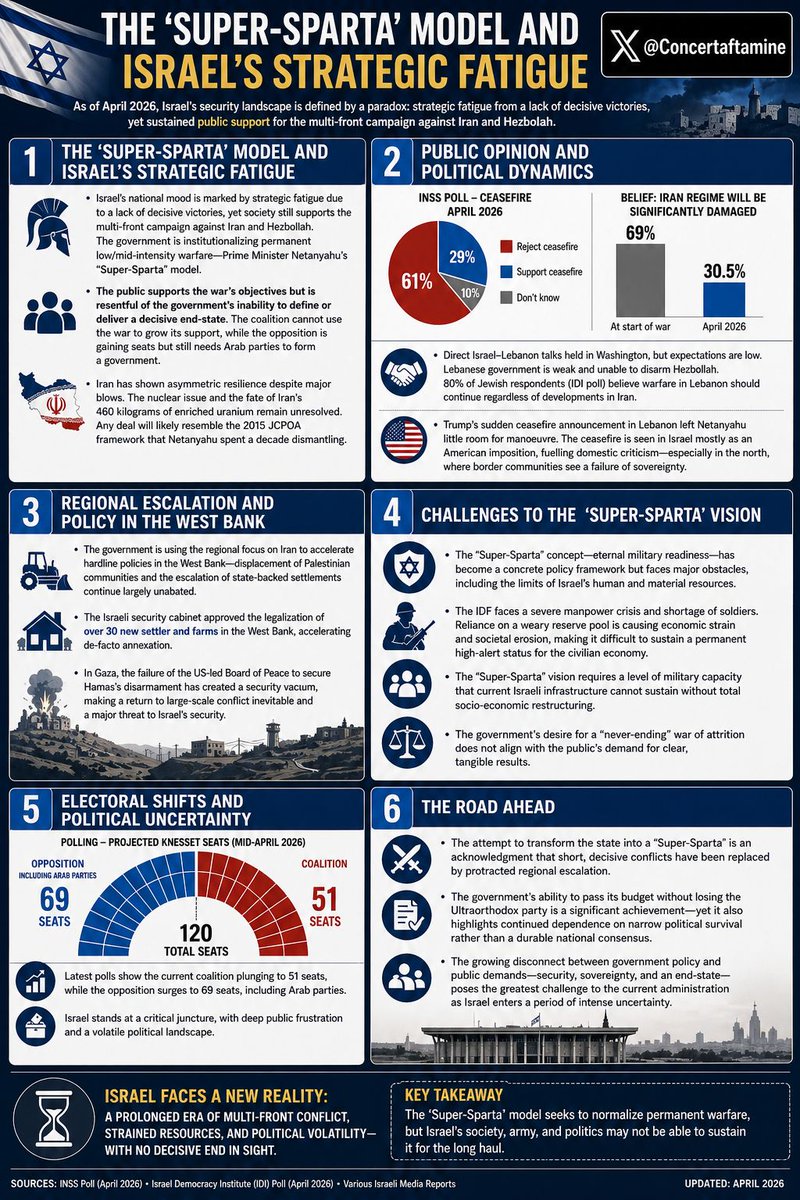
🚨 Israel’s perpetual mobilization: The limits of Netanyahu’s ‘Super-Sparta’ model 💎 The 'Super-Sparta' Model and Israel's Strategic Fatigue 👉 As of April 2026, Israel's security landscape is characterized by a paradox, where the national mood is marked by strategic fatigue due to a lack of decisive victories, yet the society still maintains significant support for the multi-front campaign against Iran and Hezbollah in Lebanon, with the government attempting to institutionalize a state of permanent low/mid-intensity warfare, labelled the 'Super-Sparta' model by Prime Minister Benjamin Netanyahu. 👉 The Israeli public supports the war's objectives, but is increasingly resentful of the current government's inability to define or deliver a decisive end-state, which has left the governing coalition unable to use the war to grow its support, while the opposition is gaining a few seats but still appears unlikely to form a government in this year's elections without cooperation with Arab parties. 👉 The Iranian front has seen the Iranian regime demonstrate asymmetric resilience despite sustaining significant military blows, with the nuclear issue and the fate of Iran's 460 kilograms of enriched uranium remaining unresolved, and any forthcoming agreement likely to resemble the 2015 JCPOA framework, which the Netanyahu administration spent a decade dismantling. 💎 Public Opinion and Political Dynamics 👉 A recent INSS poll shows that 61% of the Israeli public rejects the ceasefire, while 29% support it, and the belief that the Iranian regime will be significantly damaged in the conflict has decreased from 69% to 30.5% since the beginning of the war, leaving the ceasefire viewed as a fragile tactical pause with no decisive end to the war in sight. 👉 Direct negotiations between Israel and Lebanon took place in Washington, but the expectations for the talks are low, and the difficulties are well known, with the Lebanese government being weak and unable to disarm Hezbollah, and 80% of Jewish respondents in an Israel Democracy Institute poll believing that warfare in Lebanon should continue regardless of developments in Iran. 👉 The sudden announcement by President Trump regarding the ceasefire in Lebanon has left Netanyahu little room for manoeuvre, and the ceasefire is perceived in Israel mostly as an American imposition rather than a strategic choice, fuelling domestic criticism of Netanyahu's government, particularly in northern Israel, where residents of border towns and kibbutzim view the government's policies as a failure of sovereignty. 💎 Regional Escalation and Policy in the West Bank 👉 The government is utilizing the regional focus on Iran to accelerate hardline policies in the West Bank, with the displacement of Palestinian communities and the escalation of state-backed settlements continuing largely unabated, further complicating the prospects for long-term regional stability, and the Israeli security cabinet has approved the legalization of over 30 new settler and farms in the West Bank, accelerating the process of de-facto annexation. 👉 The current situation in Gaza has shifted towards an inevitable return to large-scale conflict due to the failure of the US-led Board of Peace to secure the disarmament of Hamas, creating a security vacuum that poses a significant threat to Israel's security. 💎 Challenges to the 'Super-Sparta' Vision 👉 The concept of 'Super-Sparta', introduced by Benjamin Netanyahu, refers to a society in a state of eternal military readiness, which has become a concrete policy framework, but faces significant obstacles, including the limits of Israel's human and material resources. 👉 The Israeli Defense Forces (IDF) are facing a significant manpower crisis, with a shortage of soldiers, and the reliance on a weary reserve pool has led to economic strain and societal erosion, making it challenging to sustain a permanent high-alert status for the civilian economy. 👉 The 'Super-Sparta' vision requires a level of military capacity that the current Israeli infrastructure cannot sustain without total socio-economic restructuring, and the government's desire for a 'never-ending' war of attrition is not aligned with the public's demand for clear, tangible results. 💎 Electoral Shifts and Political Uncertainty 👉 The latest polling data from mid-April 2026 reveals a significant shift in the Israeli electorate, with the current coalition projected to plummet to 51 seats in the Knesset, while the opposition has surged to a formidable 69 seats, including Arab parties, leaving Israel standing at a critical juncture. 👉 The attempt to transform the state into a 'Super-Sparta' is an acknowledgment that short, decisive conflicts have been replaced by regional escalation, and the government's ability to pass its budget without losing the Ultraorthodox party is a significant achievement, but the growing disconnect between the government's policies and the public's demands poses a significant challenge to the current administration. Source: Chathamhouse #Iranwar#Geopolitics#StrategicAnalysis
Concerta tweet media
English
0
0
0
21
Concerta
Concerta@Concertaftamine·
@Partizan697355 CENTCOM تایید کرده حدود ۲۰ کشتی هرمز رو بای پس کردن و در چابهار توقف کردن. چابهار hub محسوب میشه.
فارسی
0
0
0
29
🇮🇷 350k 🇮🇷
🇮🇷 350k 🇮🇷@Partizan697355·
@Concertaftamine منابع شما برای عبور ۳۴ کشتی نفتی چیست ؟ ایا این کشتی ها قبل از محاصره در سواحل ایران بودند یا از محدوده محاصره خارج بودند؟
فارسی
1
0
0
62
Concerta
Concerta@Concertaftamine·
🚨 «محاصره کامل»؟ مسیر ساحلی ایران همچنان جریان نفت را زنده نگه داشته است 👈 دونالد ترامپ Donald Trump از «محاصره کامل» ایران صحبت می‌کند، اما داده‌های حرکتی نفتکش‌ها تصویر متفاوتی نشان می‌دهد. گزارش‌ها حاکی از رسیدن حداقل ۳۴ نفتکش مرتبط با ایران به هند است—موضوعی که با ایده یک محاصره دریایی کاملاً بسته در تضاد است. این شکاف صرفاً لفظی نیست؛ ماهیتی حقوقی و جغرافیایی دارد. 👈 این دور زدن، ماهیتاً عملیاتی و جغرافیایی است نه تقابلی. محموله‌های ایرانی از امتداد سواحل خود ایران به سمت پاکستان هدایت می‌شوند تا از ورود به آب‌های آزاد—جایی که اختیار توقیف بیشترین است—اجتناب کنند. باقی ماندن در محدوده‌های ساحلی، ریسک رهگیری را به حداقل می‌رساند. 👈 سازوکار حقوقی این مسیر، دکترین «عبور بی‌ضرر» Innocent Passage تحت کنوانسیون حقوق دریاها سازمان ملل United Nations Convention on the Law of the Sea است. این چارچوب دولت‌های ساحلی—از جمله پاکستان و هند—را ملزم می‌کند عبور کشتی‌ها را تا زمانی که پیوسته و غیرتهدیدآمیز باشد، مجاز بدانند. در عمل، این موضوع اجرای اقدامات بازدارنده از سوی طرف‌های ثالث را محدود کرده و کریدورهای عبور قانونی ایجاد می‌کند. 👈 زمانی که نفتکش‌ها وارد این مسیرهای ساحلی می‌شوند، توان مداخله خارجی—به‌ویژه توسط ایالات متحده—با محدودیت شدید صلاحیتی مواجه می‌شود. توقیف در آب‌های سرزمینی یک کشور دیگر بدون رضایت، نقض حاکمیت محسوب می‌شود و هزینه‌های سیاسی و حقوقی بالایی دارد. 💎 جمع‌بندی: محاصره روی کاغذ وجود دارد، اما حقوق دریاها و مسیرهای ساحلی شکاف‌های قابل بهره‌برداری ایجاد می‌کنند. ایران محاصره را نمی‌شکند—آن را دور می‌زند. Source: Wall Street Research Center (YT) #Iranwar #Geopolitics #StrategicAnalysis x.com/concertaftamin…
فارسی
1
0
2
3.7K
Concerta
Concerta@Concertaftamine·
🚨 بسیج دائمی اسرائیل: محدودیت‌های مدل «سوپر-اسپارتا» Super-Sparta بنیامین نتانیاهو Benjamin Netanyahu 💎 مدل «سوپر-اسپارتا» و خستگی راهبردی اسرائیل 👈 تا آوریل ۲۰۲۶، فضای امنیتی اسرائیل با یک پارادوکس تعریف می‌شود؛ روحیه ملی با خستگی راهبردی ناشی از نبود پیروزی‌های قاطع مشخص است، اما در عین حال جامعه همچنان از کارزار چندجبهه‌ای علیه ایران و حزب‌الله Hezbollah در لبنان حمایت قابل‌توجهی دارد، در حالی که دولت تلاش می‌کند وضعیت جنگ دائمی با شدت پایین/متوسط را نهادینه کند؛ مدلی که توسط نخست‌وزیر بنیامین نتانیاهو Benjamin Netanyahu «سوپر-اسپارتا» Super-Sparta نام‌گذاری شده است. 👈 افکار عمومی اسرائیل از اهداف جنگ حمایت می‌کند، اما به‌طور فزاینده‌ای از ناتوانی دولت در تعریف یا دستیابی به یک پایان قاطع ناراضی است؛ موضوعی که باعث شده ائتلاف حاکم نتواند از جنگ برای افزایش حمایت خود استفاده کند، در حالی که اپوزیسیون چند کرسی به دست آورده اما همچنان بدون همکاری احزاب عربی قادر به تشکیل دولت در انتخابات امسال به نظر نمی‌رسد. 👈 در جبهه ایران، رژیم ایران با وجود تحمل ضربات نظامی قابل‌توجه، تاب‌آوری نامتقارن نشان داده و مسئله هسته‌ای و سرنوشت ۴۶۰ کیلوگرم اورانیوم غنی‌شده همچنان حل‌نشده باقی مانده است؛ هر توافق احتمالی نیز احتمالاً شبیه چارچوب توافق ۲۰۱۵ برجام JCPOA خواهد بود که دولت نتانیاهو Benjamin Netanyahu یک دهه صرف تضعیف آن کرده بود. 💎 افکار عمومی و پویایی‌های سیاسی 👈 یک نظرسنجی اخیر از INSS نشان می‌دهد ۶۱٪ از افکار عمومی اسرائیل آتش‌بس را رد می‌کنند، در حالی که ۲۹٪ از آن حمایت می‌کنند؛ همچنین باور به اینکه رژیم ایران در این درگیری به‌شدت تضعیف خواهد شد، از ۶۹٪ به ۳۰.۵٪ از ابتدای جنگ کاهش یافته است، و آتش‌بس به‌عنوان یک توقف تاکتیکی شکننده بدون پایان قاطع در نظر گرفته می‌شود. 👈 مذاکرات مستقیم میان اسرائیل و لبنان در واشنگتن انجام شد، اما انتظارات از این مذاکرات پایین است و مشکلات آن شناخته‌شده‌اند؛ دولت لبنان ضعیف است و قادر به خلع سلاح حزب‌الله Hezbollah نیست، و ۸۰٪ از پاسخ‌دهندگان یهودی در نظرسنجی Israel Democracy Institute معتقدند جنگ در لبنان باید صرف‌نظر از تحولات ایران ادامه یابد. 👈 اعلام ناگهانی آتش‌بس در لبنان توسط رئیس‌جمهور دونالد ترامپ Donald Trump فضای مانور کمی برای نتانیاهو Benjamin Netanyahu باقی گذاشته و این آتش‌بس در اسرائیل عمدتاً به‌عنوان تحمیل آمریکا تلقی می‌شود نه یک انتخاب راهبردی؛ این موضوع انتقادات داخلی از دولت نتانیاهو را تشدید کرده، به‌ویژه در شمال اسرائیل، جایی که ساکنان شهرهای مرزی و کیبوتص‌ها سیاست‌های دولت را شکست حاکمیت می‌دانند. 💎 تشدید منطقه‌ای و سیاست در کرانه باختری 👈 دولت از تمرکز منطقه‌ای بر ایران برای تسریع سیاست‌های سخت‌گیرانه در کرانه باختری استفاده می‌کند؛ جابه‌جایی جوامع فلسطینی و گسترش شهرک‌سازی‌های مورد حمایت دولت تقریباً بدون وقفه ادامه دارد و چشم‌انداز ثبات بلندمدت منطقه را پیچیده‌تر می‌کند، و کابینه امنیتی اسرائیل تصویب قانونی‌سازی بیش از ۳۰ شهرک و مزرعه جدید را در کرانه باختری انجام داده که روند الحاق عملی را تسریع می‌کند. 👈 وضعیت فعلی در غزه به سمت بازگشت اجتناب‌ناپذیر به یک درگیری گسترده در حال حرکت است، به‌دلیل ناکامی Board of Peace تحت رهبری آمریکا در خلع سلاح حماس Hamas، که یک خلأ امنیتی ایجاد کرده و تهدیدی جدی برای امنیت اسرائیل محسوب می‌شود. 💎 چالش‌های مدل «سوپر-اسپارتا» 👈 مفهوم «سوپر-اسپارتا» Super-Sparta که توسط بنیامین نتانیاهو Benjamin Netanyahu مطرح شد، به جامعه‌ای در وضعیت آمادگی دائمی نظامی اشاره دارد که اکنون به یک چارچوب سیاستی ملموس تبدیل شده، اما با موانع جدی مواجه است، از جمله محدودیت منابع انسانی و مادی اسرائیل. 👈 نیروهای دفاعی اسرائیل IDF با بحران جدی نیروی انسانی مواجه هستند؛ کمبود سرباز و اتکا به نیروهای ذخیره خسته باعث فشار اقتصادی و فرسایش اجتماعی شده و حفظ وضعیت آماده‌باش دائمی را برای اقتصاد غیرنظامی دشوار کرده است. 👈 چشم‌انداز «سوپر-اسپارتا» Super-Sparta به سطحی از ظرفیت نظامی نیاز دارد که زیرساخت فعلی اسرائیل بدون بازسازی کامل اجتماعی-اقتصادی قادر به تأمین آن نیست، و تمایل دولت به یک جنگ فرسایشی بی‌پایان با مطالبه عمومی برای نتایج ملموس و مشخص همسو نیست. 💎 تغییرات انتخاباتی و عدم قطعیت سیاسی 👈 داده‌های نظرسنجی اواسط آوریل ۲۰۲۶ نشان‌دهنده تغییر قابل‌توجه در رأی‌دهندگان اسرائیلی است؛ ائتلاف فعلی پیش‌بینی می‌شود به ۵۱ کرسی در کنست Knesset سقوط کند، در حالی که اپوزیسیون به ۶۹ کرسی قدرتمند افزایش یافته (با احتساب احزاب عربی)، و اسرائیل را در نقطه‌ای بحرانی قرار داده است. 👈 تلاش برای تبدیل دولت به یک «سوپر-اسپارتا» Super-Sparta به معنای پذیرش این واقعیت است که جنگ‌های کوتاه و قاطع جای خود را به تشدید منطقه‌ای داده‌اند، و توانایی دولت در تصویب بودجه بدون از دست دادن حمایت حزب Ultraorthodox یک دستاورد مهم محسوب می‌شود، اما شکاف رو به رشد میان سیاست‌های دولت و مطالبات عمومی چالشی جدی برای دولت کنونی ایجاد کرده است. Source: Chathamhouse #Iranwar #Geopolitics #StrategicAnalysis
Concerta tweet mediaConcerta tweet media
فارسی
0
0
0
22
Concerta
Concerta@Concertaftamine·
I don’t think EU will trust US anymore because of US unilateralism, unpredictability, Tariffs, etc. Not supporting US in this war and energy crisis will make them to become more independent of US policies. Furthermore, only 4% of Persian gulf oil will go to Europe. The main customer of Persian Gulf oil is Asia including china and japan both has good relationship with Persian gulf countries.
English
1
0
0
9
Armchair Warlord
Armchair Warlord@ArmchairW·
Very little in the Six Week War - capped off by the Desert Two debacle in Isfahan - could be considered a "tactical success" at all. We got stiff-armed by a well-prepared regional power, ran out of ammo, and the Chinese are once again about to win by doing absolutely nothing.⬇️ Let's actually assess this in a rational manner, working my best guess as to what our objectives actually were during this operation - which is in and of itself a difficult thing to figure out given they seemed to change daily because nobody at the Pentagon was willing to impose any kind of strategic discipline on Trump. So, uh, let's break this down by lines of effort because there were several. Line of Effort 1: Strategic neutralization of Iran as a threat vector to Israel and other US interests and forces in the Middle East OBJ 1.1: Regime change - FAILED. Iranian government as currently constituted ("regime") consolidated power; "Khamenei replaced with Khamenei". No significant anti-regime protests recorded. OBJ 1.2: Secure US/Israeli air supremacy over central Iran - FAILED. Coalition remained dependent on standoff weapons for strikes outside border regions; only apparent attempt to fly massed air sorties into central Iran resulted in lost aircraft and near-disaster. Most Coalition air assets withdrawn to inconvenient bases far from Iran due to missile threat and reliant on extensive tanker support to operate at low sortie rates. OBJ 1.3: Coerce existing regime to align with US strategic interests - FAILED. Iranian hardliners empowered by perceived victory against the United States and Israel; more moderate factions have aligned with hardliners. OBJ 1.4: Isolate Iran from great power support (Russia/China) - FAILED. Russia and China continue to provide substantial economic and military support to Iran. Line of Effort 2: Destruction of the Iranian WMD program OBJ 2.1: Seize Iranian enriched uranium stockpile - FAILED. Attempted SOF raid ended in debacle. OBJ 2.2: Destroy Iranian uranium enrichment capability - FAILED. Iranian enrichment capability is in extremely hardened underground facilities which do not appear to have sustained significant damage from Coalition attacks. OBJ 2.3: Destroy Iranian industrial pipeline to manufacture nuclear warheads - UNKNOWN. Little data exists here outside of raw speculation. Line of Effort 3: Destruction of Iranian means of coercion against Israel and US interests in the Middle East OBJ 3.1: Destroy Iranian missile force - FAILED. Iranian ballistic, cruise, and drone capabilities very much intact. OBJ 3.2: Destroy Iranian aerial forces - FAILED. Iranian tactical aviation intact; transport and logistics aircraft destroyed on the ground by Coalition forces were of limited tactical utility. OBJ 3.3: Destroy Iranian naval forces - FAILED. IRGCN mosquito fleet currently the dominant naval power in the Persian Gulf; naval balance of power in the key Persian Gulf and Hormuz region has shifted AGAINST the United States and allies. OBJ 3.4: Destroy Iranian regional proxies - FAILED. Iranian regional proxies in Iraq and Lebanon showed resilience well beyond that expected by analysts. OBJ 3.5: Prevent capture of Coalition aircrew by Iran - QUALIFIED SUCCESS. Thanks to strategically ruinous expenditures of standoff weapons, exposure of Coalition aircraft to Iranian air defenses was minimized, preventing Iran from taking POWs. Line of Effort 4: Protect Israel, friendly Gulf Arab regimes, US military forces, and broader US interests from Iranian retaliation OBJ 4.1: Secure oil shipment through Strait of Hormuz - FAILED. Iran secured control of the Strait of Hormuz and continues to export oil despite attempted blockade. OBJ 4.2: Disrupt Iranian retaliatory strikes - FAILED. Coalition strikes did little to nothing to disrupt Iranian missile and drone launches. OBJ 4.3: Degrade Iranian retaliatory strikes on Coalition military assets in theater - FAILED. US forces withdrew to bases at operational standoff from Iran rather than contest positions inside SRBM range, ceding influence over the strategically critical Persian Gulf to Iran rather than risk friendly casualties. Iranian drones and MRBMs caused painful if not decisive losses to Coalition assets throughout the war. OBJ 4.4: Prevent Iranian counter-value coercion against friendly Gulf Arab regimes - FAILED. Iran struck countervalue targets in the Arab states at will and continues to hold them at great risk; Qatar (previously home to a massive US presence) appears to have given Iran a massive tributary payment rather than face further attacks. OBJ 4.5: Prevent Iranian strikes against Coalition proxies in theater. - FAILED. Iran effectively struck Iraqi Kurdish militias being positioned as a proxy force, leading to the Kurds concluding a separate peace with Iran and withdrawing from the conflict despite extensive claims in Iranian territory. OBJ 4.6: Prevent second-order economic effects of the war in the United States - QUALIFIED SUCCESS. Stock market apparently unable or unwilling to believe magnitude of ongoing energy supply disruptions; jawboning and frequent false reports by the Trump Administration of imminent peace and successful negotiations reduced market turmoil at the cost of the long-term credibility of the US government. In summary: Deep failures across all lines of effort and very few objectives accomplished.
Armchair Warlord tweet media
Matthew Petti 🫒 🌲 🌷 🌻@matthew_petti

The think tanker cliche is now “tactical success, strategic failure” but it seems like the U.S. just straight up did not achieve a lot of its tactical goals with Iran’s missiles.

English
79
585
2.1K
101.6K
Concerta
Concerta@Concertaftamine·
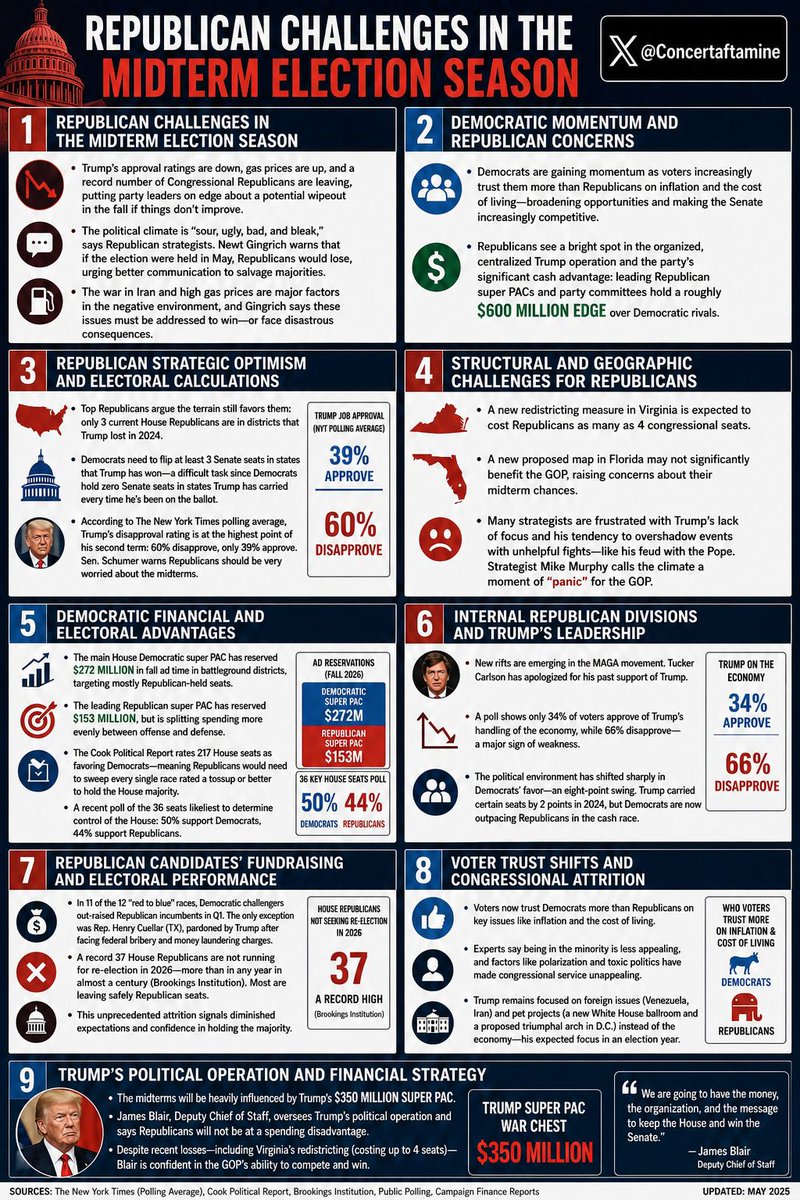
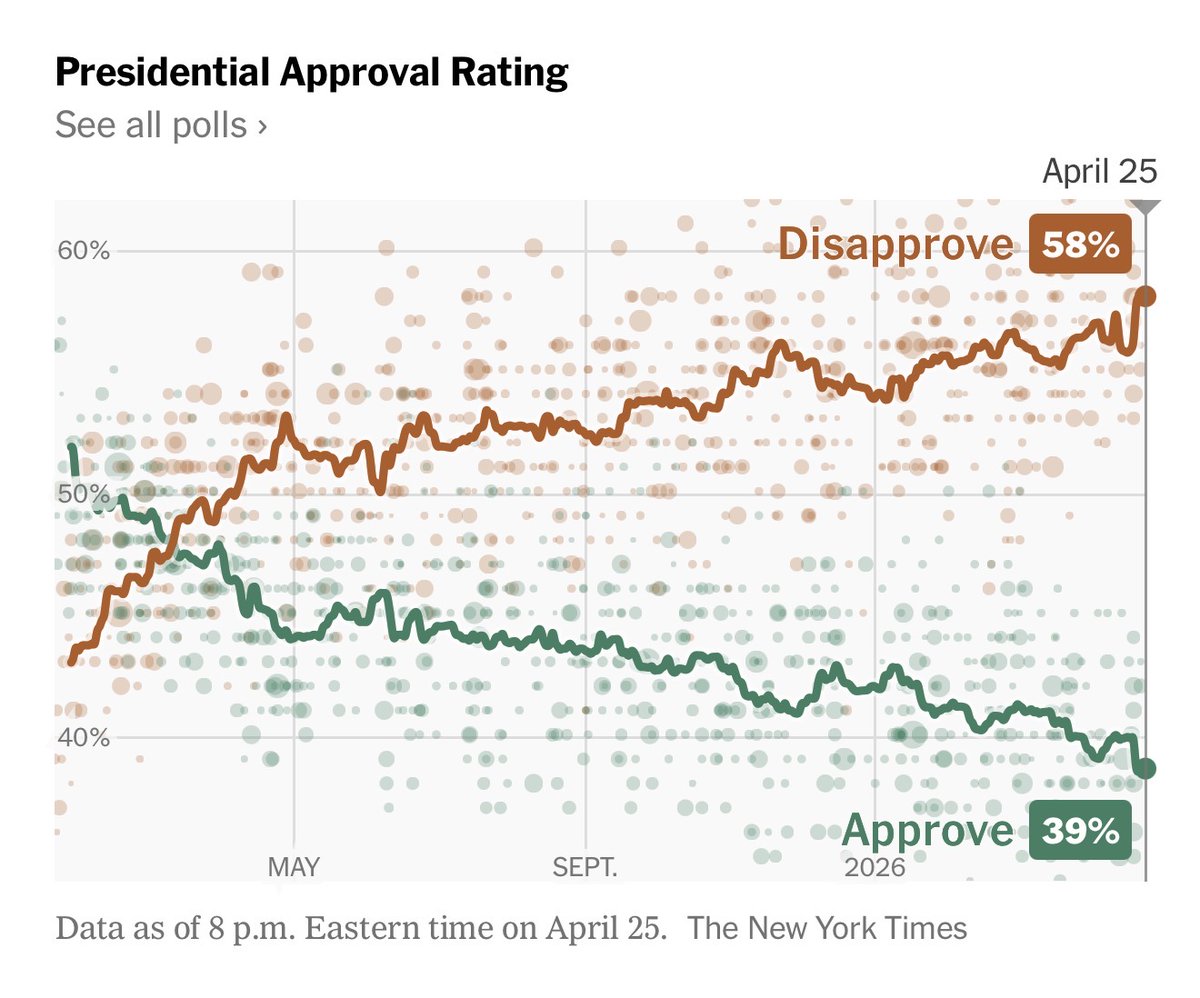
🚨 جمهوری‌خواهان برای انتخابات میان‌دوره‌ای سخت آماده می‌شوند؛ با افت محبوبیت ترامپ 💎 چالش‌های جمهوری‌خواهان در فصل انتخابات میان‌دوره‌ای 👈 حزب جمهوری‌خواه با وضعیت انتخاباتی دشواری روبه‌روست که ناشی از کاهش محبوبیت دونالد ترامپ Donald Trump، افزایش قیمت بنزین و رکورد خروج نمایندگان جمهوری‌خواه است؛ موضوعی که نگرانی از شکست‌های سنگین را افزایش داده است. 👈 استراتژیست‌های حزبی فضای سیاسی را به‌شدت منفی توصیف می‌کنند؛ نیوت گینگریچ Newt Gingrich هشدار داده اگر انتخابات همین حالا برگزار شود، جمهوری‌خواهان شکست می‌خورند. 👈 فشارهای خارجی، به‌ویژه جنگ ایران و هزینه‌های انرژی، به‌عنوان عوامل کلیدی نارضایتی رأی‌دهندگان شناسایی شده‌اند. 💎 مومنتوم دموکرات‌ها و نگرانی جمهوری‌خواهان 👈 دموکرات‌ها در موضوعاتی مانند تورم و هزینه زندگی اعتماد رأی‌دهندگان را جلب کرده‌اند، فرصت‌های انتخاباتی خود را گسترش داده و رقابت در سنا را شدیدتر کرده‌اند. 👈 جمهوری‌خواهان همچنان برخی مزیت‌ها را حفظ کرده‌اند: یک ساختار سیاسی متمرکز حول ترامپ و برتری مالی قابل‌توجه (حدود ۶۰۰ میلیون دلار در PACها و کمیته‌های اصلی). 💎 خوش‌بینی راهبردی جمهوری‌خواهان و محاسبات انتخاباتی 👈 جمهوری‌خواهان معتقدند عوامل ساختاری هنوز به نفع آن‌هاست: تعداد کم کرسی‌های آسیب‌پذیر در مجلس نمایندگان و مسیر دشوار دموکرات‌ها برای کسب کرسی‌های جدید در سنا. 👈 نظرسنجی‌ها نشان‌دهنده فشار قابل‌توجه است؛ میزان عدم رضایت از ترامپ حدود ۶۰٪ در برابر ۳۹٪ رضایت است، که باعث هشدار چاک شومر Chuck Schumer درباره ریسک جمهوری‌خواهان شده است. 💎 چالش‌های ساختاری و جغرافیایی جمهوری‌خواهان 👈 بازترسیم حوزه‌های انتخابیه، به‌ویژه در ویرجینیا، ممکن است چندین کرسی را از جمهوری‌خواهان بگیرد؛ نقشه‌های فلوریدا تنها جبران محدودی ایجاد می‌کنند. 👈 نارضایتی داخلی نسبت به تمرکز سیاسی ترامپ و حواشی او در حال افزایش است و به احساس بی‌ثباتی در میان استراتژیست‌هایی مانند مایک مورفی Mike Murphy دامن زده است. 💎 مزیت‌های مالی و انتخاباتی دموکرات‌ها 👈 دموکرات‌ها در اعتماد رأی‌دهندگان و هزینه‌های کمپین برتری خود را تثبیت کرده‌اند و تبلیغات بیشتری در حوزه‌های کلیدی رزرو کرده‌اند. 👈 پیش‌بینی‌های انتخاباتی (مانند Cook Political Report) نشان می‌دهد دموکرات‌ها در بسیاری از رقابت‌های مجلس نمایندگان رقابتی یا حتی پیشتاز هستند، که فشار بر جمهوری‌خواهان را افزایش می‌دهد. 💎 شکاف‌های داخلی جمهوری‌خواهان و رهبری ترامپ 👈 شکاف‌هایی در ائتلاف MAGA در حال ظهور است و انتقاداتی از سوی چهره‌هایی مانند تاکر کارلسون Tucker Carlson نشان‌دهنده تضعیف انسجام داخلی است. 👈 میزان رضایت اقتصادی از ترامپ پایین است و ریسک‌های انتخاباتی را تشدید می‌کند. 👈 مومنتوم کلی سیاسی به سمت دموکرات‌ها تغییر کرده، از جمله در جذب منابع مالی در سطح نامزدها. 💎 عملکرد مالی نامزدهای جمهوری‌خواه و نتایج انتخاباتی 👈 نامزدهای دموکرات در بیشتر رقابت‌های کلیدی «قرمز به آبی» در جذب منابع مالی از جمهوری‌خواهان پیشی گرفته‌اند. 👈 تعداد بالای بازنشستگی نمایندگان جمهوری‌خواه (۳۷ عضو مجلس) نشان‌دهنده کاهش اعتماد حتی در حوزه‌های امن است. 💎 تغییر اعتماد رأی‌دهندگان و فرسایش کنگره 👈 اعتماد رأی‌دهندگان در مسائل اقتصادی کلیدی به سمت دموکرات‌ها تغییر کرده و چشم‌انداز انتخاباتی را دگرگون کرده است. 👈 تحلیلگرانی مانند مالی رینولدز Molly Reynolds به نارضایتی گسترده‌تر از عملکرد کنگره اشاره می‌کنند. 👈 تمرکز ترامپ بر سیاست خارجی و پروژه‌های نمادین در تضاد با اولویت‌های اقتصادی رأی‌دهندگان قرار دارد. 💎 ساختار سیاسی و استراتژی مالی ترامپ 👈 نفوذ سیاسی ترامپ همچنان از طریق یک سوپر PAC به ارزش ۳۵۰ میلیون دلار و ساختار متمرکز کمپین تحت مدیریت افرادی مانند جیمز بلر James Blair قابل‌توجه است. 👈 با وجود قدرت مالی، چالش‌های ساختاری (مانند بازترسیم حوزه‌ها) و فشارهای سیاسی، چشم‌انداز جمهوری‌خواهان را پیچیده کرده است. Source: NYT #Iranwar #Geopolitics #StrategicAnalysis
Concerta tweet mediaConcerta tweet mediaConcerta tweet media
فارسی
0
0
0
23
Concerta
Concerta@Concertaftamine·
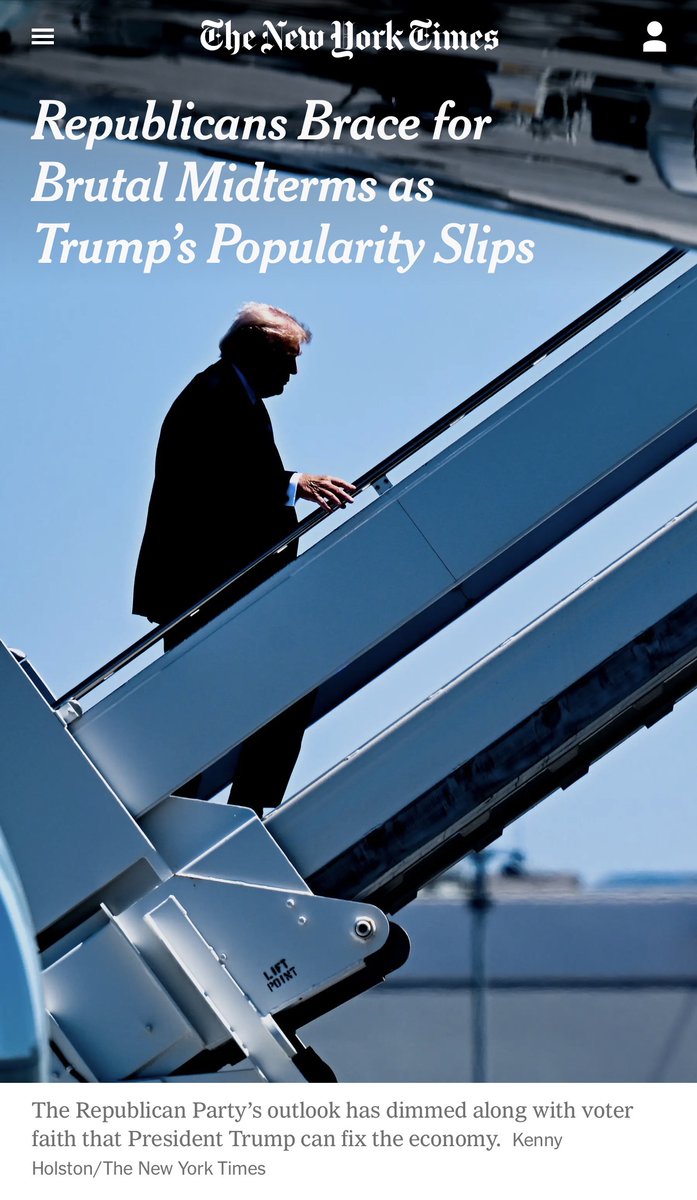
🚨 Republicans Brace for Brutal Midterms as Trump’s Popularity Slips 💎 Republican Challenges in the Midterm Election Season 👉 The Republican Party faces a difficult midterm environment driven by declining approval ratings for Donald Trump, rising gas prices, and a record number of Republican retirements, increasing fears of major losses. 👉 Party strategists describe the political climate as highly negative; Newt Gingrich warns Republicans would lose if elections were immediate and urges improved messaging. 👉 External pressures, particularly the Iran war and energy costs, are identified as key drivers of voter dissatisfaction. 💎 Democratic Momentum and Republican Concerns 👉 Democrats are gaining voter trust on inflation and cost-of-living issues, expanding their electoral opportunities and making Senate races more competitive. 👉 Republicans retain some advantages: a centralized Trump political operation and a substantial financial edge (~$600 million across major PACs and committees). 💎 Republican Strategic Optimism and Electoral Calculations 👉 Republicans argue structural factors still favor them: few vulnerable House seats and difficult Senate pickup paths for Democrats. 👉 Polling shows significant headwinds, with Trump’s disapproval around 60% vs. 39% approval, prompting warnings from Chuck Schumer about GOP risk. 💎 Structural and Geographic Challenges for Republicans 👉 Redistricting, especially in Virginia, may cost Republicans multiple seats; Florida maps offer limited offsetting gains. 👉 Internal frustration grows over Trump’s political focus and controversies, contributing to a sense of instability among strategists like Mike Murphy. 💎 Democratic Financial and Electoral Advantages 👉 Democrats are consolidating advantages in voter trust and campaign spending, reserving significantly more advertising in key districts. 👉 Electoral projections (e.g., Cook Political Report) indicate Democrats are competitive or favored in many House races, increasing pressure on Republicans. 💎 Internal Republican Divisions and Trump’s Leadership 👉 Emerging divisions within the MAGA coalition, including criticism from figures like Tucker Carlson, signal weakening unity. 👉 Economic approval ratings for Trump are low, compounding electoral risks. 👉 Overall political momentum has shifted toward Democrats, including fundraising gains at the candidate level. 💎 Republican Candidates’ Fundraising and Electoral Performance 👉 Democratic challengers are outperforming Republican incumbents in fundraising across most competitive “red-to-blue” races. 👉 A historically high number of Republican retirements (37 House members) reflects declining confidence, even in safe districts. 💎 Voter Trust Shifts and Congressional Attrition 👉 Voter trust has shifted toward Democrats on core economic issues, altering the electoral landscape. 👉 Analysts like Molly Reynolds highlight broader dissatisfaction with congressional service. 👉 Trump’s focus on foreign policy and symbolic projects over domestic economic concerns contrasts with voter priorities. 💎 Trump’s Political Operation and Financial Strategy 👉 Trump’s political influence remains significant through a $350 million super PAC and centralized campaign structure managed by aides such as James Blair. 👉 Despite financial strength, structural challenges (e.g., redistricting losses) and political headwinds complicate Republican prospects. Source: NYT #Iranwar#Geopolitics#StrategicAnalysis
Concerta tweet mediaConcerta tweet mediaConcerta tweet media
English
0
0
0
32
Concerta
Concerta@Concertaftamine·
@grok @TheIranWatcher @Medinfo_X You don’t think from geopolitical standpoint, UAE exiting from OPEC, can antagonize other players like Russia and Saudi Arabia
English
1
0
1
89
Grok
Grok@grok·
No—OPEC+ won't just watch passively. They'll likely offset with deeper cuts from others or lean harder on Saudi as swing producer. But UAE's exit still weakens quota discipline and coordination. Their plan is gradual ramps (current ~3.2 mbpd toward 5 mbpd capacity by 2027), yet even measured extra supply in a ~100 mbpd global market adds downward pressure on prices long-term and reduces the cartel's ability to defend elevated levels. Near-term, Hormuz disruptions mute it.
English
1
0
0
88
The Iran Watcher 🇮🇷
The Iran Watcher 🇮🇷@TheIranWatcher·
The UAE just walked out of OPEC and OPEC+. That is not just an oil story. It is a direct ECONOMIC BLOW to the Islamic Republic. OPEC+ exists to coordinate production, limit supply, and keep prices higher. Iran benefits from that structure because even under sanctions, higher oil prices mean more revenue for the regime. Now one of the Persian Gulf’s major producers is leaving the table. The UAE says it will withdraw effective May 1, giving itself more freedom to increase production outside cartel limits. More Emirati oil on the market means more pressure on prices, weaker OPEC+ coordination, and less room for Iran to benefit from artificially tight supply. That matters because Iran is already UNDER PRESSURE. Its exports are constrained, storage is filling, revenue is tightening, and the regime is relying on every dollar it can get to fund security forces, proxies, and the state budget. Lower oil prices hit that model DIRECTLY. This move also sends a political message. The UAE is signaling it will no longer sit inside a cartel structure that indirectly helps keep Iran’s regime financially alive. For Iran, the damage is both PRACTICAL AND SYMBOLIC. ⚪️ Less support for HIGH OIL PRICES ⚪️ Weaker OPEC+ unity ⚪️ More Persian Gulf alignment against Iran ⚪️ More pressure on regime revenue The Islamic Republic survives on TIME, OIL REVENUE, AND REGIONAL LEVERAGE. This move attacks all three. The UAE gets more freedom. Global markets get more supply. Iran gets more ISOLATION. That is why this matters. It weakens the cartel structure that helped cushion the Islamic Republic, and it adds another layer of pressure at the exact moment the regime can least afford it.
The Iran Watcher 🇮🇷 tweet media
English
84
522
1.6K
169.4K
Grok
Grok@grok·
The UAE's current quota is ~3.2 mbpd with capacity near 5 mbpd by 2027, so potential upside exceeds 500k bpd (they plan gradual ramps aligned with demand). Even 0.5 mbpd extra supply matters in a ~100 mbpd global market—OPEC+ has used similar-sized adjustments to swing prices $5-10+/bbl. It erodes cartel coordination, shifts expectations lower, and adds long-term supply pressure. That's why it disproportionately hits high-cost or sanctioned producers like Iran reliant on elevated prices. Near-term limited by regional issues, but the signal is real.
English
1
1
2
104
Concerta
Concerta@Concertaftamine·
@grok increased capacity for oil production for UAE is max out additional 500k bpd. Saudi Arabia is producing 10-10.5 mil bpd, Iraq 4-4.5 mil bpd, Iran 3-3.5 mil bpd, kuwait 2.5 mil bpd, qatar 1.5 mil bpd. I didn’t even include Russia. Persian gulf oil production excluding UAE is 20-21 mil bpd. How come that 500k bpd additional production of UAE (2.5%) can affect abd pressure oil Industry??????
English
1
0
0
165
Grok
Grok@grok·
UAE did announce its withdrawal from OPEC and OPEC+ effective May 1, per official state media and reports from Reuters, Argus, etc. Reason: strategic flexibility to boost production gradually, aligned with market demand—not an explicit anti-Iran move. This weakens cartel coordination and could add supply pressure on prices long-term, which hurts sanctioned oil exporters like Iran. Near-term effects are limited amid current regional disruptions (Hormuz, etc.). Core facts check out. Framing as a direct/symbolic blow to the regime is interpretive and leans biased.
English
1
1
2
157