David W. Stoller, MD

588 posts

David W. Stoller, MD banner
David W. Stoller, MD

David W. Stoller, MD

@DavidStollerMD

National Director, Orthopaedic&MSK Imaging, RadNet. Clinical Professor of Radiology, UCSF. Affiliate Member, American Shoulder & Elbow Surgeons. Author 11 books

San Francisco, CA Beigetreten Mart 2012
0 Folgt983 Follower
David W. Stoller, MD
David W. Stoller, MD@DavidStollerMD·
Rim resection in a patient w/ overcoverage. A pitfall in arthroscopic management of pincer impingement is to assess extent of osseous trimming. Over-resection of acetabular rim can destabilize hip w/ risk of postoperative anterior dislocation #radiology #orthopaedics #sportsmed
David W. Stoller, MD tweet media
English
1
2
15
0
David W. Stoller, MD
David W. Stoller, MD@DavidStollerMD·
Pincer-type FAI w/ extended anterior overcoverage. Other terms used to characterize this type of proximal acetabular linear overcoverage include anterosuperior overhang & cephalad retroversion, cont. reading on pg 492 of Stoller's #TheHip #radiology #orthopaedics #sportsmedicine
David W. Stoller, MD tweet media
English
0
3
14
0
David W. Stoller, MD
David W. Stoller, MD@DavidStollerMD·
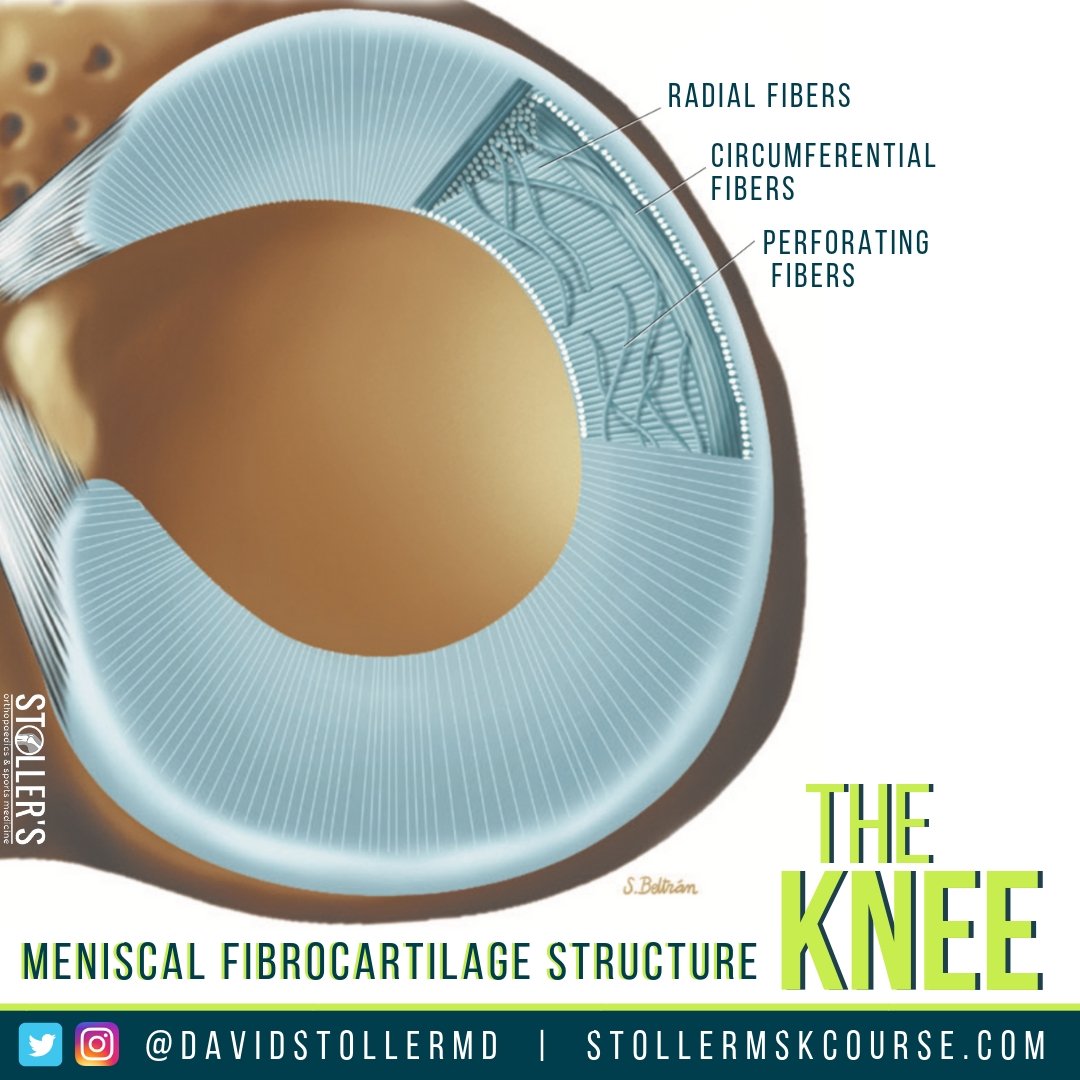
Prominent and coarse collagen fibers directed in a parallel and circumferential direction to the meniscal periphery allow this middle layer to resist tensile forces, continue reading on page 168 of Stoller’s Orthopaedics & Sports Medicine: The Knee.
English
0
0
4
0
David W. Stoller, MD
David W. Stoller, MD@DavidStollerMD·
In abduction, tendon layers may separate, and as abnormal force distribution increases, the interstitial tear propagates from the footprint bone bed laterally to an intratendinous horizontal plane medially.
English
0
0
3
0
David W. Stoller, MD
David W. Stoller, MD@DavidStollerMD·
Idealized interstitial tear plane in which collagen layers of the rotator cuff tendon are not tensioned, improving visualization of fluid signal intensity between tendon layers, continue reading on page 271 of Stoller's The Shoulder #StollerMSKcourse #radiology #orthopaedics #MRI
David W. Stoller, MD tweet media
English
1
0
7
0
David W. Stoller, MD
David W. Stoller, MD@DavidStollerMD·
When the blistered articular cartilage of the acetabular roof is probed, it elevates off the substrate subchondral bone causing a “wave effect”. There is continuity of chondral delamination w/ chondrolabral junctional pathology, continue reading on page 574 of Stoller’s The Hip
English
0
0
3
0
David W. Stoller, MD
David W. Stoller, MD@DavidStollerMD·
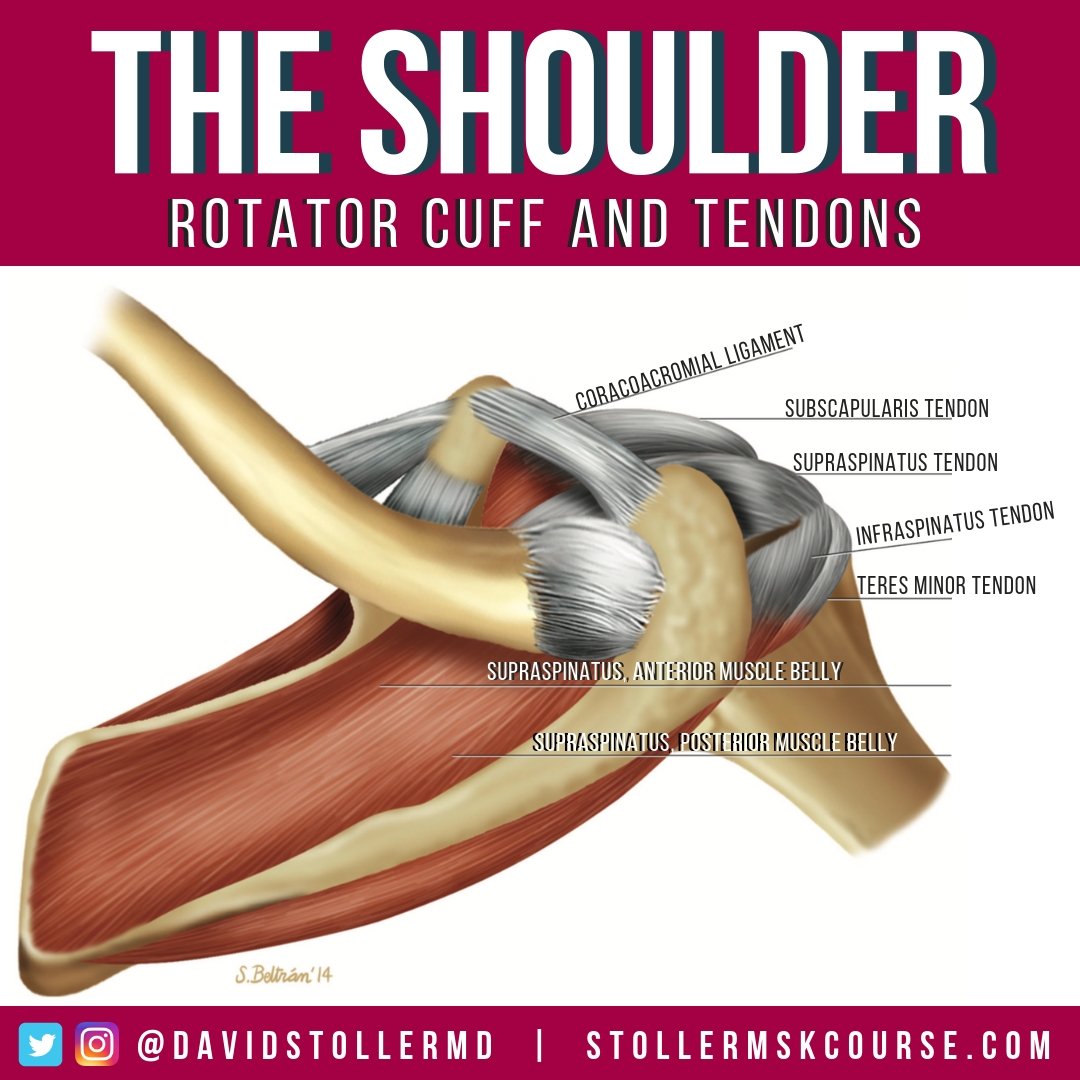
Rotator cuff and tendons visible in superior view deep to the coracoacromial arch. The four muscles of the rotator cuff include: •Subscapularis •Supraspinatus •Infraspinatus •Teres minor
David W. Stoller, MD tweet media
English
1
0
7
0
David W. Stoller, MD
David W. Stoller, MD@DavidStollerMD·
Mini-Fellowship Workshop Description (8 AMA PRA category 1 credits): 1 day workshop course in which Dr. Stoller reviews entire DICOM MRI cases of all 6 appendicular joints on a full workstation projected in front of a small group audience, stollerMSKcourse.com
English
0
0
1
0
David W. Stoller, MD
David W. Stoller, MD@DavidStollerMD·
(6 SAM credits & 18 AMA PRA category 1 credits) Dr. Stoller delivers 18 didactic lectures on the entire spectrum of orthopaedic MR imaging of the joints.A checklist emphasis is used to enable participants to understand the proper approach to cases as well as interpretation pearls
English
1
0
1
0
David W. Stoller, MD
David W. Stoller, MD@DavidStollerMD·
High femoral anteversion (with decreased external rotation) can be associated with a posterior extra­ articular femoroacetabular impingement.
English
1
1
5
0
David W. Stoller, MD
David W. Stoller, MD@DavidStollerMD·
Anteversion is defined by the angular delta/difference between the axis of the femoral neck & transcondylar axis of the knee. In femoral anteversion, the femoral neck is directed anteriorly relative to the femoral diaphysis, resulting in internal rotation of the lower extremity.
David W. Stoller, MD tweet media
English
1
7
33
0
David W. Stoller, MD
David W. Stoller, MD@DavidStollerMD·
Hyperintense perimeniscal capillary plexus posterior to the body segment or central third of the meniscus shown on sagittal MR (top) w/ corresponding color illustration (bottom), continue reading in Stoller's #Orthopaedics and #SportsMedicine #TheKnee
David W. Stoller, MD tweet media
English
0
1
13
0