

Blackthorne
990 posts

Blackthorne
@GrandMosk
"In essentials unity, in non-essentials liberty, in all things charity." Virginian | Theology & Anglosphere politics.
Beigetreten Eylül 2025
268 Folgt42 Follower

@ProtPhilosopher Are we supposed to believe that the scriptures aren’t clear on salvation, but are clear on our need to trust an infallible church, which relies on a disputed interpretation of vague passages using sacred tradition that can’t be discerned apart from this infallible church?
English

I received some helpful pushback on my claim that if God is essentially loving, and love involves delivering what the beloved needs in a form the beloved can receive, then a text authored by God will possess formal sufficiency.
Chris S. on Substack presses, "On divine love, I’m not denying the classical theism premise—I’m just not seeing the entailment. Even if God is essentially loving, it doesn’t follow that love requires a text that’s formally sufficient apart from any interpretive authority. That feels like a logical jump. A loving God could just as easily communicate through a text within a living, authoritative community without that making Him any less loving. It just means He works with our nature, not against it."
Here's how I responded.
That's a fair point. You're essentially asking for a derivation of the entailment from divine love to formal sufficiency. Let me provide a brief sketch of how that goes. I start with a definition of love that is Catholic-friendly. Aquinas's definition, as further made precise by Eleonore Stump, is what I'd use. Divine love consists in two intertwined desires: God desires the good of the beloved and God desires union with the beloved. Next, we need to define formal sufficiency.
Formal sufficiency means that the materially sufficient content for salvation, which is a property of Scripture most Catholics endorse, is accessible to an average reader using ordinary means and aided by the Spirit. The text doesn't just gesture toward saving truth and then require an infallible interpretive institution to access that saving truth. The text is not obscure in that way. Rather, Scripture's clarity on the essentials of salvation is available to each believer without needing an institution to act as a gatekeeper bringing to light that which is obscure.
Now let's assume that God put everything necessary for salvation into Scripture but he made it inaccessible to the average reader using ordinary means aided by the Spirit. This means to access essentials necessary for salvation a person must identify the correct institution and trust their interpretation of salvific matters.
Look at what that requires. God desires the good of the beloved (salvation) and desires union with the beloved, yet he delivered the content necessary for both in a form the beloved can't access without first solving an independent epistemic problem namely which institution is the right one. The beloved must get the institution question right before she can get the salvation question right. God has made access to the good he desires for her contingent on correctly navigating an ecclesial question that has divided sincere Christians for a very long time.
That's not consistent with Aquinas's definition of love. A lover who desires the good of the beloved and desires union with the beloved doesn't bury the means of that good behind a prior institutional identification problem. He has the ability to communicate plainly. He has the desire for the beloved's good. He chose not to communicate plainly. At that point we aren't describing love as Aquinas defines it. We're describing something else.
So the entailment runs like this. If God is essentially loving (Aquinas's definition), and if he authored a text containing everything necessary for salvation (material sufficiency, which Catholics grant), then that content is accessible to the beloved without requiring her to first solve the institution question. That's formal sufficiency. It follows from the conjunction of essential divine love and material sufficiency. To deny formal sufficiency while affirming both premises is internally inconsistent on Aquinas's own terms.
Notice I haven't presupposed Sola Scriptura. I haven't argued from Protestant premises. I've used a Catholic definition of love, a Catholic concession about material sufficiency, and drawn a conclusion. The question for the Catholic is, which premise do you deny?
The Protestant Philosopher@ProtPhilosopher
The cross isn't an arbitrary divine decision. The resurrection isn't a random miracle. The text that reports them isn't an accident of history. All three have the character of the God who produced them. A new article on what the AIT says about Easter: protestantreview.substack.com/p/cross-tomb-t…
English
@TrueEuropa @Sargon_of_Akkad Who do you think built the modern Middle East?
But yes, Britain is useless at this point.
English

@Sargon_of_Akkad it's never been the wests war. Stop dragging Britain into every Middle East scrap. Fix London before Tehran
English
@ebound @Ramandu_Star @thattradgal Ignatius was very worried about intuitional power, and not unreasonably so.
He was certainly the earliest clear & explicit advocate of the monoepiscopate.
English

@GrandMosk @Ramandu_Star @thattradgal 1 Corinthians 11 St. Paul distinguishes between the meal and the Lord's Supper. He's saying they're guilty of the body and blood because they don't discern the body. The focus is on the elements. Why would Ignatius in the lion's den be worried about institutional power? 🥴
English
He didn’t say;
“This represents my body.”
He didn’t say;
“This symbolizes my body.”
He said;
“This IS my body.”

English
"Everything before" starts at verse 25. They were discussing what Jesus taught to the crowd in the synagogue at Capernaum.
V60 does say, "when they heard this".
To which Jesus responded in v61,
"61 When Jesus knew in Himself that His disciples complained about THIS, He said to them, “Does THIS offend you?"
Jesus then identifies the offending claim, in V62 by way of the answer that He provides.
"62 What then if you should see the Son of Man ascend where He was before?"
That takes us back to the verses 41-42.
"41 The Jews then complained about Him, because He said, “I am the bread which came down from heaven.” 42 And they said, “Is not this Jesus, the son of Joseph, whose father and mother we know? How is it then that He says, ‘I have come down from heaven’?”
The issue was blasphemy, the charge that put Him on the cross, not cannibalism. The Jews knew he was speaking metaphorically about the "eating his flesh", and "drinking his blood" which were categorical taboos for a Jew, much less a Jewish rabbi.
The also knew because Jesus stated as much to them in verse 35.
"35 And Jesus said to them, “I am the bread of life. He who comes to Me shall never hunger, and he who believes in Me shall never thirst."
English
@GrandMosk @Ramandu_Star @thattradgal The narrative break could've been 5 min, that doesn't matter. V60 says "when they heard this", which references everything before. Why would they wait all of that time to say "this is a hard saying" if they weren't referencing that specifically?
English
Let's not pivot to sola scriptura, which is a separate discussion. My claim was that "The early church had the canon and debated scripture from the apostolic era."
What the verses I cited prove is that scripture was in circulation during the lives of the apostles as well as were instructions to share and accept that scripture.
Once past the Apostolic era of direct attestation to authorship, scripture still retained the fingerprints of God, testifying of itself by fulfilled prophecy, inter-canonical reference & allusions, doctrinal, expositional, logical & thematic consistency, linguistic, idiomatic, stylistic markers, verisimilitude, historic corroboration, historical pedigree, etc.
Jerome's canon readily meets the scholastic markers used to identify scripture, while other books remain disputed or held as lesser scripture.
The vote on the canon at Trent was 24 in favor, 15 against with 16 abstaining. Cardinal Cajetan, head of the Dominican Order, papal legate and point man sent to confront Luther at Augsburg, held to Jerome's canon. The Glossa Ordinaria, which taught 3 centuries of medieval Catholic priests, taught Jerome's understanding of the Deuterocanon as lesser scripture (in its preface).
What the early regional councils did was assert control over who would decide which books were canon. Various opinions have remained throughout Christian history, however, within Catholicism and without.
English

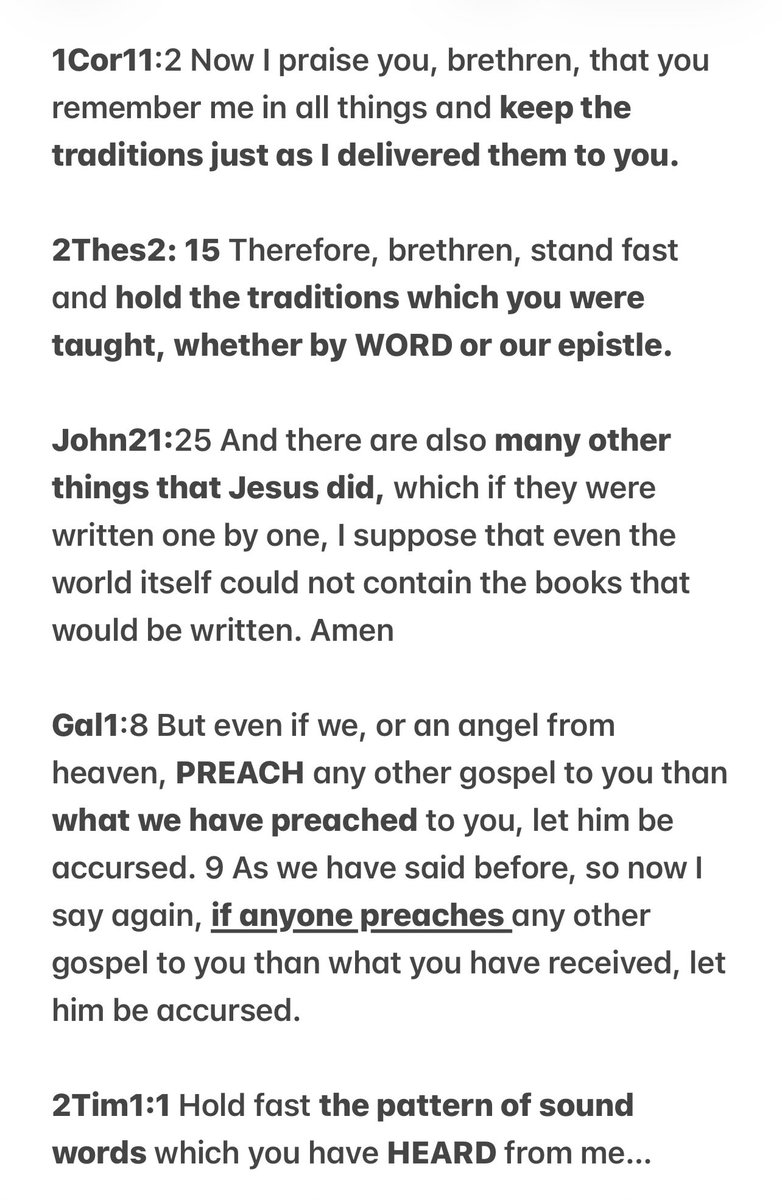
They did not have the bible canon until much later. And these verses disprove sola scriptura. They speak to the wisdom of the apostolic church, the context of scripture
“as also in all his epistles, speaking in them of these things, in which are some things hard to understand, which UNTAUGHT and unstable people twist to their own destruction, as they do also the rest of the Scriptures”
This argues against sola scriptura. Untaught people have corrupt & twisted understanding . One needs apostolic teaching from the church to understand the scriptures, Protestants twist the scriptures because they do not have apostolic teaching.
Read all of Col4: Paul expects the church to be at corporate prayer often. Not only are the apostles to speak the mystery of Christ, but every member of the church is to have speech ... with grace so as to answer those seeking the true faith.
2Continue earnestly in prayer, being vigilant in it with thanksgiving;
3 meanwhile praying also for us, that God would open to us a door for the word, to speak the mystery of Christ, for which I am also in chains,
4 that I may make it manifest, as I ought to speak.
5 Walk in wisdom toward those who are outside, redeeming the time.
6 Let your speech always be with grace, seasoned with salt, that you may know how you ought to answer each one.
It was NEVER scripture alone
English

Eastern Orthodox and Roman Catholics: "to read church history is to cease to be protestant."
(Protestant read church history)
Also Eastern Orthodox and Roman Catholics: "You're QUOTE MINING!" You're CHERRY PICKING!" "All the fathers didn't agree!" "You gotta read the original Latin!" "We don't have to follow everything they say!!"
English
2/ The word eucharist means "thanksgiving" and the eucharist at the time included the entire offering to the poor and not just bread and wine.
I think the debate over what Ignatius meant by the statement you quoted is ongoing, and is about to be engaged further by some anticipated scholarship, but I'm not remotely surprised that the church as an institution would adopt an understanding that would further their institutional interests.
English
@GrandMosk @Ramandu_Star @thattradgal He's using the Ascension to validate his authority. Obviously if he has the power to ascend into heaven, he has the power to give his flesh as food. Their simple logic is too small for the reality of who he really is, so this just reinforces his point.
Now your turn.
English
I'll answer your question if you can tell me why you think the "hard" saying" dealt with eating his flesh when Jesus says this:
60 Therefore many of His disciples, when they heard this, said, “This is a hard saying; who can understand it?”
61 When Jesus knew in Himself that His disciples complained about this, He said to them, “Does this offend you? 62 What then if you should see the Son of Man ascend where He was before?"
What does v62 have to do with "eating His flesh"?
English
@GrandMosk @Ramandu_Star @thattradgal So you think for the first 1500 years of the church they just "got it wrong"?
St. Ignatius wrote in 110AD
"They abstain from the Eucharist and from prayer, because they do not confess the Eucharist to be the flesh of our Savior Jesus Christ, which suffered for our sins."
English
Catholics need to read John 6 more carefully.
Verse 59 is a narrative break.
In the subsequent discussion, Jesus directly addresses the “hard saying” (v61-62), which is that Jesus came down from heaven. His response has nothing to do with eating his flesh.
The issue was blasphemy, not cannibalism. Jesus was directly responding to verses 38-42.
English
@Ramandu_Star @thattradgal Why ignore John Chapter 6? What are your thoughts on his followers leaving him for specifically saying it is his flesh and blood?
"Then many of his disciples who were listening said, “This saying is hard; who can accept it?”"
English
@NehemiaszWilk @severegrace @thattradgal The context is blasphemy, not cannibalism, which is easily seen by posting the entire discussion starting at verse 28. Verse 59 is a narrative break. The discussion after that narrative break makes clear that the issue is blasphemy.
English

@severegrace @thattradgal He said He will be resurrected and it wasn't metaphore. Also He said that about bread and wine He held in His hands, not about food in some abstract story. And He had said before that people will eat His flash as bread.

English
The early church had the canon and debated scripture from the apostolic era.
"And count the patience of our Lord as salvation, just as our beloved brother Paul also wrote to you according to the wisdom given him, as he does in all his letters when he speaks in them of these matters. There are some things in them that are hard to understand, which the ignorant and unstable twist to their own destruction, as they do the other Scriptures." (2 Pet 3:15-16)
"And when this letter has been read among you, have it also read in the church of the Laodiceans; and see that you also read the letter from Laodicea." (Col 4:16)
"I put you under oath before the Lord to have this letter read to all the brothers." (1 Thes 5:27)
Matthew, who would have known shorthand as a tax collector, is reported to have written down scripture in Hebrew by Papias of Hierapolis, (130–140 AD). Likely this would have been contemporaneous with his eyewitness.
“Matthew also issued a written Gospel among the Hebrews in their own dialect [or: ‘Matthew put together the oracles [logia] in the Hebrew language’], while Peter and Paul were preaching at Rome… Matthew composed the oracles [sayings/logia] in the Hebrew dialect, and each one interpreted them as he was able.”
English
Nope I said all that the apostles taught is truth. That’s what scripture says.
Scripture alone denies scripture itself. Over 1/2 the NT is on the Church. Not on reading scripture. The NT wasn’t considered scripture for centuries.
Not all cities had the writings. They had in person teaching. Paul & the other apostles visited many cities establishing the Church. Yet the NT contains only a few writings to a snail number of them. No letters to Antioch, Alexandria, Jerusalem, etc. They had the faith from in person teaching.
English
Europe can suit itself. Only about 2% of U.S. oil supply passes through the Straight of Hormuz.
But we'll be happy to take the maritime insurance market as a consolation prize.
We'll see how Lloyd's likes competing with U.S. companies now that the DFC, backstopped by the U.S. Navy, Centcom & 20B in seed capital, is in the game.
English


America blew up the Nordstream pipeline, and now has closed the Strait of Hormuz. Hard not to see this as a deliberate strategy of denying energy to Europe, whilst America can produce its own. Callous.
English

🚨🇫🇷🇺🇸 Trump said Macron's wife beats him up.
Macron's response: "Trump talks too much... his remarks are neither elegant nor up to the standard."
Macron told Trump that he has bad manners.
In French this is a declaration of war.
x.com/LCI/status/203…
Mario Nawfal@MarioNawfal
🚨🇺🇸🇫🇷 Trump just mocked Macron by saying his wife "treats him extremely badly" and he's "still recovering from the right to the jaw." Brigitte Macron is 71. Emmanuel Macron is 48. They have been married since 2007.
English
@JohnCleese Theology might not be your lane John.
"Then said I, Lo, I come: in the volume of the book it is written of me," (Psa 40:7)
"Then said I, Lo, I come (in the volume of the book it is written of me,) to do thy will, O God." (Heb 10:7)
English
Dear Rory,
The essence of Christianity is in Christ's teaching
You won't find anything about him in the Old Testament, because he isn't in it
Leo Kearse - see me on tour! Links in bio@LeoKearse
Such a bad-faith argument to quote ancient texts to justify criticism of contemporary Christianity. Where are the Church of England vicars calling for women to be stoned, gays to be burned, infidels to be slaughtered, Rory? The texts you've quoted are from hundreds of years before Christ. The whole point Cleese is making is that Islam hasn't been reformed and modernised.
English

Funny, I read the Bible finally and it led me directly to the Catholic Church.
Ryan Denton@TexasPreacher
In any given Protestant church, you'll find scores of people, astronomically so in fact, who were once papists. Their conversion was rarely complicated or dramatic. They just started reading their Bible.
English
The "hard saying" had nothing to do with consuming His flesh. Verse 59 is a narrative break.
"60 Therefore many of His disciples, when they heard this, said, “This is a hard saying; who can understand it?”
61 When Jesus knew in Himself that His disciples complained about this, He said to them, “Does this offend you? 62 What then if you should see the Son of Man ascend where He was before?"
Blasphemy was the issue, not cannibalism. Jesus' claim that he came down from heaven was the "hard saying".
"41 The Jews then complained about Him, because He said, “I am the bread which came down from heaven.” 42 And they said, “Is not this Jesus, the son of Joseph, whose father and mother we know? How is it then that He says, ‘I have come down from heaven’?"
English

@grok this knucklehead asserts the Eucharist as a symbol based on Scriptures. Based on Jesus’s doubling down on the literal meaning of consuming His flesh (“this is a hard teaching”), his declaration of “this IS my body and blood;” the fact that John declared “Behold the Lamb of God” and Jews had to actually eat the sacrificial lamb to be saved at Passover; and that on the road to Emmaus the disciples “came to know Him in the breaking of the bread,” with Paul finally declaring that consuming the Eucharist unworthily brings condemnation, he doesn’t appear to show any actual evidence for his specious claims. Evaluate the passages I presented in light of his symbol view. As Flannery O’Connor says, if it’s a symbol, to hell with it.
English

Not exactly a Mic drop for ya bud….
Luke, Matthew, Mark, John and Paul taught a symbolic Eucharist! They in no way taught the pagan aristotelian philosophy of the transubstantiation eucharist!
Those men are really, the only Christian authors who’s opinion matters since they are the only ones inspired by God!
But you also have Clement of Alexandria, & Tertullian.
Now tell the truth about how the Jewishness of our faith was diminished after Rome demolished Jerusalem twice, and the emphasis of Bible interpretation became overrun by Greek modes of interpretation of scripture that overly spiritualized and allegorized the Bible!
The early church writers are not our instruction in the faith. It’s the inspired written word of God that does that.
Dr Taylor Marshall™️@TaylorRMarshall
Try to name ONE Christian author in the first 3 centuries who said the Eucharist is “just a symbol.”
English
@narindertweets @NewStatesman If observation, pattern recognition and critical thinking are racist, then racism is a good and necessary outcome.
English


The anti-Muslim sentiment sweeping across the UK and Europe is "basically racism" says Rory Stewart
English
The perpetual virginity of Mary was not the universal position of the early Church and didn't take hold until the 4th century and didn't become official until 553AD.
The first mention of the doctrine is found in the Protoevangelium of James, a book that also claims Mary spend her childhood in the Temple and was fed daily by an angel (among other apocryphal claims).
English

Need or desire is not the point. The perpetual virginity of Mary was the universal position of the early Church and is still held by all four churches that can trace their origins to ancient roots (Catholic, Eastern Orthodox, Oriental Orthodox, and the Church of the East). Even the Reformers ascribed to it. Unless you hold the opinion that everyone before the second generation of Reformers held absurd beliefs, then the burden is on you to prove why such an ancient, universal belief should be abandoned.
English

@Lynel_Hutz @TertiusIII @ProtPhilosopher "I just love how they act as if no one has ever thought of these things before".
That goes double for Fr. Krupps and Catholicism's special pleading and tortured exegesis about Mary's perpetual virginity.
English

Many Protestants are calling this poll from Michael Knowles a "trap." Redeemed Zoomer says of the Catholic and early Reformers’ view on the perpetual virginity of Mary, "They're the same."
But Knowles's poll is only "a trap" if you grant him the ambiguity in his framing of the prompt. Knowles asks, "do you agree with the Catholic view or with the view of Protestant reformers...?" The ambiguity is that your agreement only focuses on the conclusion reached by those two "views." But agreement with views, and the views themselves, aren't comprised of just whether both camps endorse the perpetual virginity of Mary. They also include the grounds on which those conclusions are held.
Luther, Zwingli, and Wesley held perpetual virginity as a personal opinion consistent with their reading of Scripture, not as a dogma binding on conscience. None of the Reformers treated perpetual virginity as the kind of doctrine that requires Tradition and the Magisterium to establish it as an article of faith. The same cannot be said for the Catholic "view."
So there's no trap. The conclusions may match. The views don't.
Michael Knowles@michaeljknowles
When it comes to the perpetual virginity of Mary, do you agree with the Catholic view or with the view of Protestant reformers Martin Luther, Ulrich Zwingli, and John Wesley?
English
When men are compelled to believe certain doctrines by religious overlords (at the cost of their souls), one can never be sure whether expressed beliefs are honest or merely necessary.
It may be that the perpetual virginity of Mary was not a hill that Luther, Zwingli, and Wesley wished to fight on.
English