我支持川普、喜欢川普,是因为他跟我一样有一个简洁而完备的公理体系,才能做到始终如一,遇到任何事情都不会有方向性的偏差。
Crypto Doggy 叫我狗总@CryptoDoggyCN
特朗普作为时间穿越者的最新证据: 来自1987年的怨念
中文
Shuning KNOTS Hong
911 posts
@HongShuning
Programmer; Researcher; Extreme Right Wing; Bitcoin Maximalist; Disciple of Hayek.
特朗普作为时间穿越者的最新证据: 来自1987年的怨念


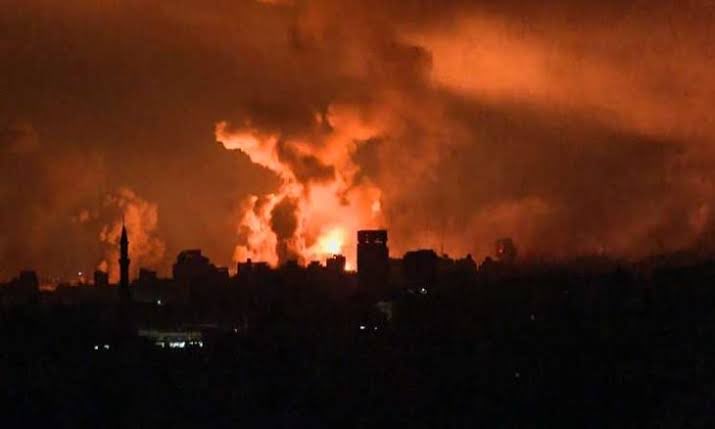
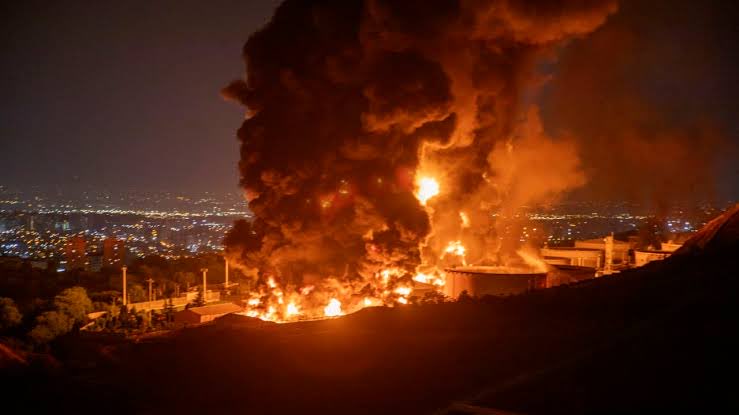


BREAKING: Europe spent four years escaping Russian gas. It cut dependence from 40 percent to under 10 percent. It built LNG terminals. It signed long-term contracts with Qatar. It celebrated energy independence. Then America bombed Iran. Iran closed the Strait of Hormuz. Qatar declared force majeure. And European gas prices nearly doubled in a month. The Dutch TTF benchmark surged 70 percent in March to 54.5 euros per megawatt-hour per FinancialContent. It briefly touched 63.77, a three-year high per CNBC. The ECB raised its 2026 inflation forecast to 2.6 percent from 1.9 percent per its March 19 meeting. President Lagarde said she stands ready to HIKE rates if inflation persists per CNBC. Markets now price in two rate hikes by year-end per Morningstar. Before the war, the consensus was cuts across the developed world. Here is the structural trap nobody else has named. Europe entered 2026 with gas storage at just 46 billion cubic metres per Bruegel, compared to 60 bcm in 2025 and 77 bcm in 2024. A harsh winter depleted the reserves that were supposed to be the buffer. When the war hit, Europe had less stored gas than at any point since 2022. The Economics Observatory confirmed storage levels had “fallen back towards the lows reached during the early stages of the Russia-Ukraine war.” Europe is more vulnerable to this shock than the last one because it started from a weaker position. And the replacement gas comes from a single source. US LNG now supplies 40 to 45 percent of European imports per IEA data. That is not diversification. That is substitution. Europe replaced Russian pipelines with American tankers. It replaced one dependency with another. And the country that holds the new dependency lever is the one whose president launched the war that created the shortage. The IEA head described this as “the greatest global energy security challenge in history” per Wikipedia’s economic impact analysis. Commerzbank projects inflation rising above 3 percent in Q2 2026 before easing per FXStreet. Oxford Economics warns of a severe scenario where inflation could peak at 3.6 percentage points above baseline. The ECB’s own “severe” scenario warns inflation could peak above 6 percent early next year if Gulf energy infrastructure suffers further destruction per CNBC. Germany faces the worst hit: Deutsche Bank cut its 2026 growth forecast from 1.5 to 1.0 percent per Morningstar. The Ifo Institute estimates the war’s drag on German growth at 0.8 percentage points cumulative. Chemical and steel manufacturers have imposed surcharges of up to 30 percent per Wikipedia’s economic impact analysis. Permanent deindustrialisation is now discussed as a realistic outcome for Europe’s largest economy. The sequence is structural, not accidental. Russia’s invasion forced Europe to pivot to Qatar and US LNG. The Iran war eliminated Qatar. Europe now depends on American gas shipped from Gulf Coast terminals at record margins. Trump holds the lever. Vance is running the backchannels. And every LNG tanker crossing the Atlantic carries both the gas Europe needs and the leverage America gains. Europe escaped Russia’s trap by building a bridge to Qatar. Iran bombed the far end of the bridge. The only span still standing leads to Texas. The war that was supposed to secure Hormuz for global trade has instead made Europe a captive customer of American shale. That is not liberation. That is a change of landlord. Full analysis - open.substack.com/pub/shanakaans…