Hugo Alves

1.8K posts

Hugo Alves banner
Hugo Alves

Hugo Alves

@HugoAlves1972

CEO, Auxly $XLY.TO $CBWTF Views are my own.

Toronto Beigetreten Mayıs 2013
178 Folgt3.9K Follower
Hugo Alves
Hugo Alves@HugoAlves1972·
A lot of hard work and a lot of great people made these results possible. Grateful to our team, our partners, our customers and everyone who has backed us along the way. Proud of what we've built together - and focused on what comes next. 🙏 $cbwtf $xly.to
Auxly Cannabis Group@AuxlyGroup

“In 2025, Auxly delivered 24% net revenue growth and 65% Adjusted EBITDA growth. Back Forty was the #1 cannabis brand in Canada for the entire year – a testament to the strength of our products, innovation, distribution and, most importantly, our people.” $XLY.TO $CBWTF

English
1
0
25
1.1K
Hugo Alves retweetet
BeatinTheBookie.com®️
BeatinTheBookie.com®️@BeatinTheBookie·
You think you’re going thru some shit? Watch Eric Dane give his final words to his kids and the reevaluate how much of a chance you got since you’re still on this planet. God bless
English
142
2.5K
18.9K
1.1M
Mark E. Merritt
Mark E. Merritt@markemerritt·
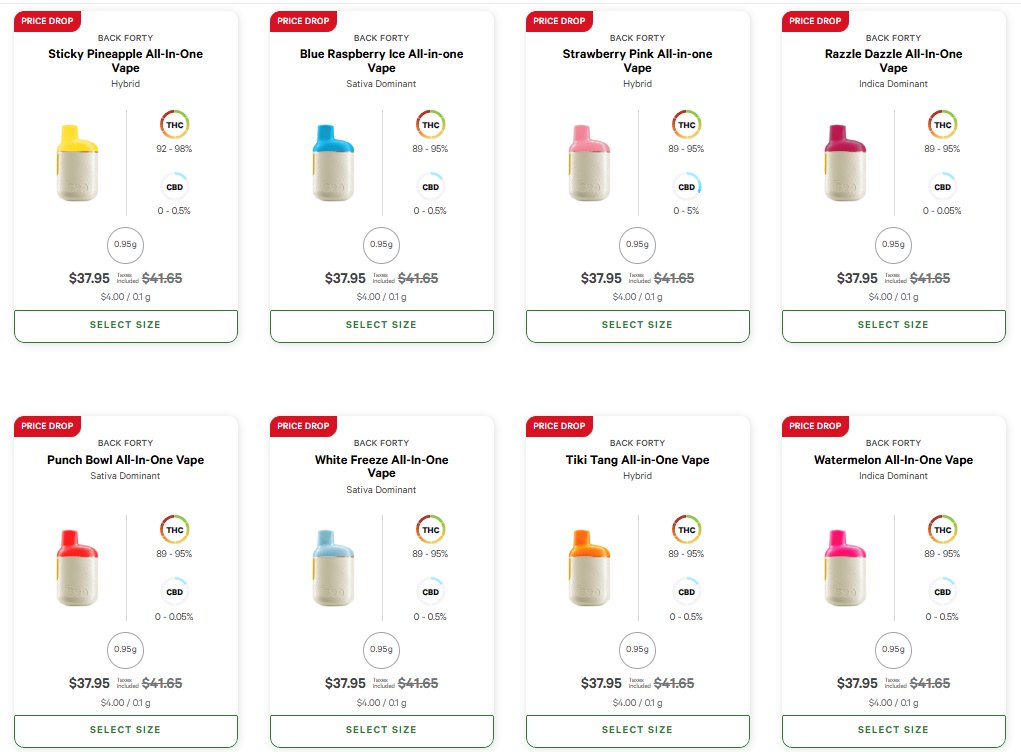
Big News! $CBWTF Vape Innovation
Mark E. Merritt tweet media
English
1
0
10
1.4K
Hugo Alves
Hugo Alves@HugoAlves1972·
@Stocks_Stones It was a great event Mathieu! Thank you for inviting us to participate 🙏 It was a pleasure to be in Quebec and present @AuxlyGroup to your audience, and meet so many $xly.to $cbwtf shareholders!
English
0
0
10
216
Stocks & Stones | Mathieu Martin
Stocks & Stones | Mathieu Martin@Stocks_Stones·
Thank you to everyone who attendend our 2026 Top Picks cocktail in Montreal yesterday! It was another full house 🥂 The presentation replays should be posted on Rivemont MicroCap’s YouTube channel within the next week or so. Stay tuned! $XLY.TO $CBWTF $DBO.TO $DBOXF @HugoAlves1972
Stocks & Stones | Mathieu Martin tweet mediaStocks & Stones | Mathieu Martin tweet mediaStocks & Stones | Mathieu Martin tweet mediaStocks & Stones | Mathieu Martin tweet media
English
1
4
43
2.8K
Hugo Alves
Hugo Alves@HugoAlves1972·
Very proud of the incredible Auxly team!! 2025 was a defining year for @AuxlyGroup - stronger, more profitable, and better positioned than ever. We're building to last, and we're just getting started! $cbwtf $xly.to
Auxly Cannabis Group@AuxlyGroup

"We entered a new chapter in our story characterized by building enduring value. Meaning, continuing to win at home - growing and optimizing our success in Canada, while preparing for international growth and maintaining financial strength." $XLY.TO $CBWTF ow.ly/hfu550XTveO

English
1
5
29
1.9K
Hugo Alves
Hugo Alves@HugoAlves1972·
Wishing everyone a happy and healthy 2026 🥂 2025 was a great year for @AuxlyGroup - and we're just getting started! For those in the Montreal area and interested in Auxly, I'll be presenting at the Rivemont MicroCap Cocktail event on Jan 20. Details here: eventbrite.ca/e/billets-cock…
English
1
3
26
3.3K
Stocks & Stones | Mathieu Martin
Stocks & Stones | Mathieu Martin@Stocks_Stones·
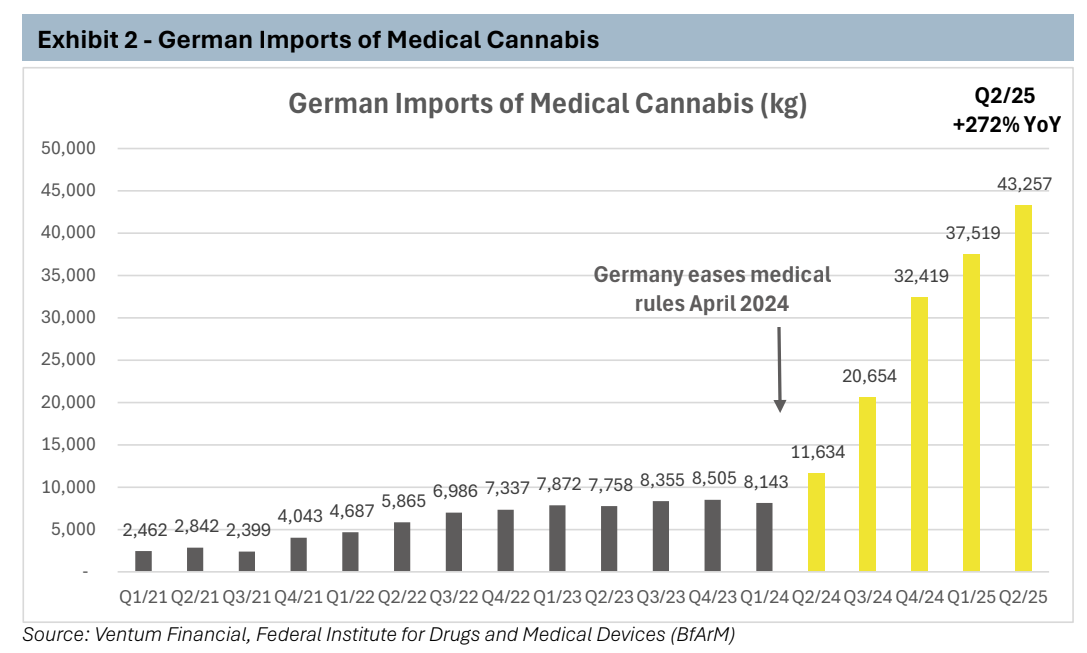
🌱 My Most Comprehensive Cannabis Update Yet (Part 2) Alright, let’s pick up where we left off a couple of weeks ago! In case you missed it, I encourage you to read my Most Comprehensive Cannabis Update (Part 1), in which I shared a high-level overview of the industry’s main trends (follow the link in my bio). In today’s Part 2, we’ll dive into some of the individual names I like the most and why. My goal is to share a few differentiated insights on each, rather than writing a whole investment thesis. In each case, I’ll try to direct you to a more detailed presentation where you can learn about these companies. Also, please keep in mind that my investment horizon may vary by company and may differ from yours. Let’s dive in! 🟩 My Top Pick: Cannara Biotech $LOVE.V $LOVFF To learn more, you can listen to this recent fireside chat I did with Nicholas Sosiak, Cannara’s CFO: youtube.com/watch?v=o1SfLp… My major foray into the Canadian cannabis sector began when I purchased Cannara shares in December 2024 (through the Rivemont MicroCap Fund). My initial thesis was simple: the company was growing revenues at 25%+ per year, was profitable, was trading at a very low multiple of free cash flows, and held enough real estate on its balance sheet to protect the downside completely. After buying a starter position, I began conducting classic Peter Lynch-style research, digging deeper into the entire sector. I interviewed several management teams, spoke with suppliers, employees (below the C-suite), and other investors. My goal was to map out the industry and figure out which LPs were considered the strongest. Time and again, Cannara came up as a best-in-class competitor among its peers. ‘‘The ultimate commendation is when a company talks positively about a competitor. I always put a strong weight on such a view.’’ – Anthony Bolton, former Fidelity fund manager To me, hearing competitors and other industry insiders talk so positively about Cannara was significant validation. It’s hard to compete against Cannara for several reasons. Here’s why: 1⃣ Low-cost inputs: 70% of the costs of cultivating cannabis are electricity and labour. In Quebec, Cannara benefits from the lowest electricity costs in Canada and some of the most affordable labour costs. 2⃣ State-of-the-art facility: Cannara owns and operates one of the most sophisticated cultivation facilities in Canada. The Valleyfield facility was built for over $250 million by another LP before it was repossessed by the bank and subsequently liquidated. Cannara bought it for 10 cents on the dollar ($27 million) in 2021. 3⃣ Relationship with the SQDC: Everyone I’ve spoken to has confirmed that it is very challenging to compete in the Quebec market if you’re not based in the province. The SQDC, a government-owned provincial retailer, tends to support local LPs. Cannara is currently the second-largest LP in Quebec, a market where competition is significantly limited compared to other provinces. 4⃣ Strong management team: Cannara’s team has proven its ability to execute, ramping net revenues from $2 million in 2020 to over $100 million in the last twelve months, while maintaining profitability for four consecutive years. I’ve heard (and witnessed myself) that Cannara’s team likes to do things differently than most other LPs and thinks outside the box. Since the success of a microcap company often relies on the quality of its management team, I believe shareholders are well-served in this regard. A short-term catalyst that investors can watch for is the launch of the new vape category in Quebec next week. The SQDC will initially carry only 25 vape SKUs, and Cannara has secured 5 out of these 25 listings. I expect this category to make a significant contribution to Cannara’s growth over the coming quarters. Now, what could hold the company back, you ask? The primary challenge for Cannara has been and will continue to be expanding outside of Quebec. The company has a 12.5%+ market share in Quebec but only 3.8% nationally (as of June 2025). Continued revenue growth over the coming years will have to come from the rest of Canada. Considering that Cannara currently utilizes only 50% of its cultivation capacity, the organic growth pathway is straightforward as long as demand for the products continues to increase. The company has been expanding its sales team and refining its strategy to penetrate the rest of Canada further. Although success isn’t guaranteed, I like my chances here. Cannara is a long-term compounder that I could see myself holding for the next three to five years. 🟩 Premium Organic Quality: Rubicon Organics $ROMJ.V $ROMJF To learn more, you can listen to this recent fireside chat I did with Margaret Brodie, Rubicon Organics’ CEO: youtube.com/watch?v=eUUH_K… Rubicon has some of the same characteristics I saw in Cannara a year ago. The company has grown its revenues at a 29% CAGR over the last three years while being EBITDA positive. Its tangible book value sits at $0.60 per share today, which means you can buy the stock at a discount to book and benefit from what I believe is a substantial margin of safety. However, Rubicon’s competitive advantages are slightly different. Since Rubicon couldn’t rely on scale and the lowest-cost inputs, it has optimized for the highest quality by offering premium and super premium organic products. Quality permeates everything the company does. Its flagship brands, 1964 and Simply Bare Organics, set the highest standards in the Canadian marketplace. The company is led by a highly skilled management team and a phenomenal board of directors. In fact, I think it’s one of the best boards I’ve seen in a sub $100 million market cap Canadian company. I like having exposure to the premium and super premium categories in my portfolio. As you’ve probably read before, we are in a K-shaped economy (i.e. the rich are getting richer and the poor are getting poorer). I’ve been noticing a trend toward premiumization in various industries. This was the genesis of my thesis on D-BOX Technologies (TSX: DBO), which is supporting the premiumization of the cinema industry. I’ve been seeing the same phenomenon in the airline industry. Airline companies increasingly frame premiumization (i.e. seat upgrades) as a core strategic pillar driving revenue growth and margin expansion. Cannabis is no different, and Rubicon can provide consumers with that elite experience. Over the past year or so, Rubicon’s main challenge has been its capacity constraints. The company was essentially operating its Delta cultivation facility (now renamed ‘‘Pacifica’’) at full capacity and relied on third-party growers to meet demand. The situation recently changed when Rubicon acquired a new facility in Hope, BC (renamed ‘‘Cascadia’’) for $4.5 million. With the facility fully licensed as of last month, the company can now ramp up cultivation at its second site. Ultimately, the Cascadia facility is expected to provide Rubicon with 40% more cultivation capacity. For 2026, the primary catalysts I’ll watch for will be: 1⃣ A successful ramp-up of the cultivation at Cascadia (i.e. reaching the company’s high quality standards) 2⃣ Generating the first revenues from Cascadia in Q2 or Q3 2026 3⃣ Improving gross margins to 40% or more (from the current 31-34% level) On this last point, I believe it is a priority for newly appointed CFO Glen Ibbott (the former CFO of Aurora Cannabis) and the rest of the team to enhance the margin profile. Are you truly a premium company if you don’t have premium margins? Rubicon needs to translate its premium quality and premium selling prices into premium financial results, and its management team knows it. Fittingly, the company announced this week that it secured an additional $4 million in loans from its lender to fund margin-accretive projects at its two facilities. I like how this story is shaping up, with revenue growth and margin expansion on the menu for 2026. Rubicon will release its third-quarter financial results tonight and will host a conference call tomorrow (November 13th). 🟩 Lowest-cost Producer at Scale: Auxly Cannabis Group $XLY.TO $CBWTF To learn more, you can watch the company’s most recent investor presentation at Planet MicroCap Showcase Toronto: youtube.com/watch?v=QC82aQ… My friend @maxwellhouse99 also pitched the company as his top idea at the conference: youtube.com/watch?v=Ncbnnp… Auxly has been on my radar since I began exploring the industry, but it’s only recently that I’ve come to appreciate the opportunity fully. Unlike Cannara and Rubicon, which operate at the higher end of the price spectrum, Auxly targets the value-driven, everyday consumer with affordable price points, and it does so very well. Auxly has grown revenues at a 60% CAGR since 2020 and has established itself as the #3 LP by market share. Most importantly, Auxly’s Back Forty brand is the #1 brand in the Canadian recreational market. Why is this important? This means that Auxly was able to home in on a strong value proposition and scale the brand organically, driven by solid consumer demand. In contrast, many other LPs had to rely on acquisitions to gain market share. According to a recent tweet by @markemerritt (a great follow, btw), Auxly holds 8 of the top 50 SKUs in Ontario, which is further proof of Auxly’s focused execution. To tie this back to a point I made in Part 1 of this series, the provincial boards and retailers are currently rationalizing the number of SKUs that they carry. The last thing you want is for your sales to be evenly spread out among hundreds of different SKUs. I think Auxly, with its focused roster of high-performing SKUs, will continue to benefit from this market shift. In terms of assets, Auxly owns a state-of-the-art, large-scale cultivation facility (1.1M square feet) in Leamington, Ontario, and a second facility in Charlottetown, PEI, for its vape manufacturing and product development. The management team thinks Auxly can continue to improve yields and volumes within its existing footprint and has access to additional land for future expansion. With a gross margin of over 50% and a net profit margin of 21% in its most recent quarter, Auxly has demonstrated its ability to produce cannabis at scale profitably. Its margin profile is one of the most (if not the most) impressive in the industry, despite operating in the highly competitive mass market. In terms of catalysts, a few things I’ll watch out for are: 1⃣ Continued revenue and profit growth with its flagship brand, Back Forty (i.e., more of the same) 2⃣ The launch of a new brand called South Point, which is something I learned about recently (there’s limited information online if you search for it). Apparently, the company is moving upmarket with new unique genetics, different post-harvest processing techniques and new product formats. I like that they’re aiming to expand their addressable market. 3⃣ The company launched a few Back Forty SKUs in the Quebec market recently and has had success with them so far. As I said before, it is challenging to enter Quebec if you’re not from Quebec, so I’m impressed with Auxly’s success in the province so far. 4⃣ Lastly, I suspect we might learn more about expansion (CAPEX) projects or other capital allocation moves now that the company generates a significant amount of free cash flows. Auxly will release its third-quarter financial results tomorrow, on November 13th. 🟩 Capitalizing on International Opportunities: Decibel Cannabis $DB.V $DBCCF To learn more, you can watch the company’s most recent investor presentation at Planet MicroCap Showcase Toronto: youtube.com/watch?v=uN9_Rf… Frederico Gomes, Director of Institutional Research at ATB Capital Markets, also pitched the company as his top idea: youtube.com/watch?v=Cjtwwr… Decibel is a bit of a different animal than what I’ve presented so far, and that’s on purpose. The reason why I like Decibel is that it provides me with the international exposure that the others don’t. Last year, Decibel made the highly strategic acquisition of AgMedica Bioscience to capitalize on the growing international opportunity. AMedica owned a fully licensed, EU-GMP-certified facility. Obtaining this certification can be a lengthy and expensive process (I’ve heard it takes 1 to 2 years and a few million dollars, for what it’s worth), but it is crucial for exporting to the European market. Some of the larger LPs in Canada have obtained this license for their own exports. In comparison, smaller LPs tend to utilize third-party certified facilities, such as AgMedica, to upgrade their products to EU-GMP standards before export. There are only a handful of facilities in Canada that offer this service. Think of it as a toll road business with a growing number of cars using it. The biggest European market is Germany, and here’s what the import picture looks like: Canada accounts for nearly 50% of those imports. Not only did Decibel time its AgMedica acquisition well, but even more impressively, they paid an expected 1.6 times EBITDA for it. According to the company’s guidance, AgMedica should produce $30 million in revenue and $4 million in EBITDA this fiscal year. Not bad for an acquisition price of $6.3 million! While I own Decibel to get international exposure at what I believe is a very cheap price, Decibel also has a strong domestic business, being the #6 player by market share in Canada. Including the domestic business, management has guided for a total net revenue of $130 million in 2025, with $25 million of adjusted EBITDA and $20 million of adjusted free cash flow. With a market cap and enterprise value of $75 million and $117 million, respectively, we are looking at relatively low multiples here (less than 4x P/FCF and less than 5x EV/EBITDA). The last thing I’ll mention is that the company will report third-quarter earnings on November 19th and will hold its first-ever quarterly conference call. I think this is an exciting setup. Think about it. Why would you schedule your first-ever quarterly call if you were about to release bad numbers? I’ll leave it at that… 🟩 Medical Focus: MTL Cannabis $MTLC.C To learn more, you can watch the company’s most recent interview with Smallcap Discoveries: youtube.com/watch?v=HLG97y… Last but not least, my final favourite Canadian cannabis company is MTL Cannabis. I was attracted to it primarily because of its financial profile and because approximately one-third of its business is on the medical side. MTLC operates Abba Medix, the third-largest medical cannabis platform in Canada, and Canada House Clinics, a network of 13 clinics in 7 provinces primarily serving the veteran community. The veteran population is attractive because it is the only medical cannabis population in Canada that the government fully insures (although the recent federal budget introduced a proposal to lower the reimbursement rate from $8.50/gram to $6.00/gram, which could impact MTLC somewhat). MTL also has a strong business in the Canadian recreational market and is developing its export strategy, particularly in Australia and Germany. Considering its focus on premium recreational products and medical markets (both domestic and international), which tend to yield juicier margins, MTLC has a very attractive financial profile. In its last fiscal year (ended March 31, 2025), the company grew net revenue by 29%, achieved best-in-class gross margins of 55%, an adjusted EBITDA margin of 23%, and a net profit margin of 8%. Similar to Decibel, MTLC is currently trading for less than 5 times its fiscal 2025 adjusted EBITDA. As I highlighted in Part 1 of this series, MTLC was able to refinance its debt with a brand new credit facility from TD Bank a few months ago, which will dramatically lower its interest expenses. I view this as a decisive vote of confidence in the business plan and the team. On the operational side, the company operates three cultivation facilities (two in Quebec and one in Ontario) and is currently building a new distribution center in Montreal. This new facility will unlock efficiencies and centralize some of the operations from the three other sites. Ultimately, this will enable MTLC to reclaim additional cultivation space and internalize more of its cultivation, rather than relying on third-party growers. The company is also undertaking other essential capital projects, including the installation of LED lighting in its cultivation rooms. This is expected to reduce energy costs and improve yields and margins. A summary of the company’s main capital projects can be found in its last earnings release. Over the next six to twelve months, I expect the financials to be somewhat noisy, considering all these moving pieces. Once everything is in place, the company should be well-positioned for its next growth phase, with a more efficient cost structure and improved margins, ultimately leading to even higher profitability. MTLC is a relatively under-the-radar opportunity, and the stock is very illiquid. I advise you to exercise caution. Considering the positive transformational changes occurring in the business, along with the proposed negative changes to medical reimbursement rates, I view this as a higher-risk but higher-reward opportunity. ⏰ Wrapping it up There you have it: my five favorite Canadian cannabis stocks! They all meet my criteria of 20%+ revenue growth, profitability, and a low valuation (they all trade for less than 10 times this year’s free cash flows, by my estimates). They all have well-established domestic businesses, which I think is key because the international opportunity might not last forever. If some of them can capitalize on it for a while, I’m all for extra profitability. However, I wouldn’t want their profitability to rely heavily on exports. Lastly, I believe they all have outstanding management teams. In an industry where bad actors have historically been prevalent, I understand the cautious approach most investors take. Nobody wants to be burned twice. I’ve met with these management teams multiple times and visited their facilities (except for Auxly). While my judgment isn’t perfect, what I’ve seen gave me the conviction to invest heavily in the space. Forget about the legacy LPs that raised and burned through billions of dollars. The new crop of winners has emerged, and I believe this is what I’ve presented here. Before ending this post, I’ll address a question that many will probably ask: ‘‘Have you looked at XYZ company and why don’t you own it?’’ I actually considered sharing some comments on all the other LPs, but I felt that this Part 2 was already quite lengthy. If there’s enough interest, I’ll be happy to write Part 3 and share more details on my watchlist. If you’re interested in a third post on this topic, please comment and let me know. Now, the stage is set. Sit back, relax, and watch for the upcoming quarterly results. I believe there are interesting times ahead for this industry! As @HugoAlves1972 at Auxly likes to say, ‘‘we are just getting started.’’ Thank you for reading! 🙏 If you like this content and don't want to miss upcoming posts, you can subscribe to my free newsletter by following the link in my bio. My full disclaimer is also available in the post on the website.
YouTube video
YouTube
YouTube video
YouTube
YouTube video
YouTube
YouTube video
YouTube
YouTube video
YouTube
YouTube video
YouTube
YouTube video
YouTube
Stocks & Stones | Mathieu Martin tweet mediaStocks & Stones | Mathieu Martin tweet media
English
3
5
35
8.1K
Hugo Alves
Hugo Alves@HugoAlves1972·
@maxwellhouse99 Consumer love it because Liquid Imagination provides consistent high quality at a great every day price!
English
0
0
11
110
Maxwell House
Maxwell House@maxwellhouse99·
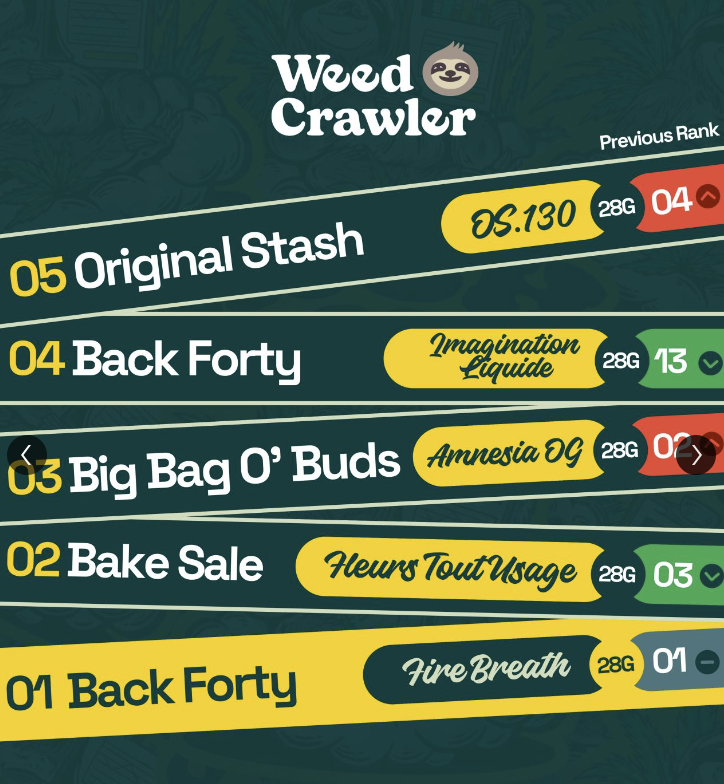
$XLY.TO $CBWTF 28G Dried Flower Weekly Top 10 sales just dropped in SQDC stores: ''Back Forty’s Imagination Liquide jumps an insane 9 spots to #4'' Just a few weeks after being distributed to ~100 stores from ~20 stores. Talk about operational efficiency and customer love
Maxwell House tweet media
Maxwell House@maxwellhouse99

$XLY.TO $CBWTF Market Penetration in Quebec SQDC retail stores: Back Forty - Fire Breath 28g just became the Number #1 selling SKU within a year in its category Back Forty - Liquid Imagination in 28g will now be distributed across +100 stores from ~20 stores in Apr 2025

English
2
1
20
5.4K
Hugo Alves
Hugo Alves@HugoAlves1972·
@Stocks_Stones Would love to get you out to Auxly Leamington, Mathieu!
English
1
0
10
308
Stocks & Stones | Mathieu Martin
Stocks & Stones | Mathieu Martin@Stocks_Stones·
Since I started investing in the Canadian cannabis sector meaningfully earlier this year, I did a TON of research, and I’m excited to share my most comprehensive update on the industry so far! 🌱⬇️ In this Part 1, I’ll cover some high-level highlights and trends I’m monitoring. In the upcoming Part 2, we’ll dive into specific companies. Spoiler Alert: I am incredibly excited about how this thesis is progressing, and I believe we are still in the early innings here. I’ve chosen to focus exclusively on the Canadian cannabis market because the regulations are clear (i.e., it’s federally legal) and stock prices are now predominantly driven by the fundamentals. This is a significant change from 5-8 years ago, when narratives largely drove prices. I believe the US market is also highly narrative-driven, given the possibility of federal rescheduling. In the Canadian cannabis market, I’ve identified over 20 publicly traded licensed producers (LPs) or retailers. I interviewed the management teams of about 10 of them and travelled across the country to visit 5 facilities in person, as well as several retail stores. In the last month alone, I attended two microcap conferences (@smallcapdisc and @PlanetMicroCap / @MicroCapClub) and a cannabis industry conference (CanExec Summit), which enabled me to catch up with the executives of many public and private companies. I think that puts me in a good position to understand key trends in the sector and position my portfolio accordingly. Lastly, I put my money where my mouth is. The fund I manage, the Rivemont MicroCap Fund, holds about 30-35% of its portfolio in the Canadian cannabis sector (see the link in my bio for more details on the fund). This is a very high-conviction bet for me. I won’t rehash what the high-level thesis is because I’ve written and spoken extensively about it before. If you’re unfamiliar, you can get started by listening to my latest podcast with @BobbyKKraft: youtube.com/watch?v=gIo1bs… Now let’s dive in and look at four key themes that are top of mind right now. ✈️ Key Theme #1: International Exports This is probably THE key theme to monitor in Canadian cannabis. Why is it important? Because it’s one of the key factors that led to the rebalancing of the supply/demand equation in our domestic market (the other is the dozens of bankruptcies over the last few years). There are currently four primary international markets that have legalized medical cannabis use and that import significant quantities from our Canadian producers: Germany, Australia, Israel, and the United Kingdom (there are a few more that are less significant). In 2024, Canada exported over $400 million of medical cannabis products, and this figure is on track to surpass $500 million in 2025, according to a recent Globe and Mail article: theglobeandmail.com/business/comme… The robust export market has been a boon for the industry because it’s been highly lucrative for exporters and has reduced competition in the domestic market, leading to market share gains and slightly higher prices for those that focus here. As of now, there doesn’t seem to be any signs of slowing down in international markets, which should provide a continued tailwind for LPs. However, I think we have to carefully monitor these markets for signs of oversupply, pricing pressures, or regulatory changes (more on that below). At the recent CanExec Summit, the comments were almost unanimous: yes, international is a great opportunity and it is highly profitable, but competition will catch up in these markets too. Not only will these countries likely establish domestic cultivation capabilities over time, but I’ve also been hearing that supply from low-cost jurisdictions like Thailand, Colombia, and South Africa is rapidly improving in quality. Ultimately, suppose dried flowers become commoditized in international markets. In that case, pursuing a branded approach makes a lot more sense to preserve pricing power (as Rubicon Organics $ROMJ.V and MTL Cannabis $MTLC.C are seeking, for example). Apparently, Canadian cannabis is highly regarded worldwide for its quality. I can envision a day when strong Canadian brands can command a premium in international markets, not too dissimilar from buying expensive wines from prolific regions in Italy or France. Lastly, another risk to monitor is a recent proposed amendment to the Medical Cannabis Act in Germany that could curb the use of telemedicine to access medical cannabis. If the bill is approved, it could have a short-term impact on cannabis consumption and thus Canadian cannabis demand (more details here: stratcann.com/news/german-ca…) To counterbalance the risk of oversupply or regulatory changes in international markets, we should keep in mind that more countries will likely legalize medical cannabis and eventually open up to Canadian exports. According to the previous Globe and Mail article, there are ‘‘emerging opportunities in Spain, France, Czechia, Turkey, Ukraine and Slovenia.’’ All in all, I am cautiously optimistic that international markets will continue to soak up excess supply from the Canadian domestic market for the foreseeable future. 💵 Key Theme #2: Capital Availability is Improving I compiled statistics on 20 publicly traded Canadian cannabis companies that I follow. First, in terms of share price performance, the group returned an average of 15.4% YTD, which is only a couple of percentage points shy of the S&P 500 with its sexy AI names. Not bad if you ask me! You probably won’t be surprised to learn that a handful of smaller, profitable LPs led the group’s performance. Four stocks are up more than 80% YTD: Auxly Cannabis Group $XLY.TO $CBWTF, Cannara Biotech $LOVE.V, Decibel Cannabis $DB.V and MTL Cannabis $MTLC.C. However, the returns have been all over the place, with 5 of the 20 names declining by more than 30%. In total, only 9 out of the 20 stocks have posted positive returns this year, highlighting the importance of stock picking in the sector. Another important metric I’ve looked at was the change in trading volume so far this year versus last year (2025 YTD vs 2024 YTD). On average, the group’s trading volume improved 57% year-over-year, with three companies posting increases of 250% or more (Rubicon Organics $ROMJ.V, Simply Solventless Concentrates $HASH.V, and Glow Lifetech $GLOW.C). 13 of the 20 stocks saw trading volume improve so far this year. I believe this data is clear evidence that momentum is building in the sector, which should eventually lead to better access to financing and a lower cost of capital. Speaking of access to capital, we’ve seen lenders get a bit more active in the sector recently. Some notable transactions included: ✅ Cannara Biotech $LOVE.V announced a debt extension with BMO, followed by a 50 bps reduction in interest rate to less than 6%, and finally an upsized $10 million credit facility for capital expenditures. ✅ Auxly Cannabis Group $XLY.TO $CBWTF announced an extension to its credit facility with BMO, including improved and more flexible covenants. ✅ MTL Cannabis $MTLC.C significantly improved its balance with a brand new $27 million credit facility with TD Bank. ✅ Late last year, Rubicon Organics $ROMJ.V secured a $10 million credit facility with Community Savings Credit Union at a market-leading interest rate of 6.75%. If the future of this industry unfolds like most capital cycles, I believe we’ll see an acceleration of M&A and consolidation in the coming years, leading to an oligopoly market structure. At that point, I would expect the remaining players to exert pricing discipline, leading to increased profitability for all. Obviously, M&A and consolidation will require capital, which is why I try to gauge the improvements in capital availability. Any smart investment banker reading this should pay attention… 😊 🧑‍🏭 Key Theme #3: BC Liquor Distribution Branch (BCLDB) Strike In case you missed it, a story has been unfolding since the start of September in British Columbia, the 4th-largest cannabis provincial market in Canada. On September 2, the BC General Employees’ Union (BCGEU) initiated a strike at the provincial Liquor Distribution Branch that later expanded to include the cannabis warehouse on September 22. Essentially, the strike severely disrupted the delivery of alcohol and cannabis as well as numerous government ministries and agencies across the province. The strike lasted almost two months before the parties reached a tentative agreement earlier this week. This article provides a good summary of the situation: stratcann.com/news/bc-resumi… In the last few weeks, I’ve seen pictures of cannabis stores with empty shelves as they could not order any new inventory from the provincial distributor. Some stores even decided to temporarily shut their doors due to the lack of product availability. The strike affected all the LPs that sell into the province, except the very small ones that could use the Direct Delivery program (I won’t get into that). The strike started at the end of calendar Q3, so I expect a modest negative impact in the upcoming Q3 financial results, and perhaps another modest impact in Q4, as the strike was ongoing for most of October. While there may be some catching up over the remainder of the quarter to replenish all store inventories, I expect some demand will be permanently lost, either because consumers forwent purchases due to lack of availability or turned to the illicit market during the strike. The strike is now tentatively over and warehouse operations have resumed, which is great news! It doesn’t change the long-term cannabis thesis at all, in my opinion, but I felt it was important to highlight this dynamic and be mindful of it when looking at the upcoming quarterly results. ↘️ Key Theme #4: SKU Rationalization at the Provincial Level The last key theme I want to touch on briefly is a topic that came up many times in my discussions with company executives: SKU rationalization. I’ll oversimplify a little bit, but here’s the typical flow of a cannabis product in Canada: Licensed producer -> Provincial distributor (government) -> Retailer -> Consumer In the early days of the industry, provincial distributors listed and carried many products that retailers could then purchase and sell in their stores. Recently, I’ve been hearing more and more about provincial distributors reducing the number of products they carry. Provincial distributors are essentially trying to carry the products from their more consistent and reliable suppliers. Additionally, retailers want to carry the products with the highest market velocity on their shelves. Apparently, the days of listing any product are gone. I’m sure there are many nuances to the statements I just made, but I think this is directionally accurate. This dynamic has two main benefits, in my view: ✅ It creates a higher barrier for any new entrants (i.e., a moat for existing LPs) ✅ It should favour the LPs that have been focused on serving the Canadian market (i.e., the most reliable and consistent suppliers) at the detriment of those that have pursued opportunistic international opportunities (i.e., being unreliable suppliers in the Canadian market). In today’s market, I believe that having fewer, but high-performing SKUs and delivering them consistently and on time is the key to winning. And it has definitely shown up in the financial results of some smaller, more focused LPs compared to big brand names like Tilray Brands $TLRY.TO $TLRY or Canopy Growth $WEED.TO $CGC. I’ll touch on that topic a bit more when I discuss some of the individual companies, but I’ll leave it at that for now since this post is already getting too long. If you’ve made it this far, I hope this first part was informative. Let’s continue this discussion in a couple of weeks with an overview of some of my favourite investment ideas in Part 2! Please make sure you don't miss it by subscribing to my newsletter. You can check out the link in my bio to sign up for free. Thank you for reading!
YouTube video
YouTube
Stocks & Stones | Mathieu Martin tweet media
English
5
10
62
7.2K
Hugo Alves
Hugo Alves@HugoAlves1972·
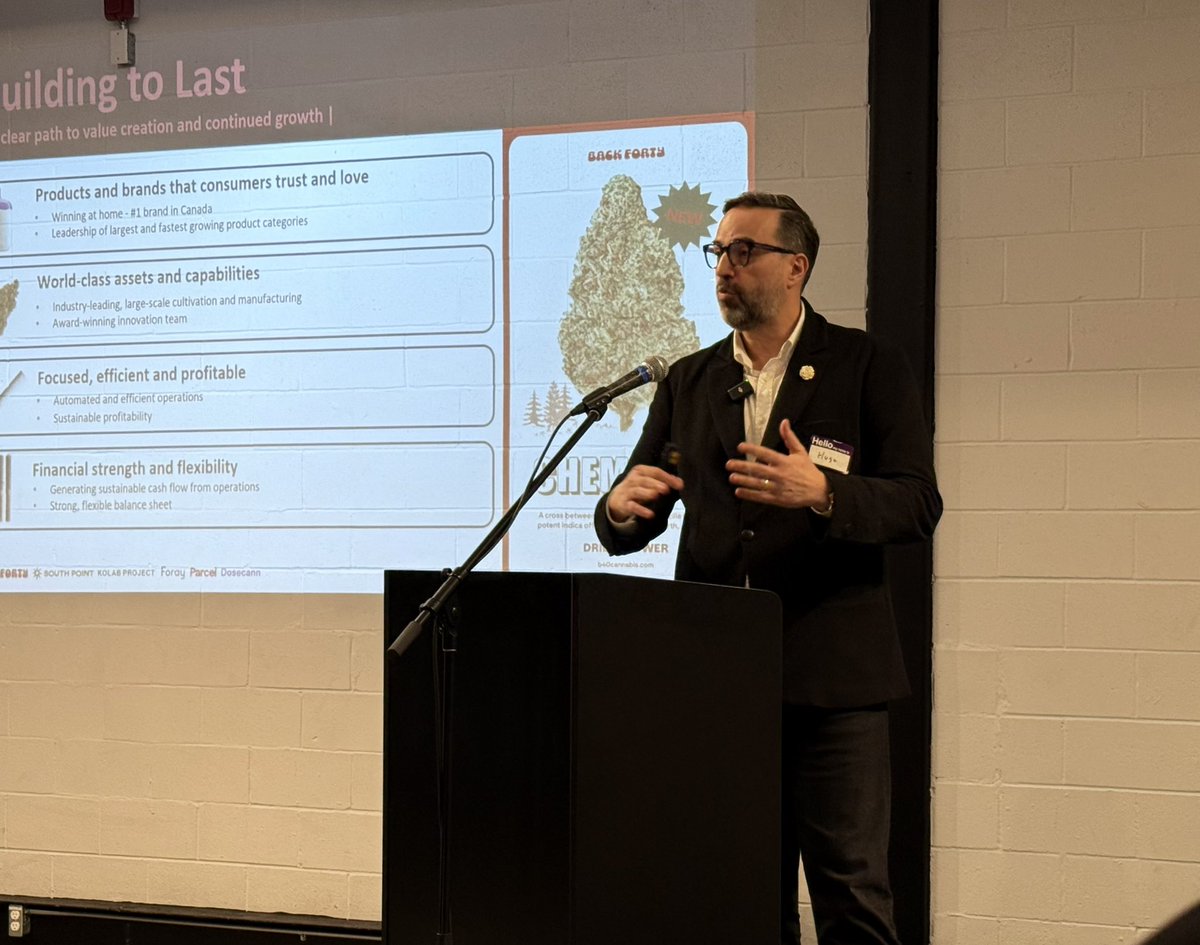
Thank you to the @PlanetMicroCap team for hosting @AuxlyGroup last week at their investor conference. 🙏 We had a packed schedule and really appreciated the quality of discussions we had with investors! $cbwtf $xly.to
Hugo Alves tweet media
English
0
1
36
1.4K