MxM

21.5K posts

MxM banner
MxM

MxM

@Mukurima

Conflict Resolution|Entrepreneur|Storyteller

Los Angeles, CA Beigetreten Nisan 2009
2.1K Folgt5.1K Follower
Angehefteter Tweet
MxM
MxM@Mukurima·
Professor Ngugi wa Thiong’o teaches at UC Irvine in Southern California. He is very sharp, articulate, and his sense of humor is out of this world. Spent time with him on the 13th, and here are my 13 takeaways. 1. He pointed out remarkable attributes of Professor Micere Mugo, portraying her as a combination of beauty, intelligence, and eloquence. She truly encompassed a well-rounded persona. And when she stood on stage to dramatize the play “Trial of Dedan Kimathi,” she was simply marvelous. 2. He laughed at "colonialism embedded in Patriarchy. He explained, for example, how some (married) women hide their given names and adopt foreign names along with their husband's surname. For instance, Eunice W. Mwangi might opt to be known only as Eunice (the colonial name) or Mwangi (the husband's name with patriarchal connotations) and hide Waitherero (W). This act, in a way, reflects a submission to the husband's authority and the traditional role he envisions for women. “Nikiii marakunîkîra rîtwa ithaka” he wondered. 3. He expressed the notion that a society is as great as the prevailing music and religion. Sadly, today’s church is no longer interested in welfare of the masses like “Kanitha wa Karing’a” of yesteryears. We reminisced on good ol’ music, listening to Kamaru and also explored Makibi James' music. 4. He emphasized the universal truth that no matter the extent of one's education, there will always be gaps in knowledge. Even if you hold ten degrees, encountering a broken lock would require seeking help from someone who possesses the necessary skills, often without any formal degrees. 5. His face lit up remembering Professor Micere Mugo. He highlighted her quick thinking, recounting how she declined an offer of about 30 acres of land from Moi. This created an ideological schism between her and her brother in law. 6. He touched on the concept he referred to as "normalizing the abnormality." It's that situation where what is weird in normal circumstances is mainstreamed and considered “woke.” For example, someone transitions from their rural roots (Assume Kîamûtûgû) to Nairobi, secures a job, and as soon as they don a suit and polish their English, they disconnect from their mother tongue and soon start thinking their grandparents are less knowledgeable because they don’t speak that kind of English. Another example is where less qualified or tainted people are given the mandate to lead, which is actually an abnormality. But we have normalized it. 7. He wondered how in the name of Kaimosi I got the name “Mukurima” in a society that glorifies foreign names. îî weee 8. The professor got some dance moves. I told him we have to go head to head soon. He laughed. I laughed. Man, I have to represent the Njaangai warriors who could move like contortionists. 9. He expressed his admiration for Carey Baraka's recent article in The Guardian. He wants readers, especially men, to prioritize their health and undergo regular check-ups: He appreciated how the article shed light on his prostate cancer, a hidden disease affecting many African men and misattributed to supernatural causes by society. “nîararogiro” people say, yet it’s prostrate cancer doing a number on the body. 10. The professor maintains a stance of not harboring personal hatred or disdain for anyone, including figures like Moi. His strong aversion is directed towards ideologies that dehumanize individuals. Isitoshe, 12. From Makibi’s lyrics in the song “Ngûhe Kîrîra,” Mîciî nî ndogo.. 13. We both share a love for “kamûkimo ka minji”. May the day break.
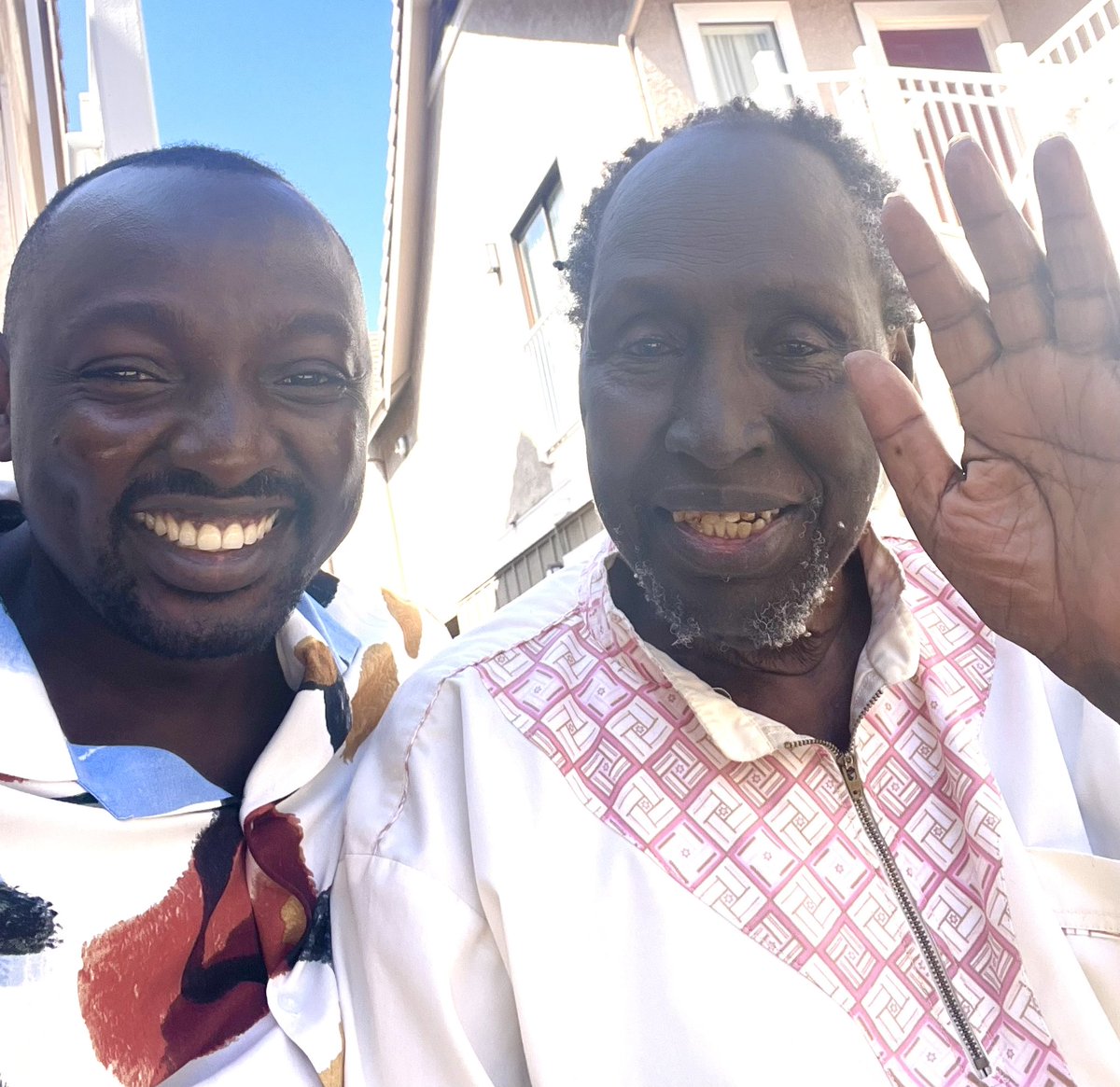
MxM tweet media
English
127
827
4K
416.6K
MxM
MxM@Mukurima·
In the 2022 General Election, outside of Kiambu, Ol Kalou is where Raila Odinga performed best in Central Kenya. Baba received about 24% of the vote, which also means this is where William Ruto underperformed the most in the region. Now, with a by-election coming up in the area, if you are in UDA, you are walking into a place where you were relatively weaker, and where the broader political ground may not be as firm as it once looked. Ok Kalaou now becomes the litmus test; not just for UDA, but for Rigathi Gachagua and grip on the region. It also will tell us if everyone who voted for Baba is now part of the broad based government. UDA/ODM should dominate the vote come the by election, given the share of the vote in 2022 in the area. Or, how much of the vote is still firmly in UDA’s hands? Ol Kalou is different from Mbeere North. In many ways, is the opposite. First of all, Mbeere North in Embu, is close to Meru and Tharaka regions. And this is where Deputy President Kithure Kindiki comes from. Secondly, in 2022, Mbeere North was arguably Ruto’s strongest constituency in Mt. Kenya. He garnered over 90% of the votes cast. During the recent by-election, UDA still won, but the vote share dropped to around 50%. A win on paper, yes, but a 40-point swing in a place tha once voted almost unanimously is not something you brush off. Whether that movement is permanent or temporary, time will tell. And in politics, direction is everything. Buckle up. Yangu macho tu. May the day break
English
0
0
0
169
MxM
MxM@Mukurima·
@EricLatiff Have you ever tried it? Better still, can you try it now? 😆😆
English
0
0
0
31
MxM
MxM@Mukurima·
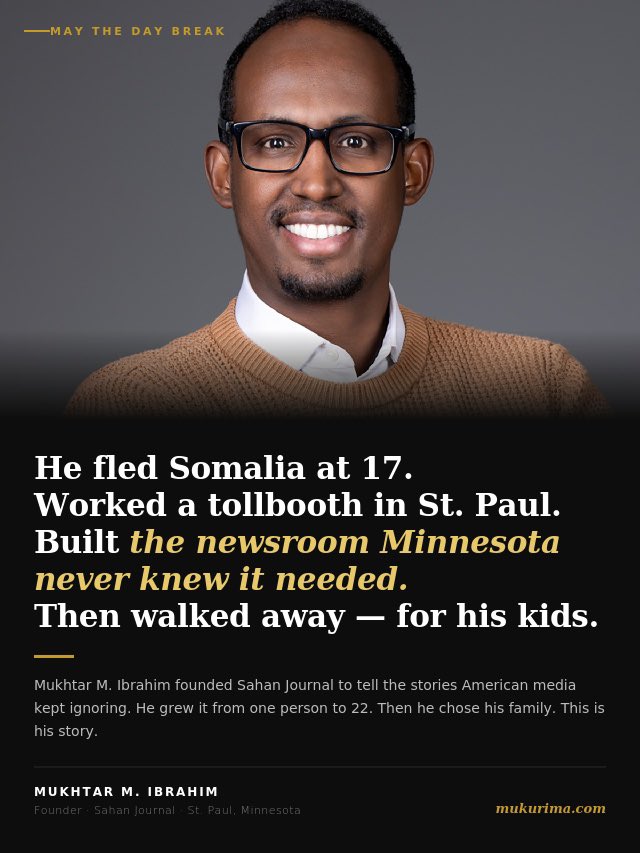
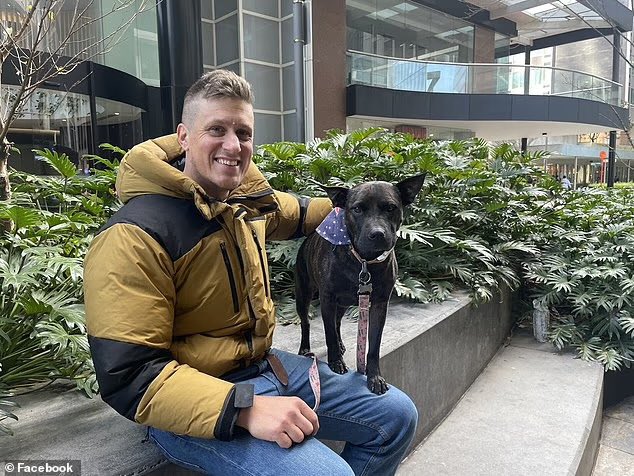
He was seventeen when he arrived in America from Somalia. He spoke little English. His family had been running since the civil war swallowed their country. They landed in St. Paul, Minnesota and started over-the way immigrants always start over, from the very bottom of everything, with nothing to cushion the landing. He got a job at a tollbooth. The Victory Ramp in downtown St. Paul is a concrete spiral, grimy and utilitarian, the kind of structure a city builds to solve a problem and never thinks about again. In the early 2000s, Mukhtar Ibrahim sat inside it every day, collecting parking fees and watching the world pass through his window. The St. Paul Pioneer Press was headquartered behind him. Its reporters came and went. The paper was thick then- he says this with nostalgia-and he read every issue to pass the time. He was supposed to become a doctor. That was the plan. But something about watching those reporters move in and out, watching words become news become the record of a city, kept pulling at him. He was also reading stories about his own community, about Somali immigrants in Minnesota, about the diaspora he was part of, and he noticed what was missing. Every story was a crisis. Every headline was a threat. The complexity, the culture, the daily life of being Somali in America, none of it existed in print. His people were being written about constantly. They were never being seen. He switched his major from biochemistry to journalism. His family thought he had lost his mind. He built a career the methodical way: University of Minnesota, then Minnesota Public Radio, then the Star Tribune, then Columbia University on a Bush Fellowship of $100,000. At each stop he was often the only Somali-American in the room. At the Star Tribune he covered Minneapolis city government. He was good at this. He had sources, instincts, and a particular talent for finding the story inside the story. In 2016, while covering a high-profile ISIS recruitment trial at the federal courthouse in Minneapolis, a security officer stopped him at the door. His white colleague walked straight through. Ibrahim showed his press badge. It wasn't enough, the officer said. He had to wait for the public entrance. He covered the trial. He did his job. But it ate at him all day. "It messed up my mood the whole day," he said afterward. "I was just really frustrated. I didn't expect this." He declined to say exactly what he believed it meant. "I like to stick to the facts," he said. "I'll let people make their own conclusions." He had been doing that his whole career, sticking to the facts, letting people draw their own conclusions, reporting from inside a system that did not always look like him or make room for him. By 2019, he had decided that was no longer enough. Full story here mukurima.com/blog/the-man-w…
MxM tweet media
English
0
0
0
207
MxM
MxM@Mukurima·
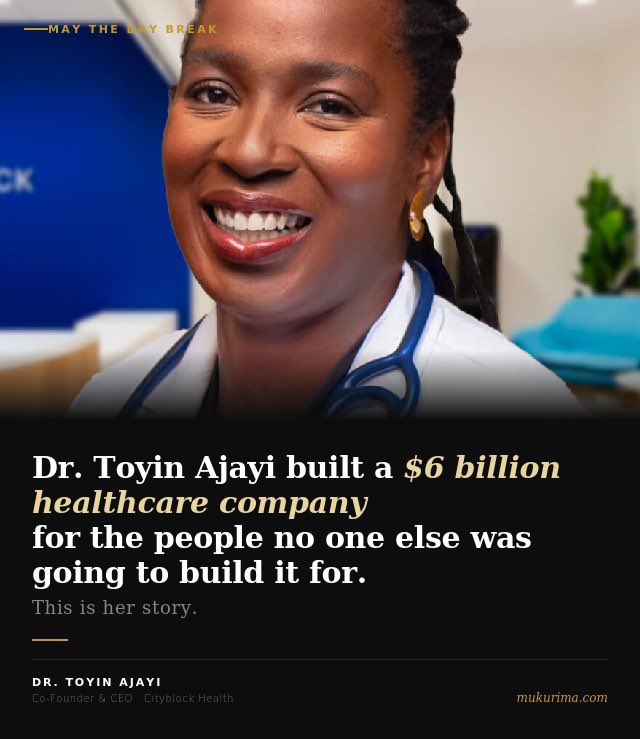
She grew up in Nairobi watching people die of AIDS while the world debated the cost of saving them. She went to Freetown in Sierra Leone. Fixed broken pipes in a hospital with no running water. Came back to America. Then she built a $6 billion company for the exact same people no one else was building for. Dr. Toyin Ajayi is someone you should know. Read her full story in the first comment. 👇 May the day break! mukurima.com/blog/the-docto…
MxM tweet media
English
0
0
1
99
MxM
MxM@Mukurima·
@united I wonder what happens to the feet of the travelers on the next section…..damn if they stink!
English
0
0
0
46
United Airlines
United Airlines@united·
The entire row is alllllll yours. Welcome to United Relax Row, three adjacent United Economy seats with adjustable leg rests that can each be raised or lowered to create a cozy lie-flat space for stretching out... You'll also get a mattress pad, blanket and two pillows. If you’re traveling with kids, a plushie too! United Relax Row will be available starting next year on more than 200 of our 787s and 777s, each with up to 12 of these brand-new rows. united.com/Elevated
English
3.6K
3.7K
61.6K
33.5M
MxM
MxM@Mukurima·
If you grew up in the early 2000s, you have heard the song. “I was gonna clean my room until I got high……I was gonna make love to her, until I got high….” That is Afroman. His real name is Joseph Foreman. He was born in Los Angeles, and grew up bouncing between Mississippi and South Central LA, not exactly the recipe for a music career. But this man had a gift for turning his real life into music that made people laugh, nod their heads, and hit repeat. He wrote “Because I Got High” in just a few minutes as a joke for his friends. The song was about all the things he meant to do but never got around to because he was high. It spread through Napster, the file-sharing service that was massive before Spotify existed and eventually got played on The Howard Stern Show. From there, it exploded. Universal Records signed him to a six-album deal. He got a Grammy nomination. He was on top of the world. Then the world moved on. The hits stopped. By the late 2000s, he was doing bar gigs for college kids who remembered the song from their teenage years. Most people assumed Afroman was done. But life had one more chapter waiting for him. In August 2022, Members of the Adams County Sheriff’s Department in Ohio raided Afroman’s home with guns drawn. They had a warrant-looking for drug trafficking and signs of a kidnapping. They found nothing. No charges were filed. Deputies seized thousands of dollars in cash, which was later returned-but Afroman says about $400 was never recovered. His front door was smashed. His gate was broken. And when he asked the Sheriff’s Office to help pay for repairs, they refused. So Afroman did the only thing he knew how to do. He made music. He recorded three songs about the raid-“Will You Help Me Repair My Door,” “Lemon Pound Cake,” and “Why You Disconnecting My Video Camera.” Then on December 29, 2022, he released three music videos made almost entirely from his own home security footage of the raid. “Will You Help Me Repair My Door” got over 9 million views. “Lemon Pound Cake” hit 3 million. The most viral one- “Lemon Pound Cake”-shows one of the officers pausing during the raid to stare longingly at a cake sitting on Afroman’s kitchen counter. While armed. In someone’s home. On a search warrant. The internet lost it. Now here’s where it gets wild. In March 2023, seven Adams County police officers sued Afroman, claiming his music videos invaded their privacy and defamed them. They wanted nearly $4 million in damages. They said the videos caused them emotional distress, embarrassment, and damaged their reputations. One officer said people kept sending pound cakes to her workplace because of the video. Another cried in court as a video mocking her played for over ten minutes. A sergeant said his child was being hazed at school because of Afroman’s posts. Afroman showed up to court in a full American flag suit: red, white, and blue, and told the jury plainly: “I should have freedom of speech. I should be allowed to speak out about my life. Police officers that violated my home and stole my money should not be allowed to sue me.” His lawyer stood in that courtroom and told the jury that powerful officials cannot use courts to silence criticism just because it hurt their feelings. This week, the jury came back. The judge read the verdict out loud: “In all circumstances, the jury finds in favor of the defendant. No plaintiff verdict prevailed.” All 13 counts. Every single one. Dismissed. Afroman cried. Then he walked outside and shouted: “We did it, America! Freedom of speech! Right on! Right on!” This man went from being written off as a one-hit wonder… to being at the center of one of the most important free speech cases in recent American history. Not because he was looking for a fight. But because someone came into his home, broke his door, took his money, found nothing, and then had the nerve to sue him when he started talking about it
MxM tweet media
English
1
0
7
173
MxM
MxM@Mukurima·
She poisoned her husband on Valentine’s Day. He survived. So she tried again five weeks later. This time she made sure. On the evening of March 4, 2022, Eric Richins drank a Moscow Mule his wife had made him. He did not know it contained five times a lethal dose of fentanyl. He died that night. And the next morning, Kouri Richins began her performance as a grieving widow. She was good at it. Frighteningly good. Within months she had written a children’s book: Are You With Me?-a tender story about coping with grief and loss. She went on local television to promote it and spoke about her family’s pain with the kind of quiet devastation that makes people reach through the screen to comfort you. The book was dedicated to her sons, the ones whose father she had just poisoned. But in court, the prosecutors told a different story. Kouri was drowning in debt. Around $4.5 million of it. She had quietly taken out substantial life insurance policies on Eric, and all this time she was sharing ũtenderũ with another man-what they call extramarital affair. The, she calculated with some deliberation, that a dead husband was worth more to her than a living one. On Valentine’s Day, she made an attempt. She gave her husband a fentanyl-laced sandwich that left Eric blacked out and covered in hives. He recovered. He never told her he suspected her. But he told someone. Eric had quietly transferred power of attorney to his sister. He had taken steps that suggested a man who knew, on some level, that the person sleeping beside him wanted him gone. He was right. He just could not prove it in time. What makes this case impossible to shake is not just the murder. It is the children’s book. Think about what it takes to hold a dead man’s sons in your arms, write a story about their grief, go on television and speak about loss with tears in your eyes, all while knowing exactly what you did to their father and why. That is being diabolical Kouri was arrested in May 2023 shortly after the book’s release. The trial lasted three weeks and when time came for the jury, they deliberated for just under three hours. Guilty! Eric had grown wary of his wife and taken quiet steps to protect what he could. He protected his assets but he could not protect himself. And somewhere in a mountain town in Utah, three boys are growing up without their father, with a children’s book about grief on their shelf that their mother wrote after she caused it. May the day break
MxM tweet media
English
1
1
3
248
MxM
MxM@Mukurima·
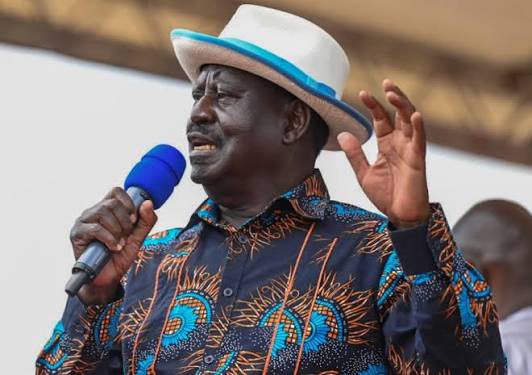
In 2005, sixty thousand Kenyans were packed into Nyayo Stadium and one man was about to say something so outrageous that the whole country talked about it for years. I was there. A little context first. Kenya was heading to a referendum. Two sides. Two symbols. Two completely different visions for the country’s constitution. On one side was Banana-the government’s side, backed by Kibaki. On the other side was Chungwa-the rebellion, and what a rebellion it was. Because Chungwa had assembled possibly the most dangerous political lineup this country has ever seen on one stage: Raila Odinga. Uhuru Kenyatta. William Ruto. Kalonzo Musyoka. Najib Balala. Together. Same side. Same platform. There was an order to how they spoke at these rallies. Balala opened. Ruto followed. Then Kalonzo. Then Uhuru. And Raila always closed because you do not bring out your best act before intermission. Now, a few weeks before this final Nyayo rally, a man named Simeon Nyachae, firmly on the Banana side, had decided to throw a grenade into the campaign. He said Raila had no business leading the Chungwa campaign. His reason? Raila was yet to have a date with the knife. In other words, and I will let you decode the cultural context here, Nyachae was questioning Raila’s credentials as a man. On a national stage. Out loud. With his full chest. Kenya heard it. Kenya noted it. And Kenya waited to see if there would be a response. The day of the rally arrives. Nyayo Stadium is absolutely heaving. Sixty thousand people who came ready. Balala speaks. Fire. Ruto speaks. More fire. Kalonzo speaks. Measured fire-he was always the composed one. Then Uhuru takes the mic. Now at this time, Uhuru and SK Macharia of Royal Media were in a cold war. SK was firmly in the Kibaki camp and his stations were showing it. Uhuru, never one to hold back when he’s comfortable in a crowd, went after SK in a way that sent the stadium into complete chaos. I genuinely cannot remember the exact words, but I remember the sound of sixty thousand people losing their minds simultaneously. Then Uhuru turns, extends his arm, and invites the last man up. Raila takes the mic. The crowd is already at boiling point. He taps into his trademark call and response, the one that could start a riot or calm one depending on his mood. “Tendawili, tendawili!” he barks. “TEGAAAAA!” sixty thousand people thunder back. He lets the noise sit for a moment. Then, in that particular voice, calm, deliberate, almost casual, he says: “Yule mwanaume anaongea kuhusu chombo cha mwengine… huyo ni nani?” The crowd’s answer came in one voice. I will not write it here. But it was in Swahili! But if you were there, you already heard it in your head just now.  And if you were not there, roll the tape. It exists. Find it. Watch sixty thousand people respond to a political question that was also somehow not a political question at all. Nyachae had thrown a grenade. Raila picked it up, polished it, and handed it back with a full stadium as witnesses. That was the day I understood that Kenyan political theatre, at its peak, is unlike anything else on earth. I genuinely miss those rallies. Not the politics. The theatre. I am so happy we are back to those days! May the day break
MxM tweet media
English
0
1
2
295
Football Crave
Football Crave@FootballCravee·
Kenyon Sadiq was told by a team at the NFL combine: “We’ve had success with Nigerian tightends.” Sadiq: “I’m Kenyan.” “No, I know your name. Your ethnicity.”
Football Crave tweet media
English
157
880
19.7K
1.6M
MxM
MxM@Mukurima·
One of the weirdest, most mind-blowing things I read this weekend is the story of how an Australian guy named Paul Conyngham used AI (Grok) to design a custom mRNA cancer vaccine for his rescue dog Rosie, who had aggressive mast cell cancer and was given just months to live. Paul sequenced the dog’s tumor's DNA, fed the data into Grok (with zero formal biology background), collaborated with scientists, and got an experimental personalized vaccine made. The result is that the tumors shrank by about 75%. Rosie's energy is back, her coat is shining, and she is doing way better than anyone expected. Not a full cure yet, but insane progress for a dog who was basically terminal. I mean what even is 2026 anymore? 😳 May the day break.
MxM tweet media
English
0
0
0
49
MxM
MxM@Mukurima·
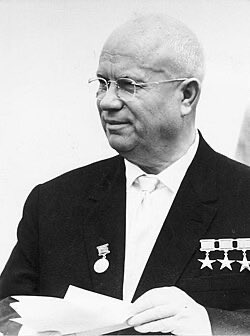
“We will bury you.” That sentence nearly destroyed the world. It was also a mis-translation. It was 1956. Cold War and a Soviet reception in Moscow. Nikita Khrushchev raises his voice and delivers what the Western world would remember as the most chilling threat of the nuclear age. Diplomats walk out. Headlines erupt. Two superpowers-each with enough weapons to end civilization-grow more suspicious of each other. All because of a phrase that did not mean what anyone thought it meant. The original Russian, “My vas pokhoronim”, was an idiom. A Marxist expression meaning communism would historically outlast capitalism. The way each generation buries the one before it. Not violence. Not war. A statement about which economic system would survive the longer arc of history. Khrushchev was boasting, not threatening. But boasts sound different when you are already afraid. Robert Jervis, one of the most important political scientists of the 20th century, studied how wars begin. His conclusion was uncomfortable: Most conflicts do not start because one side wants destruction. They start because one side misreads the other. Fear filters language. Suspicion rewrites intention. And by the time anyone asks “wait, what did you actually mean?” it is already too late. We laugh at this from a distance. We call it history. But you have done this. The message you read at midnight that you were certain was passive-aggressive. The joke that did not land and became a week of silence. The relationship that slowly unraveled because neither person said “I think I misunderstood you.” The only difference between us and 1956 is the stakes. The mechanism? Completely. Human. Photo: Nikita K.
MxM tweet media
English
0
0
1
80
MxM retweetet
GINA DIN
GINA DIN@gina_din·
The Mehdi Hasan interview with Daniel Bwala on Al Jazeera turned into a brutal global interrogation of Nigeria’s record on insecurity, the economy, governance and political credibility. What made it striking was not the questioning. It was the visible lack of preparation for a forensic international interview. When a government spokesperson appears unprepared on a platform watched around the world, the damage does not stop with the individual. The audience is not judging the spokesperson. They are judging the country. This is why communication at the highest levels of government cannot be improvised. As I argue in Beyond the Ballot, a nation’s reputation is often shaped in moments exactly like this. One interview. One audience. One global verdict. @EricLatiff
@𝗼𝗻𝗲𝗷𝗼𝗯𝗹𝗲𝘀𝘀𝗯𝗼𝘆@OneJoblessBoy

MEHDI HASAN: Nigeria is now the 5th deadliest country in the world. Are you proud of that record? DANIEL BWALA:

English
8
27
41
10.2K
MxM
MxM@Mukurima·
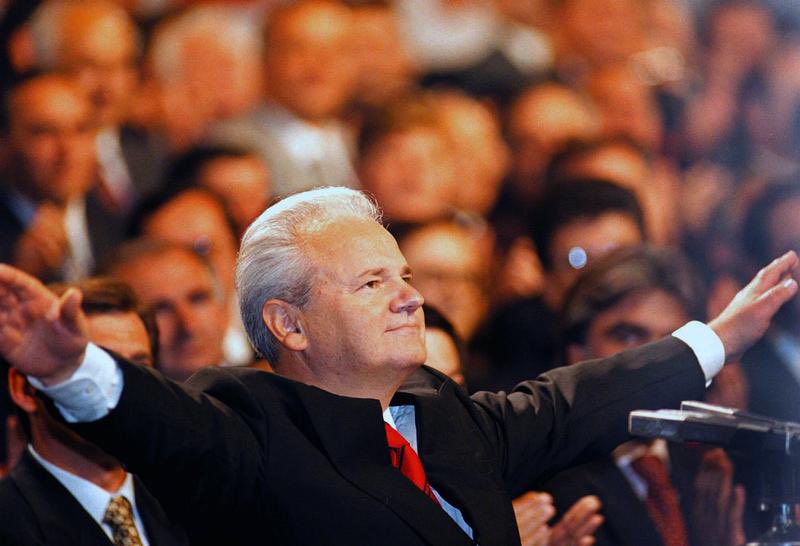
One phrase my international conflict professor loved repeating was “asymmetric conflict.” She would say that in a war where one side is vastly stronger than the other, the two sides are not actually fighting the same war. The perceived superpower fights to win. The perceived weaker side fights simply not to lose. And that small difference is what ends up shaping the entire conflict. One of the case studies we spent time on was the 1999 NATO bombing of Yugoslavia, where Serbia-under Slobodan Milosevic, endured sustained strikes from the alliance On paper the imbalance was obvious. NATO had overwhelming air superiority, superior technology, and the backing of the world’s most powerful military alliance. Serbia had no realistic path to defeating NATO militarily. But the Serbian leadership understood the logic of asymmetric conflict. They did not need to win in the traditional sense. They only needed to survive long enough to create political fractures within NATO and impose enough cost that the alliance would eventually seek an exit. There was also another assumption NATO planners made at the time. Many believed that sustained air strikes would trigger a popular revolt inside Serbia and lead to the overthrow of Slobodan Milosevic Ironically, the opposite happened in the short terma The bombing initially united much of the population. Even people who disliked Milosevic rallied around the government while the country was under attack. Instead of collapsing, the regime was temporarily strengthened by the external pressure. In Vietnam, the United States had superior technology, logistics, and firepower. But North Vietnam understood they did not need to defeat America on the battlefield. They only needed to outlast American political patience. The same pattern unfolded again in Afghanistan. The Taliban could not defeat the United States conventionally or militarily. But the clock was their greatest weapon. Twenty years later, the insurgency was still standing while the superpower had left. That is the core doctrine of asymmetric conflict: a superpower loses if it does not decisively win, while the perceived weaker side can claim victory simply by surviving. In Iran, the assumption that a quick American off-ramp is imminent ignores the political realities that shape these wars. Wars are not fought only with missiles and aircraft. They are fought inside domestic political arenas. If the United States were to step back from Iran while energy prices are rising and Gulf infrastructure is burning, it would NOT simply be interpreted as de-escalation. Around the world it would likely be seen as capitulation under pressure. That perception carries a strategic cost Washington may not be willing to absorb. And in an election year, the stakes even go higher. Which means we may now be entering the phase many asymmetric conflicts reach-the one where neither side can afford the political cost of stopping, even if the logistical and economic cost of continuing keeps rising. And history shows that this is often the most dangerous moment in a war. Once both sides become trapped between political survival and military escalation, the conflict stops being about winning quickly and becomes about who can endure the longest without appearing to lose. May the day break Photo: Slobadan Milosevic
MxM tweet media
English
0
0
1
91
MxM
MxM@Mukurima·
In short you are eating with a big spoon-and maybe that is all that matters
D. H Bwala@BwalaDaniel

PRESS STATEMENT In the last 24 hours, social media has exploded over my interview with Mehdi Hassan, albeit with varied opinions. Let me set the record straight. When I signed on to the privileged job granted to me by Mr. President, I was well aware of its implications. Selling ice cream, looking fine, and seeking the praises of men were never part of it. Some of the fiercest critics of my interview can not even stand local TV anchors. But the task of promoting and defending the President and his administration is what I do with ease and joy. I am prepared to appear before any interviewer, anywhere in the world, any day and at any time, to defend this government and its policies. I have never, and will never, subscribe to ducking or dodging interviews on matters that concern promoting and defending the administration I was appointed to serve. It is the least of what is required of me. Head to Head contacted me requesting an interview, stating that they wanted to challenge our government on security, the economy, and corruption. Nowhere in our almost six months of communication did they mention that they were going to challenge my past. If that had been their plan, ethically and professionally, they were supposed to inform me so I could prepare my response. But that’s okay, ethically, that is on them, not on me. I refused to swallow the pill of Mehdi’s “opposition research-style journalism,” and even today, if you carefully compare what he read as quotes from organisations and groups, you will see that many were inaccurate and some were outright fake news. But I will leave that for another day. As for what I said about President Tinubu in the past, I am glad those were things I said when I was in the opposition saddle with such zeal. It is all politics. Half of Donald Trump’s cabinet is made up of people who once spoke against him, and quite a number of people in our own cabinet also spoke against President Tinubu in the past. Those things do not bother him if you care to know. The majority of the naysayers are members of the opposition and their sympathisers. It does not bother me one bit. Their temporary excitement over the interview has not lasted and will not last, because it does not take away their obvious problem of lack of vision, mission in conducting and managing a political party; yet they seek to manage Nigeria. Clearly they have no path to victory and no alternative policies or program for the Nigerian people. And if they say they do, they can as well go to head to head and be interrogated on that; as the saying in Hausa goes “Ga fili Ga doki” I conclude by thanking the many Nigerians and non-Nigerians who sent in their commendations over my brave defence of our government in an interview where the anchor would hardly let you answer a question unless it suited his narrative. I still have admiration and respect for Mehdi Hassan as arguably the best debater on the planet. I look forward to part two of the Head to Head interview, and I am glad that by then questions about my past will no longer be news so that we can focus on our administration’s policies, programs and what we have achieved so far. Stay tuned. – D.H Bwala Special Adviser to President on Media and Policy Communication (State House) Saturday March 7, 2026

English
0
0
0
107