

Daniel
21.5K posts



In @VivekGRamaswamy, Ohio will get a thoughtful, measured, and common-sense reformer who has the intellectual skill and dynamic ideas to bring excellence across government. Our university system needs help. Vivek will fix it. Amy Acton is the past. Vivek is the future. 🇺🇸
Vivek Ramaswamy@VivekGRamaswamy
Ohio’s state-funded universities face an enrollment cliff, tuition is going up, and the value of a college degree is going down. We can’t ignore the problem & I’ve offered an actual solution to fix it, while my opponent @amyactonoh offers what she always does: absolutely nothing. My piece in the Columbus Dispatch this week: The race for governor of Ohio can be a positive opportunity to give voters a choice between competing policy visions for our state – and to have a healthy debate about the right way to improve Ohio. But we risk missing that opportunity in 2026: While I aim to offer clear policies to improve the lives of Ohioans, my opponent offers little more than cheap criticisms of my ideas while offering no solutions of her own. The recent debate about Ohio’s publicly funded universities continues that growing pattern. Ohio’s higher education system faces a severe enrollment cliff that threatens the future of our state-funded universities, and rising tuition costs are becoming unsustainable for Ohio families. The next governor of Ohio needs a real plan to address this growing problem, and ignoring it isn’t a solution. The facts are stark. America is aging fast, and Ohio is aging faster. The number of high school graduates in Ohio has peaked, hitting our highwater mark in 2024 with roughly 149,000 graduates. But by 2041, that number falls to about 124,000 – a 17% decline in as many years. Meanwhile, fewer Ohio students are choosing four-year universities – and understandably so. Graduate salaries aren’t keeping pace with climbing tuition and student debt. Just 47.6% of Ohio graduates in the class of 2021 enrolled in higher education within two years of graduation, down from 59% in 2015, while the total cost of attending Ohio's public universities has increased by nearly 50% over the past 15 years. Families across the state are feeling the strain. Despite these headwinds, Ohio still operates one of the most fragmented public university systems in the country, enrolling roughly 313,000 students across 14 public universities, 24 regional branch campuses and 22 community colleges. Florida, with about twice our population, only operates 12 public universities. That means Ohio is spreading its limited state dollars across too many bloated bureaucracies, and alarms are already blaring. Just last week, Lourdes University became the fifth private college to close since 2020. Meanwhile, public universities that receive hundreds of millions in taxpayer funding are feeling the impact of fewer students. In recent years, Cleveland State has cut staff and eliminated NCAA sports programs. The student count at the University of Akron inched up this past year but is at half of its 2010 enrollment level. Kent State launched a "Transformation 2028" restructuring plan last year in search of administrative efficiencies. Central State University remains on “fiscal watch.” While universities struggle to get by, other states have benefited from commonsense reforms. Consider Georgia, which adopted a sensible plan that reduced the number of state universities from 35 in 2011 to 26 by 2018. Notably, their process didn’t start with an agenda of consolidation for its own sake, or with targets set on certain universities. Instead, it began with a set of principles. Their leadership decided they wanted to expand access, reduce duplication, improve attainment and strengthen regional economic development. The results were better retention and more on-time graduation, without increasing tuition. That is what real reform looks like. Ohio should go further. As governor, I intend to lead a pragmatic reform that guides certain state-funded universities that suffer from under-enrollment to instead become “centers of excellence” – national leaders in a specific field – with the goal of offering a higher-quality education to students at a lower cost. Specialization creates distinction, and distinction attracts students. This will push our state-funded universities to work together, instead of in separate siloes. My first budget will propose to empower the Chancellor of Higher Education to conduct a statewide review, guided by clear statutory criteria, not backroom favoritism. It will identify where missions overlap, where enrollment collapse has made independence untenable, and where administrative functions can be unified without harming students. The chancellor will then return to the General Assembly with a concrete plan on a fixed timeline. Critics will say this threatens campus identity. This is an understandable concern, but it does not justify inaction. Georgia’s experience shows that campuses and local identities need not vanish, even if excess overhead costs do. A campus can keep its traditions and its local role without carrying the full cost of an outdated administrative hierarchy. The purpose of a university isn’t to sustain a legacy bureaucracy; it’s to educate students. When the structure stops serving that mission, the structure should change in a positive way. My plan will ensure that the dollars saved from administrative duplication go back to benefit students. Options abound for how to achieve this goal: Ohio could reinvest these dollars through the State Share of Instruction formula and tie that formula more directly to affordability, or improve the quality of instruction, academic experience and tuition relief in other ways. Skyrocketing tuition, cratering enrollment and declining quality of education are real problems that demand thoughtful solutions. While my opponent sneered on social media at my ideas, she offers absolutely no alternative solutions to help Ohioans. By contrast, I’m willing to start the challenging conversations we need to lead Ohio to new heights, in higher education and beyond. My plan will create a more competitive, increasingly affordable and rightsized higher education system for taxpayers and students. As other states have demonstrated, thoughtful reform can attract and retain more students, keep tuition affordable and better prepare graduates to compete for higher-paying jobs. There’s no reason Ohio can’t do even better. Either we reform our higher education system with purpose, or we watch it decline by default.
English


Understand what’s happening here. Two different “wings” of the GOP realizing they need to play the same gross game and speak a certain language to win over the GOP base. This is what the party is now — starting at the top. GOP voters like this brand and routinely vote for it.
An0maly@LegendaryEnergy
Megyn Kelly: I heard you have a small pee pee Mark Levin: I heard you give amazing blowjobs
English



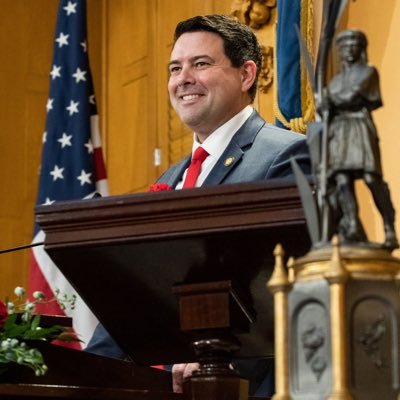
Amy Acton will do nothing to stop the rising cost of college. Vivek is the only leader in this race with a real plan to help Ohio families.
Dr. Amy Acton@amyactonoh
Billionaire Vivek Ramaswamy — with no real idea what is happening around kitchen tables in Ohio — is doubling down on his plan to close our world-class Ohio universities. Every plan of his hurts hardworking Ohioans, while life gets better for him and his friends at the top.
English



Don't you think it's weird that UFO sightings almost never happen in the morning, when most people aren't drunk.
Bill Maher@billmaher
If you don’t believe aliens are here and observing us, maybe you’re the conspiracy theorist.
English





highest homeownership rate in the country. 80% of people in the state own their homes. 60% of them without mortgages.
It resembles a southern european country in some ways. Inexpensive. mountainous terrain, shrinking population, hard for outsiders to integrate into the society. Tight knit clans.
Hunter📈🌈📊@StatisticUrban
I'll be honest you guys, I'm not really sure how much of a future WV has.
English

The adults in charge of our national security believe in demons. Demons. In the 21st century. This should terrify everyone.
Disclose.tv@disclosetv
NEW - U.S. Vice President Vance on UFOs: "I don't think they're aliens, I think they're demons."
English

The FOX 8 I-Team has found the Cleveland National Air Show just notified city officials that if Burke Lakefront Airport is closed, the air show will end completely. fox8.com/news/i-team-cl…
English

友よ、さあ今こそ進み出て、鷲の国にて催されている壮大な肉の祭典を、心ゆくまで堪能するがよい!

ホットケーキくん(ホッケチャンネル)@hotcake_kun_
アメリカ男性と肉ならこの写真が好き いつか現地でこれに参加したい
日本語
Daniel retweetet

@WhiteHouse Can you arrest Epstein’s co-conspirators instead of riffing on a porn site ?
English
Daniel retweetet

Thomas Massie is right which is why his comment ratioed the WH gross post comparing farmers to porn stars.
This administration was elected by conservatives who are opposed to porn, rapists, and pedophiles yet protects Epstein class pedos and rapists.

Thomas Massie@RepThomasMassie
@WhiteHouse Can you arrest Epstein’s co-conspirators instead of riffing on a porn site ?
English
Daniel retweetet

Kent State? University of Akron? Central State? Ohioans deserve to know which other schools are in his sites.
Vivek Ramaswamy@VivekGRamaswamy
Ohio’s state-funded universities face an enrollment cliff, tuition is going up, and the value of a college degree is going down. We can’t ignore the problem & I’ve offered an actual solution to fix it, while my opponent @amyactonoh offers what she always does: absolutely nothing. My piece in the Columbus Dispatch this week: The race for governor of Ohio can be a positive opportunity to give voters a choice between competing policy visions for our state – and to have a healthy debate about the right way to improve Ohio. But we risk missing that opportunity in 2026: While I aim to offer clear policies to improve the lives of Ohioans, my opponent offers little more than cheap criticisms of my ideas while offering no solutions of her own. The recent debate about Ohio’s publicly funded universities continues that growing pattern. Ohio’s higher education system faces a severe enrollment cliff that threatens the future of our state-funded universities, and rising tuition costs are becoming unsustainable for Ohio families. The next governor of Ohio needs a real plan to address this growing problem, and ignoring it isn’t a solution. The facts are stark. America is aging fast, and Ohio is aging faster. The number of high school graduates in Ohio has peaked, hitting our highwater mark in 2024 with roughly 149,000 graduates. But by 2041, that number falls to about 124,000 – a 17% decline in as many years. Meanwhile, fewer Ohio students are choosing four-year universities – and understandably so. Graduate salaries aren’t keeping pace with climbing tuition and student debt. Just 47.6% of Ohio graduates in the class of 2021 enrolled in higher education within two years of graduation, down from 59% in 2015, while the total cost of attending Ohio's public universities has increased by nearly 50% over the past 15 years. Families across the state are feeling the strain. Despite these headwinds, Ohio still operates one of the most fragmented public university systems in the country, enrolling roughly 313,000 students across 14 public universities, 24 regional branch campuses and 22 community colleges. Florida, with about twice our population, only operates 12 public universities. That means Ohio is spreading its limited state dollars across too many bloated bureaucracies, and alarms are already blaring. Just last week, Lourdes University became the fifth private college to close since 2020. Meanwhile, public universities that receive hundreds of millions in taxpayer funding are feeling the impact of fewer students. In recent years, Cleveland State has cut staff and eliminated NCAA sports programs. The student count at the University of Akron inched up this past year but is at half of its 2010 enrollment level. Kent State launched a "Transformation 2028" restructuring plan last year in search of administrative efficiencies. Central State University remains on “fiscal watch.” While universities struggle to get by, other states have benefited from commonsense reforms. Consider Georgia, which adopted a sensible plan that reduced the number of state universities from 35 in 2011 to 26 by 2018. Notably, their process didn’t start with an agenda of consolidation for its own sake, or with targets set on certain universities. Instead, it began with a set of principles. Their leadership decided they wanted to expand access, reduce duplication, improve attainment and strengthen regional economic development. The results were better retention and more on-time graduation, without increasing tuition. That is what real reform looks like. Ohio should go further. As governor, I intend to lead a pragmatic reform that guides certain state-funded universities that suffer from under-enrollment to instead become “centers of excellence” – national leaders in a specific field – with the goal of offering a higher-quality education to students at a lower cost. Specialization creates distinction, and distinction attracts students. This will push our state-funded universities to work together, instead of in separate siloes. My first budget will propose to empower the Chancellor of Higher Education to conduct a statewide review, guided by clear statutory criteria, not backroom favoritism. It will identify where missions overlap, where enrollment collapse has made independence untenable, and where administrative functions can be unified without harming students. The chancellor will then return to the General Assembly with a concrete plan on a fixed timeline. Critics will say this threatens campus identity. This is an understandable concern, but it does not justify inaction. Georgia’s experience shows that campuses and local identities need not vanish, even if excess overhead costs do. A campus can keep its traditions and its local role without carrying the full cost of an outdated administrative hierarchy. The purpose of a university isn’t to sustain a legacy bureaucracy; it’s to educate students. When the structure stops serving that mission, the structure should change in a positive way. My plan will ensure that the dollars saved from administrative duplication go back to benefit students. Options abound for how to achieve this goal: Ohio could reinvest these dollars through the State Share of Instruction formula and tie that formula more directly to affordability, or improve the quality of instruction, academic experience and tuition relief in other ways. Skyrocketing tuition, cratering enrollment and declining quality of education are real problems that demand thoughtful solutions. While my opponent sneered on social media at my ideas, she offers absolutely no alternative solutions to help Ohioans. By contrast, I’m willing to start the challenging conversations we need to lead Ohio to new heights, in higher education and beyond. My plan will create a more competitive, increasingly affordable and rightsized higher education system for taxpayers and students. As other states have demonstrated, thoughtful reform can attract and retain more students, keep tuition affordable and better prepare graduates to compete for higher-paying jobs. There’s no reason Ohio can’t do even better. Either we reform our higher education system with purpose, or we watch it decline by default.
English

NEW PRESS RELEASE: "Vivek for Ohio Launches 'Cornerstone,' New Ad Focused on Property Tax Relief for All Ohioans"
Full release 👉 ohiogop.org/press

English
Daniel retweetet

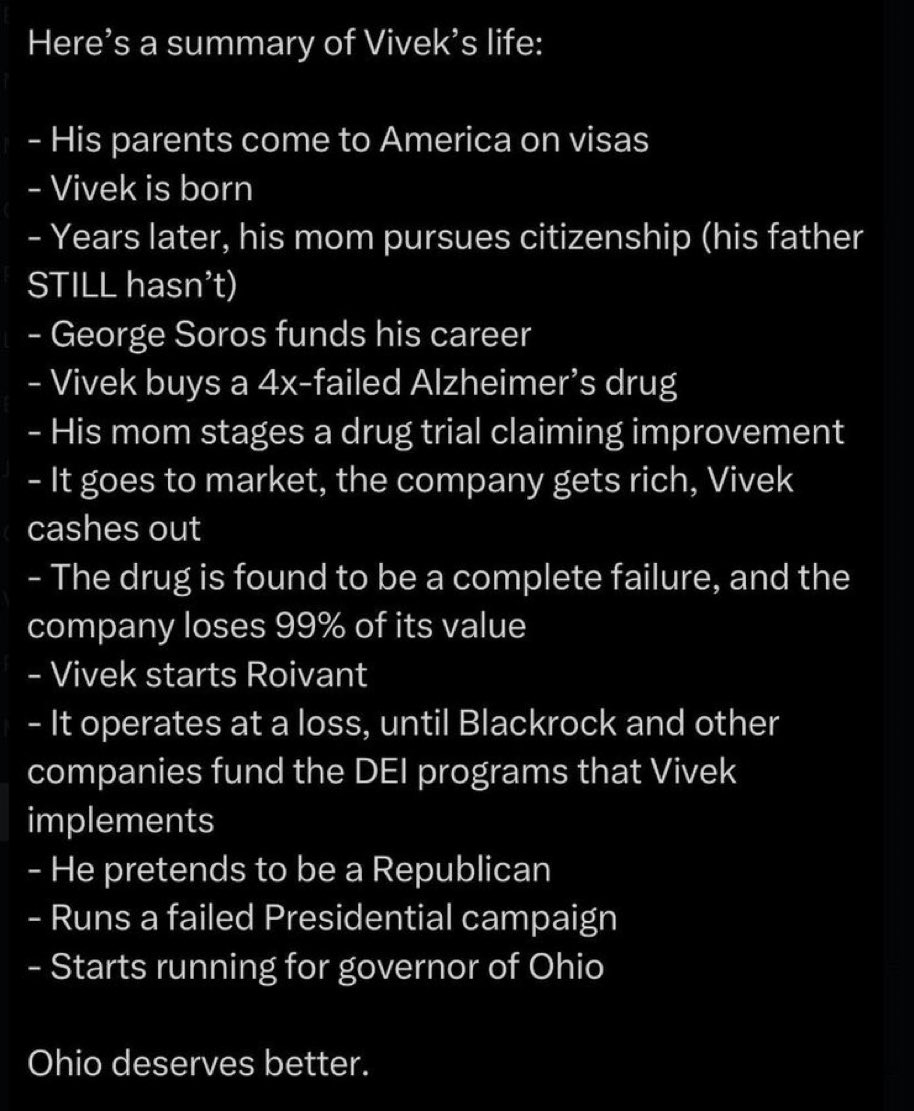

English

We all know someone who went to a regional campus because it was close to home and affordable. Those campuses feel permanent. They’ve been there for decades.
But here’s the connection nobody’s making:
Ohio’s higher ed system was built in the 1960s and 70s, when the state’s population was young and growing.
We built branch campuses everywhere so that a rising number of high school graduates could go to college without leaving their county.
Now Ohio is aging. The number of high school graduates peaked in 2024 and is falling 17% by 2041.
The infrastructure we built for growth is now oversized for decline. And unlike a factory or a mall, you can’t just close a university , it’s the economic anchor of its town.
So the “enrollment cliff” isn’t just a demographic problem. It’s a map problem. The physical footprint of Ohio public higher education was drawn for a state that no longer exists.
The consolidation debate is really a debate about which towns we’re willing to let go of the last institution that keeps them tethered to the rest of the state.
That’s why it’s so hard to have honestly.
English
Ohio’s state-funded universities face an enrollment cliff, tuition is going up, and the value of a college degree is going down. We can’t ignore the problem & I’ve offered an actual solution to fix it, while my opponent @amyactonoh offers what she always does: absolutely nothing.
My piece in the Columbus Dispatch this week:
The race for governor of Ohio can be a positive opportunity to give voters a choice between competing policy visions for our state – and to have a healthy debate about the right way to improve Ohio. But we risk missing that opportunity in 2026: While I aim to offer clear policies to improve the lives of Ohioans, my opponent offers little more than cheap criticisms of my ideas while offering no solutions of her own. The recent debate about Ohio’s publicly funded universities continues that growing pattern.
Ohio’s higher education system faces a severe enrollment cliff that threatens the future of our state-funded universities, and rising tuition costs are becoming unsustainable for Ohio families. The next governor of Ohio needs a real plan to address this growing problem, and ignoring it isn’t a solution.
The facts are stark. America is aging fast, and Ohio is aging faster. The number of high school graduates in Ohio has peaked, hitting our highwater mark in 2024 with roughly 149,000 graduates. But by 2041, that number falls to about 124,000 – a 17% decline in as many years.
Meanwhile, fewer Ohio students are choosing four-year universities – and understandably so. Graduate salaries aren’t keeping pace with climbing tuition and student debt. Just 47.6% of Ohio graduates in the class of 2021 enrolled in higher education within two years of graduation, down from 59% in 2015, while the total cost of attending Ohio's public universities has increased by nearly 50% over the past 15 years. Families across the state are feeling the strain.
Despite these headwinds, Ohio still operates one of the most fragmented public university systems in the country, enrolling roughly 313,000 students across 14 public universities, 24 regional branch campuses and 22 community colleges. Florida, with about twice our population, only operates 12 public universities.
That means Ohio is spreading its limited state dollars across too many bloated bureaucracies, and alarms are already blaring. Just last week, Lourdes University became the fifth private college to close since 2020. Meanwhile, public universities that receive hundreds of millions in taxpayer funding are feeling the impact of fewer students. In recent years, Cleveland State has cut staff and eliminated NCAA sports programs. The student count at the University of Akron inched up this past year but is at half of its 2010 enrollment level. Kent State launched a "Transformation 2028" restructuring plan last year in search of administrative efficiencies. Central State University remains on “fiscal watch.”
While universities struggle to get by, other states have benefited from commonsense reforms. Consider Georgia, which adopted a sensible plan that reduced the number of state universities from 35 in 2011 to 26 by 2018. Notably, their process didn’t start with an agenda of consolidation for its own sake, or with targets set on certain universities. Instead, it began with a set of principles. Their leadership decided they wanted to expand access, reduce duplication, improve attainment and strengthen regional economic development.
The results were better retention and more on-time graduation, without increasing tuition. That is what real reform looks like.
Ohio should go further. As governor, I intend to lead a pragmatic reform that guides certain state-funded universities that suffer from under-enrollment to instead become “centers of excellence” – national leaders in a specific field – with the goal of offering a higher-quality education to students at a lower cost. Specialization creates distinction, and distinction attracts students. This will push our state-funded universities to work together, instead of in separate siloes.
My first budget will propose to empower the Chancellor of Higher Education to conduct a statewide review, guided by clear statutory criteria, not backroom favoritism. It will identify where missions overlap, where enrollment collapse has made independence untenable, and where administrative functions can be unified without harming students. The chancellor will then return to the General Assembly with a concrete plan on a fixed timeline.
Critics will say this threatens campus identity. This is an understandable concern, but it does not justify inaction. Georgia’s experience shows that campuses and local identities need not vanish, even if excess overhead costs do. A campus can keep its traditions and its local role without carrying the full cost of an outdated administrative hierarchy. The purpose of a university isn’t to sustain a legacy bureaucracy; it’s to educate students. When the structure stops serving that mission, the structure should change in a positive way.
My plan will ensure that the dollars saved from administrative duplication go back to benefit students. Options abound for how to achieve this goal: Ohio could reinvest these dollars through the State Share of Instruction formula and tie that formula more directly to affordability, or improve the quality of instruction, academic experience and tuition relief in other ways.
Skyrocketing tuition, cratering enrollment and declining quality of education are real problems that demand thoughtful solutions. While my opponent sneered on social media at my ideas, she offers absolutely no alternative solutions to help Ohioans.
By contrast, I’m willing to start the challenging conversations we need to lead Ohio to new heights, in higher education and beyond. My plan will create a more competitive, increasingly affordable and rightsized higher education system for taxpayers and students. As other states have demonstrated, thoughtful reform can attract and retain more students, keep tuition affordable and better prepare graduates to compete for higher-paying jobs.
There’s no reason Ohio can’t do even better. Either we reform our higher education system with purpose, or we watch it decline by default.
English


An incident involving a Somali flag flown outside the Ohio Statehouse is driving renewed effort by Republican lawmakers to restrict which flags can be displayed on government property. nbc4i.com/news/local-new…

English