Ime Obot

6.4K posts

Ime Obot

Ime Obot

@Obottyime

Gentle & kind

Beigetreten Şubat 2022
3.4K Folgt872 Follower
Ime Obot retweetet
Kio Amachree
Kio Amachree@Ivory1957·
Just Like Epstein Files, Tinubu’s DEA Files Are Coming Out — He’s Run Out of Time The Epstein files named powerful people across America and no one could stop them from coming out. Now the same thing is happening with Bola Tinubu’s DEA and FBI files. President Tinubu has spent years and serious money hiring lawyers to block these 33-year-old documents from ever seeing the light of day. His team keeps saying there’s “nothing in the files.” But if that’s true, why fight so hard to keep them buried? A federal judge, Beryl Howell, has had enough. She has already ruled that their secrecy games are improper and ordered the DEA and FBI to release the files by June 1st, 2026. Deadline is locked in. Just like the Epstein files, Tinubu’s files are coming out — whether he likes it or not. He has officially run out of time. The truth is finally on its way. #TinubuFiles #ReleaseTheFiles #June1st2026 #NoMoreDelays #NigeriaDeservesTruth
Kio Amachree tweet media
English
1
13
18
201
Ime Obot
Ime Obot@Obottyime·
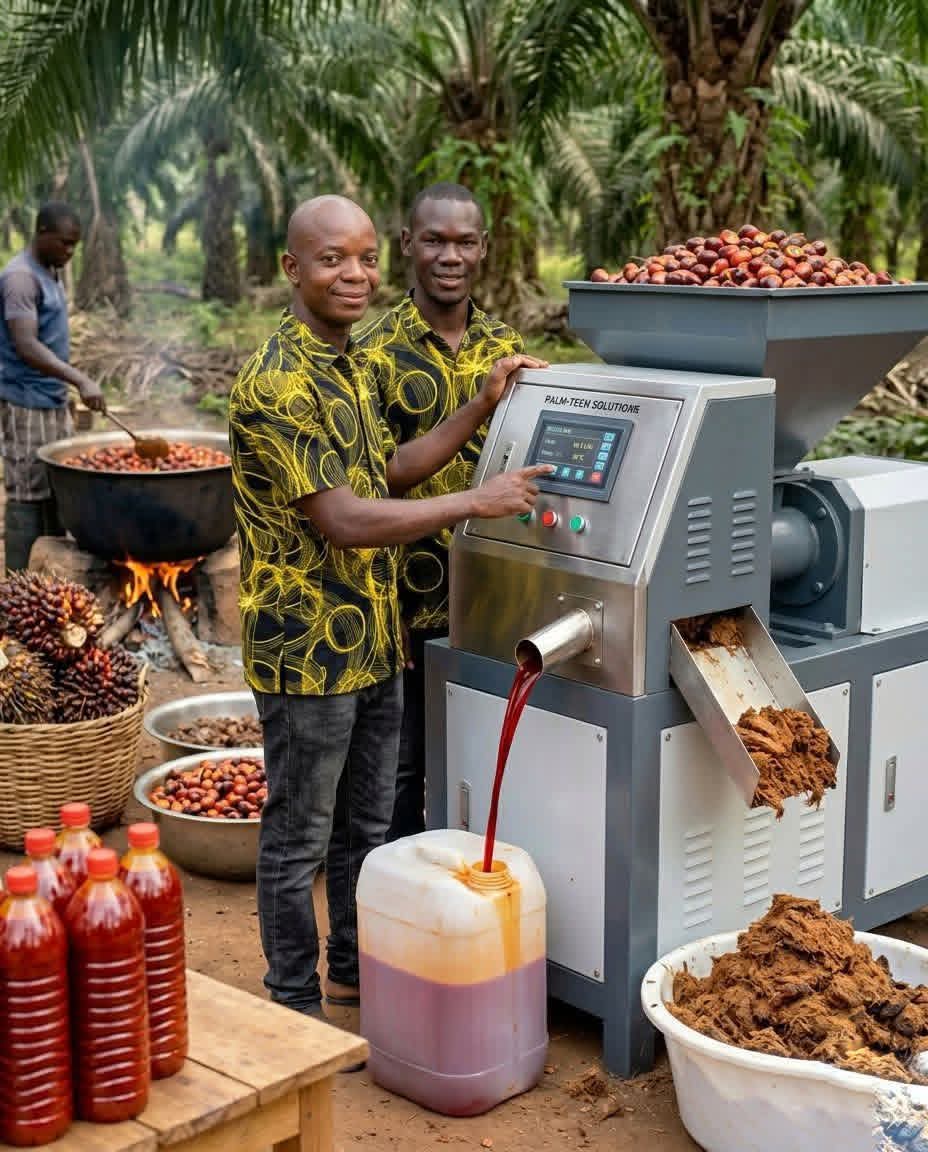
@engrICO2015 Is this machine available here in Nigeria? What's the price and where exactly is the firm dealing in this located?
English
0
0
0
47
AFRICAMUSTBEFREE!!!!!!!
AFRICAMUSTBEFREE!!!!!!!@engrICO2015·
The latest palm oil processing machine . All you need to do is to cook the palm fruits and the machine completes the rest Nice one 😄
AFRICAMUSTBEFREE!!!!!!! tweet media
English
460
1.8K
8.6K
545.9K
Ime Obot retweetet
EZE AMURU NA OBI
EZE AMURU NA OBI@NaAmuru34656·
I don't know this our brother who made this video but i am pleading to @all the X handle users to please repost this video, share this video and we must protect this man in all ramifications because he spoke pure truth
English
17
451
558
10.8K
Ime Obot retweetet
OjiUgo™️🍫👁️‍🗨️
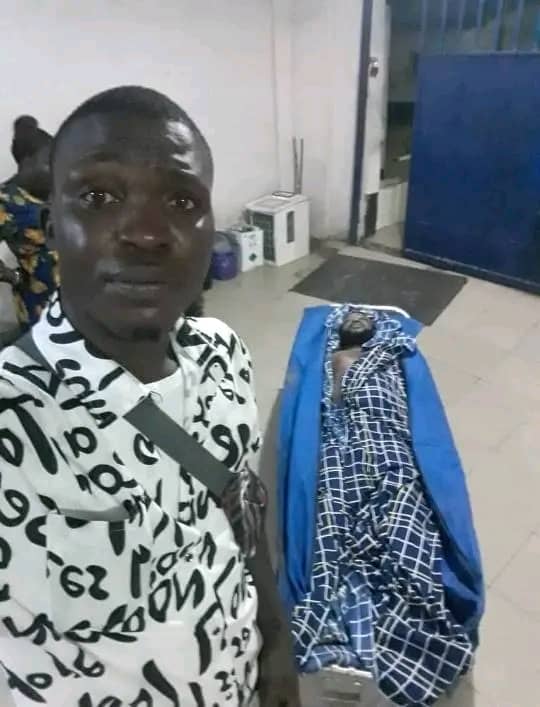
This is the body of the Labour Party agent that was killed at Trade fair on Saturday March 18th by Tinubu's APC thugs during the 2023 elections. Do not let Batidiots and APC morons gaslight you.
OjiUgo™️🍫👁️‍🗨️ tweet media
English
32
2.3K
2.8K
51K
Ime Obot retweetet
Jahmal of Port Harcourt 🦍
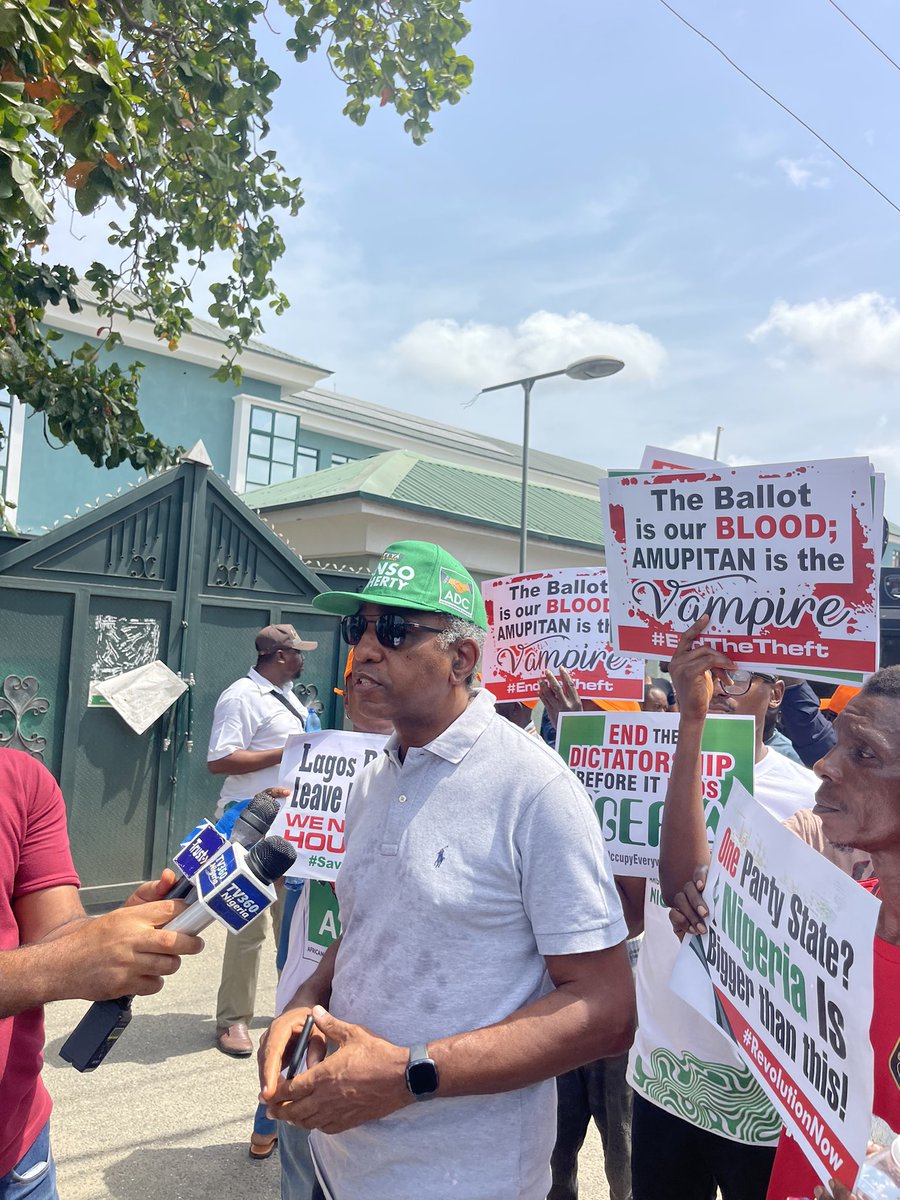
INEC CHAIRMAN AMUPITAN MUST GO LAGOS IS NOT SLEEPING ✊
Jahmal of Port Harcourt 🦍 tweet media
English
7
933
1.8K
12.7K
Ime Obot retweetet
GRV Stan
GRV Stan@CrownprinceCom2·
Repost this video and share it with your family members: Lagos State Commissioner of Police has warned officers against searching citizens’ phones. He also stated that members of the public have the right to record police officers on duty, as long as the officers are acting within the law and conducting themselves properly.
English
8
32
31
16.9K
Ime Obot retweetet
BUCOS
BUCOS@TENIBEGILOJU202·
THE GREATEST OBIDIENTS, KINDLY RETWEET MASSIVELY TILL IT GETS TO THE APPROPRIATE QUARTERS... This guy has said it all, I have nothing more to add. God bless you my brother
English
7
285
372
4.2K
Ime Obot retweetet
BSN
BSN@Barristerstreet·
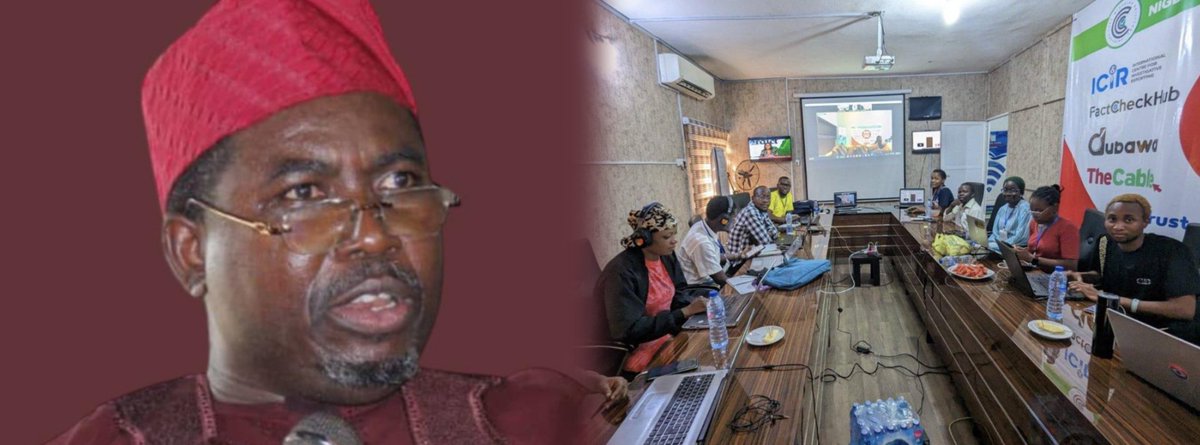
🇳🇬 JUST IN: Digital Footprints Link Under-Pressure @inecnigeria Chairman Prof. Joash Ojo Amupitan to Pro-APC X Account Used During 2023 Elections An investigation by The ICIR (republished via FactCheckHub) on April 20, 2026, reports digital overlaps allegedly linking Nigeria’s Independent National Electoral Commission (INEC) Chairman, Prof. Joash Ojo Amupitan, SAN, to an X account that posted partisan content supporting the All Progressives Congress ahead of and during the 2023 general elections. The account, originally @joashamupitan (account ID 1567086242164101120, created in September 2022), reacted to a post by APC National Youth Leader Dayo Israel about an APC victory in a Lagos Igbo community with the message: “victory is sure.” Following public backlash in April 2026, the account was renamed @Sundayvibe00 on April 10, locked, and labelled a “parody account.” Investigators cross-referenced Amupitan’s publicly available CV with X’s two-factor authentication (2FA) recovery data, including a phone number (0803099 matching partial 08**99 in recovery prompts and linked via Truecaller and OPay), a UNIJOS email (amupitan@unijos.edu.ng matching **an@unijos.edu.ng), a Gmail address (jho@gmail.com, exact match), and a Yahoo email (am****nj@yahoo.com linked via Truecaller/OPay). The report states that these overlaps suggest a possible connection but notes that definitive proof of ownership would require X’s internal data, such as IP logs, login history, and device records, which is not publicly accessible. It also highlights that academics often have publicly available contact details, increasing the risk of impersonation. Some users referenced AI tools like Grok, which reportedly confirmed the account’s existence, username history, and creation date based on publicly available platform data. INEC has categorically denied the claims, stating that Prof. Amupitan “does not own or operate any personal account on X” and has never engaged in partisan commentary. The commission described the account as a “fabrication by impersonators” and said the matter has been referred to security agencies, adding that it conducted an internal forensic review with a cybersecurity expert and concluded the activity resulted from impersonation. No full independent forensic report has been publicly released for verification. The digital matches remain circumstantial but notable. Concerned Nigerians are calling for full transparency, noting that any definitive conclusion would depend on platform-level forensics or an independent audit.
BSN tweet media
BSN@Barristerstreet

🇳🇬 "Nemo judex in causa sua" This means, in law, @inecnigeria cannot be a judge in its own cause. I have been reading the latest press release from @inecnigeria to find out who authored the investigation, and all I can see are repeated references to “an independent forensic cybersecurity expert.” INEC promised Nigerians a third party forensic team. So why is the identity of that third party still unknown? There is visibly no name, no firm, no credentials, no track record absolutely nothing. This report is effectively telling Nigerians that INEC is the accused, the investigator, the defender, and the judge in its own case. INEC is accused of partisanship at the very top, an allegation that goes to the heart of electoral credibility. In response, the Commission claims it conducted a multi layered forensic and digital investigation using X platform data, Wayback Machine archives, OSINT tools, identity forensics, and timestamp analysis. Yet there is zero transparency about who actually carried out the investigation. This cannot be treated as a minor omission. Without a named and verifiable forensic team, INEC is effectively saying it commissioned, controls, and interprets the investigation, with no opportunity for independent verification. @inecnigeria, who conducted the forensics? What exactly is being withheld from Nigerians? If the Chairman is politically exposed, why insist that he oversees an election that could further divide the country? What is the difficulty in engaging a known and reputable forensic firm, disclosing its identity, publishing the full unredacted report including methodology and raw data, and allowing independent review? #amupitanmustresign

English
12
243
299
11.4K
Ime Obot retweetet
Peter Akah
Peter Akah@Peter4Nigeria·
A Party Chieftain pretending to be @inecnigeria Chairman is a DANGER ⛔️ INEC pretending to be Investigating INEC is Greater DANGER ⛔️ AMUPITAN RESIGN and go and take your position as Ayetoro-gbede ward chairman ❗️ Nigerians we must not be silenced 🔕 #AmupitanMustGo 🎤
Peter Akah tweet media
English
201
5.8K
8.6K
84.3K
Ime Obot retweetet
Peniremit
Peniremit@peniremit·
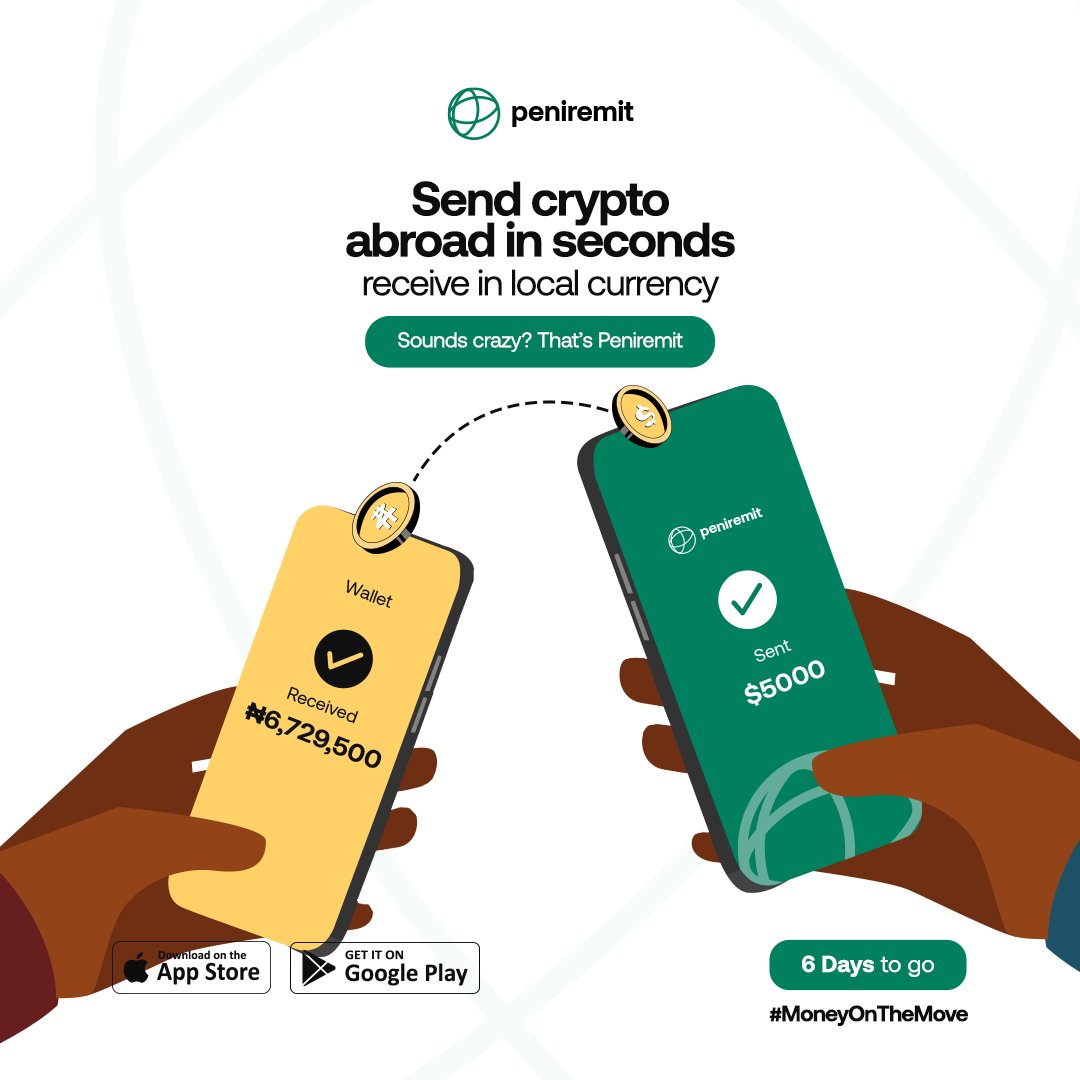
George just received ₦6,729,500. His brother sent it from abroad in crypto. No delay. No ridiculous fees. No stress. That's Peniremit. 6 days to go #MoneyOnTheMove
Peniremit tweet media
English
91
318
1.2K
27.4K
Ime Obot retweetet
Ifure Usen
Ifure Usen@real_Ifyarts·
It took about a months to draw this, please use 1 sec of your time to like and repost. thank you.
Ifure Usen tweet media
English
37
1.5K
8.6K
80.1K
Ime Obot retweetet
Zekeri Idris Jnr
Zekeri Idris Jnr@IdrisZekeriJnr·
I endorse this message! No compromises.
Zekeri Idris Jnr tweet media
English
187
3.1K
7.8K
62K
Ime Obot retweetet
GRV Stan
GRV Stan@CrownprinceCom2·
If you don’t believe the INEC Chairman, Amupitan, can conduct a free and fair election in 2027, like, repost, and comment “Amupitan Must Go.”
GRV Stan tweet media
English
49
273
390
5.2K
Ime Obot retweetet
Kio Amachree
Kio Amachree@Ivory1957·
Here is the op-ed, Kio: Nigeria Does Not Need Better Democrats. It Needs Better Engineers of Power. Why the Thiel-Musk Model of Technocratic Governance May Be Africa’s Most Honest Template for 2027 and Beyond By Kio Amachree | Stockholm, Sweden | President, Worldview International I will confess something that will unsettle many of my colleagues in the Nigerian diaspora: I no longer believe in Nigerian democracy. Not in its current form. Not as currently practiced. Not as currently protected — or rather, not protected at all. I say this not as a defeatist, but as a realist shaped by decades of watching a nation of extraordinary human capital repeatedly surrender its future to the lowest form of political transaction — the tribe, the cash envelope, the godfather’s nod. Despite more than two decades of uninterrupted electoral democracy, Nigeria has failed to translate democratic governance into broad-based human development.  Over 129 million Nigerians live in multidimensional poverty. Education spending has collapsed from 9.3 percent of government expenditure in 2015 to just 4.4 percent in 2023 — far below the sub-Saharan African average of 14 percent.  Foreign direct investment has hemorrhaged. Institutions have been hollowed out. And what passes for democratic accountability has become, in the words of one Nigerian commentator, a society where failure in leadership is not only tolerated but vigorously defended.  This is not a temporary failure of calibration. It is a structural failure of the model itself — as applied to Nigeria’s conditions. The Wharton Convergence I am a graduate of the Wharton School of the University of Pennsylvania. So, in his own way, is Elon Musk — though his journey took him from Wharton through Palo Alto, Mars ambitions, and, most recently, the corridors of the United States federal government. Donald Trump, too, carries the Wharton credential. Three men. Three very different worldviews. And yet on one matter — the fundamental inadequacy of traditional democratic institutions to deliver results in complex, failing systems — Elon Musk and I may find ourselves, perhaps for the first and only time, in agreement. I differ from Mr. Musk on much. His politics are not mine. His methods are often chaotic. His record in Washington proved that brash disruption without structural vision produces noise rather than transformation. But the underlying premise — that conventional democratic machinery, captured by elites, corrupted by patronage, and paralysed by populism, cannot deliver the engineering precision that a nation in crisis requires — that premise deserves serious examination when applied to Nigeria. Peter Thiel’s Provocation and Its African Relevance Peter Thiel, the billionaire co-founder of PayPal and Palantir, openly questioned the compatibility of democracy and freedom as far back as 2009, advocating for a system where power is concentrated among those with the expertise to drive progress.  In the West, this view is controversial — and rightly so, given the democratic traditions those societies have built over centuries. But Nigeria is not the West. Nigeria is a nation where peaceful protesters are arrested, journalists are harassed, and critics of government are routinely detained — all under the guise of democratic civilian rule.  What Nigerians currently endure is not democracy. It is the aesthetics of democracy wrapped around the substance of oligarchy. The form is present; the function is absent. Corruption is endemic in the petroleum industry, and security challenges — including insurgencies, kidnappings, and communal violence — threaten the basic rights of millions.  Peter Thiel has articulated a dream that one could change the world unilaterally through technological means, calling technology an “incredible alternative to politics.”  That sentence, stripped of its Silicon Valley arrogance, contains a seed of something Africa’s governance architects have never seriously cultivated: the idea that competence — not consensus — should be the governing principle of resource allocation in a state struggling for survival. What Technocracy Actually Means for Nigeria Let me be precise about what I am and am not proposing. I am not proposing military rule. I am not proposing dictatorship. I am not proposing the importation of any Silicon Valley billionaire’s political fantasies onto African soil. What I am proposing — what the Worldview International framework has long proposed — is a radical reorientation of how Nigeria selects and empowers its governing class. The Thiel-Musk model, at its most useful distillation, argues this: governance is an engineering problem. You would not select a pilot by popular vote. You would not elect your surgeon. You would not choose your nuclear engineer by tribal affiliation. Why, then, do we continue to select the stewards of a $440 billion economy, a 220-million-person federation, and one of the world’s largest hydrocarbon reserves — through a process dominated by money, ethnicity, and the manipulation of poorly informed electorates? As Alex Karp, Palantir’s CEO, has argued in recent years, the fusing of technological expertise with state decision-making — what he calls the “Technological Republic” — represents the only durable path for nations seeking to escape institutional decay.  The Manhattan Project analogy may be overstated for general application, but for Nigeria’s oil sector, its infrastructure deficit, its educational collapse, and its security architecture — a technocratic command-and-deliver model is not radical. It is overdue. The 2027 Question Nigeria faces a defining election cycle in 2027. The questions confronting the nation are existential: Is the country witnessing a democratic recession or outright state decline?  The answer, I submit, depends entirely on whether Nigerians — particularly the diaspora and the educated urban class — are willing to demand a new governance contract. That contract must include: merit-based cabinet selection with verifiable professional credentials; independent technocratic bodies insulated from executive patronage managing oil revenues, infrastructure procurement, and judicial appointments; and a diaspora engagement framework that brings home the intellectual capital Nigeria has been exporting to London, Stockholm, Houston, and Toronto for forty years. The Tinubu administration has demonstrated, painfully, that the current model produces policies that fail in execution due to lack of trained implementers, institutional weakness, and the absence of coherent strategic frameworks.  Reform rhetoric is abundant. Reform infrastructure is nonexistent. A Convergence I Did Not Expect I have spent years arguing with the assumptions of the Silicon Valley right. Their libertarian individualism sits uneasily with the communal obligations I know from the Niger Delta, from my father’s generation of nation-builders, from the Ijaw traditions of collective stewardship. But governance, like medicine, must be evidence-based. And the evidence from Nigeria’s twenty-six years of electoral democracy is unambiguous. The experiment has not failed for lack of trying. It has failed because the architecture was wrong from the beginning — transplanted without modification, operated without accountability, and captured almost immediately by the very elite networks it was meant to constrain. Thiel is right about the diagnosis, even if I reject much of his prescription. Musk demonstrated — in his brief, turbulent tenure advising Washington — that disruption without institutional knowledge is merely expensive chaos. The Nigerian version of technocratic reform must be home-grown, values-anchored, and structurally protected from the same patronage networks that destroyed democratic governance. But it must begin with an honest admission: the balloting ritual alone will not save us. Nigeria needs engineers of state — tested, accountable, insulated from tribal pressure, and empowered to deliver. That is not the end of democracy. It is, perhaps, its necessary precondition. Kio Amachree is President of Worldview International and a former member of Nigeria’s National Assembly. He writes from Stockholm, Sweden. #Nigeria2027 #Technocracy #NigerianGovernance #AfricanLeadership #WorldviewInternational #PeterThiel #ElonMusk #Wharton #NigerianDiaspora #KioAmachree #EndBadGovernance #NigeriaReform
Kio Amachree tweet media
English
1
16
21
366
Ime Obot retweetet
Jahmal of Port Harcourt 🦍
INEC CHAIRMAN, AMUPITAN, MUST VACATE OFFICE. Today, the demand for his resignation gained international momentum, as UK-based Nigerians rallied at Parliament, calling for his removal and insisting on credible, free, and fair 2027 elections.
Jahmal of Port Harcourt 🦍 tweet media
English
29
1.6K
2.1K
15.8K
Ime Obot retweetet
Kio Amachree
Kio Amachree@Ivory1957·
THE JUNE DEADLINE: WHY TINUBU’S ACHILLES HEEL CANNOT BE HIDDEN ANYMORE A warning to the administration, its enablers, and those who still believe the files will stay buried By Kio Amachree, President, Worldview International Stockholm, April 20, 2026 The Epstein files changed everything. When the federal court unsealed those documents in 2024, naming names that reach into the highest circles of global finance, politics, and power, it destroyed forever the argument that “national security” or “privacy concerns” could shield evidence of serious federal crimes from public accountability. That precedent now stands as iron law in the American federal judiciary. And it now hangs directly over Bola Ahmed Tinubu. On June 1, 2026 — six weeks from today — the FBI and Drug Enforcement Administration are under binding court order to release all non-exempt records relating to a 1990s narcotics investigation involving the sitting President of the Federal Republic of Nigeria. That deadline was set by United States District Judge Beryl A. Howell of the District of Columbia — the same judge who supervised the Mueller investigation into Russian interference in the 2016 election and the grand jury proceedings arising from the January 6th assault on the United States Capitol. She does not issue ultimatums she does not mean. Three Years of Obstruction This case did not arrive at this moment overnight. In June 2022, Aaron Greenspan, a transparency advocate and chief executive of the legal data platform Plainsite, submitted Freedom of Information Act requests to six federal agencies — the FBI, the DEA, the IRS, the State Department, the CIA, and the Executive Office of United States Attorneys — seeking records related to the early 1990s narcotics investigation in Chicago in which Tinubu was implicated. Greenspan was assisted by Nigerian investigative journalist David Hundeyin. When the agencies stonewalled him, he filed a civil lawsuit in June 2023. For three years, what followed was a masterclass in institutional obstruction. The FBI initially promised completion by August 2025. Then September 2025. Then December 2025. Then January 2026. Then February 2026. At each stage, the bureau offered minimal explanation, no reliable end date, and produced zero documents. The DEA claimed files were “out for consultation” with other agencies but could not say when that consultation would conclude. Both agencies deployed what are known as “Glomar responses” — the legal device by which a government agency neither confirms nor denies the existence of requested records. In February 2026, Judge Howell reached the limit of her patience. In a ruling dated February 3, 2026, she described the agencies’ conduct as unacceptable. She struck down their Glomar responses as “improper,” ruling that protecting this information from public disclosure was “neither logical nor plausible.” She ordered the FBI to file sworn statements explaining its repeated failure to meet court-ordered deadlines. She directed both agencies to release all non-exempt records on a fixed schedule, with complete disclosure by June 1, 2026. She ordered the DEA to submit a detailed Vaughn index — a formal legal document explaining, page by page, why specific materials had been redacted or withheld. And she issued a joint status report deadline of May 2 for all remaining agencies. This was not a gentle reminder. This was a federal judge telling two of the most powerful law enforcement agencies in the world that their conduct had been a deliberate obstruction of justice, and that it ends now. The Epstein Precedent: The Door That Cannot Be Closed Again Here is why no amount of legal maneuvering will save Tinubu from what is coming in June. When the Southern District of New York unsealed the Jeffrey Epstein-related documents, the argument deployed to suppress them was identical to the argument the FBI and DEA have been using in the Tinubu case: sensitivity, privacy, ongoing investigative concerns, national security implications. The courts rejected those arguments. They rejected them in full. And in doing so, they established a precedent that now binds every federal court considering similar suppression requests. You cannot tell one set of powerful people that their exposure to documented criminal proceedings must remain sealed while simultaneously releasing the Epstein files, which named sitting politicians, billionaire financiers, and members of foreign royal families. The logical inconsistency is too profound. The legal hypocrisy is too glaring. No federal judge would sustain it. No appellate court would uphold it. This is why the Tinubu administration’s lawyers — and there are many of them, well paid and well connected in Washington — cannot ultimately prevail. They have already lost the legal argument. The Epstein files made sure of that. The only tools left to them are delay, and the goodwill of a judge who has already run out of it. What Those Files Contain Let us be clear about what arrives in June. In the early 1990s, Bola Ahmed Tinubu was the subject of a narcotics investigation by federal authorities in Chicago. At the conclusion of those proceedings, he forfeited $460,000 to the United States government — money the DEA determined to be proceeds connected to a heroin trafficking operation. An affidavit filed by IRS Special Agent Kevin Moss, which has circulated in investigative and legal circles for over three decades, set out the evidentiary basis for that forfeiture. The FBI’s investigation generated approximately 2,500 pages of records. None of them have been released. All of them are now under court order for disclosure. The Nigerian Presidency has attempted to preemptively manage this by stating that the Moss affidavit and DEA report have been “in the public space for more than thirty years” and do not indict their principal. That claim is disingenuous on two levels. First, what has circulated publicly is a fragment — not the full investigative record. Second, if the complete files were truly innocuous, four years of legal obstruction to prevent their release would be inexplicable. You do not spend millions in legal fees fighting the disclosure of documents that exonerate you. A Warning to the Administration and Its Supporters To Bola Ahmed Tinubu, to Gilbert Chagoury, to Seyi Tinubu, and to every lawyer, fixer, lobbyist, and enabler currently deployed in Washington to delay the inevitable: the Epstein files are out. The precedent is set. The judge has spoken. The June deadline is not a negotiating position. It is a court order. To those who have spent years defending this administration — who have come to the timelines and pages of those exposing this corruption to mock, to gaslight, and to attack — hear this clearly: the files are coming. When they arrive, your choice will be stark. You will either continue defending the indefensible in full knowledge of what those files contain, or you will have the dignity to step away from a structure that is collapsing. History has a long memory. It does not forget who stood where when the evidence was presented. The Nervousness Is Already Visible Ask yourself why this administration is so consumed with suppressing opposition. Ask yourself why activists are being detained by the DSS. Why Atiku Abubakar Isah sits in detention. Why the state security apparatus is being deployed not against external threats but against citizens exercising their constitutional rights. Why a man who controls the levers of a sovereign nation is spending political capital attacking journalists, lawyers, and diaspora advocates. The answer is visible to anyone paying attention. Tinubu knows what is in those files. His lawyers know. His financiers know. And they know that once those 2,500 pages enter the public domain, the narrative they have carefully constructed over decades — the self-made politician, the Lagos strongman, the democratic leader — will be impossible to sustain. The Achilles heel was always the 1990s. It was always Chicago. It was always the $460,000. And now, for the first time, a federal judge has ordered that the full story be told. Conclusion: The Reckoning is Six Weeks Away Nigeria deserves the truth. Not the fragments. Not the carefully managed admissions. Not the Presidency’s pre-emptive spin about documents that have “been in the public space for thirty years.” The full record. The complete investigative file. Every page that the FBI and DEA have spent four years fighting to suppress. On June 1, 2026, that reckoning begins. No lawyer will stop it. No lobbyist will delay it. No amount of money wired to Washington will move a federal judge who has already called their conduct unacceptable and issued her final ultimatum. The Epstein files came out. The Tinubu files are next. To the 220 million people of Nigeria — in the Delta, in the North, in Lagos, in the diaspora — hold the line. The evidence is coming. The institutions are moving. And the men who looted your nation while hiding behind diplomatic immunity and expensive legal counsel are about to discover that in a functioning federal judiciary, no one is too powerful to be documented. Kio Amachree is the President of Worldview International. He is a Swedish citizen of Ijaw and Niger Delta royal lineage and the eldest son of Chief Godfrey Kio Jaja Amachree QC — Nigeria’s first Solicitor-General, Acting Attorney-General, United Nations Under-Secretary-General, and founding Chairman of the Nigeria Football Association. #TheKioSolution · #NigeriaDecides2027 · #WorldviewInternational · #GodfreyAmachree
Kio Amachree tweet media
English
7
68
96
1.7K
Ime Obot retweetet
WahabStatsHub
WahabStatsHub@WahabStatsHub·
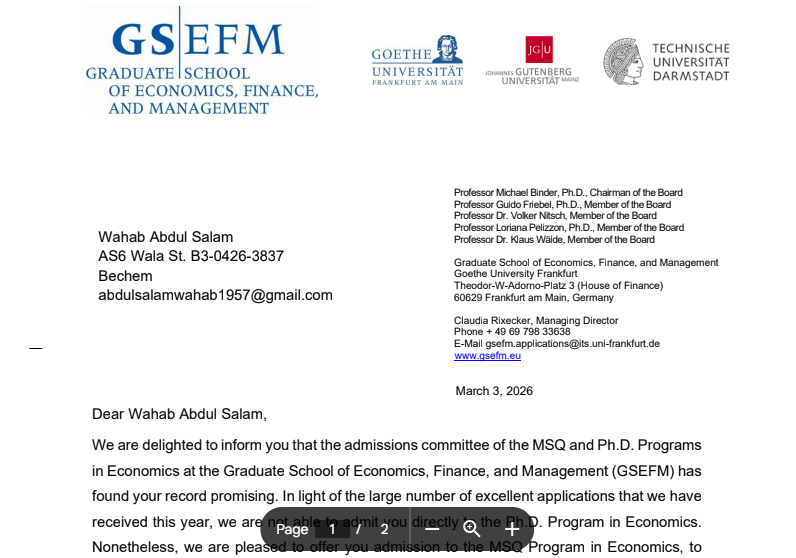
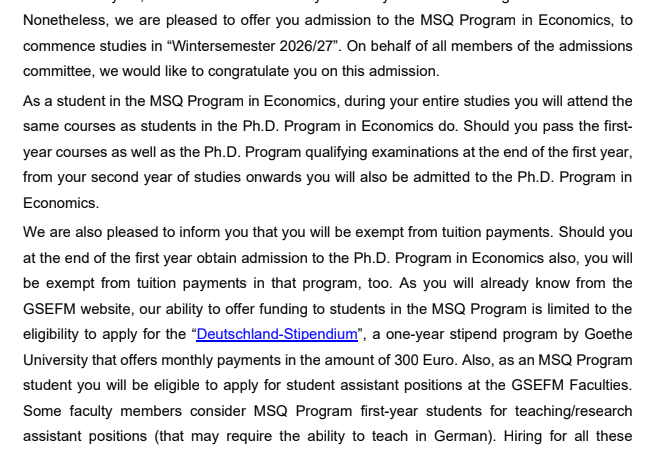
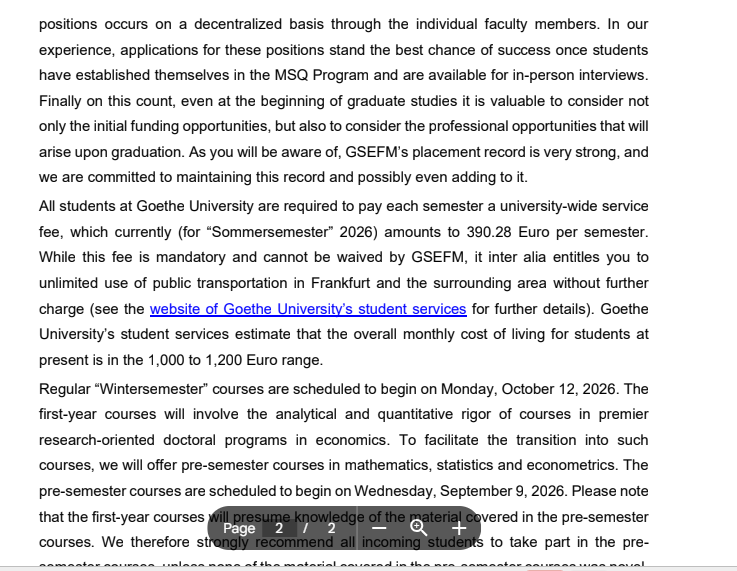
My name is Abdul Wahab. I am pleading with my Football Twitter (FT) family and everyone on this app to please RT. I am on the verge of losing a life-changing opportunity simply because of where I come from, and I have worked too hard to bottle it now. I grew up in extreme poverty in a small village called Kwabenantene in the Ahafo Region. I am the very first person in my family and my entire village to ever get a university education. My path was never easy. To survive undergrad, I literally had to drop out of classes mid-semester, pack my bags, and go back home to do heavy construction work just to raise enough money to survive the next term. I was laying bricks to pay for my textbooks. Despite having zero financial safety net, I poured my blood and sweat into my studies and graduated with First-Class Honours in Economics, ranking in the top 1% of my entire cohort of 435 students. But I didn’t just want to succeed alone; I went back to my village, gathered the youth, and started teaching and mentoring them. Because of that work, two students from my locality have now successfully made it into university too. I want to lift my people up. All this hard work finally paid off: I just received admission into the highly prestigious, integrated Masters/Ph.D. Economics program at Goethe University Frankfurt (GSEFM) in Germany! My tuition is officially 100% waived. However, I am facing a massive roadblock. Because the program is so competitive, I wasn't put directly into the fully-funded Ph.D. cohort right away. Instead, I was admitted to the MSQ track for Year 1. I will take the exact same rigorous classes alongside the Ph.D. students, and if I pass my Year 1 qualifying exams, I transition directly into the fully-funded Ph.D. I know I will pass those exams. The academics don't scare me. The finances do. My only problem right now is getting funding to cover my Year 1 living expenses in Frankfurt. If I can just survive these first 12 months, the Ph.D. funding takes over and my future is secured. To my FT family: you guys know my grind and my loyalty. If I get this lifeline, I promise I will proudly represent FT in every academic hall, conference, and research room I ever step into. I just need a chance to be in the room. I cannot let a lack of living expenses kill a dream I built with my bare hands. If you know of any scholarships, foundations, philanthropists, or anyone who can sponsor a village boy for just one year, PLEASE tag them or reach out. Please RT this until it reaches the right timeline. Let’s make this happen! 🌍📚🙏🏾
WahabStatsHub tweet mediaWahabStatsHub tweet mediaWahabStatsHub tweet media
English
241
10.2K
14K
461.4K