OpenGradient (∇, ∇)

1.5K posts

OpenGradient (∇, ∇) banner
OpenGradient (∇, ∇)

OpenGradient (∇, ∇)

@OpenGradient

The Network for Open Intelligence. Host models, run secure inference, and deploy agents verifiably onchain.

New York City Beigetreten Temmuz 2023
27 Folgt160.7K Follower
Angehefteter Tweet
OpenGradient (∇, ∇)
OpenGradient (∇, ∇)@OpenGradient·
We are excited to announce that OpenGradient has raised $8.5M in seed funding to build a groundbreaking end-to-end decentralized platform for secure open-source AI. Big thanks to our backers @a16zcrypto CSX, @cbventures, @svangel, @balajis, @ilblackdragon, @sandeepnailwal and more! We are proud to also have the support of other visionary investors on this exciting journey including: @CanonicalCrypto, @symbolicvc, @SALTConference, @ForesightVen, @NEARProtocol, @CelestiaOrg, @blackdragon_vc, @ThanefieldRes, @PragmaVentures, @ai, @ekrahm, @Bfaviero, @RyanWatkins_, @HighCoinviction, @chainyoda, @mraltantutar, @PaulTaylorVC, @0xlukeskywalker, @no89thkey, @0xnavage. Check out our official blogpost here: opengradient.ai/blog/opengradi…
OpenGradient (∇, ∇) tweet media
English
1.5K
141K
25.3K
5.9M
OpenGradient (∇, ∇)
OpenGradient (∇, ∇)@OpenGradient·
8/ Dynamic fee mechanisms are particularly relevant in the context of Uniswap v4, where programmable hooks allow pools to implement custom fee logic. Models like this could enable pools to adjust trading fees in response to changing market conditions. This work builds on funded research conducted with support from the Uniswap–Arbitrum Grant Program (UAGP). 🔗: opengradient.ai/blog/dynamic-a…
English
1
0
8
356
OpenGradient (∇, ∇)
OpenGradient (∇, ∇)@OpenGradient·
OpenGradient Model Highlight: AMM Fee Optimization Model This model explores a volatility-aware approach to AMM fee design. Instead of relying on static trading fees, the mechanism adapts fee levels using short-horizon volatility forecasts. 🧵 👇🏻
OpenGradient (∇, ∇) tweet media
English
91
66
152
3.3K
OpenGradient (∇, ∇)
OpenGradient (∇, ∇)@OpenGradient·
We’re approaching the final stages of Expertly. Designed as a combination of twin.fun and @memsync_ai, it focuses on building AI experts that are context-aware and task-specific by design. As we finalize the product, we’re gathering input to guide what should be built first. Share your feedback: expertly.so/surveys/ai-exp…
OpenGradient (∇, ∇) tweet media
English
139
101
241
4.1K
Tara
Tara@Tipwotip·
What if complex tasks could happen automatically? Yes its possible, as @OpenGradient is focusing on making agents, that can handle tasks automatically Want to book a flight? Agents could one day find the best price and book it for you with every step verified & trustless To understand the future of agents in action watch below 👇
English
7
1
19
413
megumi
megumi@megumidoteth·
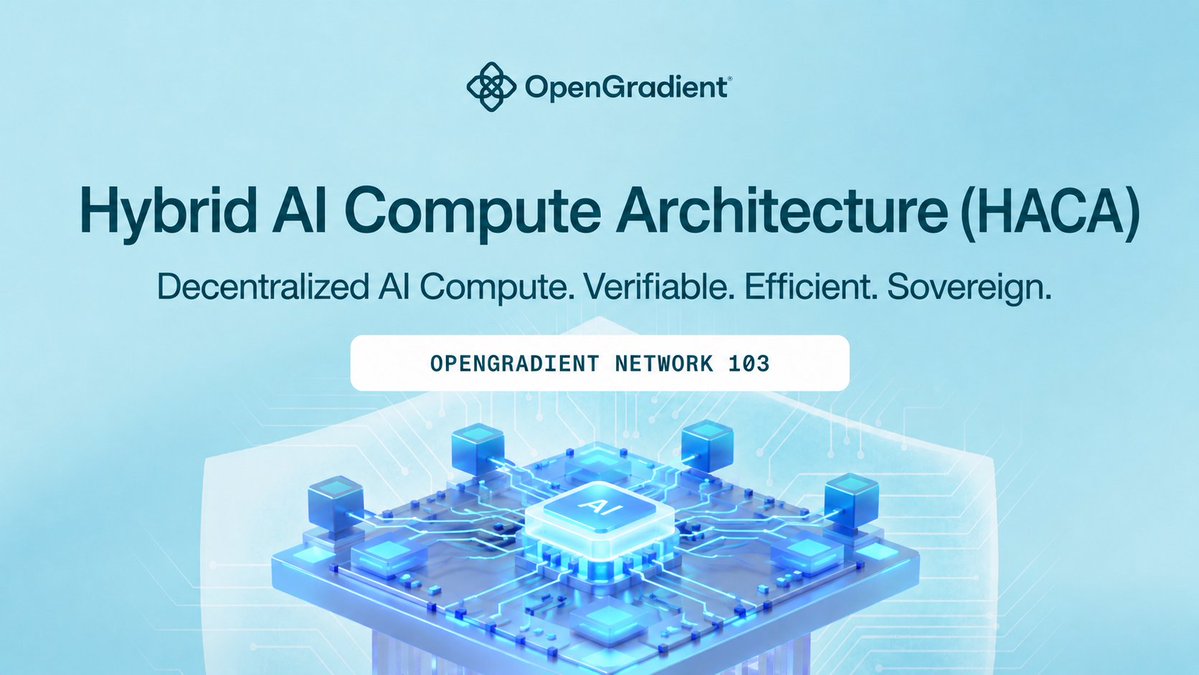
𝐞𝐦𝐩𝐨𝐰𝐞𝐫𝐢𝐧𝐠 𝐃𝐞𝐀𝐈: 𝐜𝐨𝐦𝐩𝐨𝐬𝐚𝐛𝐢𝐥𝐢𝐭𝐲, 𝐮𝐭𝐢𝐥𝐢𝐭𝐲, 𝐢𝐧𝐭𝐞𝐥𝐥𝐢𝐠𝐞𝐧𝐜𝐞 composability transformed defi through permissionless innovation @OpenGradient is bringing that same principle to AI agents by building protocol-level interoperability that enables agents work together trustlessly to build a productive economy 𝐭𝐡𝐢𝐬 𝐜𝐥𝐢𝐩 𝐞𝐱𝐩𝐥𝐚𝐢𝐧𝐬 𝐰𝐡𝐲 𝐚𝐠𝐞𝐧𝐭-𝐭𝐨-𝐚𝐠𝐞𝐧𝐭 𝐢𝐧𝐭𝐞𝐫𝐚𝐜𝐭𝐢𝐨𝐧𝐬 𝐚𝐫𝐞 𝐭𝐡𝐞 𝐤𝐞𝐲 𝐝𝐢𝐟𝐟𝐞𝐫𝐞𝐧𝐭𝐢𝐚𝐭𝐨𝐫 𝐛𝐞𝐭𝐰𝐞𝐞𝐧 𝐠𝐞𝐧𝐮𝐢𝐧𝐞 𝐃𝐞𝐀𝐈 𝐢𝐧𝐟𝐫𝐚𝐬𝐭𝐫𝐮𝐜𝐭𝐮𝐫𝐞 𝐚𝐧𝐝 𝐡𝐲𝐩𝐞 most AI platforms operate as closed systems where agents can not interoperate or verify each other's outputs what is opengradient building? it is building the infrastructure to fix that problem with: - x402 protocol integration for native agent payments - TEE + zkML verification for cryptographic proof of inference - protocol-level composability for cross ecosystem coordination - HACA architecture for fast decentralized compute 𝐰𝐡𝐲 𝐭𝐡𝐢𝐬 𝐦𝐚𝐭𝐭𝐞𝐫𝐬: the vision of digital twins that can invest, trade or execute at scale is not just an idea but something that is possible with the right infrastructure like - twin(.)fun: an AI digital marketplace - bitquant: defi analytics agent - model hub: web3 native AI models - memsync: persistent agent memory understand that without verifiable interoperability, agent economies will remain constrained by manual intervention for that, @OpenGradient is building the foundation so that agents can: - negotiate autonomously - execute transactions trustlessly - access specialized ML models - verify outputs cryptographically - coordinate across protocols without permission all this is what separate genuine DeAI infrastructure from hype
megumi@megumidoteth

𝐨𝐩𝐞𝐧𝐠𝐫𝐚𝐝𝐢𝐞𝐧𝐭 𝐢𝐬 𝐞𝐱𝐩𝐥𝐨𝐫𝐢𝐧𝐠 𝐯𝐞𝐫𝐢𝐟𝐢𝐚𝐛𝐥𝐞 𝐢𝐧𝐟𝐞𝐫𝐞𝐧𝐜𝐞 𝐭𝐡𝐫𝐨𝐮𝐠𝐡 𝐱𝟒𝟎𝟐 it is notable to say that all inferences run on infrastructure that users can not inspect - user sends a request - response is returned but somewhere in between, a model is executed on someone else's server with no proof of which model ran and no way to confirm if the computation was tampered 𝐢𝐧𝐭𝐫𝐨𝐝𝐮𝐜𝐢𝐧𝐠 𝐱𝟒𝟎𝟐 this is an open protocol built on http's 402 "payment required" status code 𝐭𝐡𝐞 𝐢𝐝𝐞𝐚 instead of using API keys or subscriptions, clients could pay per inference request directly with no intermediaries and no platform lock in just a payment-gated http call, native to how the web already works but payment is only the beginning as it gets more significant 𝐨𝐩𝐞𝐧𝐠𝐫𝐚𝐝𝐢𝐞𝐧𝐭 𝐞𝐦𝐛𝐞𝐝𝐬 𝐱𝟒𝟎𝟐 𝐝𝐢𝐫𝐞𝐜𝐭𝐥𝐲 𝐢𝐧𝐬𝐢𝐝𝐞 𝐓𝐄𝐄𝐬 𝐢𝐧𝐬𝐭𝐚𝐧𝐜𝐞𝐬 a TEE is a hardware-level secure zone where code executes under strict protection and shielded even from the host machine itself not even the node operator can observe or alter what happens inside when your inference request arrives, it routes directly into that verified zone with no payment proxy sitting between you and the computation the TLS session terminates inside the zone and not at the host level thereby sealing the data path end-to-end once inference is completed, the output is cryptographically signed and a hash is stored on-chain user can then independently verify that the inference was executed and recorded without exposing the actual content of the result zkML proofs also provides mathematical certainty that a specific model produced a specific output without requiring the model to be re-executed for verification 𝐰𝐡𝐲 𝐝𝐨𝐞𝐬 𝐭𝐡𝐢𝐬 𝐦𝐚𝐭𝐭𝐞𝐫 𝐟𝐨𝐫 𝐀𝐈 𝐚𝐠𝐞𝐧𝐭𝐬? agents do not perform a single inference rather, they orchestrate dozens in parallel often making decisions with significant downstream consequences x402 addresses this through a pre-funded account model: > tokens are loaded upfront > inference draws from the balance this makes it so that computation is never blocked while waiting for onchain settlement between calls what @OpenGradient is building with x402 is not a feature layered into AI infrastructure. it is a fundamentally different starting assumption that inference should be auditable by design and not trusted by default

English
2
0
9
318
Cysic
Cysic@cysic_xyz·
Cysic is partnering with @OpenGradient! We’re excited to support OpenGradient’s verifiable AI stack by accelerating the zero-knowledge proofs that verify model execution.
Cysic tweet media
English
20
5
59
3.4K
OpenGradient (∇, ∇)
OpenGradient (∇, ∇)@OpenGradient·
This is what the verifiable AI stack actually needs to scale. Not just better models. Not just better chains. The proving layer has to keep up, and now it can. 6/7
English
1
0
17
681
OpenGradient (∇, ∇)
OpenGradient (∇, ∇)@OpenGradient·
We're partnering with @cysic_xyz Together, we're accelerating zero-knowledge proofs that verify model execution on OpenGradient. This is a big step toward making verifiable AI inference production-ready. 1/7
OpenGradient (∇, ∇) tweet media
English
182
115
283
215.3K