Patrick Coggins

4.4K posts

Patrick Coggins banner
Patrick Coggins

Patrick Coggins

@PatrickCFOD

Student of Leadership and building High Performing Teams, Father, Husband, Drummer, Partner CFO's Domain

Los Angeles, CA Beigetreten Ekim 2010
2.1K Folgt978 Follower
Angehefteter Tweet
Patrick Coggins
Patrick Coggins@PatrickCFOD·
Thrilled to announce that CFO's Domain has been acquired by @Solomon_Edwards to expand their Office of CFO capabilities! It’s been an incredible journey the last 7 years, from starting my own firm with my partner to navigating a global pandemic 9 months later, to growing and selling the company, I couldn’t be more excited for what lies ahead. Grateful beyond words to our families, team, clients, and everyone who supported this journey. Couldn't have done it without you. Full details: businesswire.com/news/home/2026…
English
2
0
3
58
Patrick Coggins
Patrick Coggins@PatrickCFOD·
McKinsey noted that finance functions must shift from reporting the past to shaping the future. We couldn’t agree more. At CFO’s Domain, we see this evolution every day, as CFOs demand faster insights, scenario modeling, and real-time visibility.
English
0
0
1
21
Patrick Coggins
Patrick Coggins@PatrickCFOD·
Everyone's talking about AI in finance. But what actually works right now? Here are three practical applications we're seeing deliver real results: (presuming you have clean data) 1. Automate the Reconciliation Grind Use AI tools to match transactions across systems automatically. What used to take hours of manual comparison now happens in minutes. Tools like Vic.ai and MindBridge are game-changers for month-end close. 2. Forecast Smarter, Not Harder AI-powered forecasting models can analyze patterns your spreadsheets miss. Feed your historical data into tools like Planful or Jirav, and get cash flow predictions that actually account for seasonality, trends, and anomalies. 3. Turn Reports Into Conversations Stop building the same dashboard 47 different ways. AI assistants can now query your financial data in plain English. "What were our top expenses last quarter?" gets you an instant answer instead of a pivot table marathon.
English
0
0
1
22
Patrick Coggins
Patrick Coggins@PatrickCFOD·
The best finance leaders don’t wait for perfect conditions, they turn constraints into direction. As highlighted in a recent Inc. article, limits like budget, time, or legacy systems can become powerful catalysts when leaders reframe them as design parameters rather than barriers. inc.com/moshe-engelber…
English
0
0
2
63
Patrick Coggins
Patrick Coggins@PatrickCFOD·
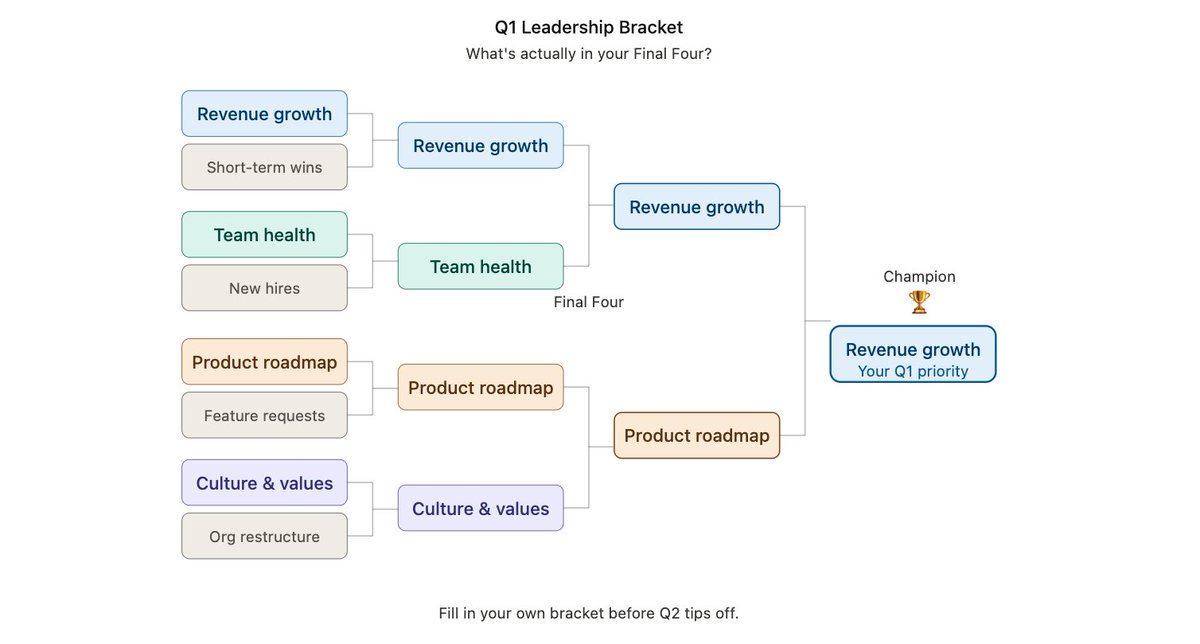
Everyone's filling out brackets right now. And honestly? It's one of my favorite leadership reminders of the year. Not because I'm great at picking winners (I'm not). But because the bracket forces something most of us skip in business: you have to choose. You can't hedge. You can't say "it depends." You pick a team and you commit. As Q1 wraps up, I've been thinking about what it means to actually bracket your priorities as a leader. Because the reality is, everything on your “bracket” might matter. Every initiative could be important. But trying to advance all of them at once is how nothing actually moves forward. Strong leaders decide what gets to advance this quarter and what doesn’t. The teams that go deep in March aren't the ones that tried to do everything. They have a system. They know their role. Everyone on the floor understands what matters when the pressure is on. Same is true for the organizations I've seen thrive. #Leadership #Q1 #MarchMadness #Strategy #ExecutiveLeadership
Patrick Coggins tweet media
English
0
0
0
11
Patrick Coggins
Patrick Coggins@PatrickCFOD·
How the top 1% of leaders run meetings: They don't. At least not most of them. I've coached enough leaders to notice a pattern: the best leaders are ruthless about declining meetings that could've been an email (or a Slack message, or just a decision). But when they DO run a meeting, here's what's different: They send the decision or agenda upfront. They start on time even if people are missing. They end early if the problem gets solved. And they're crystal clear on who's deciding versus who's just informed. Most importantly? They ask themselves beforehand: "What would have to be true for this meeting to be a waste of everyone's time?" Then they make sure that thing doesn't happen.
English
0
0
0
18
Patrick Coggins
Patrick Coggins@PatrickCFOD·
"A client told me her team was "disengaged." "They do the work, but no one goes above and beyond anymore. The energy is just... gone." So I asked her: "When's the last time someone on your team brought you a new idea and something actually came of it?" Long pause. Disengagement isn't usually laziness. It's learned helplessness. People tried, nothing happened, so they stopped trying. If you want your team's energy back, you don't need a team-building exercise. You need to pick one idea someone brought you recently, and actually do something with it.
English
0
0
1
31
Patrick Coggins
Patrick Coggins@PatrickCFOD·
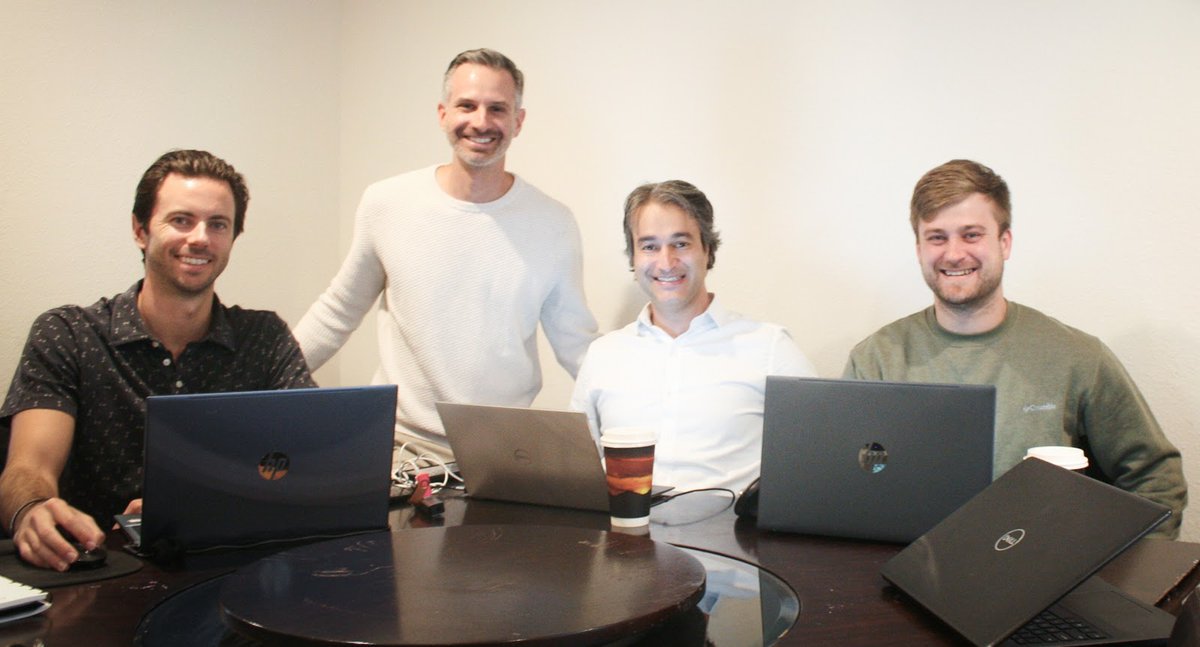
I've been doing a lot of reflecting since the acquisition. And my mind keeps going back to the very beginning. The kitchen table. The laptop. The quiet house. And my wife looking at me, saying - "Are you sure about this?" Honestly? I had no idea. But I knew I had to try. That's the part nobody puts in the announcement post. The doubt. The leap. The person sitting across from you who loves you enough to ask the hard question - and then support you anyway when you say yes. 📸 This photo is from several years ago during a company offsite, not all of us today with the company are even in it. We were smaller at the time. This is what doing the work looks like; showing up on the hard days, treating clients like they were their own - we made CFOs Domain something I'm genuinely proud of. It wasn't a straight line up, but every detour taught us something. Every hard conversation made us sharper. Every setback made the wins better. CFOs' Domain became what it became because of people. And now, as we step into this next chapter with Solomon Edwards, I carry all of it with me - the doubt, the grind, the growth, and the gratitude.
Patrick Coggins tweet media
English
0
0
1
55
Paul Graham
Paul Graham@paulg·
Prediction: When fighting Iran gets too painful because of oil prices or polls or whatever, Trump will claim that the current state of things, whatever it happens to be, was his goal, declare victory, and retreat.
English
417
307
5.4K
342.3K
Patrick Coggins
Patrick Coggins@PatrickCFOD·
Stop announcing strategy in all-hands meetings. I know that sounds counterintuitive. But here's what actually happens: You present the plan. Slides look great. People nod. There's maybe a question or two. Everyone leaves. Two weeks later, nothing has changed. The problem isn't the strategy. It's that you treated the announcement like the work. The leaders I've seen actually move the needle do something different. They follow up the announcement with one-on-ones. They ask: "What does this change about what you're working on?" They make sure every person can connect their daily work to the direction.
English
1
0
0
41
Patrick Coggins
Patrick Coggins@PatrickCFOD·
The most career-limiting phrase I hear constantly: "That's not really my area." Said in a meeting when a problem comes up. Said in a one-on-one when something goes wrong. Said every time there's a chance to matter. I understand the instinct. You don't want to overstep. You don't want to be wrong in public. But here's the thing: the people moving fastest in their careers are usually the ones who lean in when something is hard, unclear, or technically outside their job description. Not because they're reckless. Because they understand that visibility comes from being useful, not from staying in your lane.
English
0
0
0
35
Patrick Coggins
Patrick Coggins@PatrickCFOD·
A friend told me last week she's on seven committees. She volunteered for zero of them. "How did this happen?" I asked. "I have no idea. I looked up one day and my calendar was just... full of committees." Here's the thing nobody tells you: being "selected" for committees feels like recognition. Like you're valued. Like saying no would be ungrateful. But here's what it actually is: other people outsourcing their obligation to you. I told her to pick the two that actually matter and resign from the rest. Just a simple email: "I need to focus my energy elsewhere. Happy to support in a different capacity if needed." She was terrified. Sent the emails anyway. Not a single person pushed back. Two people replied "totally understand." The other three never responded. Turns out, most committees won't even notice you're gone. And the ones that do? Those are the ones worth staying on.
English
0
1
2
41
Patrick Coggins
Patrick Coggins@PatrickCFOD·
The best leaders I've worked with answer this question in a way that always stands out. When asked what their real job is, they say, “Making sure my people can do things without me.” There's a massive difference between being the person who gets things done and being the person who builds a team that gets things done.
English
1
0
2
34
Patrick Coggins
Patrick Coggins@PatrickCFOD·
Uncertainty doesn’t pause business, it tests leadership. When markets shift, CFOs must become both stabilizers and strategists. We’ve seen that resilience in finance comes from preparation: scenario planning, strong cash visibility, and adaptive processes. That’s how teams stay ready for what’s next, not reactive to what’s now.
English
2
0
2
31
Patrick Coggins
Patrick Coggins@PatrickCFOD·
@marcrandolph What separates durable companies isn’t just initiative. It’s building the right team early enough that execution doesn’t depend on the founder’s bandwidth.
English
0
0
0
4
Marc Randolph
Marc Randolph@marcrandolph·
The trait that every successful founder shared: they started.
English
92
69
707
27.3K
Patrick Coggins
Patrick Coggins@PatrickCFOD·
@DavidCrysler The issue is usually assumed expectations, not defined ones. As complexity grows, ambiguity compounds, and execution breaks down from lack of structural accountability, not lack of talent.
English
1
0
1
46
David Crysler
David Crysler@DavidCrysler·
A 25-year-old company nearly collapsed. Not from competition. Not from the market. From internal chaos. Most execution failures trace back to unclear expectations, not incapable people.
English
1
0
0
21
Patrick Coggins
Patrick Coggins@PatrickCFOD·
@MarcBurmich Many organizations define values socially, not operationally. When expectations aren’t explicit and measurable, misalignment feels personal instead of structural.
English
0
0
1
24
Marc
Marc@MarcBurmich·
The fastest way to fix team dysfunction? Define expected behaviors before correcting misalignment. Most conflict isn’t bad intent — it’s unclear expectations. Healthy organizations run on aligned values, not assumptions. #Leadership #OrgHealth #ExecutiveLeadership
English
1
0
1
17
Patrick Coggins
Patrick Coggins@PatrickCFOD·
@MrRussellcoop Overwhelm is rarely a talent issue. When standards aren’t clearly defined and operationalized, intervention becomes constant.
English
0
0
0
5
Matthew russell
Matthew russell@MrRussellcoop·
If your managers feel overwhelmed, it’s usually not because the team is bad. It’s because standards aren’t clear enough to run without constant intervention.
English
1
0
0
33
Patrick Coggins
Patrick Coggins@PatrickCFOD·
@theceoffice Managers can absolutely create a cycle where they’re both indispensable and exhausted. When organizations reward control more than delegation and fail to design responsibility and authority to transfer, not accumulate, overload becomes structural, not personal.
English
0
0
1
16
Melissa | theceoffice
Melissa | theceoffice@theceoffice·
Learned helplessness is quietly encouraged in organizations because it doesn't threaten existing positions and structures. There are managers who create the perfect storm of always being needed and being overwhelmed by all the work they keep to themselves. 🫠 If your team isn't progressing in responsibilities and skills, it's time for self-reflection.
English
2
0
1
36