Podcast Alpha

1.5K posts

Podcast Alpha banner
Podcast Alpha

Podcast Alpha

@PodcastAlphaX

Signal. Not noise. Forensic breakdowns of the world’s most influential podcasts. Substack - https://t.co/1GNcZMJIWU DM to remove clips

United States Beigetreten Nisan 2026
268 Folgt5.9K Follower
Angehefteter Tweet
Podcast Alpha
Podcast Alpha@PodcastAlphaX·
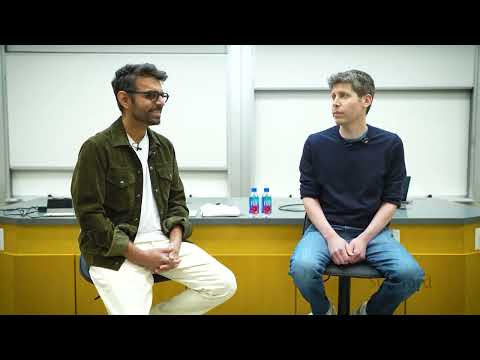
The market said AI scaling would stop working. @sama bet against it at YC. Then again at OpenAI. Both times, the market was wrong. His career principle: when something works at small scale and no one has tested 10x, that is almost always worth attempting. He ran large YC batches when smart people said focus on 10. He scaled AI models when top researchers said gains were uninteresting. The market systematically underweights scale bets because they break things visibly. That is not evidence the thesis is wrong. What this means for where to look next: podcastalpha.substack.com/p/sto-altman-2… Source: Stanford CS153 Frontier Systems - youtube.com/watch?v=F_7M4H…
YouTube video
YouTube
English
4
0
11
2.1K
Podcast Alpha
Podcast Alpha@PodcastAlphaX·
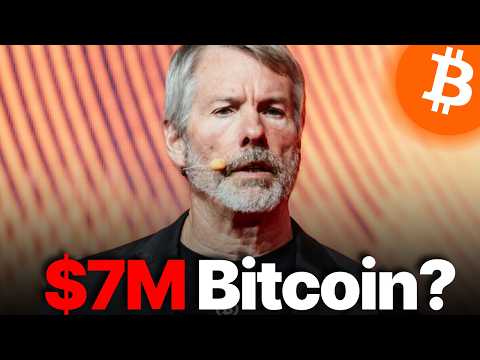
$350 billion in stablecoins pay their holders zero yield. That is not a feature. It is a product gap. @saylor's thesis at BTC Prague: a yield-bearing Bitcoin-backed dollar coin paying 6-8% makes every existing stablecoin economically obsolete while competing directly with money market funds and T-bills. The mechanism that makes it achievable: digital credit. STRC's 11.5% yield structure, now at $11-12B in assets, provides the yield engine for a Bitcoin-backed stablecoin. The infrastructure did not exist 12 months ago. If you hold positions in traditional money market providers or stablecoin issuers, this is the competition entering your market. Not theoretical. The yield mechanism is live. Full breakdown of the four product layers replacing conventional assets: podcastalpha.substack.com/p/btcprague-sa… Source: BTC Prague 2026 - youtube.com/watch?v=r2X04I…
YouTube video
YouTube
English
0
0
1
129
Podcast Alpha
Podcast Alpha@PodcastAlphaX·
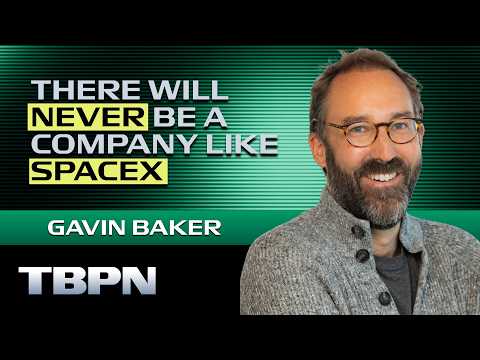
xAI charges $50B per gigawatt. Neoclouds charge $17-25B. Gavin Baker @GavinSBaker of Atreides Management told @johncoogan and @jordihays on @tbpn that Mars is not the SpaceX bull case. Altimeter's research shows xAI monetizes compute at $50B per gigawatt on the Google deal - 2-3x what any neocloud competitor charges. Baker stayed long through the IPO. His 12-month model doesn't track rocket launches. It tracks gigawatt additions. xAI also ordered roughly 20% of NVIDIA's Ruben production. Ruben is easier to deploy than Blackwell. Each new gigawatt at that pricing premium is a significant revenue event. Model gigawatts, not launch cadence. That's the trade. Full breakdown of Baker's near-term SpaceX case: podcastalpha.substack.com/p/gavin-baker-… Source: TBPN - youtube.com/watch?v=PW5n3Z…
YouTube video
YouTube
English
0
0
2
241
Podcast Alpha
Podcast Alpha@PodcastAlphaX·
Mid-to-high single-digit pre-tax returns on capital. That's what neo cloud economics actually show. On iConnections, Jim Chanos explains the CoreWeave and Nebius business model in one sentence: they buy GPUs from Nvidia and rent them to AI companies. The accounting looks like equipment leasing. The returns look like equipment leasing. The problem: these stocks don't trade like equipment leasing. They trade like tech companies - at multiples above the GPU suppliers who control their entire cost structure and supply allocation. Chanos: a middleman should never trade at a premium to the company that controls its supply. Right now, the market has it backwards. The full data center short thesis: podcastalpha.substack.com/p/episode-summ… Source: iConnections - youtube.com/watch?v=MYm33z…
YouTube video
YouTube
English
0
1
3
495
Podcast Alpha
Podcast Alpha@PodcastAlphaX·
If you are watching the Clarity Act as a crypto-industry protection bill, you are watching the wrong signal. Carlos Domingo (@carlosdomingo), Securitize CEO, on @scottmelker: the bill matters most to banks and asset managers, not crypto-native firms. An institution managing $12 trillion cannot authorize a 0.01% balance sheet exposure without 100% legal cover - regardless of how much they want the position. That is not risk aversion. That is legal reality. Crypto companies have built through years of regulatory uncertainty. Banks have not. When the Clarity Act passes, the institutions that move first are not the ones already active in crypto. They are the ones that have been waiting for permission. The institutional on-chain activity that follows will move faster than most market participants expect. Full breakdown: podcastalpha.substack.com/p/wolf-domingo… Source: The Wolf Of All Streets - youtube.com/watch?v=plzdjZ…
English
0
1
1
209
Podcast Alpha
Podcast Alpha@PodcastAlphaX·
Risks are from top and bottom of the stack - not from direct competitors of HBM or other memory makers. Top of the stack are - algorithm changes or memory usage pattern changes can shift demand so HBM usage is highly efficient and utilization drops. Leading to reduced need for the memory chips. HBM willnot go away. Bottom of the stack - new material or manufacturing innovations can drive production with same chip capacity leading to oversupply of memory.
English
0
0
0
20
Nils | Momentum Core Satellite
Gute Einordnung: Die Memory-Nachfrage durch agentic AI wird von vielen noch unterschätzt – ähnlich wie früher bei anderen Commodities. Genau deshalb bleibt $MU bei mir regelbasiert als Satellit investiert. Die Momentum-Regel hat die strukturelle Stärke früh erfasst. HBM bleibt ein klarer Engpass im AI-Stack. Wie siehst du das Risiko, dass der Markt diese Nachfrage schon zu stark eingepreist hat?
Deutsch
1
0
0
70
Podcast Alpha
Podcast Alpha@PodcastAlphaX·
Micron $MU went from $65 to $700+ because the market missed exponential memory demand in the agentic AI world. @jvisserlabs on The Pomp Podcast: the same misread is happening in commodities right now. Silver, copper, and energy are the physical layer that AI cannot exist without - terrestrial or orbital. Capital does not move them out of the ground faster than geology allows. The market is not looking at them because there is no narrative and no 52-week high. That is precisely when the setup forms. He still considers Micron cheap. His framework: when demand is exponential and supply is geological, price will follow. The full commodity positioning thesis inside AI infrastructure: podcastalpha.substack.com/p/jordi-visser… Source: The Pomp Podcast - youtube.com/watch?v=gAqXcG…
YouTube video
YouTube
English
1
1
8
1.8K
Podcast Alpha
Podcast Alpha@PodcastAlphaX·
2026 equity issuance is on pace to break 1999, 2000, and 2021 - combined. Jim Chanos on iConnections: Wall Street has its own printing press. When it runs at full capacity, new supply eventually overwhelms buyer demand. He's watched this play out twice. Early 2021: $3 billion in SPACs per night, equal to the entire US savings rate. Most stocks peaked H1 2021 and sold off through 2022. The SpaceX IPO, Google secondaries, and a near-nightly pipeline of large deals is the 2026 version. Chanos's historical read: a major IPO wave has never been good for the broader market. Maybe this time is different. He does not think so. The full IPO wave framework and what it signals for the market top: podcastalpha.substack.com/p/episode-summ… Source: iConnections - youtube.com/watch?v=MYm33z…
YouTube video
YouTube
English
0
0
0
281
Podcast Alpha
Podcast Alpha@PodcastAlphaX·
"Safety-first" is usually just marketing. Anthropic has receipts that it isn't. @darioamodei built Mythos - a cybersecurity model capable of hacking critical infrastructure. He didn't release it publicly. He called it "enormous commercial cost" on camera, under direct questioning. Not a PR statement. A CEO voluntarily conceding safety cost real money. That's what separates a costly signal from a cheap one. Price the difference into how you think about the IPO integrity premium. Full breakdown of Anthropic's three real-world safety tests: podcastalpha.substack.com/p/inside-anthr… Source: Bloomberg Originals - The Circuit with Emily Chang - youtube.com/watch?v=v1wZwx…
YouTube video
YouTube
English
0
0
0
293
Podcast Alpha
Podcast Alpha@PodcastAlphaX·
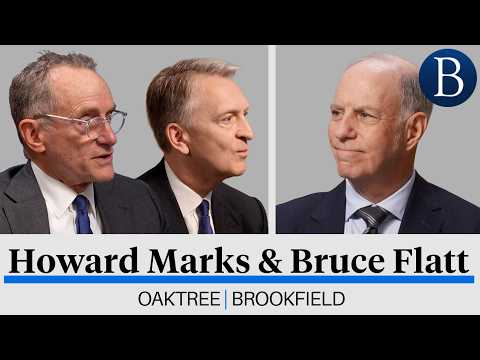
Marks set one condition for selling Oaktree to Brookfield. Flatt honored it for seven years. Howard Marks, Oaktree co-chairman on @Barrons: no insertion into the investment process. No commercial override. The Oaktree brand survives intact. That was the deal. Seven years of integration testing - not inertia. Verification that decentralization is real and not a promise that dissolves under pressure. The payoff: Brookfield's capital lets Oaktree co-invest more heavily alongside clients. Stronger manager-client alignment. More skin in the game at scale. For allocators who use both platforms: the structural separation held. That is what the seven-year test was for. What that separation means for how you use each platform: podcastalpha.substack.com/p/bar-marks-in… Source: At Barron's - youtube.com/watch?v=ZPpcUU…
YouTube video
YouTube
English
0
1
0
233
Podcast Alpha
Podcast Alpha@PodcastAlphaX·
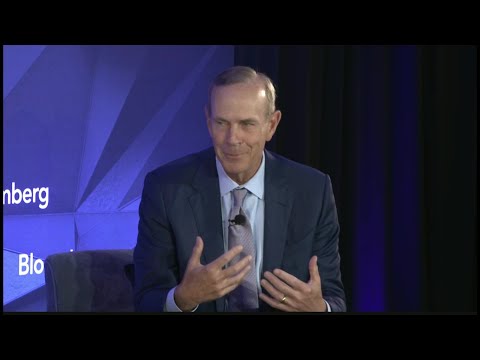
US energy equities: priced for Democratic regulatory risk every four years. That pricing assumption may be breaking. Mike Wirth on @BloombergLive: Democrats are now talking about energy affordability and reliability. His most specific evidence is California's governor's race. A Democratic candidate is openly discussing oil drilling restoration in a state where the prior Democratic governor actively discouraged Chevron customers. People vote with the lights on. Wirth said it. The California data point is real. If affordability replaces climate as the default Democratic lens, the regulatory risk premium on US energy equities compresses across cycles, not just in Republican ones. That compression has a long runway and an early tell. The full Wirth interview: podcastalpha.substack.com/p/mike-wirth-h… Source: Bloomberg Energy Security Executive Briefing 2026 - youtube.com/watch?v=sZT3VA…
YouTube video
YouTube
English
0
0
0
145
Podcast Alpha
Podcast Alpha@PodcastAlphaX·
If you have private credit in your portfolio, Marks's $1.7T observation is the key risk input. Howard Marks, Oaktree co-chairman via @Barrons, frames direct lending in historical terms: zero to $1.7 trillion in 15 years, built entirely in conditions that never included a genuine credit contraction. The two forces that drove growth: declining rates made leveraged investments attractive, and a persistently benign environment meant investors never experienced being unable to exit when they needed to. Now rates are higher for longer. The illiquidity premium that looked like free money is the price of being locked in when conditions change. $1.7 trillion in assets. First real test pending. Framework: podcastalpha.substack.com/p/bar-marks-in… Source: At Barron's - youtube.com/watch?v=ZPpcUU…
YouTube video
YouTube
English
0
0
0
206
Podcast Alpha
Podcast Alpha@PodcastAlphaX·
Why is @AnthropicAI suddenly saying humans matter - after years of job-displacement warnings? Matan Grinberg of Factory gave @HarryStebbings the answer on @twentyminutevc: Anthropic needs its IPO retail investors to trust them. The workers it threatened to replace are the same people it wants to buy the stock. The pattern is structural: companies that raised from outside capital made the job-displacement case because it created urgency for institutional investors. Companies that didn't need outside capital - Meta, DeepMind - never made the case. Incentives explain the messaging better than philosophy does. If you are pricing Anthropic's IPO, that tension is something to resolve before you size the position. Full analysis: podcastalpha.substack.com/p/20vc-matan-g… Source: 20VC with Harry Stebbings - youtube.com/watch?v=lgo_Qb…
YouTube video
YouTube
English
0
0
3
289
Podcast Alpha
Podcast Alpha@PodcastAlphaX·
No AI layer captures pricing power permanently. Not the model labs. Not the apps. Not the infrastructure. Matan Grinberg of Factory told @HarryStebbings on @twentyminutevc: the whole stack is a three-way commoditization war. Model labs commoditize the application layer. App companies commoditize the models. Infrastructure companies want to own everything. His framing: the org-chart meme where every Microsoft division points guns at every other. That is an accurate picture of what is happening in AI today. Value rotates across layers over multi-year windows. Where it sits right now - and how to position around the rotation - is the thesis the full piece unpacks. Full breakdown: podcastalpha.substack.com/p/20vc-matan-g… Source: 20VC with Harry Stebbings - youtube.com/watch?v=lgo_Qb…
YouTube video
YouTube
English
0
0
4
707
Podcast Alpha
Podcast Alpha@PodcastAlphaX·
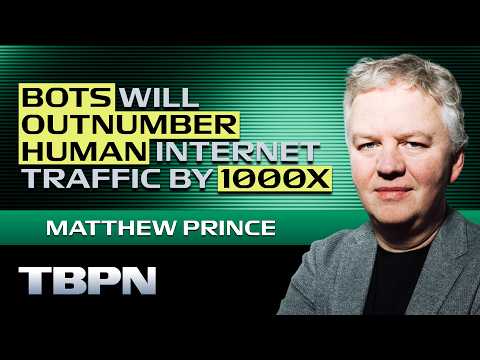
Acquiring an open-source tool is not a revenue move. It is a default-setting move. $NET bought Void Zero (Vite, 130M weekly downloads) and is keeping it open source. Matthew Prince on @tbpn: the goal is to make Cloudflare Workers the obvious deployment destination for any Vite project - before the developer consciously chooses a platform. That is a different kind of moat. Not switching costs. Default gravity. The developer never decides to use NET infrastructure. It is already there when they deploy. Vite + Workers + edge inference = a full-stack agent platform no one has named yet. The acquisition thesis: podcastalpha.substack.com/p/matthew-prin… Source: The Bear Paw Network (TBPN) - youtube.com/watch?v=HWheP8…
YouTube video
YouTube
English
0
0
2
315
Podcast Alpha
Podcast Alpha@PodcastAlphaX·
The largest marketplace on earth will not be visible to humans. @RaoulGMI has been building toward this claim for years. AI agents transacting with AI agents at machine speed - buying data, selling compute, exchanging processed information. It's already live: API calls and MCP (the protocol that lets AI tools call other AI tools) are the first layer. Google is already in the quadrillions of tokens per year. @jvisserlabs frames the unlock: two-thirds of $400 trillion in global assets sit dormant and illiquid. Tokenize them, velocity rises, and GDP grows - with no new economic activity required. The public market doesn't price this yet. That gap may be the longest trade of the decade. Full thesis: podcastalpha.substack.com/p/raoul-pal-an… Source: Raoul Pal The Journey Man - youtube.com/watch?v=jGNmWF…
YouTube video
YouTube
English
0
0
0
234
Podcast Alpha
Podcast Alpha@PodcastAlphaX·
If you're building an Anthropic IPO model, Bloomberg just gave you the three tests that determine whether the safety premium holds. @darioamodei walked through each on camera. Did they actually sacrifice commercial upside for safety? (Mythos: yes, at "enormous commercial cost.") Did they hold a line against government power? (Pentagon ban: yes, with lawsuits to prove it.) Are they complicit in the harms they warned about? (Iran: "we don't know exactly how the models were used.") Each answer is real, not clean, and worth pricing independently. Full breakdown - the documentary, the signals, and what they mean for the IPO: podcastalpha.substack.com/p/inside-anthr… Source: Bloomberg Originals - The Circuit with Emily Chang - youtube.com/watch?v=v1wZwx…
YouTube video
YouTube
English
0
0
0
236
Podcast Alpha
Podcast Alpha@PodcastAlphaX·
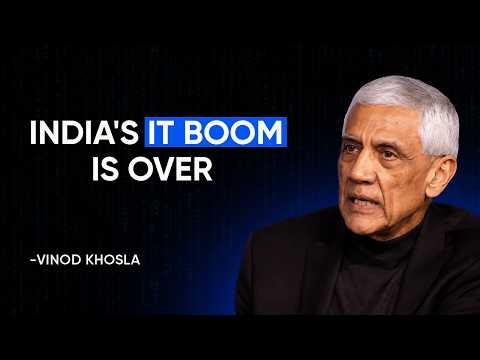
Why is Vinod Khosla not worried about AI concentrating wealth in a handful of companies? Because he thinks the question is wrong. The right question: will 95% of people have access to better healthcare, education, and legal services in 2040? His answer is yes - not because they earn more, but because those services trend toward near-free. Anthropic at $1 trillion and Google at $5 trillion capturing AI profits does not change that outcome. The consumer basket gets cheaper regardless of who captures the margin. The full deflationary thesis and what it means for your portfolio: podcastalpha.substack.com/p/episode-summ… Source: SparX by Mukesh Bansal - youtube.com/watch?v=pfGAdz…
YouTube video
YouTube
English
0
0
3
841
Podcast Alpha
Podcast Alpha@PodcastAlphaX·
Why does Vinod Khosla refuse to run internal rate-of-return spreadsheets? Because the investments worth making are the ones where you can't make the forecast. OpenAI, Commonwealth Fusion Systems, and GitLab were all bets where the probability of success looked low but the upside, if right, was enormous. 91% of AI unicorns are now in the Bay Area. 2% in New York. That is not luck. That is a method. And that method is now pointing at healthcare AI and fusion energy. The full thesis on SparX: podcastalpha.substack.com/p/episode-summ… Source: SparX by Mukesh Bansal - youtube.com/watch?v=pfGAdz…
YouTube video
YouTube
English
2
2
11
1.6K
Podcast Alpha
Podcast Alpha@PodcastAlphaX·
Six months ago: engineers used Claude to help write code. Today: on Boris Cherny's team at Anthropic, 100% of code is AI-written. Cherny built Claude Code after @darioamodei recruited him from rural Japan - where he was making miso and going to farmers markets. The product he built didn't augment software engineering. It restructured it. At any point, he might have a few Claude instances running, or a few thousand, working simultaneously. Claude went from 21% to 48% enterprise market share in nine months. The adoption curve inside Anthropic's own walls tells you where your enterprise customers are headed. Breakdown of what this means for the coding tool market: podcastalpha.substack.com/p/inside-anthr… Source: Bloomberg Originals - The Circuit with Emily Chang - youtube.com/watch?v=v1wZwx…
YouTube video
YouTube
English
0
1
1
361
Podcast Alpha
Podcast Alpha@PodcastAlphaX·
@Pablo01618 @AravSrinivas @twentyminutevc Cerebras inference chips and Groq chips are the alternatives - but they do not have enough market share in inference yet. Plus the best models need NVDA GPUs with HBM.
English
1
0
1
183
Podcast Alpha
Podcast Alpha@PodcastAlphaX·
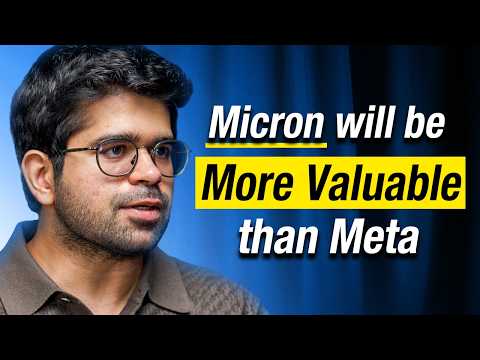
$MU at $1 trillion market cap. Meta at $1.3-1.4 trillion. @AravSrinivas says Micron closes that gap in 6-12 months if HBM stays the binding constraint. On @twentyminutevc: every inference run needs HBM memory. That has pushed HBM costs up 5x in cost of goods. The entity that makes HBM gets the same structural advantage as the entity that makes the GPU - but without the GPU narrative already priced in. Srinivas's bottleneck framework: whatever is the hardest-to-replace constraint in the AI stack commands the price premium. Today that is HBM. CPUs are also getting scarce again because agent orchestration loops run on CPU, not GPU. The trade is the bottleneck, not the chip. Full infrastructure bottleneck breakdown: podcastalpha.substack.com/p/aravind-srin… Source: 20VC with Harry Stebbings - youtube.com/watch?v=OxFyVc…
YouTube video
YouTube
English
8
17
207
47.8K