QuantifiedStrategies.com

5.2K posts

QuantifiedStrategies.com banner
QuantifiedStrategies.com

QuantifiedStrategies.com

@QuantifiedStrat

Daily backtested quant edges on Stocks/ETFs/Futures. 1000+ algo trading strategies tested since 2012. Full library: https://t.co/Op6cQYH2VZ
Nordic Beigetreten Temmuz 2021
125 Folgt16.5K Follower
QuantifiedStrategies.com
QuantifiedStrategies.com@QuantifiedStrat·
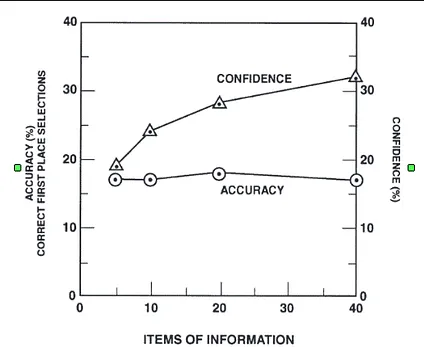
The Power of Simplicity Simple trading strategies, characterized by having few variables or parameters, trump complex strategies. • Effectiveness and Robustness: Simple strategies are generally more effective, easier to implement, and less likely to fail or go wrong compared to complex counterparts. Simple systems are more robust because their rules work in a wider variety of circumstances. • Solving Complexity with Simplicity: While markets are complex, it is counterintuitive but effective to solve complex problems using simplicity. • The Role of Experience: Success in trading is not about building complex things, but about brainstorming many simple ideas. Experience is essential in finding ideas to test, and seasoned traders understand that once the minimum information needed to form a hypothesis is acquired, adding variables usually does not improve accuracy. The Risks of Complexity The sources emphasize that complexity introduces significant risks that undermine performance: • Increased Risk of Overfitting: The primary danger of complexity is the increased risk of curve-fitting. Adding filters and variables exponentially increases the risk of curve-fitting results to the data set. • Overconfidence and Error: Additional complexity leads to overconfidence bias, where the trader becomes overly confident in their ability to predict, even though the strategy may perform worse. Complex strategies are more prone to errors. If a strategy has multiple variables, a tiny change in just one can render the entire strategy worthless because the effects are multiplicative. • Market Complexity and Uncertainty: Trading is inherently difficult because markets are complex and depend on an almost unlimited number of factors. This complexity makes trading susceptible to change and uncertainty. The Psychological Bias Toward Adding Elements A major challenge for traders is a cognitive or psychological bias toward complexity. • The Tendency to Add: When faced with a problem, both traders and people in general tend to select solutions that involve adding new elements (features, variables, legislation) rather than taking existing components away. This is the natural inclination in most aspects of life. • Perceived Value: Traders are inclined to add variables because they believe a more complex strategy will perform better than a simple one. Complexity tends to "sell better," as people often assume they get more value from a strategy with eight variables than one with two. • Occam’s Razor Ignored: This tendency to add complexity is utterly opposite of Occam’s Razor, which suggests that the simplest of two competing theories should always be preferred. The Solution: Removing Variables The key insight for improving trading strategies is to focus on removing variables, not adding them. • Better Solutions Through Subtraction: Removing elements can be a radical idea for many, but it often leads to better and more reliable solutions. By subtracting or removing variables, traders can improve results and simultaneously reduce the risk of overfitting. • Building Strategies Simply: Traders should build many straightforward strategies that complement each other. • Cautions for Backtesting: When forming a hypothesis and starting backtesting, traders should always start with the simplest variables. Complexity should only be added later by scrutinizing the trades that were removed from the backtest. When a strategy seems to stop working, the instinctive urge is to add a variable, but the correct course of action may be to do the opposite and remove one.
QuantifiedStrategies.com tweet media
English
0
0
1
148
QuantifiedStrategies.com
QuantifiedStrategies.com@QuantifiedStrat·
You must understand the potential risk in your strategies, but above all, you must stress test your brain: Can you deal with drawdowns and consecutive losing trades? You’ll be surprised how pessimistic you get after just a few losses and small drawdowns. A 20% drawdown looks like a walk in the park when you are simulating strategies, but when money is at stake, you’ll most likely abandon a strategy even with smaller drawdowns. You must beat your brain before you beat the markets!
English
0
0
7
607
QuantifiedStrategies.com
QuantifiedStrategies.com@QuantifiedStrat·
Day trading with daily bars? Is it possible? Think day trading means glued to 5-minute charts? Think again! You can day trade effectively using daily bars, and it might even be a better solution for most traders. What's a "bar" anyway? In trading, a bar represents the open, high, low, and close prices within a specific period. A "daily bar" captures these four points for an entire trading day. The conventional wisdom suggests intraday charts, but here’s why daily bars are argued to be superior for day traders: Key Advantages: • Reduced Behavioral Mistakes: Less screen time means fewer impulsive decisions and helps avoid biases like overconfidence (for example), leading to more systematic trading. • Less Market Noise: Daily bars filter out the constant fluctuations of intraday volatility, making underlying trends clearer. Much of the price action during the day is just noise anyway. • Time Efficiency: This approach allows traders more time for research and backtesting, rather than constant chart monitoring. It also makes day trading compatible with a full-time job, as entries and exits can be focused around the open and close. • Lower Costs: Focusing on open and close trades can mean fewer transactions, leading to less commissions and slippage. Consider the Downsides: • Fewer Trading Opportunities: By limiting focus, you might miss some intraday chances. • Potential for Bad Quotes: Daily high and low prices can sometimes be inaccurate due to after-hours activity or delayed reporting. #daytrading
English
2
1
10
1.2K
QuantifiedStrategies.com
QuantifiedStrategies.com@QuantifiedStrat·
Here is a short visual version of Williams Percent Range Indicator Backtest.
English
0
0
3
784
QuantifiedStrategies.com
QuantifiedStrategies.com@QuantifiedStrat·
Today is OPEX day (options expiration) - the third Friday of the month. It’s a good day for making money in stocks! Months ago, we published a note on how to trade this day:
QuantifiedStrategies.com@QuantifiedStrat

This is how you make money in stocks on the third Friday of the month: Trading rules based on market imbalances: Adjust each stock’s closing price based on the movement of the S&P 500 futures. This gives you the fair value for the stock. For example, if futures points to a 0.5% higher open, mark the stock’s fair value as 0.5% above the prior close. Next, place both buy and sell orders around this fair value. A buy order at x% below, and a short order at x% above. For instance, you might buy 0.5% below fair value and short 0.5% above it. Simple and mechanical. You need to send many orders. At the open, some will get filled while many don’t. On busy days, you could end up with positions in as many as 200 tickers. Exits are handled with a mix of profit targets and time-based exits. These are the basic rules, but you most likely need a few twists. We have been trading these imbalances and it has always been the most profitable day of the month (on average). However, for retail traders, it’s not easy to trade it because you need to send a large number of limit orders (open only orders). This takes buying power and automation. Moreover, you never know how many fills or stocks you will end up with. We used to send over a thousand orders. The logic behind the strategy: A large portion of global index derivative trading activity centers on products tied to the S&P 500 index (SPX). Many of these derivatives, like certain futures and options, are “a.m.-settled,” meaning their final payoff price is determined by the index’s opening price on the third Friday of the month, known as the Special Opening Quotation (SOQ). These settlement prices have been consistently biased upwards for the last 25 years. Here is the specific price pattern: 1. Drift Up: S&P 500 equity prices drift steadily upward from the close of regular trading on Thursday to the open on the 3rd Friday morning (9:30 AM E.T.). On these specific days, the SOQ exceeds the previous closing price by an average of 18 basis points (0.18%). 2. Sharp Reversal: Immediately after the derivative payoffs are calculated at the open, the price rise reverses sharply, falling back down by about noon the same day. This creates a distinctive “tent-shaped reversal pattern”. It is confined specifically to the a.m. settlement window. It is also documented in other major indices that use a.m. settlements, such as the Nasdaq 100 and the Dow Jones Industrial Average. #DayTrading

English
0
0
3
1K
Andy R
Andy R@TheLineBetween2·
@QuantifiedStrat Is there out of sample data used for these tests?
English
1
0
0
84
QuantifiedStrategies.com
QuantifiedStrategies.com@QuantifiedStrat·
Overnight Trading Strategy: The 3-Day Down Setup. A classic "Mean Reversion" strategy that exploits the "Overnight Effect," where the majority of S&P 500 returns historically occur between the close and the next day's open. One simple rule. The Strategy: 3-Days Down ✅Asset: $SPY (S&P 500) ✅Trigger: Market closes lower 3 days in a row. ✅Entry: Buy at the 3rd day's close. ✅Exit: Sell at the next day's open. Results (Since 1993): ✅ 643 Trades ✅ 65% Win Rate ✅ 8% Max Drawdown The "Greed" Twist: If you hold until the next day's CLOSE instead of the open: ✅Average gain jumps to 0.24% per trade. ✅But... win rate drops and drawdown increases significantly. Optimization: By refining the entry/exit, our version hits ~0.35% per trade with lower volatility. #TradingStrategies #SPY #quantifiedstrategies
English
1
8
64
5.7K