Reframing Childhood

876 posts

Reframing Childhood banner
Reframing Childhood

Reframing Childhood

@ReframingChood

No more 'It didn't do me any harm'. At the intersection of healing trauma, and what it means to learn, childhoods must be reframed.

Beigetreten Haziran 2022
875 Folgt234 Follower
Reframing Childhood retweetet

Naomi Fisher
Naomi Fisher@naomicfisher·
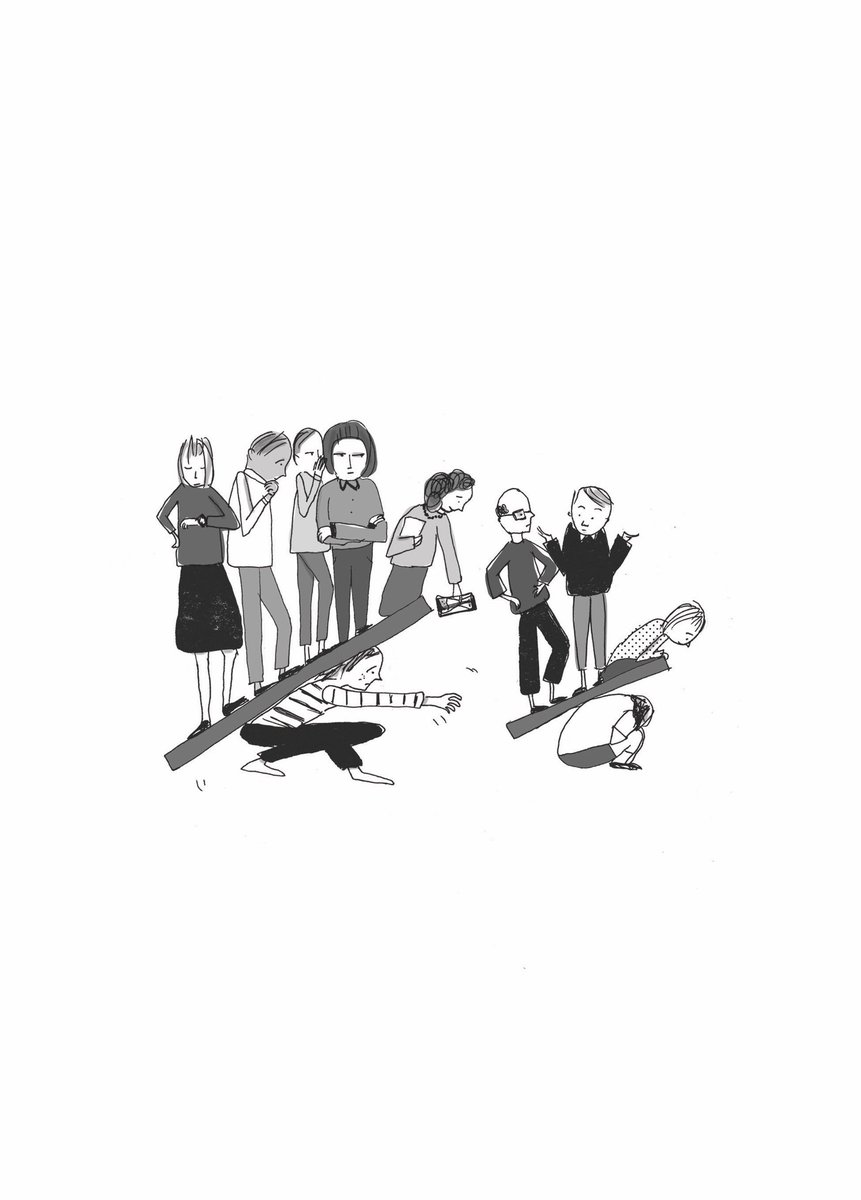
I was talking to a grandmother last week about schooling. ‘I can see the difference’ she said. ‘When my children were young, primary school was relaxed. If the weather was good, they went outside and ran around. If they were sick, they stayed at home. Now with my grandchildren they are seated in desks for more of the day and if they are ill, they are worried that they’ll lose their 100% attendance for the term. The pressure is on to pass their phonics test when they are six and then to learn their times tables at speed by the time they are nine. They feel it and their parents feel it too’. There’s lots of talk about SEND (special educational needs and disabilities) at the moment, and how increasing numbers of children are being identified as SEND. It’s less common to ask questions about what SEND really means, and whether the education system creates more children ‘with SEND’ as it becomes more pressured and rigid. For what SEND really means is that a child cannot learn in the way which mainstream education expects. They cannot keep up with expectations, either for academic work or for behaviour. SEND is something which happens in the interaction between a child and the education system. In a system where no 6-year-old is expected to sit still and learn to write their name, then a 6-year-old who just wants to run around outside isn't a problem. In a system where everyone is meant to be able to read by age 6, then they are. We know from research that if a child is young in their year, they are more likely to be identified as ‘having SEND’. We know that summer born boys are far more likely to be identified as ‘having SEND’ than autumn born girls. We know that the impact of this immaturity resonates through the years, with the youngest in the year doing less well at GCSE. We know that the number of children ‘with SEND’ is going up year on year. It's not really plausible that more children each year have difficulties in learning, nor that being born in August makes you more likely to have learning problems than if you are born a few weeks later in September. It’s far more likely that in the push to ‘drive up standards’ the education system is becomes less, not more, suited to how children develop and learn. It’s more likely that the system is penalising immaturity – and children are inherently immature. That isn’t a lack or a defect, it’s a defining part of childhood. As the education system becomes more rigid and pressured, we’d expect more children not to be able to manage without adaptations. This is exactly what we see. Those children are holding up the flag for all the others, saying that this system is not child-friendly and doesn’t take account of developmental needs and differences. What if, instead of having higher expectations of the children, we had higher expectations of the education system? What if those expectations were of flexibility, reducing pressure and prioritising lifelong learning and wellbeing instead of short-term testing? What if we saw the increasing number of children ‘with SEND’ as a sign that the system isn’t working for the many ways in which children develop, rather than a sign that more and more children have learning difficulties? We’ll never sort the ‘SEND crisis’ until we start looking at SEND as an interaction between children and the education system. The more rigid the system is, the more children it will fail. Illustration by @_MissingTheMark from the book A Different Way to Learn.
Naomi Fisher tweet media
English
65
401
1.4K
114.4K
Reframing Childhood
Reframing Childhood@ReframingChood·
@educationgovuk Is it the learning or the attendance that matter most? For some children t 2 do NOT equate. Attendance is about getting parents into work. That is the whole truth. But when a child really breaks, nobody will be at work and the costs are high, emotionally, financially.
English
0
0
6
198
Department for Education
Department for Education@educationgovuk·
Missing just a few school days impacts your child's future. Our research shows Y11 pupils with excellent attendance are almost TWICE as likely to achieve grade 5+ in English and maths GCSEs. Find out how the government is tackling attendance as part of its Plan for Change ⬇️
English
89
17
44
69.1K
Reframing Childhood
Reframing Childhood@ReframingChood·
@lathan_miss IMO 3 year olds have a better felt sense of what they need to do in order to fit into their own present and future than any 30, 40, or 50 year old ‘instructing’ them does. Let them play.
English
0
0
0
37
Reframing Childhood retweetet
Steve Chalke
Steve Chalke@SteveChalke·
The view that children are not in school because their parents now work from home & so they do too, is a nonsense. Children are out of school because the curriculum doesn’t meet their needs & Ofsted’s approach is confrontational rather than helpful, collaborative & developmental!
English
34
61
398
22K
Reframing Childhood retweetet
JennieJo
JennieJo@Life191621Jo·
@naomicfisher Does anyone know if it is actually legal to punish a child for their academic achievement? Is it acceptable under the UN Convention on the rights of the child, to which we are a signatory? Would be interesting to know.
English
3
2
13
409
Naomi Fisher
Naomi Fisher@naomicfisher·
The detentions will continue until you are good at Maths? A school is giving those who score below 90% in their maths homework detentions. They say this is to improve standards in maths. It won’t improve children’s maths or their learning and this is why. Giving a detention is a punishment. It assumes that the child has done something intentionally that they should not have done, and the detention will incentivise them not to do it again. It essentially assumes that not doing well in Maths homework was a choice. This isn’t how learning works. A child can work hard, but even then, everyone will not get the same results. Learning, particularly children’s learning is not as simple as ‘information in, information out’. Punishing those who find maths harder will not turn them into people who find maths easy. In addition, learning is affected by our emotions and how we feel about what we are doing. If a child is anxious about maths, they will find maths harder. Maths anxiety is a problem for many children, because they are scared to get it wrong. If you can't risk make mistakes, it's very hard to learn. By adding detention for those who get under 90%, this school is making homework higher stakes. They are saying that mistakes are punishable behaviour. They are doing so in the belief that if they put on more pressure, children will do better. Unfortunately this approach has side effects, including high anxiety, performance anxiety and could lead to school attendance problems down the line. Why does it matter? Detentions won't help children learn, and they will have other consequences down the line. Learning is so much more complicated than 'just try harder'. No child should be punished for making mistakes.
English
50
54
261
29.6K
Amog3w
Amog3w@a30679929·
@Dotmay47 @johncosgrove405 Please take care of yourself Tilly. My wife had a full breakdown about 3 years ago after being a teacher for 14+ years. Totally broke her. 3 suicide attempts many years of depression, utter devastation to our family, she's still very lost due to also losing her career she loved
English
4
2
13
1.8K
John Cosgrove
John Cosgrove@johncosgrove405·
This is such a depressing read. Martyn Oliver has learnt nothing and proposes to change absolutely as little as he can get away with. "Raising the bar for standards" is a euphemism for "bullying will resume as before." Oh and ... schoolsweek.co.uk/ofsted-chief-i…
English
30
66
300
35.2K
Reframing Childhood retweetet
Missing The Mark
Missing The Mark@_MissingTheMark·
Regurgitated phrases about attendance and feckless parenting is always so far from the truth. I know that the families I speak to every week are far from lazy or nonchalant, they work the hardest, shelving all their own needs for their child who is in distress, trying
Missing The Mark tweet media
English
2
15
104
3.4K
Reframing Childhood
Reframing Childhood@ReframingChood·
@wellbeingpixels @naomicfisher And guidance often doesn’t work for those who need it, as their problems go much deeper than simply ‘not knowing the rules’… help and support is always what’s needed… but nobody’s willing to put £ where it’s needed.
English
0
0
1
12
Reframing Childhood retweetet
Naomi Fisher
Naomi Fisher@naomicfisher·
Why do politicians think that the way to improve education is to have a dig at parents? Who are they trying to impress when they say things like ‘parents have responsibilities too?’, as if parents did not know this? You won’t improve education or school attendance by shaming and blaming parents. It’s likely to have the opposite effect. Are they really so out of touch that they can’t see this? 
English
20
41
236
15.4K
Reframing Childhood
Reframing Childhood@ReframingChood·
@SteveChalke @teamsquarepeg When I took my ND child out of school aged 6, so much trauma spilled out of them .. looked like rage but I knew it was survival state energy. How might it have looked if I’d pushed them beyond their limit for 10+ years? Some children are hurting more than they can show us
English
0
0
1
43
Reframing Childhood retweetet
Steve Chalke
Steve Chalke@SteveChalke·
Banning knives, limiting their sale or remodelling their tips so they are not so sharp all makes sense - but the real answer to youth violence is the development of more caring and supportive communities, investment in youth work and a far more inclusive approach to education!
English
23
53
287
11.9K
Reframing Childhood retweetet
Gerry🧠🌱
Gerry🧠🌱@gerrydiamond71·
A brains top priority is safety. So,it is biologically impossible for a pupil to process or absorb information if they are overwhelmed or in a state of stress,worry, or anxiety.Without safe,predictable,attuned,emotionally available adults, development & attainment will suffer🧠🌱
English
0
28
77
3.1K
Reframing Childhood retweetet
Suzanne Zeedyk
Suzanne Zeedyk@suzannezeedyk·
There has been a lot of attentn on social media to this speech, this moment of courage, yesterday in the USA. This is the adult version of an infant still face procedure. That is why it is so unnerving for us to watch. When 'the other' is unmoved by pleas, danger alarms ring.
English
4
8
43
4.5K
Reframing Childhood retweetet
Steve Chalke
Steve Chalke@SteveChalke·
Until we adapt & develop our whole educational pedagogy, curriculum, assessment & regulation to be wider, more inclusive & more relevant to children’s lives, learning-styles & circumstances, the number of children needing EHCPs, & parents demanding them, will continue to ballon.
English
13
31
139
6.9K
Sarah Dalton
Sarah Dalton@MrsSDalton75·
@MartinBarrow As far as I understand it children can only build “resilience” when they generally feel safe most of the time. Otherwise they turn to coping mechanisms instead which may help them get through difficulties at the time but will cause much bigger problems in the long run.
English
2
0
7
185
Martin Barrow
Martin Barrow@MartinBarrow·
“Resilience”: I know I’m not alone in being concerned about the way this is put forward as a solution to young people’s mental health challenges bbc.co.uk/news/articles/…
English
26
34
120
9.9K
Peter Gates
Peter Gates@petergates3·
Truly shocking to watch the #EduLads vying with each other to support the whitewashing of child abuse.
Peter Gates tweet media
English
8
13
44
8.2K
Sue
Sue@ballater6·
@petergates3 Wonder how they woukd feel if this was happening to their child……..
English
2
0
2
354