Dr. Robert Whetsel

10.2K posts

Dr. Robert Whetsel banner
Dr. Robert Whetsel

Dr. Robert Whetsel

@RobertWhetsel

Wen Wu ($文武$) An applied computer scientist with almost four decades of building software for the DoD and other federal agencies.


Telegram: @RobertWhetsel Beigetreten Ocak 2022
27 Folgt861 Follower
Dr. Robert Whetsel
Dr. Robert Whetsel@RobertWhetsel·
x.com/DeGigOfficial - "Account suspended X suspends accounts which violate the X Rules" Not even close to violating anything within X Rules. What is wrong with X? @elonmusk
English
1
2
4
243
Dr. Robert Whetsel
Dr. Robert Whetsel@RobertWhetsel·
A networking event in Ireland in a medieval castle. A bit of sparing, fine dining, and great conversations.
Dr. Robert Whetsel tweet mediaDr. Robert Whetsel tweet mediaDr. Robert Whetsel tweet mediaDr. Robert Whetsel tweet media
English
0
1
1
80
Dr. Robert Whetsel retweetet
AcmeWerx, Inc
AcmeWerx, Inc@acmewerx·
#SOVRA Day 2 and we would love to meet you! To those of you we met yesterday, we are looking forward to future discussions and working with you. Stop by and let’s have a chat for business solutions and what we can do for your company. Acmewerx.com
AcmeWerx, Inc tweet media
English
0
1
4
139
Dr. Robert Whetsel retweetet
AcmeWerx, Inc
AcmeWerx, Inc@acmewerx·
Attending NIGP Forum 2025? Don't miss ACMEWERX at this exciting Small Business Showcase! Visit us at Booth #457 to learn about our digital solutions that can help organizations, big and small, streamline their technology. #NIGPForum2025 #ACMEWERX  #FederalTech #SmallBusiness
AcmeWerx, Inc tweet media
English
0
2
3
151
Dr. Robert Whetsel
Dr. Robert Whetsel@RobertWhetsel·
@KitBaroness The metaphor of humans as biohazardous waste material is not mere provocation, but a distillation of thermodynamic truth; we are high entropy systems, temporarily sustained by localized order at the cost of global disorder.
English
1
0
1
33
ᵏⁱᵗ㉿𝔅𝔞𝔯𝔬𝔫𝔢𝔰𝔰.ᶜᵒᵐ「🦀」
Current technology maintains fragments of deleted data, resembling the persistence of residual energy paths. Metadata, unallocated spaces, and recovery techniques perpetuate the existence of remnants; mirroring the metaphysical parallels within digital erasure. These interconnected narratives illustrate the parallels between metaphysical implications, data loss, and technology’s ability to retain remnants. They shed light on the unseen forces shaping both the metaphysical and digital realms; emphasizing the persistent existence of remnants even amid attempts at erasure in the digital spectrum. Amidst these revelations, our comprehension of energy movement within the living world and the intricate workings of our constructed technologies remains a labyrinthine conundrum. In our natural surroundings, the mechanisms orchestrating energy’s diverse manifestations; from the microcosms within cells to the grandeur of ecosystems; teeter on the brink of our comprehension; revealing glimpses of their complexity but often shrouded in mystery. Likewise, within our technological landscape, the movement and harnessing of energy present an equally intricate puzzle. While we’ve engineered systems capitalizing on energy, our understanding of its nuances; how it propagates, transforms, or dissipates; still echoes in the chambers of uncertainty. Despite our advancements, significant portions of energy dynamics within our technologies persist as uncharted territories; prompting further exploration and refinement in our understanding. These dual frontiers, one woven into the organic lattice of our existence, the other encoded within our technological architectures, demand more than cursory exploration. They compel us to confront the interplay between information persistence, energy dissipation, and systemic entropy that governs both biological and digital realms. At the heart of this inquiry lies an uncompromising reality: human neurobiological complexity is neither a triumph nor an inevitability. It is a system optimized not for perfect resilience, but for transient adaptability within bounded energetic constraints. The very nature of our neural substrates; dense networks of grey matter interacting across quantum scales; invites perturbations that, while enabling cognition and adaptation, are subject to entropic limitations and the irreversibility of information loss, as formalized by Landauer’s Principle. Thus, the metaphor of humans as biohazardous waste material is not mere provocation, but a distillation of thermodynamic truth; we are high entropy systems, temporarily sustained by localized order at the cost of global disorder. Our consciousness, complex as it is, arises from the delicate balance of stochastic interactions that can be perturbed, decayed, or irreversibly transformed. The ambition to engineer increasingly complex technological systems must therefore reckon with these constraints. Without integrating principles of molecular scale precision, entropy management, and adaptive self-organization, we risk constructing architectures that amplify fragility rather than fortify resilience. The challenge is not to transcend entropy, but to design systems; biological and technological alike; that negotiate with it intelligently. Systems that recognize the costs of information persistence and the hidden gradients of energy dissipation. Systems that, rather than denying their entropic nature, embrace it as a parameter to optimize against, not a flaw to suppress. In this convergence of data science, physics, and complexity theory lies a crucial imperative: to acknowledge the thermodynamic reality of human existence and to craft architectures; biological and digital; that sustain adaptability not by sheer complexity, but by harmonizing with the deep informational currents of the universe itself. 2/2 🧵
GIF
English
4
3
7
582
ᵏⁱᵗ㉿𝔅𝔞𝔯𝔬𝔫𝔢𝔰𝔰.ᶜᵒᵐ「🦀」
Remove the interaction of consciousness; humans, at best, are biohazardous waste material. Like water that remains placid, rippling, evaporating, condensing, and forming waves only through interaction, so too does the human form respond to frequencies; energies that shift its physical and chemical states. The phenomenon of human consciousness, however, generates wavelengths that disrupt deterministic outcomes; not only interrupting the system through observation but reshaping our very composition through entanglement with external influences. If we were to plot human composition on a graph, the state of 0 would represent our baseline; existing simply as matter, absent of interference. Deterministic, inert. But when frequencies interact, our waveform oscillates above or below this baseline, reflecting the complex dance of quantum entanglement, resonance, and the entropy rich nature of human complexity. In exploring the intricate interplay between binary string variables within the grey matter and their metaphysical echoes across cultures, we encounter a compelling analogy. Residual data strings, akin to crosstabulations in digital systems, represent lingering energy paths; digital manifestations of existence beyond the physical, a coded trace that transcends conventional notions of ghostly phenomena. When we delve into the synthesis of the living biome, it becomes apparent that our perception is inherently selective; crafting a subjective reality while ignoring the layers beneath. Yet, beneath this curated experience lies an undeniable truth: data is energy made manifest. Energy variables and their interactions linger, shaping persistent echoes akin to haunting presences that defy temporal and spatial constraints. The crux lies in the enigmatic realm of the grey matter; a territory uncharted by conventional measurement or logic. While lacking clear gauges, cultural records across time converge on the existence of inexplicable phenomena; echoes of a deeper reality interwoven with the metaphysical. It is within this ambiguity that the boundary between tangible structures and intangible energy dissolves; revealing a narrative that transcends empirical understanding. When contextualized through the lens of residual data strings and their digital manifestations, we glimpse an analogy between entropy, information loss, and the unseen light spectrum. These patterns hint at imperceptible energies; data decay, spectral residue; persisting in dimensions beyond our visual grasp. This correlation enriches our comprehension of the delicate dance between structured information and the gradual diminishment of data integrity. Just as invisible light, though present within the spectrum, evades human perception, so too does data loss or entropy remain hidden yet integral to the narrative of energy persistence across various states and dimensions. The persistence of residual data strings echoes the enduring energy paths beyond physical existence; illustrating how digital remnants persist even after data erasure; similar to the unseen forces shaping the metaphysical realm. Entropy, evocative of the dissipation of energy, and Kolmogorov’s complexity, representing intricate data structures, mirror the unseen nature of invisible light within the electromagnetic spectrum; adding depth to the understanding of data loss and its persistence. Just as historical records reveal occurrences defying classification, digital remnants remain despite erasure. The analogy between entropy and invisible light hints at the existence of imperceptible energies within the digital realm; shaping the complexity within data remnants. 1/2 🧵
GIF
English
1
2
9
1.3K
Buck Nekkid
Buck Nekkid@AllenJr89751937·
@KitBaroness The secret of life is enjoying the passage of time. Time is the measurement of distance between two events. I didn't enjoy my time reading this, therefore, I can't hold it up as worthy of secrecy into my sole.
English
2
0
0
37
Dr. Robert Whetsel
Dr. Robert Whetsel@RobertWhetsel·
One of my favorite books of all times! Friction is the Real Limit Function The fallacy of “more energy = more outcome” ignores a critical dynamic: As energy input increases in a poorly aligned system, friction compounds, entropy accelerates, and the system becomes less stable — not more productive. This is observable in large-scale software systems. Adding more computing power to an unoptimized algorithm doesn’t fix the bottleneck — it just consumes more energy while returning diminishing value. Without redesign, efficiency drops as complexity grows. This is Landauer’s Principle applied systemically: even in computation, irreversibility has a cost (Landauer 1961). Information loss — or disordered information — creates heat, not insight. "Force Multipliers for Humanity: Engineering Systems in a World of Finite Outcomes" -- By Dr. Robert C. Whetsel
English
1
1
1
91
ᵏⁱᵗ㉿𝔅𝔞𝔯𝔬𝔫𝔢𝔰𝔰.ᶜᵒᵐ「🦀」
I was in a meeting recently, deep in conversation about the human complexity dilemma. We were navigating through layers of technology, systems, and human adaptability, trying to untangle the paradox of how progress; our relentless push for comfort and efficiency; might actually be eroding the total sum of human energy. In the back of my mind, I kept hearing echoes of entropy. How every new layer of complexity we build, every convenience we engineer, makes the system more entropy rich. On the surface, it all seems seamless; apps automate decisions, networks handle logistics, AI predicts patterns. But underneath, this seamlessness demands ever more maintenance, oversight, and, ironically, human adaptability; something we may be losing as we offload cognitive and physical challenges onto machines. That conversation didn’t just drift into technicalities; it sparked a broader reflection. It brought me back to Nikola Tesla’s boundless optimism; his dream of harnessing energy to free humanity. He saw a world where progress was a liberating force, where power flowed effortlessly and the mind was unburdened. But Tesla, for all his genius, didn’t account for the biological complexity of the human brain. Our neuroplasticity, the ability of our minds to reorganize, adapt, and grow, isn’t an infinite resource. As we saturate our environments with technologies that remove the need for mental challenge and adaptive problem solving, we risk diminishing that plasticity. Tesla’s optimism about energy as a liberator failed to anticipate that progress, untempered, might lead to a gradual atrophy of human resilience. That’s where K. Eric Drexler’s writings; especially Engines of Creation; resonate so powerfully. Drexler wasn’t merely a visionary; he was a cautionary voice. He foresaw how unchecked technological complexity could morph into brittle, fragile systems that, while impressive in scale and appearance, lack the resilience of biological structures. Drexler envisioned molecular scale engineering, where self repairing, entropy minimizing systems could mirror the adaptability of biological life. Without this resilience, Drexler argued, technological progress risks becoming a trap; a beautiful, delicate edifice of complexity prone to catastrophic failure. This brought my thoughts to the modern discourse on AGI and the buzz around LLMs running on blockchain. Let’s be honest; AGI isn’t here yet. Our current LLMs, while powerful, are pattern matching engines; not adaptive minds. They don’t learn dynamically, restructure their own architectures, or integrate context like the human brain does. They’re stochastic parrots, not sentient agents. And then there’s the on chain illusion. People talk about running LLMs on blockchain as though it’s a fait accompli, but the reality is far more constrained. Blockchains prioritize determinism and consensus, not the massive parallelism and memory demands of transformer architectures. Even with zkML and confidential computation advances, these systems offload computation off chain, only bringing proofs on chain. The idea of running a full scale LLM natively within a blockchain? Technologically unfeasible for now, and maybe fundamentally misaligned with how these models are designed to operate. This isn’t just a question of compute power or energy scaling, though that’s a massive factor. The human brain operates at ~10¹⁶ operations per second using only 20 watts of energy. To match or exceed that with AGI might demand 10¹⁸ operations per second, scaling energy consumption by a factor of 1000x. If we pursue this without rethinking architectures; without molecular scale precision, neuromorphic designs, or quantum classical hybrids; we’ll be trading biological efficiency for entropic excess. 1/2 🧵
ᵏⁱᵗ㉿𝔅𝔞𝔯𝔬𝔫𝔢𝔰𝔰.ᶜᵒᵐ「🦀」 tweet media
English
2
5
27
3.3K
Ian Jaeger
Ian Jaeger@IanJaeger29·
What branch does he serve in?
English
19.9K
3.1K
19.1K
3M
Dr. Robert Whetsel
Dr. Robert Whetsel@RobertWhetsel·
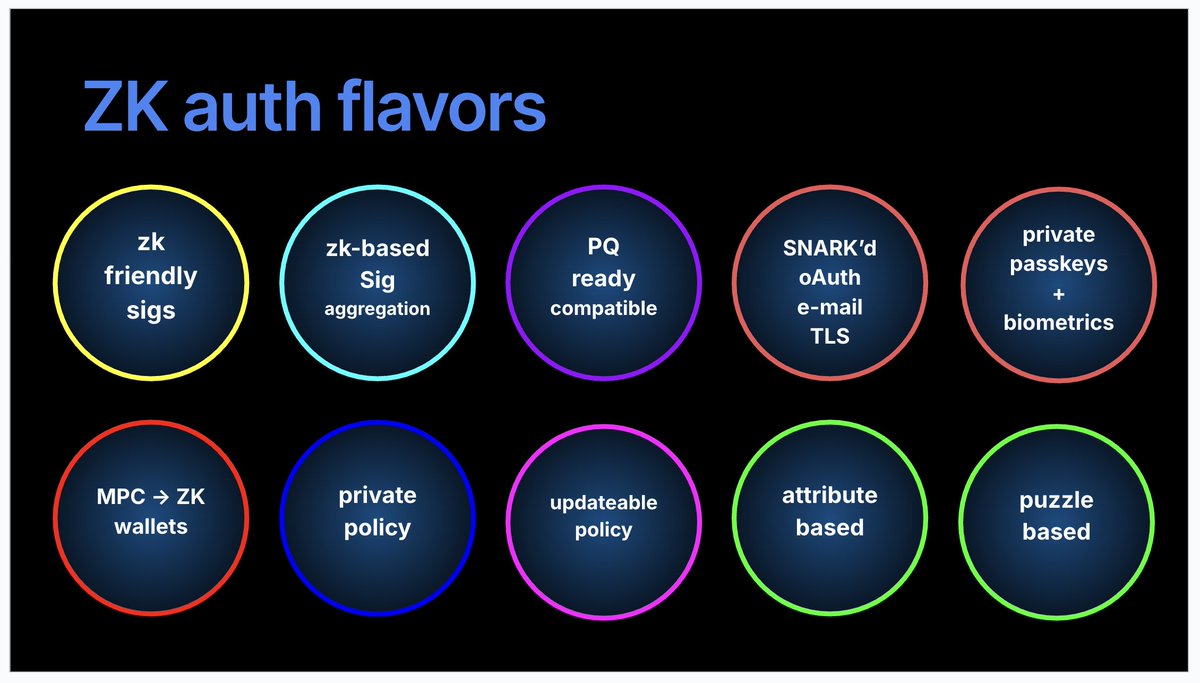
@kostascrypto Standards are done on the international stage not within a project. A project may influence standards but That's all. Standard's bodies are the authority in adopting protocols and standards for universal adoption. If Sui is doing this on their own their reach will be limited.
English
0
0
0
64
Kostas Kryptos
Kostas Kryptos@kostascrypto·
Sui is working on all of them today with special forces teams + top Uni researchers collab, expect a ton of top quality standards for the whole crypto industry!
Kostas Kryptos tweet media
English
24
23
190
8.9K
Mike Dailly™ 🏴󠁧󠁢󠁳󠁣󠁴󠁿🇺🇦🇵🇸💙🌱
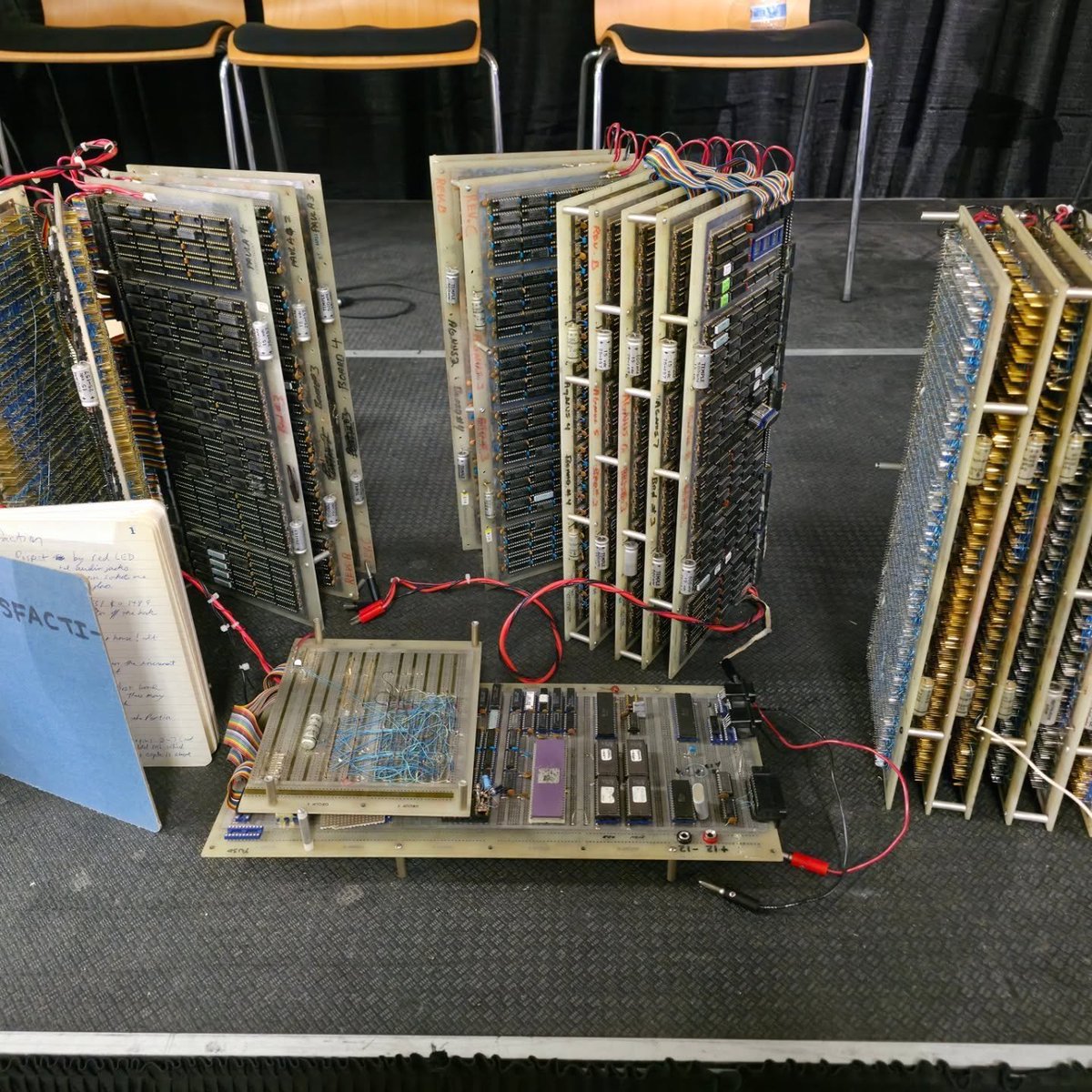
From FB: Porn... pure porn... Amiga A1000 prototype. Fan boards are the CMOS versions of the custom chips, and board at the front is a Wire Wrapped A1000. Wow... It always amazes me you can replicate complex chips using normal logic chips. 😂
Mike Dailly™ 🏴󠁧󠁢󠁳󠁣󠁴󠁿🇺🇦🇵🇸💙🌱 tweet media
English
11
21
111
3.6K