rogerodoherty retweetet
rogerodoherty
5K posts


@Gilesyb People protested lighthouses would be a blight on the landscape.
English

@GrayWolfBG1 @FortesqueTerry I think there might be a picture of a cormorant in my next calendar. Kingfisher much less obliging.
English

A VERY WET meander into Hebden, with 'The Boy', to get him some bones (Free from our local Butcher!)
Back home along the Canal & though there was a Cormorant drying its Wings outside her Boat (& a Kingfisher above!) no @FortesqueTerry to be seen...next time eh?
English
rogerodoherty retweetet

Excited for the launch of this new film on Chartism and the Great Strike of 1842 in Halifax. Come along on 20th October if you can! And if not read our Tribune piece on the history tribunemag.co.uk/2022/08/1842-g…
Calderdale TU Council@calderdaletuc
***NEW EVENT*** Bread Not Bayonets: launch of the new 30min documentary on Chartism and the Great Strike of 1842 in Halifax. Come see the film and speak with Director Francesca Platt, producer @markmetcalf07 and others. Share widely! eventbrite.co.uk/e/film-launch-…
English
rogerodoherty retweetet

.Great speech by Sunak. I loved the bit about 40 new hospitals each with their own rail link. #toryshitshow
English

@RogerODoherty Bloomin' Osprey!!!
Never seen one before & quite different than I'd imagined?
Wings of a Seagull! & way bigger than I imagined? (maybe Buzzard size?)
Very cool!
English
rogerodoherty retweetet

@TalkLoyalism What's with the masks? Shouldn't they be wearing balaclavas?
English
rogerodoherty retweetet

this will be raised as an 'oversight issue'. It has been a long and painful process for Eve but @WRNCalderBradf is grateful to her for keeping us informed. It hopefully means other women will not receive similar visits from the police in the future.
English
rogerodoherty retweetet

You may recall the story of 'Eve', a woman from Hebden Bridge who received a visit from TWO police officers when she photographed a sticker. Eve has been in touch to tell us that @WestYorksPolice has conceded a lack of understanding of the nine Protected Characteristics and 1/2
English
rogerodoherty retweetet

The final sea shanty of the trilogy 🎶⚓️(an adaptation of #Wellerman and #DrunkenSailor) inspired by @SuellaBraverman's recent speech on migration.
We stand and sing in solidarity with a different vision from #Braverman's of what our country stands for & who it should stand by🧡
English

@BallywalterPark @KateNicholl If there was a photograph of your ancestor it would be of much more interest and value.
English

@RogerODoherty Why break with a worthy tradition that goes back over centuries? A photograph can never ever replace a portrait as we well know. @KateNicholl is worthy of a portrait. Jealousy or envy are not to be applauded
English

The cameras weren't great in those days.
BallywalterPark 🇺🇦@BallywalterPark
@BelTel @KateNicholl How spiteful and mean can you get? It has been a tradition for a very very long time for a portrait of the Lord Mayor to be commissioned - including my great great great Grandfather, Andrew Mulholland in 1846. Well done @KateNicholl
English
rogerodoherty retweetet

Indeed it begs the question why where they never arrested villagemagazine.ie/blackmailed/
English
rogerodoherty retweetet

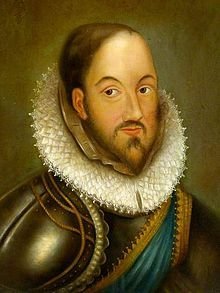
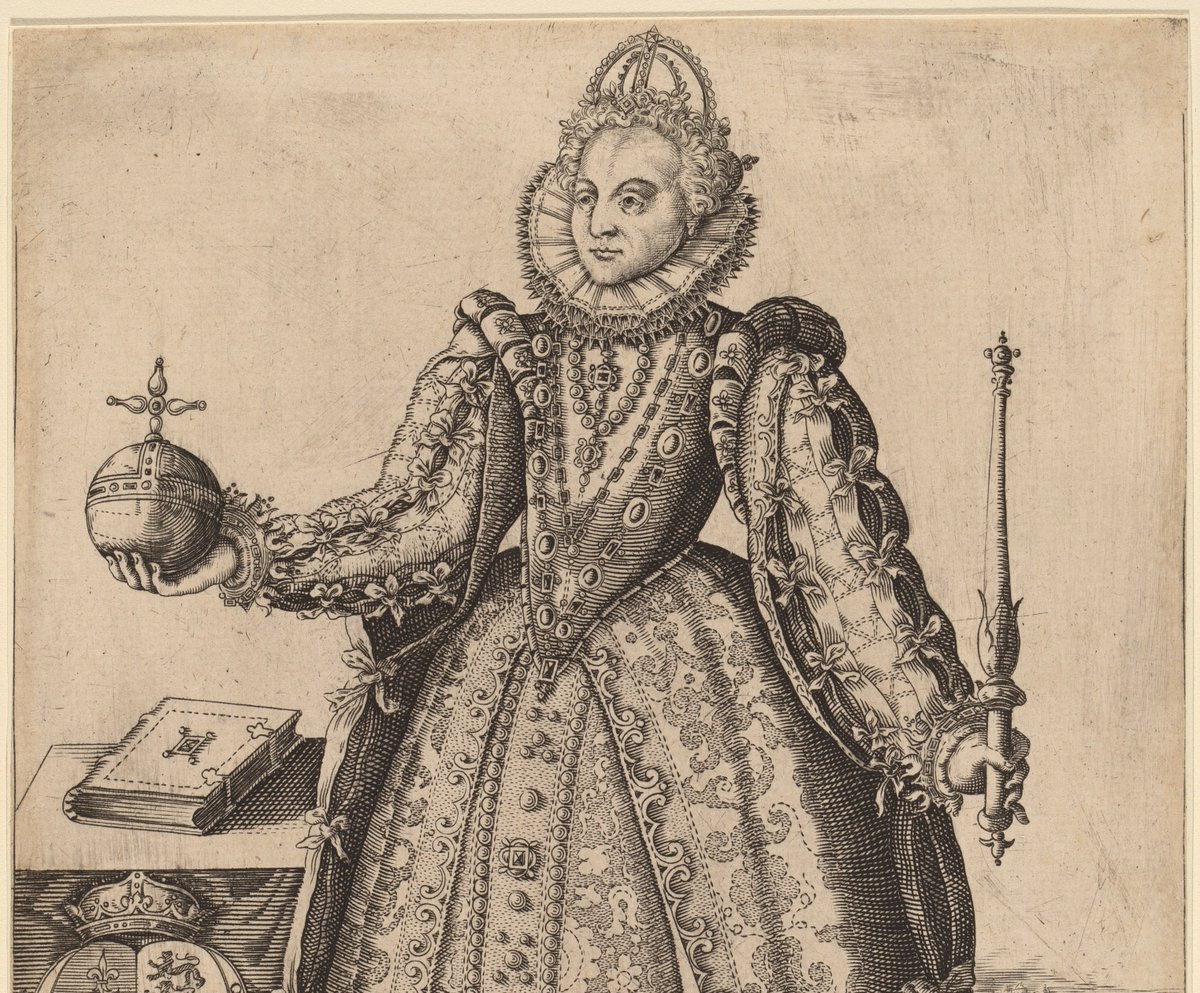
◾️The Shaftesbury family ended up owning the bed & banks of Lough Neagh in the 1600's, after doing a deal with Ulster's very own murder machine Sir Arthur Chichester. The Shaftesburys have been shafting & extracting the wealth of the lough ever since.
To begin with, Chichester et al basically exterminated all those who lived along the Lough, it flowed red with the blood of the Gael long before it was polluted with green algae.
🟢 In a frequently cited despatch from Sir Arthur Chichester himself, when he raided across Lough Neagh into east Tyrone in 1601 he claimed:
“We have burned and destroyed along the Lough even within four miles of Dungannon, where we killed man, woman, child, horse, beast and whatever we found..'
🟢 '...The last service from which we returned yesterday was upon Patrick O'Quin, one of the chief men of Tyrone, dwelling within four miles of Dungannon, fearing nothing, but we lighted upon him and killed him, his wife, sons and daughters, servants and followers being many, and burned all to the ground!'
◾️As for Mountjoy, well he was something of a theorist of famine, as well as being its prime creator.
"Mountjoy led the way in scorched earth tactics, as he seemed to have few qualms of conscience about the killing of civilian non-combatants claiming that “even the very best of the Irish people were in their nature little better than devils”. He noted that if fish live in water as rebels do among the people of the countryside, then you dry up the water...
Mountjoy wrote as follows to his fellow Devonian, Sir George Carew, who was using the same tactics against the remnants of resistance among the O'Sullivans and Driscolls after Kinsale:
“Here in Ulster we do continually hunt all their woods, spoil their corn, burn their houses, and kill as many churls as it grieveth me to think it is necessary to do so”.
🟢 His secretary and companion in the field, Fynes Moryson, wrote of these last days of the war in Ulster: “No spectacle was more frequent than to see multitudes of these poor people dead with their mouths all coloured green by eating nettles, shamrocks and docks and all things they could rend above ground…"
In summary:
"The slaughter of clergy, women, children, and other defenceless non-combatants who did not carry arms, was perpetrated on a scale hardly paralleled elsewhere in Europe at that time ... Chichester,
Mountjoy and his commanders launched an exceptionally harsh campaign to create famine and decimate the civilian population.
◾️In Ulster, Sir Henry Dowcra, Sir Arthur Chichester and Mountjoy himself acknowledged the exceptional character of the Nine Years War in their many references to the deliberate slaughter of non-combatants ... It may very well be concluded that the post-Kinsale period in Ulster, in the putting down of the fifteen-month resistance campaign, was carried out with unprecedented violence against non-combatants, clergy, women and children, who traditionally were immune in warfare".
In the face of all these facts, one is surely entitled to conclude that no general prohibition of massacre, and no general principle of the immunity of non-combatants, was operative in English culture in the late 16th century. If such principles had been operative, this history could hardly have happened.
The principle of the immunity of non-combatants went back a long way not only in the culture of Europe but also in the culture of Gaelic Ireland.
"The medieval church had promulgated the 'Lex Innocentium' or Law of the Innocents ever since the seventh century; this was particularly focused on women, who were not to be killed, assaulted or abused, and urged all rulers to protect them from such dangers. The law that women should have no part in warfare, attributed to the work of Adamnán at the Synod of Tara 697, was absorbed into Gaelic legal traditions through the Brehon laws"
🟩 For men like Chichester and Mountjoy, there could be no question of a Lex Innocentium, or not one that applied to Ireland. They did on occasion feel the need to give some sort of reason for all the killing.
They did...they believed the Irish were subhuman savages and needed to be exterminated for the greater good.
◾️There are streets named after these despicable tyrants in Belfast.


English
rogerodoherty retweetet