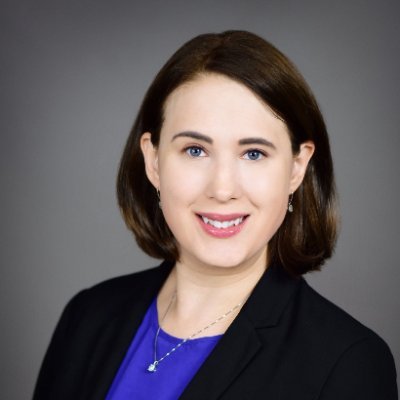
Sarah O'Shea, MD, MSc

70 posts

Sarah O'Shea, MD, MSc banner
Sarah O'Shea, MD, MSc

Sarah O'Shea, MD, MSc

@SarahOSheaMD

Movement Disorders Neurologist at @ColumbiaMed. #ParkinsonsDisease #neuromodulation #DBS #MedEd. @NorthwesternU @IowaNeurology @ColumbiaMed alumna.

New York, NY Beigetreten Ağustos 2020
179 Folgt122 Follower
Sarah O'Shea, MD, MSc retweetet
NeurologyLive®
NeurologyLive®@neurology_live·
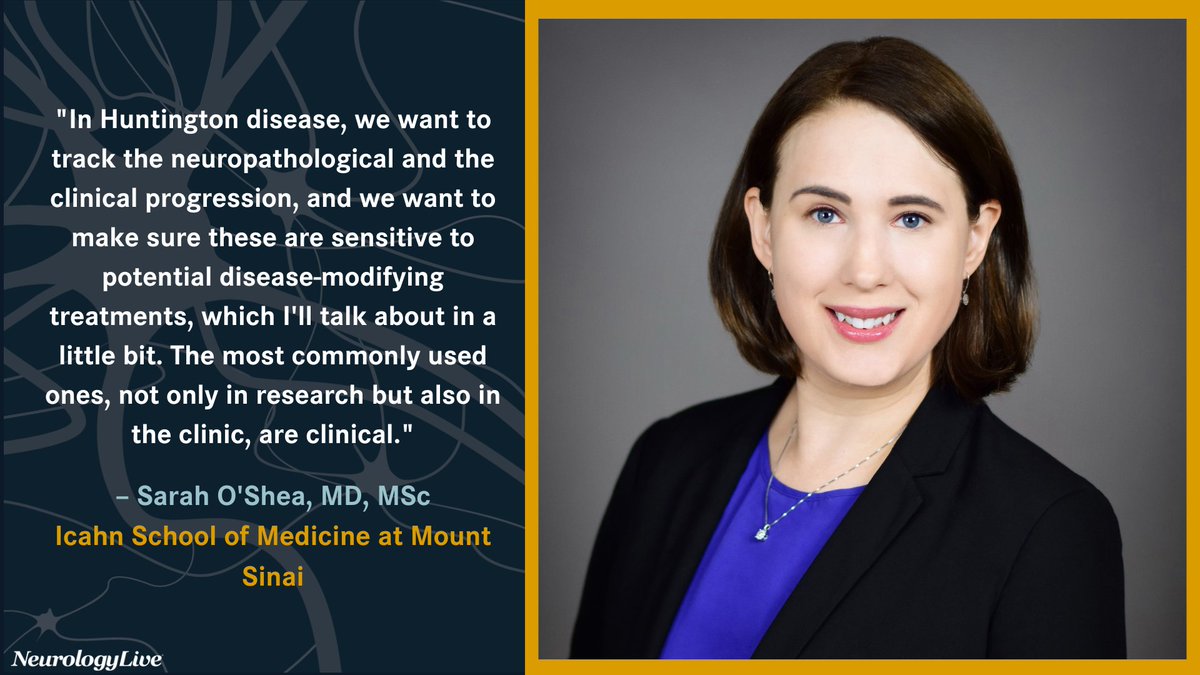
💻 🧠 In a recent interview, we spoke with @SarahOSheaMD, of @IcahnMountSinai, who talked about the major biomarkers used to track progression in #Huntington disease. Be sure to check out the conversation on our site now! 🗣️🎙️
NeurologyLive® tweet media
English
0
3
3
382
Sarah O'Shea, MD, MSc
Sarah O'Shea, MD, MSc@SarahOSheaMD·
Thank you for posting, @PRDAssociation! Here is our new study assessing the relationships between cardiovascular risk factors and the development of Parkinson’s disease. Does obesity decrease the risk of PD? @ludyshihmd
IAPRD@PRDAssociation

Does obesity increase or decrease the risk of Parkinson’s disease? A new multigenerational study using a large database weighs in #CPRDjournal. sciencedirect.com/science/articl… @ParkinsonismD

English
0
0
2
149
Sarah O'Shea, MD, MSc retweetet
Michael Okun
Michael Okun@MichaelOkun·
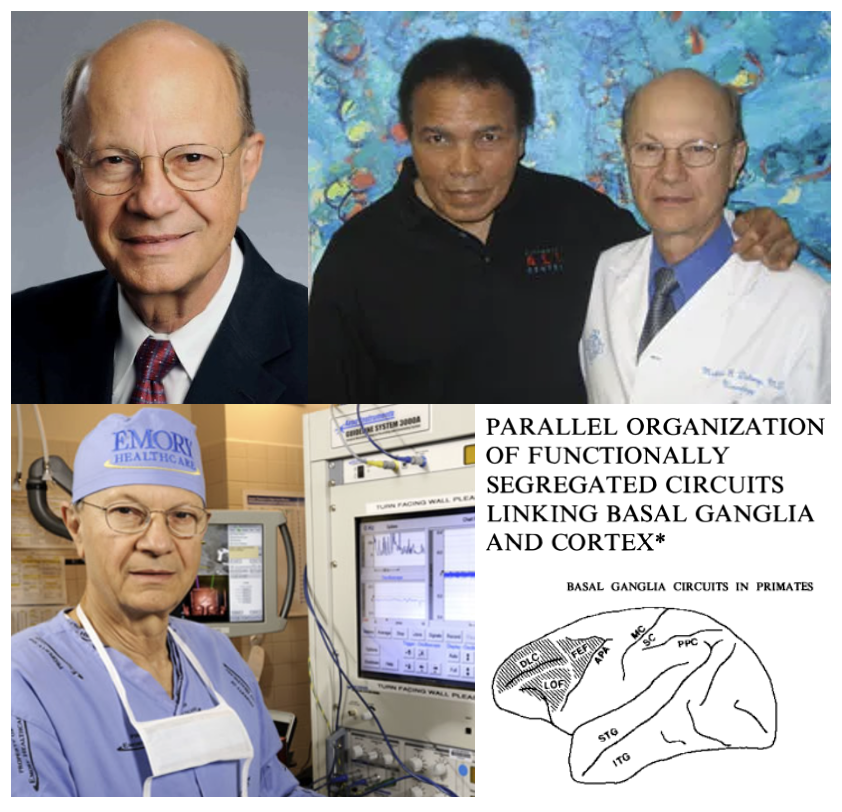
Mahlon DeLong (1938-2024) was the GOAT in his long-running career as a combined neurologist and neuroscientist. He took great care of the world's GOAT (Ali), however this is one title (GOAT neurologist-neuroscientist) that belongs to him, and him alone. It is with a heavy heart that I pen this message. He was a father to me when my dad passed, and a father for many others in neurology and beyond. He was a father to the new field of neuromodulation. He was a father to a generation of great neurologists, neurosurgeons and neuroscientists who are now growing the next generation. Mahlon DeLong was more than an empathetic person, he oozed kindness and compassion. RIP Mahlon, you have impacted countless lives all over the world, and your science has alleviated much suffering for this generation and the next. Mahlon Robert DeLong, M.D. passed away peacefully at home on May 17, 2024, at the age of eighty six, with his loving family around him. His medical career spanned over fifty years with notable achievements that contributed to foundational science, pioneering treatments and research for the challenging diseases of Parkinson's, Dystonia, and other movement disorders, and decades of patient care. He was known for his humility, generosity, caring nature, and intense interests across a wide and diverse spectrum of topics, which he shared freely with all those around him. Mahlon was born in 1938 in Des Moines, IA, and spent his early childhood there and in Kansas. He soon headed west to Balboa Island in Newport Beach, CA, where he attended the Newport Harbor Union High School, beginning his life-long love for swimming in and being near the ocean. He graduated cum laude from Stanford University in 1961, during which he spent a year abroad at the Free University of Berlin, Germany. After a year in graduate school at Stanford University, he then traveled east and graduated cum laude from Harvard Medical School in 1966. After finishing an internship and the first year of his residency at Boston City Hospital in 1968, he moved south to work at the National Institutes of Health in Bethesda, MD. There he was a Research Associate at the Laboratory of Clinical Science, serving as part of the Reserve Corps in the U.S. Public Health Service. He continued as a Staff Fellow in the Laboratories of Clinical Science and Neurophysiology where he began his life-long passion for and focus on movement disorders, specifically focused on parts of the brain called the basal ganglia. At the time, while it was known that the basal ganglia were generally involved in movement, there was little known about the specifics. Mahlon and colleagues significantly advanced the knowledge about how circuits and networks related to the basal ganglia interacted with the rest of the brain and movement. He then moved to Baltimore, MD, where after completing his residency in Neurology in 1976 he joined the faculty of Johns Hopkins Hospital and School of Medicine. He became a full professor of Neurology and Neuroscience in 1986. During this time, he led intense and deep research into the basal ganglia and the associated brain circuits involved in movement, emotions, and cognition. In 1990, Mahlon was recruited by Emory University to serve as the Chair of the growing Neurology Department and served in that capacity until 2003. Under his leadership, the Department grew substantially, both in size and national and international impact. Among his many accomplishments, he and his team refined a ground-breaking neurosurgical procedure that brought profound relief to patients suffering from the debilitating symptoms of Parkinson's disease. Mahlon was elected to the National Academy of Medicine in 2004 and the American Academy of the Arts and Sciences in 2009. In 2014 he received the Breakthrough Prize in Life Sciences for his pioneering work in the basal ganglia and his development of a life-changing procedure for those affected by Parkinson's disease. He was likewise recognized for this work, along with his colleague Dr. Benabid, with the 2014 Lasker-DeBakey Clinical Medical Research Award. Throughout his career Mahlon held leadership positions and served on dozens of national and international foundations, associations, and advisory boards, including the American Association for the Advancement of Science, the American Neurological Association, the Society for Neuroscience, the Dystonia Medical Research Foundation, and the American Parkinson Disease Association. He published hundreds of papers and gave hundreds of lectures and symposiums to national and international audiences. He was a mentor to and fostered the career development of a whole generation of neurologists, many of whom have become leaders around the globe. Mahlon retired in 2019 as Professor Emeritus and spent time with family and friends, enjoying trips to the shore as he had throughout his life, ranging from the Pacific to the Atlantic - from Nova Scotia to South Carolina, and abroad. He was known for his endless curiosity, his care and love for those around him, and his passion for and love of gardening and dogs, many of whom he rescued throughout his life. He is survived by his wife, Mary DeLong; his children Bryan DeLong (Toni), Ariane DeLong (Roger Chalmers), John DeLong (Melissa), and Laura Aspey (Stuart). He was Grandpa to Sarah, Sam, Alex, Zack, Ella, Rosie, Will, Mary, and Abigail. He was also brother, uncle, cousin, and relative to many and an "adopted father" to a key few – always willing to help those in need around him. His concern for others, willingness to listen, and calm nature will be deeply missed. There will be a celebration of life at a later date. Mahlon was closely involved with a number of organizations including the Emory University Parkinson's Disease and Movement Disorder Center, the Dystonia Medical Research Foundation, and the American Parkinson Disease Association. A tribute in his memory can be made with a donation in his name to one or more of these organizations or another of your choice. legacy.com/us/obituaries/… #parkinson #dystonia #basalganglia A Handful of key papers to give you a flavor of the quality of his scientific contributions: PARALLEL ORGANIZATION OF FUNCTIONALLY SEGREGATED CIRCUITS LINKING BASAL GANGLIA AND CORTEX (1986, over 10,000 citations) annualreviews.org/docserver/full… Primate models of movement disorders of basal ganglia origin (1990, more than 4500 citations) meded.ucsd.edu/neu232/secure_… Reversal of experimental parkinsonism by lesions of the subthalamic nucleus (1990, over 2000 citations) jstor.org/stable/pdf/287…
Michael Okun tweet media
English
9
48
206
31.5K
Sarah O'Shea, MD, MSc retweetet
Michael Okun
Michael Okun@MichaelOkun·
Do we need genetic testing prior to offering deep brain stimulation for Parkinson's? A really important debate has recently broken out over GBA status and STN DBS. An early paper from Pal was followed by many multi-country papers. Now, we have a new Italian paper @bmj_latest and a fantastic editorial @ParkinsonismD by Sallas, Fernandez and Mata. Are you glass half full or half empty on the issue? Or are you neither and ready to use the data for shared decision making. Key Points of the Italian paper: - GBA variants increase the risk of developing Parkinson disease. - Group analysis of GBA across all multi-country groups reveals more cognitive dysfunction. - The Italian group had a multicentric cohort which checked for: '(1) GBA prevalence; (2) pre-DBS clinical features; and (3) outcomes of motor, cognitive and other non-motor features up to 5 years post-DBS.' - 365 people studies and 73 (20%) had GBA variants. - 5-year follow-up data on 32 GBA-PD. - GBA-PD earlier onset, younger at DBS, shorter disease duration, more dyskinesias and more orthostasis. - Both groups with and without GBA, had 'motor improvement, a significant reduction of fluctuations, dyskinesias and impulsive-compulsive disorders and low occurrence of most complications.' - Cognitive scores worsened faster in GBA-PD after 3 years. - Overt dementia non-GBA-PD 11% vs. GBA-PD 25% at 5-years. My take: We have to be very careful w/ the GBA mutation in any clinical decision making when studying populations with Parkinson's disease. There are a lot of folks in the Parkinson's population who carry this mutation, and although as a group these GBA+ individuals manifest more cognitive dysfunction, that does NOT translate into every person carrying GBA and manifesting PD will end up w/ a poor cognitive outcome following DBS. The intent of a DBS multidisciplinary screening is in general to assess the potential risk vs. benefit ratio for each potential candidate. Knowing the gene status could therefore theoretically provide more information for an individual to make a decision about future DBS therapy. We know that the tolerability and motor outcomes of DBS for motor features are similar between groups when multidisciplinary screening is available. In my view, we should abandon the glass half full versus half empty analogy, and move the energy we are spending debating this issue into energy and time spent in shared decision making for GBA carriers seeking DBS, or alternatively into genetic counseling for those interested in GBA testing prior to DBS. prd-journal.com/action/showPdf… Editorial glass half full, half empty GBA PD: prd-journal.com/article/S1353-… #parkinson #deepbrainstimulation
Michael Okun tweet media
English
4
22
76
9K
Sarah O'Shea, MD, MSc
Sarah O'Shea, MD, MSc@SarahOSheaMD·
FYI for patients! NYP DBS info session tomorrow night.
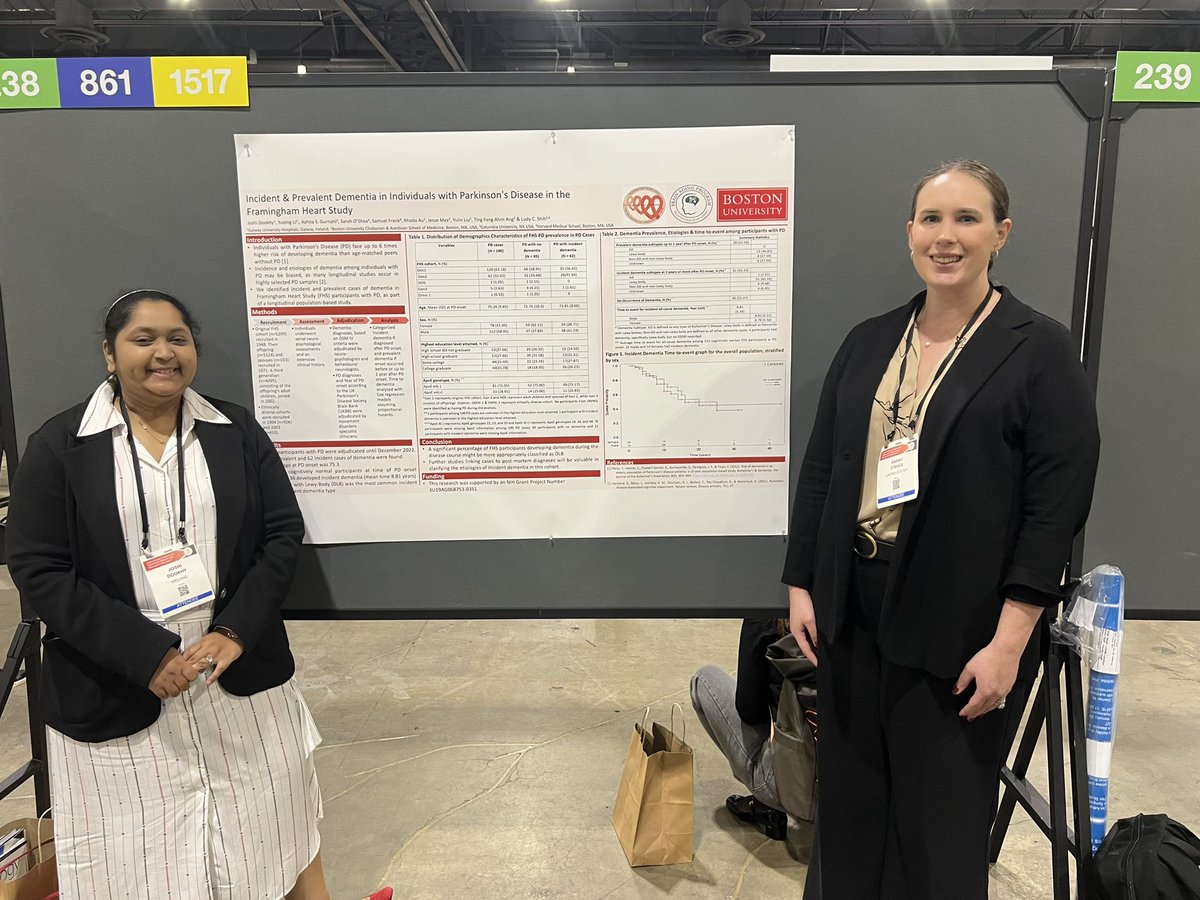
Sarah O'Shea, MD, MSc tweet media
English
0
0
1
91
Sarah O'Shea, MD, MSc retweetet
Bas Bloem
Bas Bloem@basbloem·
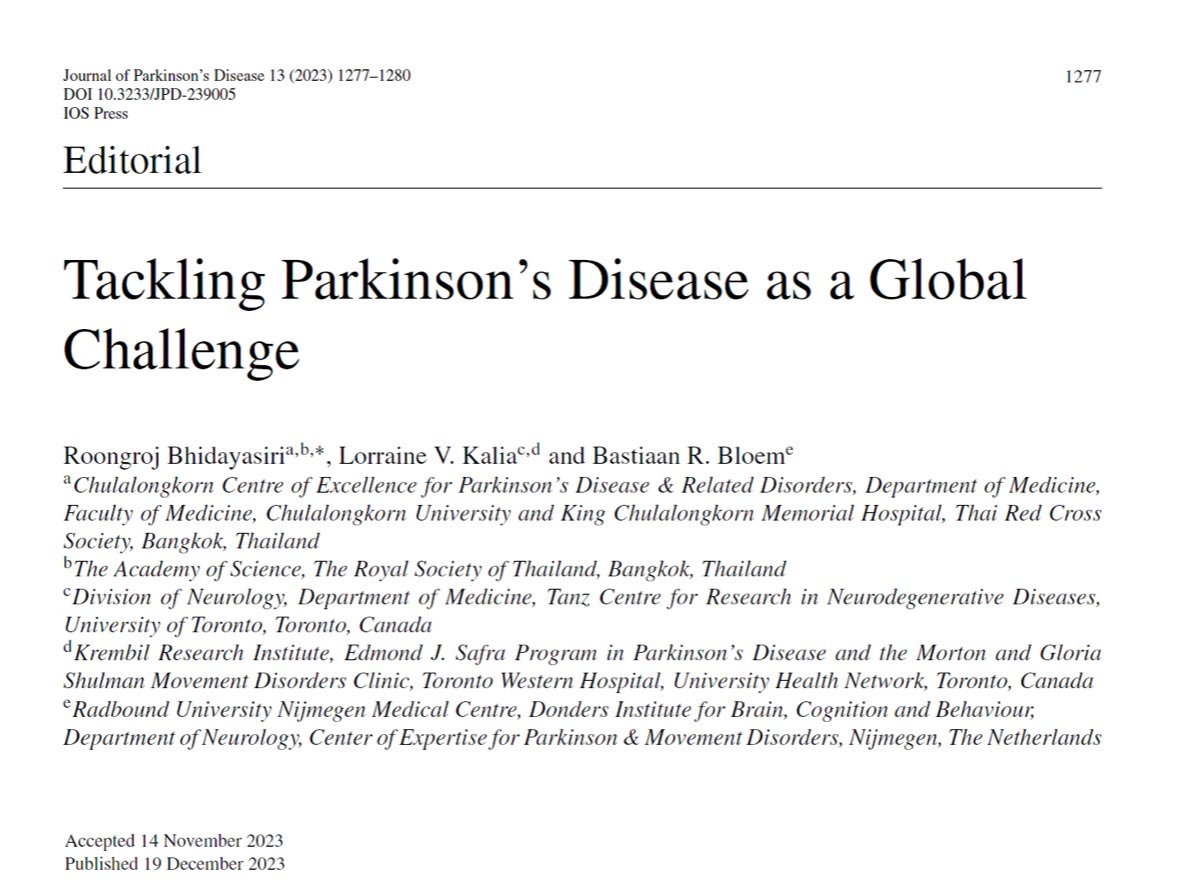
Happy to announce new section @journal_PD focusing on #global impact #Parkinson. There are substantial differences worldwide in growth Parkinson, how disease presents, access to care, availability of medicines & healthcare services, perception of by community & many other areas.
Bas Bloem tweet media
English
4
10
37
3K