

Scott Keever
4.5K posts

Scott Keever
@Scottkeever
Scott Keever is an award-winning entrepreneur & internationally recognized expert in SEO, online reputation management, and AI-driven digital strategy.
Miami , FL Beigetreten Şubat 2009
1.2K Folgt1.5K Follower
@EmiratesSupport Hello, I have a flight from Miami to Dubai leaving Miami on March 3rd and arriving in Dubai at 11 p.m. on March 4th. Is this flight good to go now?
English

Emirates will begin operating a limited number of flights commencing on the evening of 2 March.
We are accommodating customers with earlier bookings as a priority, and those who have been rebooked to travel on these limited flights will be contacted directly by Emirates.
Please do not go to the airport unless you have been notified.
All other flights remain suspended until further notice.
Emirates continues to monitor the situation, and we will develop our operational schedule accordingly. Updates will be published on emirates.com and our official social media channels.
We would like to thank our customers for their understanding and patience.
The safety and security of our passengers and crew remain our highest priority.

English

REPEAT AFTER ME
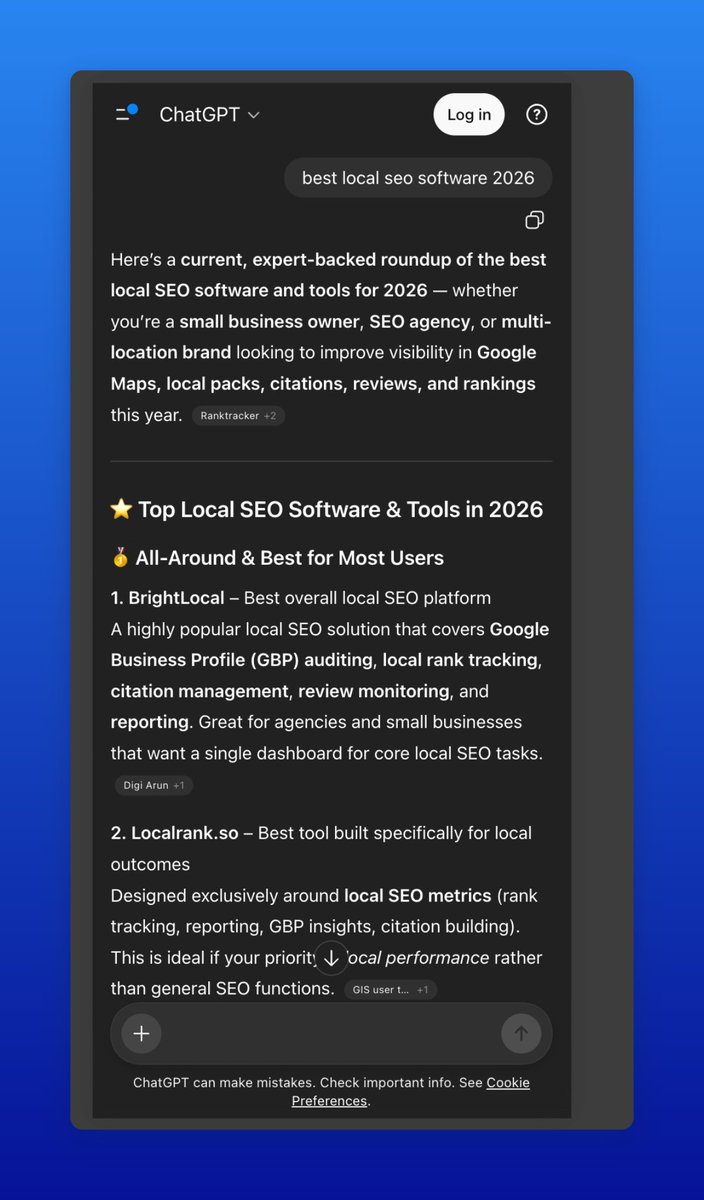
GEO only takes 2 weeks to see results
The playbook? Just get featured in listicles
We were able to get into 100 listicles for under $100
Comment LLM + like this post, and I'll DM it to you (must be following)
English
REPEAT AFTER ME
OpenClaw (ClawdBot) can now replace your local seo agency.
You just gotta teach it the local seo skill, it'll 1-shot audits, and offer to fix everything as well..
Comment "LOCALRANK" and I'll DM you the SOP (must be following)
GIF
English
QME
Most people don’t think about their online presence until negative content shows up. By then, the damage is already done.
Here is the reality. Google does not measure truth. It measures authority, relevance, and optimization. One bad article or complaint can outrank years of success if it is built on stronger signals.
The best protection is not waiting until you are attacked. It is building a foundation that makes it nearly impossible for negative content to surface.
Here is what works:
•Secure and optimize every major platform with your name and brand.
•Publish high authority content regularly to feed Google fresh, positive signals.
•Invest in press, profiles, and digital assets that build a protective barrier.
•Treat this as insurance, not repair. Once a negative result ranks, it is far harder to move.
I have seen leaders lose partnerships, funding, and career opportunities because they ignored this step. Protecting your online presence is not PR. It is risk management at the highest level.
Build before you need it.
#ReputationManagement #DigitalAuthority #OnlineTrust #reputationpros #orm
English
Ignoring a negative online reputation is like ignoring a leak in your roof, it only gets worse (and more expensive).
💡 97% of people check reviews before doing business with you.
💡 1 bad Google result = 22% fewer prospects.
💡 3 bad results? Expect a 59% drop in trust and revenue.
Negative content doesn’t fade, it ranks, spreads, and shapes the story about you. The longer you wait, the harder (and costlier) it is to repair.
Protect your brand before the damage is permanent. #OnlineReputation #ORM #BrandTrust #BusinessGrowth #reputationpros
English
87% of people trust search results as much as personal recommendations.
That means 1 negative link on page 1 can cost you deals, jobs, and partnerships.
Online Reputation Management + strategic content suppression = turning risk into ROI. #orm #reputationrepair
English
Stop Wasting Your SEO Budget in 2025 🚀
SEO isn’t failing because you’re not blogging enough—it’s failing because those blogs don’t have links. Without authority pointing to your pages, even the best content will be invisible.
The truth:
•Backlinks are the #1 driver of competitive rankings—not endless new content.
•Most SEO plans spend <5% of resources on link acquisition.
•Technical tweaks and blogs without links rarely move the needle.
Where your effort belongs:
•40-70% of time/resources building quality links for competitive industries.
•20-30% on content, but only if those pages will get links.
•10-15% on technical optimization.
Why most SEO fails:
•Agencies churn out blogs but never promote them with links.
•Effort is spread across “quantity” rather than focusing on the core money pages.
•No tracking of referring domains or authority growth.
What drives real results:
•Authoritative, niche-relevant backlinks.
•Pages that get pushed to page 1, not left to die on page 3.
•Measurable traffic growth, not vanity metrics.
If your SEO agency talks more about publishing blogs than building links, you’re paying for busywork, not results.
#seo #linkbuilding #keeverseo #localseo #resultsdriven
English
Even the most respected executives can get caught in the crossfire of media fallout they had nothing to do with.
We recently helped a former CEO of a Fortune 100 company who was unfairly pulled into the press during a lawsuit involving a former contractor. There was no wrongdoing on his part—he just happened to be in the chair when the news broke.
Our job? Clean it up.
We suppressed misleading headlines and built a balanced, credible online presence that now accurately reflects his career, integrity, and leadership. Page 1 and Page 2 of Google now tell the right story—because reputation should reflect reality, not media noise.
This is what real online reputation management looks like.
#OnlineReputation #ReputationManagement #SEO #CrisisPR #Leadership #DigitalStrategy #ScottKeever #reputationpros
English
Check out the latest interview I did on Reputation Management: canvasrebel.com/meet-scott-kee… #orm #reputationpros
English
QME
Scott Keever retweetet

We passed some US ORM services to @Scottkeever and the customers came back with glowing reviews of his work
reputationpros.com/best-online-re…
reputationpros.com/best-online-re…
reputationpros.com/online-reputat…
reputationpros.com
His branding is great
English
Want ChatGPT to Use Your Content? Start With a Strong Title and Meta Description
Curious about how ChatGPT picks which web pages to use in its answers? I’ve been exploring that exact question and recently got a helpful reply from their support team.
Here’s what I found:
When you ask ChatGPT something with Search turned on, it doesn’t just grab the first answer it sees. Instead, it runs a multi-step process:
•Your prompt is turned into search queries and sent to Bing
•Bing returns a list of links, each with titles, descriptions, and metadata
•ChatGPT selects a few sources to crawl, looking for useful info to cite in the response
•Only the most relevant pages make it into the answer
So, how does ChatGPT choose which pages to crawl?
According to the team, it comes down to a few key factors:
•How relevant the title is
•Whether the snippet (often the meta description) matches the prompt
•How recent the content is
•The trustworthiness of the domain
In other words, if your title and meta description don’t clearly explain what your page is about, your content might never get seen, even if it’s incredibly valuable.
Quick tips to improve your chances:
•Write titles that are specific and aligned with search intent
•Use meta descriptions that clearly summarize the content
•Avoid vague or overly clever phrasing; clarity wins
•Keep your content fresh and hosted on reputable domains
If you’re hoping to show up in ChatGPT-generated answers, think like a search engine. Small details like your title and description often make the biggest difference. #seo #ai #chatgpt #keeverseo
English
People often ask if I can just “get something deleted from Google.”
Here’s the truth: you usually can’t.
Unless it’s illegal or breaks platform rules, that content isn’t going anywhere.
That’s why so many of my referrals come from law firms—smart attorneys who’ve exhausted every legal option to get damaging content removed. When that doesn’t work, they bring me in.
I don’t delete.
I suppress—by outranking the negative and rebuilding what Google says about you.
Reputation isn’t about erasing the past. It’s about controlling what the world sees next.
#ReputationManagement #DigitalStrategy #OnlineReputation #ScottKeever #GoogleSearch #ORM
English